


20x20x1 Air Filter Packs
In industrial facility management and mechanical engineering, the 20x20x1 air filter is one of the most widely utilized dimensions for air handling units (AHUs), rooftop units (RTUs), and specialized industrial machinery. While this size is common in residential settings, the requirements for industrial-grade 20x20x1 air filter packs are significantly more stringent. Engineers and procurement teams must evaluate these components based on filtration efficiency, pressure drop, structural integrity, and material compatibility with specific environmental contaminants.
Selecting the right pack of filters involves more than just matching dimensions. It requires a technical understanding of how different media types—ranging from pleated synthetics to high-performance stainless steel Filter Discs & Packs—interact with the airflow of a specific system. This guide provides a technical overview of the selection criteria, performance metrics, and engineering considerations necessary for optimizing industrial air filtration systems.
Understanding the Role of 20x20x1 Air Filter Packs in Industrial Environments
The 20x20x1 designation refers to the nominal dimensions of the filter: 20 inches in height, 20 inches in width, and 1 inch in thickness. However, the actual dimensions are typically slightly smaller (often 19.5" x 19.5" x 0.75") to ensure a proper fit within standard mounting frames. In a B2B context, purchasing these in "packs" is standard practice to maintain a consistent replacement schedule and ensure that emergency spares are always available on-site.
In industrial settings, these filters serve several critical functions:
1. Pre-filtration for High-Efficiency Systems: They are often used as the first line of defense to protect more expensive HEPA or ULPA filters from large particulate matter, thereby extending the service life of the secondary filtration stage.
2. Protection of Mechanical Components: By capturing airborne dust and debris, these filters prevent the buildup of insulating layers on heating and cooling coils, which maintains heat transfer efficiency and prevents motor strain.
3. Process Air Quality: In manufacturing environments where airborne particulates can interfere with production—such as electronics assembly or food processing—consistent filtration is essential for maintaining product yield and safety.
4. Equipment Exhaust: Certain industrial machines use 20x20x1 filters to scrub exhaust air before it is recirculated or vented, ensuring compliance with local air quality regulations.
Technical Specifications and Performance Ratings
When evaluating 20x20x1 air filter packs, engineers primarily look at the MERV (Minimum Efficiency Reporting Value) rating. This scale, ranging from 1 to 16, indicates the filter's ability to capture particles between 0.3 and 10 microns.
MERV Ratings and Particle Capture
* MERV 8: Effective at capturing particles like pollen, dust mites, and large dust particles. These are commonly used as basic pre-filters in industrial HVAC systems.
* MERV 11: Provides a higher level of filtration, capturing finer dust and some smoke particles. This is a common choice for general commercial and industrial spaces where air quality is a priority.
* MERV 13: Capable of capturing very fine particles, including bacteria and virus carriers. These are increasingly required in facilities aiming for LEED certification or enhanced indoor air quality (IAQ) standards.
Pressure Drop and Airflow Resistance
A critical engineering trade-off exists between filtration efficiency and airflow. As the MERV rating increases, the density of the filter media typically increases, leading to a higher initial resistance (measured in inches of water gauge, or in. w.g.). If the pressure drop is too high, the system's blower must work harder, leading to increased energy consumption and potential mechanical failure. It is essential to verify that the system's fan curve can accommodate the static pressure of the chosen filter pack throughout its entire service life.
Material Selection: Synthetic vs. Metal Mesh Filter Discs & Packs
While standard pleated paper or synthetic media are suitable for general office environments, industrial applications often demand more robust materials. The environment—whether it involves high temperatures, high humidity, or exposure to corrosive chemicals—dictates the material choice.
Synthetic Pleated Media
Most 20x20x1 packs utilize pleated synthetic fibers. The pleating increases the surface area of the filter, allowing for a higher dust-holding capacity (DHC) and a lower initial pressure drop compared to flat-panel filters. These are typically disposable and cost-effective for standard air handling.
Stainless Steel and Metal Mesh Packs
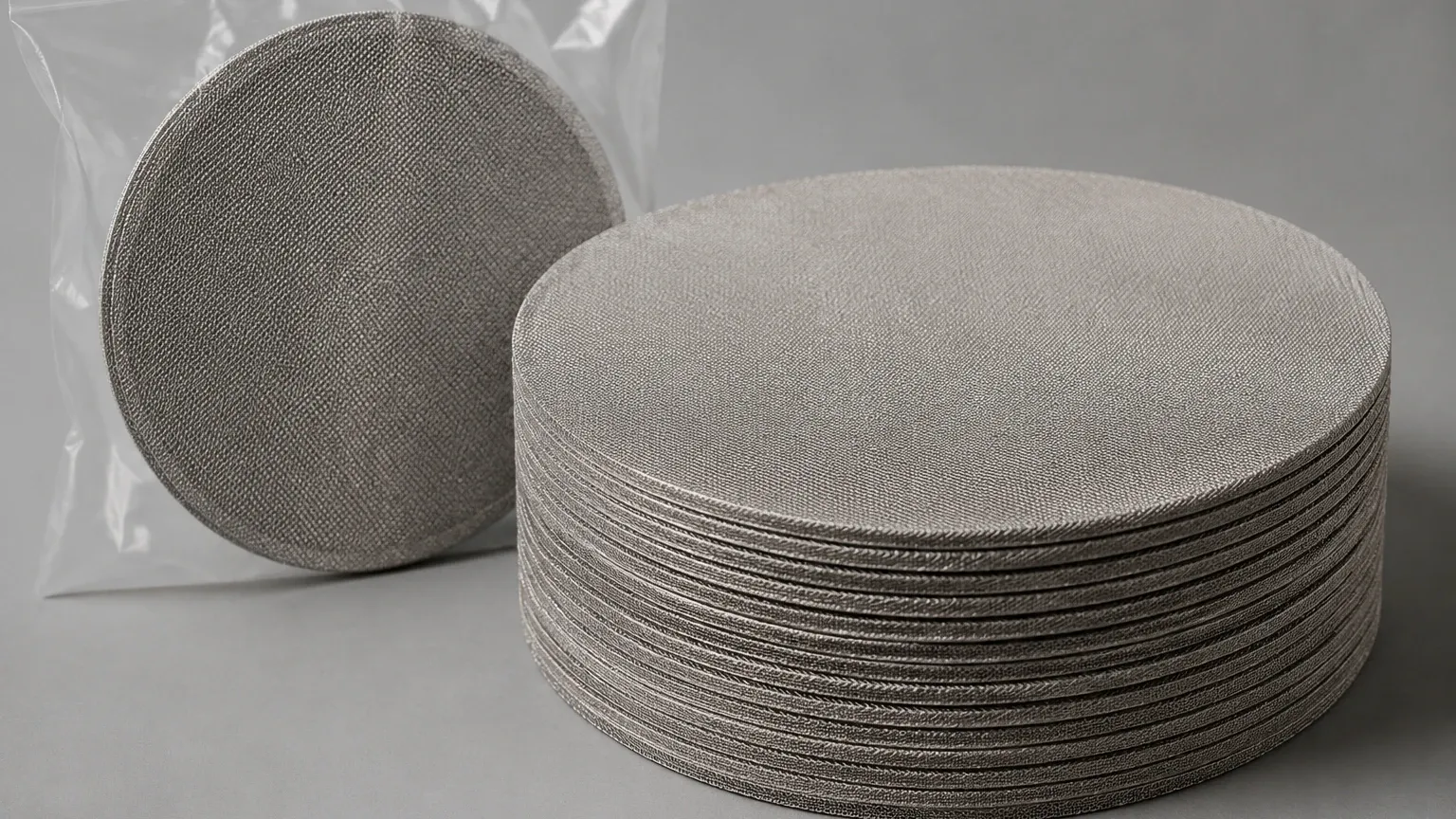
In environments involving high-temperature exhaust, oil mist, or heavy grease—such as in chemical processing or industrial kitchens—standard synthetic filters may fail or pose a fire hazard. In these cases, engineers turn to specialized Filter Discs & Packs constructed from stainless steel wire mesh.
Stainless steel filters offer several advantages in demanding B2B applications:
* Temperature Resistance: They can withstand operating temperatures far exceeding the limits of synthetic materials.
* Durability and Reusability: Unlike disposable filters, metal mesh packs can often be cleaned and reused, reducing the long-term waste stream and total cost of ownership.
* Chemical Compatibility: Stainless steel is resistant to a wide range of solvents and corrosive agents found in industrial air streams.
* Structural Rigidity: In high-velocity systems, metal frames and mesh prevent the filter from "blow-through" or collapsing under pressure.
Engineering Considerations for High-Performance Filtration
When integrating 20x20x1 air filter packs into a system design, several engineering factors must be addressed to ensure optimal performance and safety.
Face Velocity
Face velocity refers to the speed of the air as it enters the filter face, usually measured in feet per minute (FPM). Most 1-inch filters are designed for velocities between 300 and 500 FPM. If the velocity exceeds the manufacturer's specifications, particles may be forced through the media (bypass), or the media itself may deform.
Gasketing and Sealing
Even the highest-rated filter is ineffective if air can bypass the media. In industrial settings, the filter rack should be inspected for gaps. Using filters with integrated gaskets or ensuring a tight fit within the holding frame is vital. For critical applications, a "knife-edge" seal or specialized clamping mechanism may be necessary to ensure zero bypass.
Humidity and Moisture
In applications like water treatment facilities or food processing plants, high humidity can cause standard cardboard-framed filters to soften and collapse. In these environments, engineers should specify filters with moisture-resistant frames (such as plastic or galvanized steel) and hydrophobic media to prevent microbial growth and structural failure.
Procurement and Quality Assurance for Industrial Filter Packs
For purchasing departments, sourcing 20x20x1 air filter packs requires a focus on consistency and supply chain reliability. Because filters are a consumable item, the total cost of acquisition includes not just the unit price, but also shipping costs, storage requirements, and the labor required for replacement.
OEM vs. Aftermarket
While many equipment manufacturers provide branded filters, many industrial facilities opt for high-quality aftermarket packs that meet or exceed the original equipment manufacturer (OEM) specifications. When sourcing aftermarket solutions, it is crucial to verify that the manufacturer follows ISO standards for filtration testing (such as ASHRAE 52.2) to ensure the MERV ratings are accurate.
Batch Consistency
In large-scale operations, consistency across a pack of filters is essential. Variations in pleat count, media density, or frame dimensions can lead to uneven airflow across a filter bank, causing some filters to load faster than others and creating system imbalances. Working with a dedicated manufacturer like Kaifil ensures that custom dimensions and material specifications remain consistent across every production run.
Total Cost of Ownership and Replacement Cycles
The true cost of an air filter is not its purchase price, but the cost of the energy it consumes and the labor required to change it. A low-cost filter with a high pressure drop can cost a facility thousands of dollars in extra energy bills over its lifetime.
Monitoring Pressure Drop
Rather than replacing filters based on a fixed calendar schedule (e.g., every 3 months), industrial facilities should use differential pressure gauges (manometers). By monitoring the "Delta P" across the filter bank, maintenance teams can replace filters exactly when they reach their maximum recommended resistance. This practice maximizes the utility of each filter pack and prevents premature disposal.
Environmental Impact
For companies with sustainability goals, the choice between disposable and cleanable filters is significant. While stainless steel Filter Discs & Packs have a higher initial capital expenditure, their ability to be cleaned and returned to service significantly reduces the volume of waste sent to landfills. Additionally, maintaining clean filters ensures that HVAC systems operate at peak efficiency, reducing the facility's overall carbon footprint.
Conclusion
Selecting 20x20x1 air filter packs for industrial applications requires a deep dive into the technical requirements of the specific environment. Whether the application calls for standard MERV-rated pleated filters for general air handling or custom-engineered stainless steel mesh for extreme conditions, the focus must remain on airflow efficiency, structural integrity, and long-term reliability. By understanding the engineering principles behind filtration and working with experienced manufacturers, facility managers can ensure a clean, safe, and cost-effective operating environment.
