


Sparger Design
In industrial processing, the efficiency of gas-liquid contact is a critical factor that directly influences reaction rates, product quality, and energy consumption. Sparging—the process of injecting gas into a liquid—relies heavily on the configuration of the equipment used. Effective sparger design is not merely about gas delivery; it is about optimizing the interfacial area between the gas and liquid phases to facilitate maximum mass transfer. Whether for aeration in bioreactors, carbonation in the beverage industry, or hydrogenation in chemical processing, the engineering of the sparger determines the overall performance of the system.
For technical professionals and engineers, understanding the nuances of sparger design is essential for selecting components that can withstand harsh industrial environments while maintaining precise flow characteristics. This guide explores the technical parameters, material considerations, and engineering principles required to design and implement high-performance sparging systems.
Fundamental Principles of Sparger Design
The primary objective of sparger design is to create the largest possible surface area for a given volume of gas. This is achieved by generating small, uniform bubbles. According to the principles of mass transfer, the rate at which a gas dissolves or reacts with a liquid is proportional to the contact area. Smaller bubbles provide a significantly higher surface-area-to-volume ratio than larger bubbles, leading to more efficient gas utilization.
Bubble Dynamics and Pore Size
The size of the bubbles produced is primarily governed by the pore size of the sparger element, the surface tension of the liquid, and the gas exit velocity. In porous metal spargers, the pore size (often measured in microns) is the most critical variable. A sparger with a 0.5-micron rating will produce much finer bubbles than a drilled pipe sparger with 2mm holes.
However, design engineers must balance bubble size with pressure drop. While smaller pores increase mass transfer efficiency, they also require higher differential pressure to overcome the resistance of the media. If the pressure drop is too high, it may necessitate larger compressors or pumps, increasing the total cost of ownership. Therefore, the design must align the micron rating with the specific requirements of the process fluid and the available gas pressure.
Material Selection and Structural Integrity
Industrial spargers are often exposed to corrosive chemicals, high temperatures, and high-pressure differentials. Consequently, material selection is a cornerstone of sparger design. Stainless steel, particularly grades 304 and 316L, is the industry standard due to its excellent corrosion resistance, mechanical strength, and ease of sterilization.
Why Stainless Steel is Preferred
Stainless steel provides the structural rigidity necessary to prevent deformation under high gas flow rates. In applications involving steam sterilization (SIP) or chemical cleaning (CIP), the material must maintain its integrity without leaching contaminants into the process. For more aggressive environments, such as those involving high concentrations of chlorides or acids, specialized alloys like Hastelloy or Monel may be integrated into the design.
For engineers seeking specific material data and compatibility charts for various industrial environments, the Main Page of specialized manufacturers offers technical documentation on stainless steel grades and their performance in filtration and sparging applications.
Comparing Sintered Metal vs. Drilled Pipe Spargers
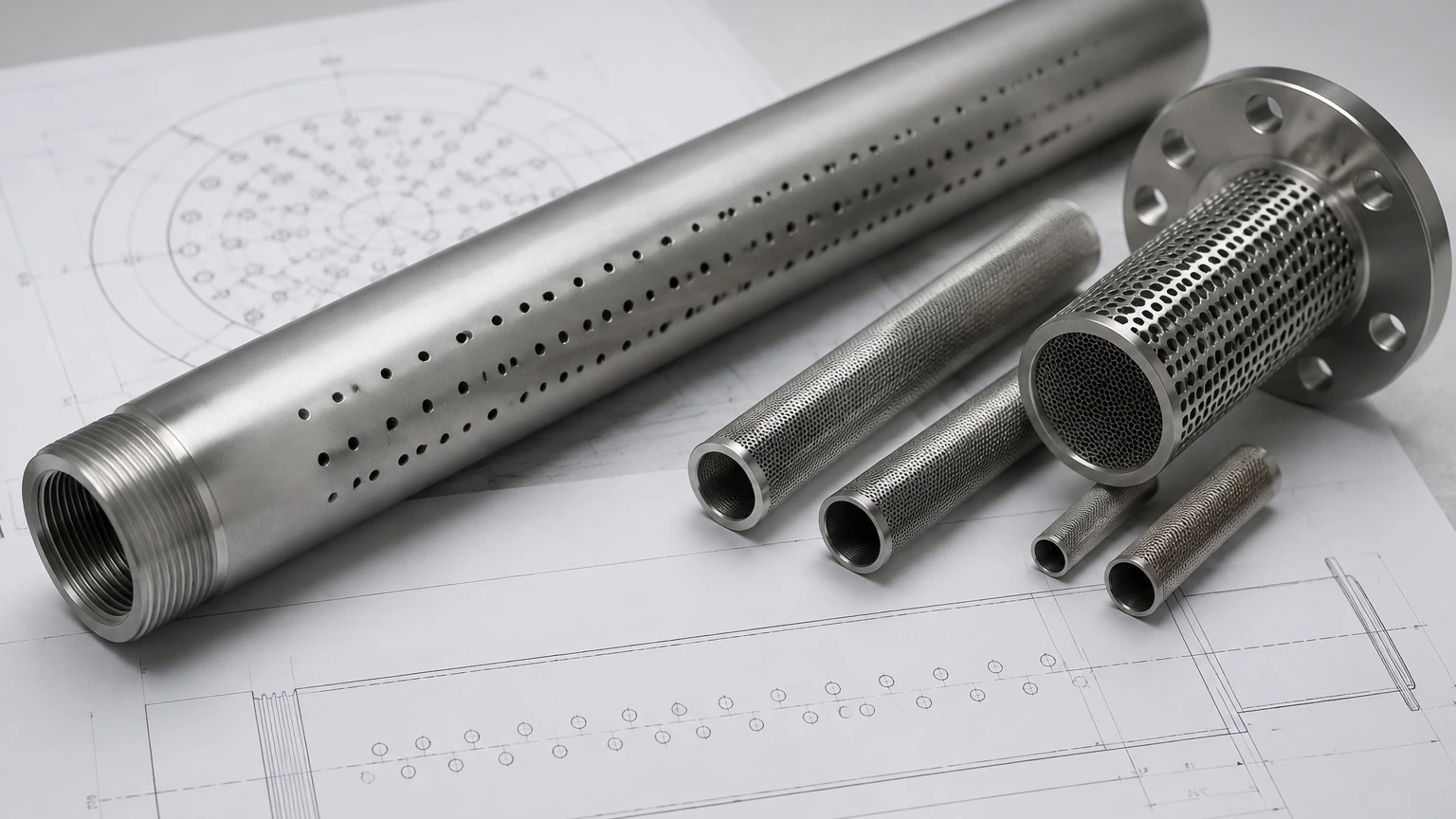
One of the first decisions in sparger design is choosing between a sintered metal element and a traditional drilled pipe. While drilled pipes are simple to manufacture and have low initial costs, they often fall short in high-efficiency applications.
1. Drilled Pipe Spargers: These consist of a pipe with holes drilled at regular intervals. They produce relatively large bubbles and are prone to uneven gas distribution. They are typically used in applications where high mass transfer is not the primary goal, such as simple tank agitation.
2. Sintered Metal Spargers: These are fabricated from metal powders that are pressed and sintered to create a porous structure. The resulting media has thousands of tiny, interconnected pathways. This design ensures that gas is distributed evenly across the entire surface of the element, producing millions of micro-bubbles.
From an engineering perspective, sintered metal spargers are superior for processes requiring rapid gas absorption. They reduce gas consumption by ensuring more of the gas reacts with the liquid before reaching the surface and escaping into the headspace.
Critical Engineering Parameters for Sparger Calculation
To ensure a sparger design meets the operational requirements of a facility, several calculations must be performed during the engineering phase. These parameters include the Gas Exit Velocity, the Gas Flux, and the Pressure Drop.
Gas Exit Velocity and Flux
The velocity at which gas exits the pores of the sparger affects the bubble size. If the velocity is too high, bubbles tend to coalesce (merge) immediately upon leaving the surface, forming larger bubbles and defeating the purpose of a fine-pore sparger. Engineers typically aim for a "laminar" exit velocity to maintain bubble individuality.
Gas flux—the volume of gas passing through a unit area of the sparger per unit of time—must also be optimized. A common design error is undersizing the sparger surface area, which forces a high flux and leads to bubble coalescence and increased fouling rates.
Overcoming Hydrostatic Pressure
The sparger design must account for the liquid height in the vessel. The gas supply pressure must be high enough to overcome both the pressure drop of the porous media and the hydrostatic head of the liquid. In deep tanks, this requires careful coordination between the plant's compressed gas system and the sparger’s flow resistance characteristics.
Customization and Application-Specific Configurations
No two industrial processes are identical, which is why customization is a vital aspect of sparger design. The geometry of the sparger must be tailored to the vessel in which it is installed. Common configurations include:
* Static Spargers: Fixed in place at the bottom of a tank or integrated into a pipeline (in-line sparging).
* Intrusive Spargers: Mounted on a flange and extending into the center of a vessel to ensure gas is introduced into the zone of highest turbulence (often near an agitator).
* Ring Spargers: Shaped like a donut to provide gas distribution across a wide radius, commonly used in large-scale fermenters.
Customization also extends to the connection types. Engineers must specify NPT, BSP, or flanged connections that match existing piping standards to ensure a leak-free installation. Furthermore, the length and diameter of the porous element can be adjusted to achieve the target surface area within the physical constraints of the reactor.
Maintenance and Performance Evaluation
A well-designed sparger should provide consistent performance over a long service life. However, because spargers operate with fine pores, they are susceptible to fouling, especially in liquids containing solids or biological matter.
Cleaning and Regeneration
In the food, beverage, and pharmaceutical industries, spargers must be compatible with CIP (Clean-in-Place) protocols. Sintered stainless steel spargers are particularly advantageous here because they can be cleaned using ultrasonic baths, back-pulsing with high-pressure gas, or chemical solvents.
Engineers should monitor the differential pressure across the sparger. A steady increase in the pressure required to maintain a constant gas flow rate is a primary indicator that the sparger is becoming clogged. Establishing a preventative maintenance schedule based on these observations can prevent unexpected process downtime and ensure that mass transfer efficiency remains within the design specifications.
Total Cost Considerations in Sparger Selection
When evaluating sparger design, it is important to look beyond the initial purchase price. The total cost of ownership (TCO) includes gas costs, energy consumption of the compressor, maintenance labor, and the potential cost of lost yield due to inefficient mass transfer.
A high-quality sintered metal sparger may have a higher upfront cost than a drilled pipe, but the reduction in gas waste and the improvement in reaction speed often result in a rapid return on investment. By selecting a manufacturer with deep expertise in custom filtration and metal components, purchasing teams can ensure they receive a product that is engineered for their specific industrial challenges.
For those in the process of specifying filtration or sparging components, reviewing product options and application support on the Main Page can provide the necessary technical foundation to move from the design phase to implementation. Reliable filtration solutions are the backbone of efficient industrial operations, and the right sparger design is a key component of that success.
