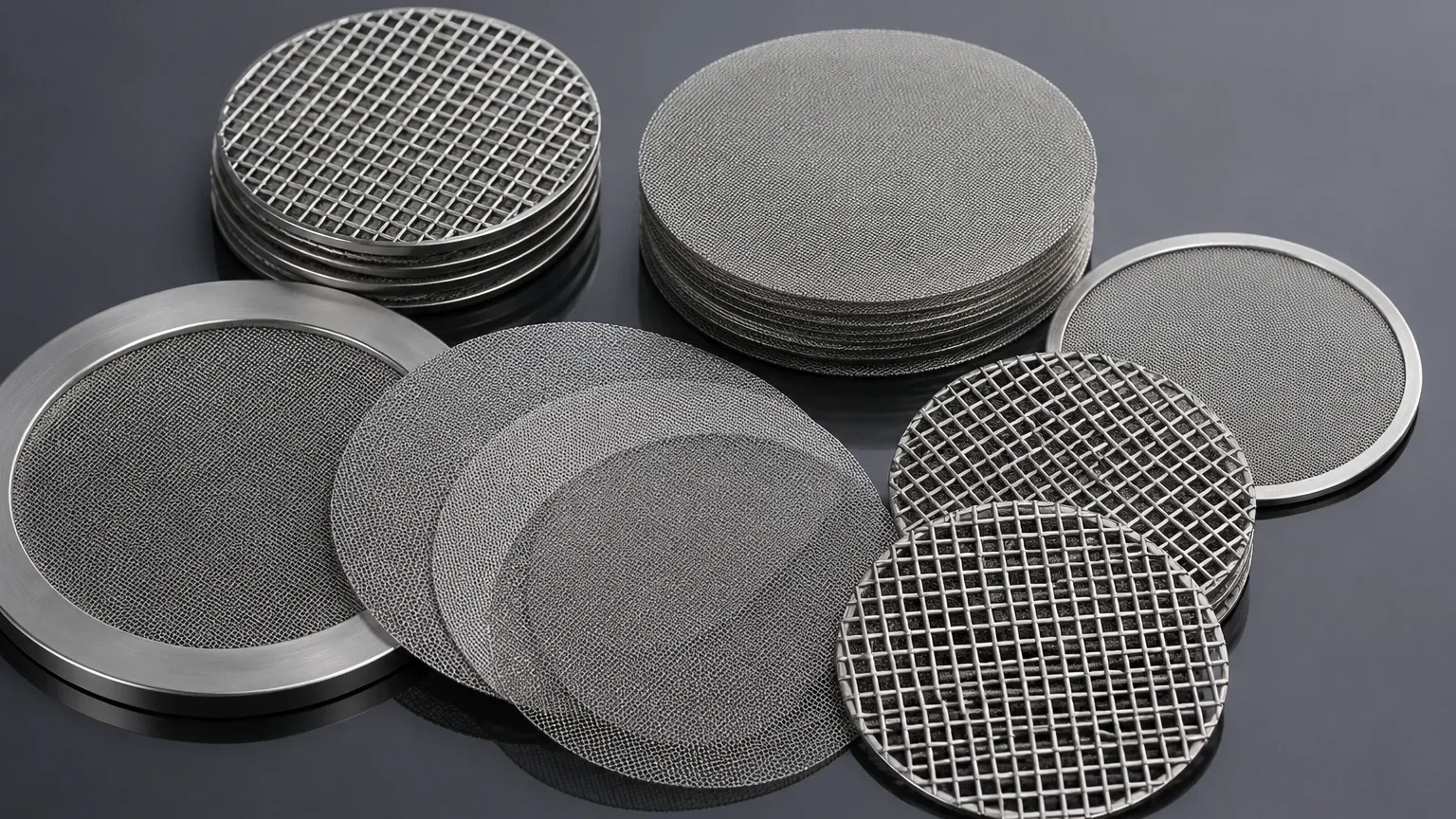
6 Filter
In industrial filtration, the term "6 filter" frequently refers to one of the most common dimensional standards for circular filter media: the 6-inch diameter filter disc. These components are critical in high-pressure environments, such as plastic extrusion, chemical processing, and hydraulic systems, where precision and structural integrity are paramount. Selecting the correct Filter Discs & Packs involves more than just matching a diameter; it requires a deep understanding of metallurgy, weave patterns, and fluid dynamics to ensure the longevity of the equipment and the purity of the final product.
Technical Specifications of 6-Inch Filter Discs
When engineers specify a 6 filter for industrial applications, they are typically looking for a stainless steel wire mesh disc designed to withstand significant differential pressure. The performance of these discs is dictated by the material composition and the specific weave of the wire mesh.
Material Selection
Stainless steel is the industry standard due to its resistance to corrosion and high temperatures.
- AISI 304: Suitable for general industrial use where basic corrosion resistance is required.
- AISI 316/316L: The preferred choice for chemical processing and pharmaceutical applications. The addition of molybdenum in 316 stainless steel provides superior resistance to chlorides and acidic environments. The "L" (low carbon) variant is essential when the filter packs require extensive welding, as it prevents carbide precipitation during the welding process.
- Specialty Alloys: For extreme environments, materials like Monel, Inconel, or Hastelloy may be utilized to handle highly corrosive fluids or temperatures exceeding 500°C.
Weave Types and Filtration Accuracy
The "6 filter" component can be manufactured using various weave styles, each offering different benefits regarding flow rate and particle retention:
- Plain Weave: The most common and cost-effective, providing a straight-through flow path suitable for larger particle sizes.
- Dutch Weave (Plain and Twilled): This weave uses heavier warp wires and finer shute wires, creating a dense, strong mesh. It is ideal for high-pressure applications where fine filtration (down to 5-10 microns) is required without sacrificing the structural strength of the disc.
- Twill Weave: Allows for the use of heavier wires in a given mesh count, increasing the durability of the filter disc for abrasive media.
Engineering Considerations for Filter Discs & Packs
Transitioning from a single 6 filter disc to multi-layer Filter Discs & Packs is a common engineering decision made to optimize the filtration process. A single layer of mesh may be sufficient for coarse straining, but precision industrial processes usually require a graduated density approach.
Multi-Layer Construction
A typical 6-inch filter pack consists of several layers of wire mesh spot-welded together or bound by a metal rim. The layers are usually arranged in a specific sequence:
1. Support Layer: A coarse, heavy-duty mesh that provides mechanical strength to the pack, preventing the finer layers from deforming under high pressure.
2. Drainage Layer: Positioned between the support and filtration layers to ensure even fluid distribution and minimize stagnant zones.
3. Filtration Layer: The primary layer that determines the micron rating of the pack.
4. Pre-filter Layer: A slightly coarser layer placed upstream of the filtration layer to capture larger contaminants, thereby extending the service life of the primary filter.
Pressure Drop and Flow Rates
One of the most critical calculations for an engineer is the clean pressure drop ($ΔP$) across the 6 filter. As fluid passes through the mesh, resistance causes a drop in pressure. If the initial $ΔP$ is too high, the system will reach its terminal pressure limit prematurely, necessitating a filter change. Factors influencing this include the open area percentage of the mesh, the viscosity of the fluid, and the velocity of the flow. In a 6-inch disc, the effective filtration area (EFA) must be maximized to maintain efficient throughput.
Customization and Manufacturing Precision
For many OEMs, a standard 6 filter disc is not enough; customization is required to fit specific housing designs or to meet unique process requirements. Kaifil specializes in providing these tailored solutions, ensuring that every dimension and material property aligns with the end-user's technical data sheet.
Edge Finishing and Binding
How the edges of a 6-inch filter pack are finished can significantly impact its performance and safety within a machine:
- Spot-Welded Packs: Multiple layers are joined at several points. This is cost-effective but may allow for some bypass if the housing seal is not perfect.
- Rimmed Packs (Framed): The edges are encased in a metal U-binding (usually aluminum, stainless steel, or copper). This provides a superior seal against the filter housing, preventing "edge leakage" and making the packs easier to handle during installation and removal.
- Sintered Discs: For the most demanding high-pressure applications, the layers of mesh are sintered (diffusion-bonded) together. This creates a monolithic structure where no individual wires can migrate, which is essential in pharmaceutical and food-grade applications.
Common Risks and Quality Assurance
In the procurement of Filter Discs & Packs, several risks must be mitigated to avoid system failure or product contamination.
1. Wire Migration: In low-quality 6 filter products, individual wires may break loose from the mesh and enter the downstream flow. This is a catastrophic failure in industries like food processing or precision hydraulics. High-quality manufacturing processes, such as ultrasonic cleaning and rigorous edge finishing, prevent this.
2. Inaccurate Micron Ratings: Not all mesh is created equal. A "20-micron" mesh from an unverified source may have inconsistent pore sizes. Verification through bubble point testing or microscopic inspection is necessary for critical applications.
3. Material Substitution: Using 304 stainless steel where 316L was specified can lead to rapid corrosion and filter breakthrough. Material traceability and MTR (Material Test Reports) are essential for B2B procurement.
Applications of 6-Inch Filter Discs
The versatility of the 6-inch diameter makes it a staple in several high-output industries:
- Plastic and Polymer Extrusion: 6 filter packs are used in screen changers to remove unmelted resins and contaminants from the melt stream. This ensures the quality of films, fibers, and profiles.
- Oil and Gas: In hydraulic systems, these discs protect sensitive valves and pumps from particulate matter that could cause mechanical wear.
- Chemical Processing: Used for catalyst recovery and the filtration of aggressive solvents where synthetic media would fail.
- Food and Beverage: Employed in the filtration of edible oils and syrups, where high-temperature resistance and cleanability (CIP) are required.
Maintenance and Total Cost of Ownership
While the initial purchase price of a 6 filter is a factor, the total cost of ownership (TCO) is driven by the replacement cycle and the impact on machine downtime.
Cleaning vs. Replacement
Stainless steel Filter Discs & Packs are often cleanable. Techniques such as ultrasonic cleaning, burnout ovens (for polymers), or chemical baths can restore the filter to near-original condition. However, each cleaning cycle slightly degrades the mechanical integrity of the mesh. Engineers must establish a maximum number of cleaning cycles before the pack is decommissioned to prevent in-service failure.
Optimizing the Replacement Cycle
By monitoring the pressure differential across the filter, operators can determine the optimal time for replacement. Changing the filter too early increases consumable costs, while changing it too late risks damaging the pump or causing a bypass. Implementing a multi-layer 6 filter design with a dedicated pre-filter layer often extends the time between changes by 30-50%, providing significant operational savings.
Conclusion for Purchasing and Engineering Teams
When sourcing a 6 filter, it is vital to confirm the specific operating conditions with the manufacturer. This includes the maximum operating temperature, the chemical composition of the fluid, the desired micron rating, and the peak flow rate.
As a professional manufacturer, Kaifil provides the technical expertise required to navigate these variables. Whether you require a single-layer disc for a simple strainer or a complex, multi-layer sintered pack for a high-pressure extruder, the focus remains on precision and durability. For detailed specifications or to discuss custom filtration requirements, engineers and purchasing teams should review the available options for Filter Discs & Packs to ensure their systems operate at peak efficiency.