


7 Filters
In the landscape of industrial liquid and gas processing, the precision of filtration components directly dictates the quality of the final product and the longevity of downstream equipment. Among the most critical components used in polymer extrusion, chemical processing, and pharmaceutical manufacturing are Filter Discs & Packs. These elements are not merely consumables; they are engineered barriers designed to operate under extreme pressures and temperatures.
When engineers and procurement teams evaluate filtration systems, they often look for a comprehensive framework to ensure the selected components meet the rigorous demands of their specific applications. This guide examines the "7 filters" of technical evaluation—seven critical criteria that define the performance, durability, and cost-effectiveness of industrial filter discs and packs.
Understanding the Role of Filter Discs & Packs in Industrial Systems
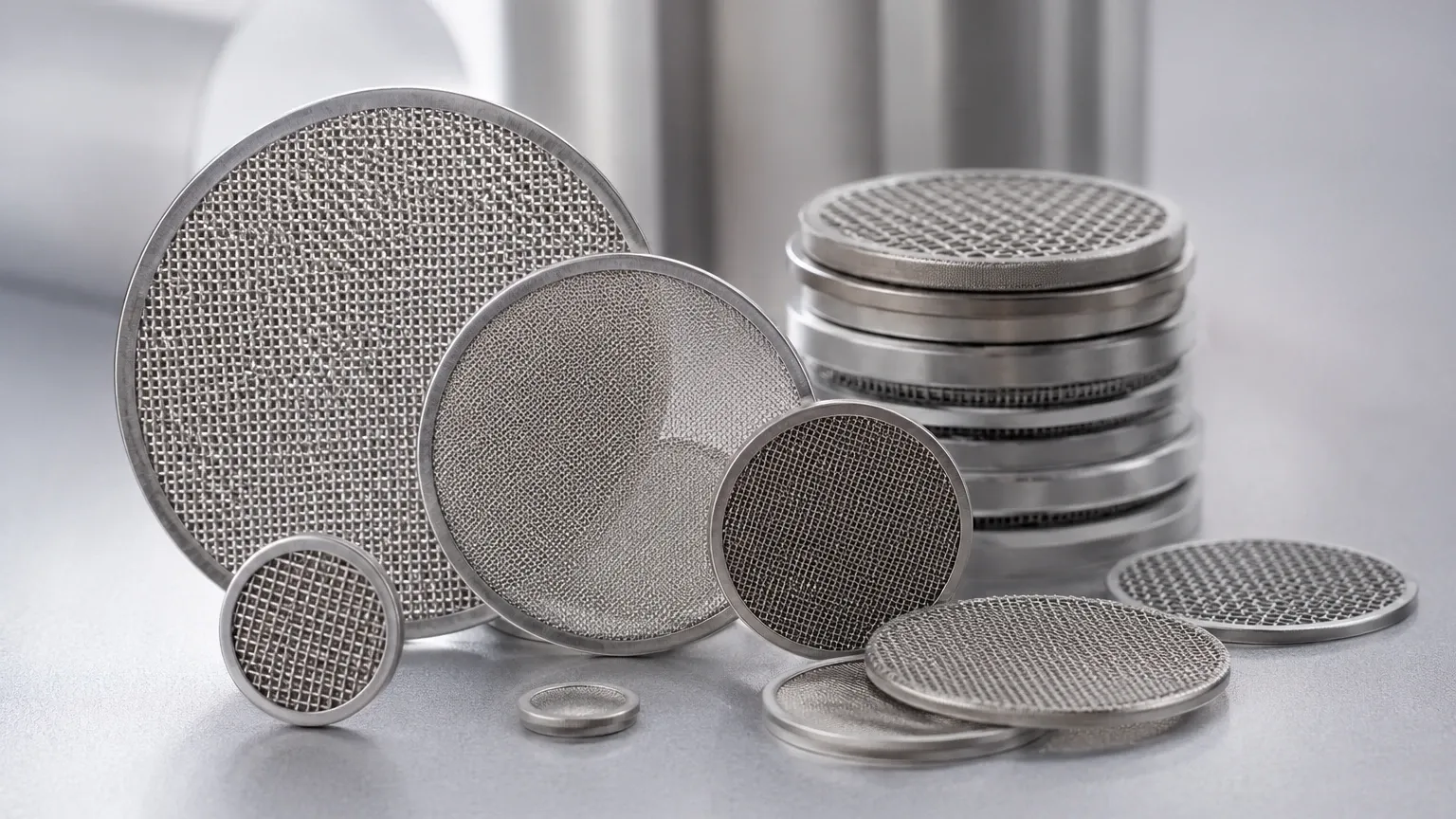
Filter discs and packs are typically constructed from multiple layers of stainless steel wire mesh. These layers are either spot-welded together or sintered to form a robust, integrated unit. Their primary function is to remove contaminants from high-viscosity fluids, such as molten plastics, or to provide fine particulate removal in gas and liquid streams.
Unlike standard filters, these packs must maintain their structural integrity while subjected to high differential pressures. The complexity of their design allows for a "depth filtration" effect, where different layers serve different purposes—from coarse pre-filtration to fine polishing. Understanding the technical nuances of these components is the first step in optimizing a filtration process.
1. Material Metallurgy and Chemical Compatibility
The first of the 7 filters for evaluation is material selection. In industrial environments, the chemical composition of the fluid being filtered dictates the alloy required. Stainless steel is the industry standard due to its corrosion resistance and mechanical strength.
* SS 304: Suitable for general industrial applications where basic corrosion resistance is required. It is cost-effective but may struggle in highly acidic or chloride-rich environments.
* SS 316L: The preferred choice for the pharmaceutical and food industries. The addition of molybdenum provides enhanced resistance to pitting and crevice corrosion, particularly in saline or chemical processing environments. The "L" denotes low carbon, which improves weldability and prevents sensitization during the manufacturing of the filter packs.
* Specialty Alloys: For extreme conditions, materials like Hastelloy, Monel, or Inconel may be used to withstand highly corrosive media or temperatures exceeding 500°C.
Engineers must confirm that the alloy chosen will not leach contaminants into the process stream or degrade prematurely, which could lead to catastrophic system failure.
2. Weave Geometry and Filtration Accuracy
The second filter involves the geometry of the wire mesh weave. The weave pattern determines the pore size, permeability, and mechanical stability of the disc.
* Plain Weave: The most common type, where each warp wire crosses over and under each weft wire. It offers high flow rates and is ideal for coarse filtration.
* Dutch Weave (Plain and Twilled): These weaves utilize a higher density of smaller diameter wires in one direction. This creates a "tortuous path" for particles, allowing for much finer filtration (down to 1–5 microns) while maintaining a high degree of mechanical strength.
* Twill Weave: Allows for the use of heavier wires in a given mesh count, providing increased durability for high-pressure applications.
When selecting Filter Discs & Packs, the micron rating must be clearly defined as either "nominal" (an approximate value) or "absolute" (the size of the largest particle that can pass through). For critical applications, absolute ratings are mandatory to ensure consistent output quality.
3. Layering Configuration and Sintering Technology
Industrial filters are rarely single-layered. The third filter of evaluation is the internal structure of the pack. A high-performance filter pack usually consists of several layers:
1. Filtration Layer: The fine mesh that determines the micron rating.
2. Support Layer: A coarser mesh that provides structural rigidity to the filtration layer, preventing it from deforming under pressure.
3. Drainage Layer: Facilitates the flow of the filtrate away from the filtration zone, reducing the overall pressure drop.
4. Protective Layer: Shields the finer meshes from mechanical damage during installation or cleaning.
Sintering is a critical process where these layers are bonded together through heat and pressure without the use of binders. Sintered filter packs offer superior resistance to delamination and can withstand repeated cleaning cycles better than spot-welded alternatives.
4. Flow Rate and Pressure Drop (Delta P)
The fourth filter focuses on the fluid dynamics of the component. Every filter introduces a degree of resistance to the flow, known as the pressure drop (ΔP). An optimized filter pack must balance filtration efficiency with permeability.
If the pressure drop is too high, it forces the pumps to work harder, increasing energy consumption and potentially causing the filter medium to collapse. Factors influencing ΔP include the open area of the mesh, the viscosity of the fluid, and the total surface area of the disc. In many cases, increasing the number of discs in a pack or using a pleated design can increase the surface area, thereby reducing the pressure drop and extending the service life of the filter.
5. Mechanical Resilience and Burst Pressure
In applications like polymer melt filtration, the filter discs are subjected to immense hydrostatic pressure. The fifth filter is the mechanical resilience of the assembly.
Engineers must evaluate the "burst pressure"—the point at which the filter medium fails. This is particularly important during "pressure spikes" that occur when a filter begins to clog. A well-designed pack will utilize heavy-duty support meshes to ensure that even as the filtration layer accumulates debris, the overall structure remains intact. Failure at this stage can lead to "media migration," where broken wires or unfiltered contaminants enter the downstream process, causing extensive damage to expensive machinery like extrusion dies or injection molds.
6. Edge Finishing and Sealing Integrity
The sixth filter is often overlooked: the treatment of the disc edges. Without proper sealing, fluid can bypass the filtration media entirely, rendering the filter useless.
* Framed Edges: The mesh layers are encased in a metal rim (usually aluminum or stainless steel). This provides a secure sealing surface and makes the discs easier to handle.
* Welded Edges: The edges are ultrasonically or plasma-welded to fuse the layers together. This is common in applications where a low profile is required.
* Raw Edges: Used in specific housings where the compression of the housing itself provides the seal. However, this carries a risk of wire fraying.
Choosing the right edge treatment ensures that 100% of the process fluid passes through the mesh, maintaining the integrity of the filtration process.
7. Cleanability and Total Cost of Ownership
The final of the 7 filters is the long-term economic viability of the component. While disposable filters may have a lower initial cost, stainless steel Filter Discs & Packs are often designed to be cleaned and reused.
Cleaning methods such as ultrasonic cleaning, chemical baths, or vacuum burnout (for polymers) can restore the filter to near-original permeability. The ability to undergo multiple cleaning cycles significantly reduces the "Total Cost of Ownership" (TCO). When evaluating suppliers, engineers should ask for data on the recommended cleaning protocols and the expected number of cycles the filter can withstand before the mesh structure begins to degrade.
Avoiding Common Risks in Filter Procurement
When sourcing industrial filters, several risks can compromise the efficiency of a production line. The most common is the use of sub-standard wire mesh that does not meet the specified alloy requirements. This leads to premature corrosion and potential product contamination.
Another risk is poor layer alignment in multi-layer packs. If the support layers are not correctly oriented, they can block the pores of the filtration layer, leading to an artificially high pressure drop from the moment of installation. To mitigate these risks, it is essential to work with manufacturers who provide material certifications (MTRs) and perform rigorous bubble-point testing to verify the integrity of the micron rating.
Conclusion: Selecting the Right Partner
Navigating the complexities of industrial filtration requires more than just picking a part number from a catalog. It requires a deep understanding of how these 7 filters—material, weave, structure, flow, strength, sealing, and cleanability—interact within a specific process environment.
For engineers looking to optimize their systems, the focus should be on precision and customization. Whether you are dealing with high-temperature chemical vapors or high-viscosity food products, the right filtration component can mean the difference between seamless production and frequent, costly downtime. By applying these seven technical criteria to your selection process, you ensure that your filtration solution is not just a barrier, but a high-performance asset to your operation.
