


Filter 99
In the landscape of industrial filtration, achieving high-purity results often hinges on the precise selection of media and the configuration of the filtration assembly. The term "filter 99" frequently appears in technical specifications as a shorthand for 99% efficiency ratings or specific high-retention performance standards required in critical manufacturing processes. Whether used in polymer extrusion, chemical processing, or hydraulic systems, achieving a 99% retention rate requires a deep understanding of wire mesh mechanics, material compatibility, and structural integrity.
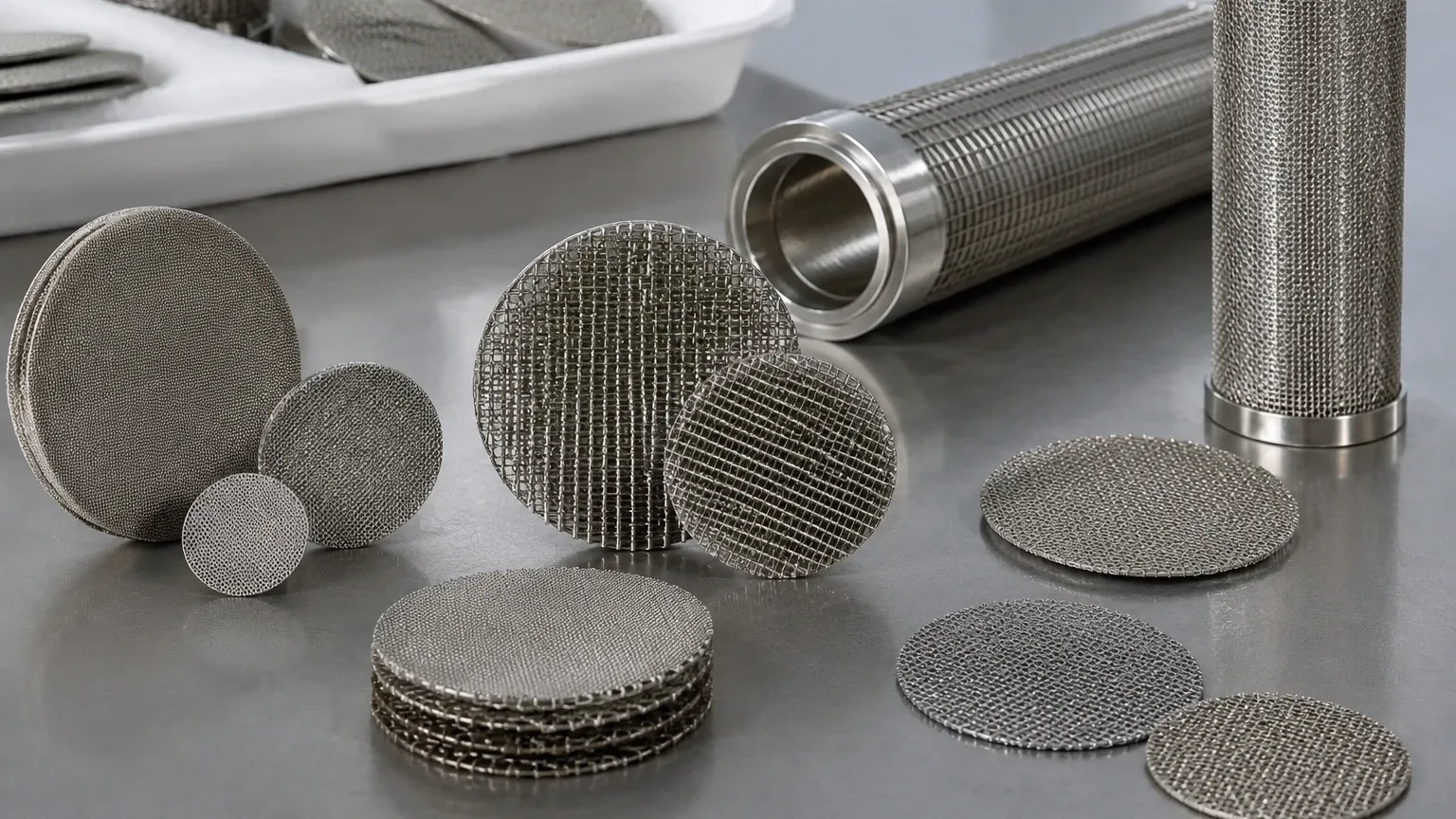
For engineers and procurement teams, the transition from standard filtration to high-efficiency performance involves balancing flow rates against the physical constraints of the filter media. Filter Discs & Packs serve as the primary solution for these demanding environments, providing the necessary surface area and multi-layered depth required to capture fine particulates without causing excessive pressure drops.
Understanding Efficiency Ratings in Industrial Filtration
When discussing a filter 99 designation, it is essential to distinguish between nominal and absolute filtration ratings. A nominal rating refers to a filter's ability to retain a majority percentage of particles of a specific size, whereas an absolute rating implies that 99% or more of particles above a certain micron size are captured under controlled test conditions.
In liquid and gas filtration, the Beta Ratio (β) is the standard metric used to define efficiency. A filter with a Beta ratio of 100 at a specific micron level (e.g., β10 = 100) indicates that for every 100 particles of 10 microns entering the filter, only one passes through, resulting in 99% efficiency. Achieving this level of precision requires high-quality stainless steel wire mesh, where the aperture size is strictly controlled during the weaving process. For applications requiring a filter 99 performance level, multi-layer sintered or spot-welded packs are often preferred because they provide a graduated filtration effect, capturing larger debris on the outer layers while the inner layers perform the final high-precision separation.
The Role of Filter Discs & Packs in High-Precision Applications
Filter discs and packs are engineered components designed to fit into specific housings, such as screen changers in plastic recycling or spinnerets in synthetic fiber production. Their primary role is to provide a reliable barrier against contaminants that could compromise the quality of the final product or damage downstream equipment.
Single-Layer vs. Multi-Layer Construction
Single-layer filter discs are typically used for coarse filtration or as support layers. However, when a filter 99 efficiency is required, multi-layer packs are the industry standard. These packs consist of several layers of wire mesh with varying mesh counts. By stacking different weaves—such as a fine Dutch weave for the filtration layer and a coarse plain weave for support—manufacturers can create a robust filter that maintains its shape under high pressure while delivering exceptional micron-level accuracy.
Rimmed and Spot-Welded Designs
To ensure that fluid does not bypass the filter media, the edges of the filter discs must be properly finished. Spot-welded packs keep the layers aligned during installation and operation, while rimmed or aluminum-bound packs provide a mechanical seal that prevents edge leakage. In high-pressure environments, the structural integrity provided by these finishes is critical to maintaining the 99% efficiency rating over the lifespan of the filter.
Engineering Considerations for Achieving 99% Filtration Accuracy
Selecting a filter for high-efficiency applications involves more than just picking a micron size. Engineers must consider several technical variables that influence the performance of a filter 99 system.
1. Mesh Weave Types: The geometry of the weave determines the flow characteristics and the particle retention capability. Plain weaves are common for general filtration, but Dutch weaves (Plain Dutch, Twilled Dutch) offer a more tortuous path for fluids, which is often necessary to achieve 99% efficiency at smaller micron ratings (under 20 microns).
2. Wire Diameter and Aperture: The ratio between the wire diameter and the open area (aperture) affects the structural strength and the "dirt-holding capacity" of the filter. A higher wire diameter increases durability but may reduce the available open area, leading to higher initial pressure drops.
3. Material Selection: Stainless steel 304 and 316L are the most common materials due to their corrosion resistance and thermal stability. In chemical or pharmaceutical applications where the filter 99 performance must be maintained in aggressive environments, 316L is typically preferred for its superior resistance to pitting and stress corrosion cracking.
4. Pressure Drop (ΔP): Every filter introduces a resistance to flow. As the filter captures particles and approaches its 99% retention threshold, the pressure drop across the media will increase. Engineering the pack to maximize surface area is the most effective way to manage ΔP and extend the service life of the component.
Common Applications Requiring High-Efficiency Filter Discs
The demand for filter 99 performance is prevalent in industries where even minor contamination can lead to catastrophic failure or significant product loss.
Polymer and Plastic Extrusion
In the production of high-quality films and fibers, contaminants in the polymer melt can cause "breaks" or surface defects. Multi-layer filter packs are used in screen changers to remove degraded polymer gels and foreign particles, ensuring that the melt reaching the die is consistent and pure.
Pharmaceutical and Food Processing
These industries require filtration solutions that are not only efficient but also hygienic. Stainless steel filter discs are ideal because they can be cleaned, sterilized, and reused. Achieving 99% efficiency in these sectors often relates to the removal of bacteria or specific precipitates during the purification process.
Hydraulic and Lubrication Systems
High-pressure hydraulic systems rely on clean oil to prevent wear on valves and pumps. A filter 99 rated disc or pack ensures that the oil remains within the required ISO cleanliness codes, protecting expensive machinery from abrasive wear caused by fine metallic particles.
Maintenance and Replacement Cycles for Critical Filtration
To maintain a filter 99 efficiency level, a rigorous maintenance and monitoring schedule is necessary. Unlike disposable synthetic filters, stainless steel filter discs and packs offer the advantage of being cleanable in many applications, though this depends on the nature of the contaminant.
Monitoring the differential pressure is the most reliable method for determining when a filter pack needs attention. Once the pressure drop reaches a predetermined terminal limit, the pack should be replaced or cleaned. In polymer extrusion, this is often automated through continuous screen changers. In batch processes, engineers must calculate the expected dirt-holding capacity to prevent the filter from reaching a "blinded" state, which could lead to media deformation or bypass.
When cleaning is an option, methods such as ultrasonic cleaning, chemical bath, or controlled burnout (for polymers) are used. However, it is vital to inspect the media after cleaning to ensure that the wire mesh has not been damaged, as any breach in the weave would immediately void the 99% efficiency rating.
Selecting the Right Filter Discs & Packs for Your System
Choosing the correct filtration component requires a collaborative approach between the end-user and the manufacturer. When specifying a filter 99 solution, the following data points should be confirmed:
* Fluid Characteristics: Viscosity, temperature, and chemical composition.
* Contaminant Profile: The size, shape, and concentration of the particles being removed.
* Operating Pressure: Both the normal operating pressure and the maximum allowable pressure drop.
* Mechanical Dimensions: Diameter, thickness, and tolerances required for the housing.
By focusing on these technical parameters, purchasing teams can ensure they are acquiring Filter Discs & Packs that not only meet the immediate filtration needs but also provide a lower total cost of ownership through durability and consistent performance. High-efficiency filtration is not just about the initial capture rate; it is about the reliability of that performance over thousands of operational hours in demanding industrial environments.
In conclusion, achieving a filter 99 standard is a matter of precision engineering. By utilizing high-grade stainless steel mesh and advanced multi-layer pack designs, industrial operators can protect their equipment and ensure product quality. Understanding the relationship between weave types, material properties, and pressure dynamics is the key to selecting the most effective filtration solution for any high-precision application.
