


9 Filters
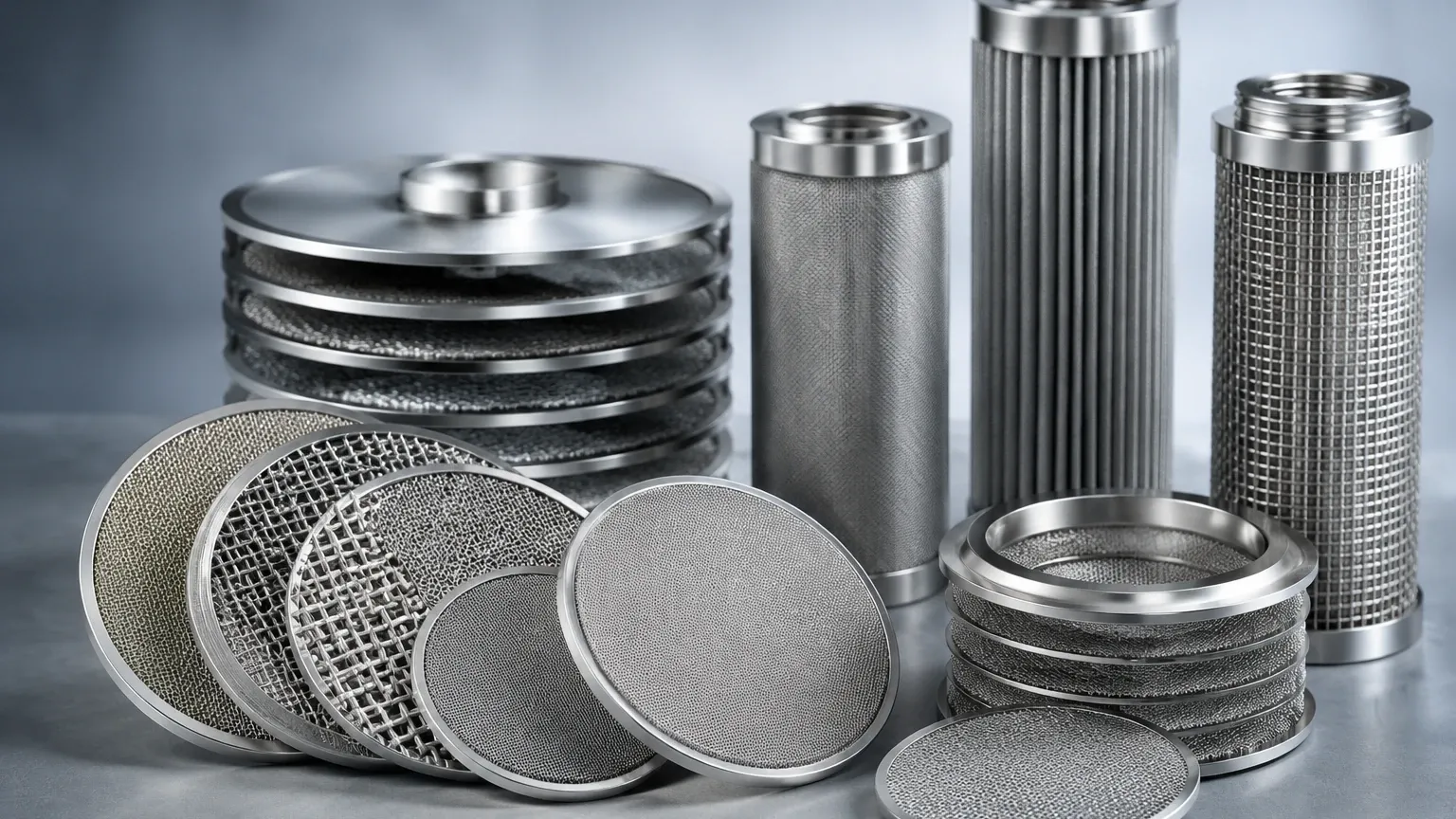
In industrial filtration, the selection of the correct media configuration is a critical engineering decision that directly impacts process efficiency, equipment longevity, and product purity. Within the specialized field of stainless steel filtration, there are 9 filters—or more accurately, nine distinct configurations of filter discs and packs—that serve as the backbone for chemical processing, polymer extrusion, and hydraulic systems. Understanding these variations is essential for engineers who must balance filtration accuracy with mechanical strength and flow characteristics.
At Kaifil, we manufacture high-performance Filter Discs & Packs designed to meet the rigorous demands of industrial environments. This guide examines the technical specifications, structural differences, and application-specific advantages of these nine essential filtration components.
Understanding the Role of Filter Discs & Packs in Industrial Systems
Filter discs and packs are stationary filtration components typically used in batch or continuous flow systems where space is limited but high precision is required. Unlike large-scale cartridge filters, discs are often integrated into housings, extruders, or valve assemblies. Their primary function is to remove solid contaminants from liquids, gases, or molten polymers.
The performance of these filters is governed by the weave type of the wire mesh, the number of layers, and the method of assembly. Engineers must consider the "9 filters" framework—the nine primary categories of disc and pack designs—to determine which configuration provides the optimal balance of micron retention and pressure drop (ΔP).
1. Single-Layer Wire Mesh Discs
The most fundamental configuration is the single-layer wire mesh disc. These are typically stamped from high-quality stainless steel wire cloth, such as AISI 304 or 316L.
* Technical Characteristics: Available in plain weave, twill weave, or Dutch weave. Plain weave offers the highest flow rates, while Dutch weave provides finer filtration ratings.
* Applications: Used in low-pressure applications where simple straining is required or as a secondary safety filter in hydraulic lines.
* Engineering Note: While cost-effective, single-layer discs lack the structural rigidity for high-pressure environments and are prone to deformation if the differential pressure exceeds the mesh's tensile limits.
2. Multi-Layer Spot-Welded Filter Packs
When a single layer cannot provide the necessary filtration depth or strength, engineers turn to multi-layer spot-welded packs. These consist of several layers of wire mesh with varying micron ratings, joined together at specific points via resistance welding.
* Structure: Typically follows a sequence of a coarse support layer, a fine filtration layer, and another coarse drainage layer. This "sandwich" construction protects the delicate fine mesh from mechanical damage.
* Performance: The graduated density allows for depth filtration, capturing larger particles in the outer layers and finer particles in the core, which extends the service life before cleaning is required.
3. Rimmed and Framed Filter Discs
In applications where bypass (leakage around the edges of the filter) must be eliminated, rimmed or framed discs are the standard choice. The edges of the mesh are encased in a metal rim, usually made of aluminum, copper, or stainless steel.
* Functionality: The rim acts as a gasket, providing a tight seal within the filter housing. It also prevents the fraying of wire mesh edges, which is critical in food and pharmaceutical processing where metal fragment contamination is a risk.
* Customization: Rims can be engineered with specific thicknesses to match the tolerances of the seating hardware.
4. Sintered Wire Mesh Filter Discs
Sintering is a process where multiple layers of wire mesh are fused together using heat and pressure without the use of binders. This creates a monolithic structure that is significantly stronger than traditional mesh.
* Advantages: Sintered discs offer excellent mechanical stability and do not suffer from "pore migration" under high pressure. They are highly resistant to backwashing and ultrasonic cleaning, making them a sustainable choice for long-term industrial use.
* Filtration Range: Sintered media can achieve precise filtration down to 1 micron while maintaining high porosity.
5. Pleated Filter Discs
For systems where the housing diameter is fixed but the required flow rate is high, pleated filter discs are utilized. By pleating the mesh, the effective filtration area (EFA) is increased by up to 300% compared to a flat disc of the same diameter.
* Engineering Benefit: Increased EFA results in a lower face velocity, which reduces the pressure drop and increases the dirt-holding capacity. This is particularly useful in high-viscosity fluid filtration, such as polymer melts.
6. Perforated Metal Support Filters
In heavy-duty industrial processes, wire mesh alone may fail under the weight of the contaminant cake or the force of the fluid. Perforated metal discs serve as a robust support structure.
* Design: These discs feature a pattern of punched holes (round, square, or hexagonal) and are often used as a base for finer mesh layers.
* Selection Criteria: The open area percentage of the perforated plate must be calculated to ensure it does not become the primary restriction in the flow path.
7. Etched Foil Precision Filters
For specialized micro-filtration, etched foil discs are used. These are produced via chemical milling (photo-etching), allowing for extremely precise hole geometries and patterns that are impossible to achieve with traditional weaving.
* Surface Filtration: Unlike wire mesh, which has depth, etched foils provide pure surface filtration. This makes them exceptionally easy to clean and ideal for applications requiring exact particle size cut-offs, such as in laboratory testing or specialized fuel filtration.
8. Wedge Wire Filter Discs
Wedge wire, or V-wire, discs are constructed from triangular-shaped stainless steel wires. This design creates a slot that widens inwardly, which significantly reduces the risk of clogging (blinding).
* Durability: These are the most robust of the 9 filters discussed. They are used in high-load applications like pulp and paper processing or wastewater treatment where abrasive solids are present.
* Cleaning: The V-shaped profile allows for highly efficient backpulsing.
9. Custom-Shaped Geometric Filter Packs
Industrial equipment often requires non-circular filtration components. Custom-shaped packs—including oval, kidney-shaped, rectangular, or ring-style discs—are engineered to fit specific machine geometries.
* OEM Integration: These are frequently developed as OEM components for specific extruder brands or hydraulic manifolds.
* Manufacturing Precision: At Kaifil, we utilize advanced CNC and laser cutting technology to ensure that custom shapes maintain dimensional stability and edge integrity, even in complex multi-layer configurations.
Engineering Considerations for Selecting Filter Discs & Packs
Selecting the right configuration from these 9 filters requires a deep dive into the operating parameters of the system. Engineers should evaluate the following factors before finalizing a specification:
Material Selection and Chemical Compatibility
While Stainless Steel 304 and 316L are the industry standards due to their corrosion resistance and thermal stability, certain environments require exotic alloys. For high-temperature or highly corrosive chemical processing, materials like Hastelloy, Inconel, or Monel may be necessary. Ensuring the material is compatible with the process fluid prevents premature failure due to pitting or stress corrosion cracking.
Micron Rating vs. Permeability
There is an inherent trade-off between filtration fineness and permeability. A common mistake in filter selection is over-specifying the micron rating. If a 20-micron filter is sufficient, using a 5-micron filter will result in an unnecessarily high pressure drop and shorter replacement cycles. It is essential to analyze the particle size distribution (PSD) of the contaminants to select the most efficient mesh.
Total Cost of Ownership (TCO)
When evaluating Filter Discs & Packs, the initial purchase price is only one component of the TCO. Engineers must also consider:
* Replacement Frequency: How often does the filter reach its terminal pressure drop?
* Cleanability: Can the disc be cleaned and reused, or is it a single-use consumable?
* Downstream Impact: Does the filter provide adequate protection for expensive downstream components like pumps and spray nozzles?
Performance Expectations and Maintenance Cycles
The maintenance cycle of industrial filters is typically dictated by the differential pressure (ΔP) across the media. As the filter captures particles, the ΔP increases. In most B2B industrial applications, a "terminal ΔP" is established—the point at which the filter must be cleaned or replaced to prevent bypass or mechanical failure.
For multi-layer and sintered packs, ultrasonic cleaning is often the most effective method for restoring permeability. By subjecting the discs to high-frequency sound waves in a cleaning solvent, even deeply embedded particles can be dislodged from the mesh intersections. However, for rimmed or spot-welded packs used in polymer extrusion, the filters are often treated as consumables due to the difficulty of removing hardened resins.
Conclusion
Navigating the complexities of industrial filtration requires a clear understanding of the structural and functional differences between various filter media. Whether your application demands the high-pressure resilience of a sintered disc or the increased surface area of a pleated pack, selecting the right configuration from the 9 filters outlined above is vital for operational success.
Kaifil provides professional OEM and customized filtration solutions tailored to your specific application requirements. By focusing on material quality, manufacturing precision, and engineering support, we help our global customers achieve reliable and cost-effective filtration performance. For technical consultations or to discuss custom designs for your next project, review our range of Filter Discs & Packs and contact our engineering team.
