


Filter Discs Grade 391
In high-precision industrial filtration, the selection of filter media is a critical engineering decision that directly impacts product purity, equipment longevity, and operational efficiency. Among the various specifications used in chemical processing, pharmaceutical manufacturing, and hydraulic systems, filter discs grade 391 represent a specific standard of filtration performance often required for fine particle retention and consistent flow characteristics. For engineers and procurement specialists, understanding how these components integrate into larger systems is essential for optimizing filtration outcomes.
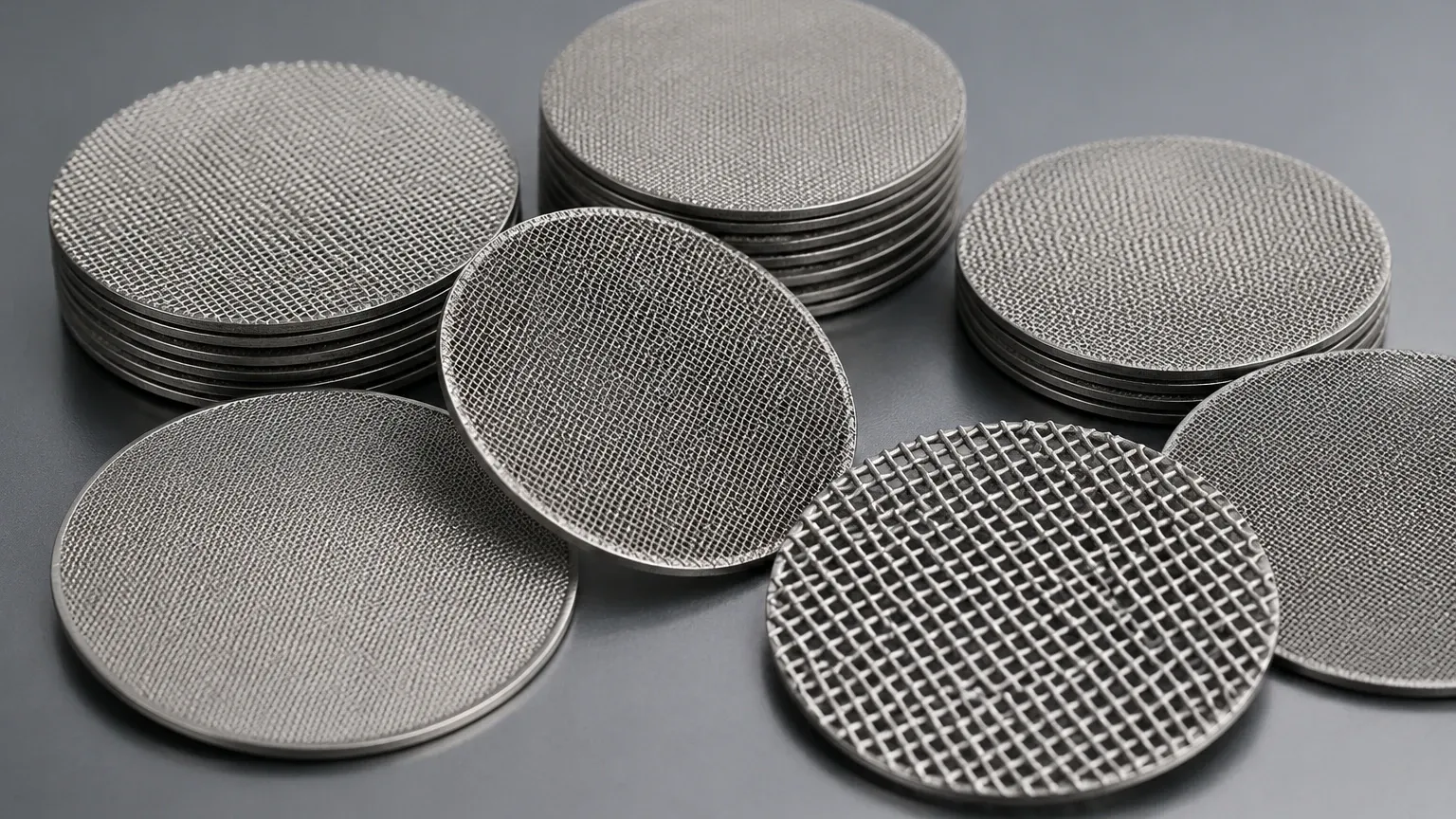
Industrial filtration relies on the structural integrity and pore precision of Filter Discs & Packs. These components are designed to withstand significant pressure differentials while maintaining a strict micron rating. Whether used as standalone discs or as part of a multi-layer pack, the performance of grade 391 media is defined by its ability to capture contaminants without prematurely blinding or causing excessive pressure drops. This article explores the technical specifications, material considerations, and application-specific engineering required when implementing these filtration solutions.
The Role of Filter Discs & Packs in Industrial Filtration
Filter discs and packs serve as the primary barrier against particulate contamination in fluid and gas streams. Unlike depth filters, which capture particles throughout a thick medium, metal filter discs often utilize surface filtration or thin-layer depth filtration to provide precise cut-off points. This precision is vital in industries where even microscopic contaminants can compromise the quality of a chemical batch or damage sensitive hydraulic components.
In many B2B applications, these discs are used in polymer melt filtration, oil refining, and water treatment. The design of a filter pack often involves multiple layers of wire mesh or sintered metal, each serving a specific purpose. For instance, a typical pack might include a fine filtration layer (such as grade 391 media), supported by coarser mesh layers that provide mechanical strength and drainage. This layered approach ensures that the fine mesh does not deform under high pressure, maintaining the accuracy of the filtration process over extended duty cycles.
Understanding the Specifications of Filter Discs Grade 391
The designation "Grade 391" in the context of industrial filtration typically refers to a specific level of filtration efficiency and pore size distribution. In engineering terms, this grade is associated with high-retention capabilities, often used in laboratory-grade industrial processes or high-purity chemical filtration. When specifying filter discs grade 391, engineers must look beyond the name and evaluate the actual micron rating, permeability, and dirt-holding capacity.
Key technical attributes of grade 391 media include:
* Filtration Accuracy: The ability to retain particles of a specific size with high consistency. This is often measured via the bubble point test to ensure no oversized pores exist in the media.
* Permeability: The rate at which fluid passes through the media at a given pressure. High-quality grade 391 discs balance fine retention with adequate flow to prevent system bottlenecks.
* Thickness and Density: These factors influence the mechanical stability of the disc and its ability to be integrated into standard housings or custom OEM assemblies.
For manufacturers like Kaifil, producing these discs requires advanced weaving or sintering technology to ensure that the mesh geometry remains uniform across the entire surface area. Any deviation in the wire diameter or weave density can lead to "channeling," where fluid bypasses the intended filtration path, leading to contamination downstream.
Material Engineering and Chemical Compatibility
The performance of filter discs grade 391 is heavily dependent on the materials used in their construction. In industrial environments involving corrosive chemicals, high temperatures, or high-pressure steam, standard materials often fail. Stainless steel is the industry standard for these applications due to its exceptional durability and resistance to oxidation.
Stainless Steel Alloys
* AISI 304/304L: Suitable for general industrial use, providing good corrosion resistance and mechanical strength at a cost-effective price point.
* AISI 316/316L: The preferred choice for chemical processing and pharmaceutical applications. The addition of molybdenum enhances resistance to pitting and crevice corrosion, particularly in chloride-rich environments.
* Specialty Alloys: For extreme conditions, materials like Monel, Inconel, or Hastelloy may be used to ensure the filter disc does not degrade when exposed to aggressive acids or extreme thermal cycling.
Sintered vs. Woven Structures
Engineers must also choose between woven wire mesh and sintered metal fiber for their grade 391 requirements. Woven mesh offers excellent surface filtration and is easier to clean, making it ideal for applications with high flow rates. Sintered metal, on the other hand, provides a more robust structure where multiple layers are thermally bonded. This process eliminates the risk of wire migration and significantly increases the pressure rating of the disc.
Customization and OEM Capabilities for Precision Filtration
No two industrial processes are identical, which is why customization is a cornerstone of effective filtration. When sourcing filter discs grade 391, purchasing teams often require specific dimensions, rim types, and layering configurations to fit existing machinery. OEM (Original Equipment Manufacturer) capabilities allow for the development of bespoke filtration components that meet exact system requirements.
Rim and Border Options
To ensure a leak-proof seal within a filter housing, discs are often finished with a specialized rim. Common options include:
* Aluminum or Copper Binding: Provides a soft, compressible edge that creates an effective seal in high-pressure hydraulic systems.
* Stainless Steel Spot Welding: Used for multi-layer packs to keep the layers aligned without adding significant thickness to the edge.
* Rubber or Synthetic Gaskets: Ideal for lower-temperature applications where a flexible seal is required to prevent bypass.
Multi-Layer Configurations
By combining different mesh grades, manufacturers can create a "gradient" filtration effect. For example, a filter pack might use a coarse outer layer to capture large debris, followed by a grade 391 layer for fine polishing, and a heavy-duty support mesh at the base. This configuration extends the service life of the filter by preventing the fine media from becoming overwhelmed by large particles.
Performance Evaluation and Selection Criteria
Selecting the right filter discs grade 391 involves a detailed analysis of the operating environment. Engineers should consider the following factors to ensure the chosen filter meets performance expectations:
1. Fluid Viscosity: Thicker fluids require more pressure to pass through fine media. If the viscosity is high, a larger surface area or a different weave pattern may be necessary to maintain flow rates.
2. Operating Temperature: High temperatures can affect the tensile strength of the metal and the integrity of any gaskets or adhesives used in the disc assembly.
3. Pressure Differential ($ΔP$): The maximum allowable pressure drop across the filter before it must be cleaned or replaced. Grade 391 discs must be engineered to withstand the peak $ΔP$ of the system without collapsing.
4. Contaminant Type: Are the particles hard, soft, fibrous, or gelatinous? The shape and nature of the contaminants dictate whether surface filtration or depth filtration is more appropriate.
By evaluating these criteria, technical professionals can avoid common pitfalls such as rapid clogging or mechanical failure. It is often beneficial to conduct pilot testing or small-batch trials to verify the performance of a specific disc grade under real-world conditions.
Maintenance, Cleaning, and Replacement Protocols
One of the primary advantages of stainless steel filter discs & packs is their cleanability. Unlike disposable polymer filters, metal discs can often be regenerated through various cleaning methods, reducing the total cost of ownership and minimizing waste.
Cleaning Methods
* Ultrasonic Cleaning: Uses high-frequency sound waves to dislodge particles trapped deep within the mesh pores. This is highly effective for grade 391 media where manual cleaning is impossible.
* Backwashing: Reversing the flow of fluid through the filter to push contaminants off the surface. This is common in automated filtration systems.
* Chemical Cleaning: Using solvents or acids to dissolve accumulated residues. It is critical to ensure the cleaning agent is compatible with the filter material (e.g., avoiding certain acids with 304 stainless steel).
Determining Replacement Cycles
Despite their durability, filter discs eventually reach the end of their functional life. Indicators for replacement include permanent deformation of the mesh, a baseline pressure drop that remains high even after cleaning, or visible signs of corrosion. Establishing a proactive maintenance schedule based on pressure drop monitoring is the most effective way to prevent unplanned downtime.
Conclusion: Optimizing Filtration with Grade 391 Solutions
The implementation of filter discs grade 391 requires a balance of material science, mechanical engineering, and application knowledge. By selecting high-quality stainless steel media and configuring it correctly within filter packs, industrial operators can achieve superior levels of purity and system reliability.
As a manufacturer specializing in custom filtration, Kaifil provides the technical expertise and manufacturing precision needed to produce reliable filter components for demanding environments. From initial material selection to the final design of complex multi-layer packs, focusing on the specific requirements of the application ensures that the filtration system performs at its peak. For engineers looking to improve their process, understanding the nuances of grade 391 filtration is the first step toward a more efficient and cost-effective operation.
