


Disc Filter Paper Machine
In the pulp and paper industry, the efficiency of water management and fiber recovery is a critical factor in both environmental compliance and operational profitability. The disc filter paper machine stands as a cornerstone technology for these processes, primarily utilized for white water recovery, pulp thickening, and fiber reclamation. As mills strive for higher throughput and reduced water consumption, the performance of the internal filtration components—specifically the metal mesh sectors and filter media—becomes the determining factor in system uptime and product quality.
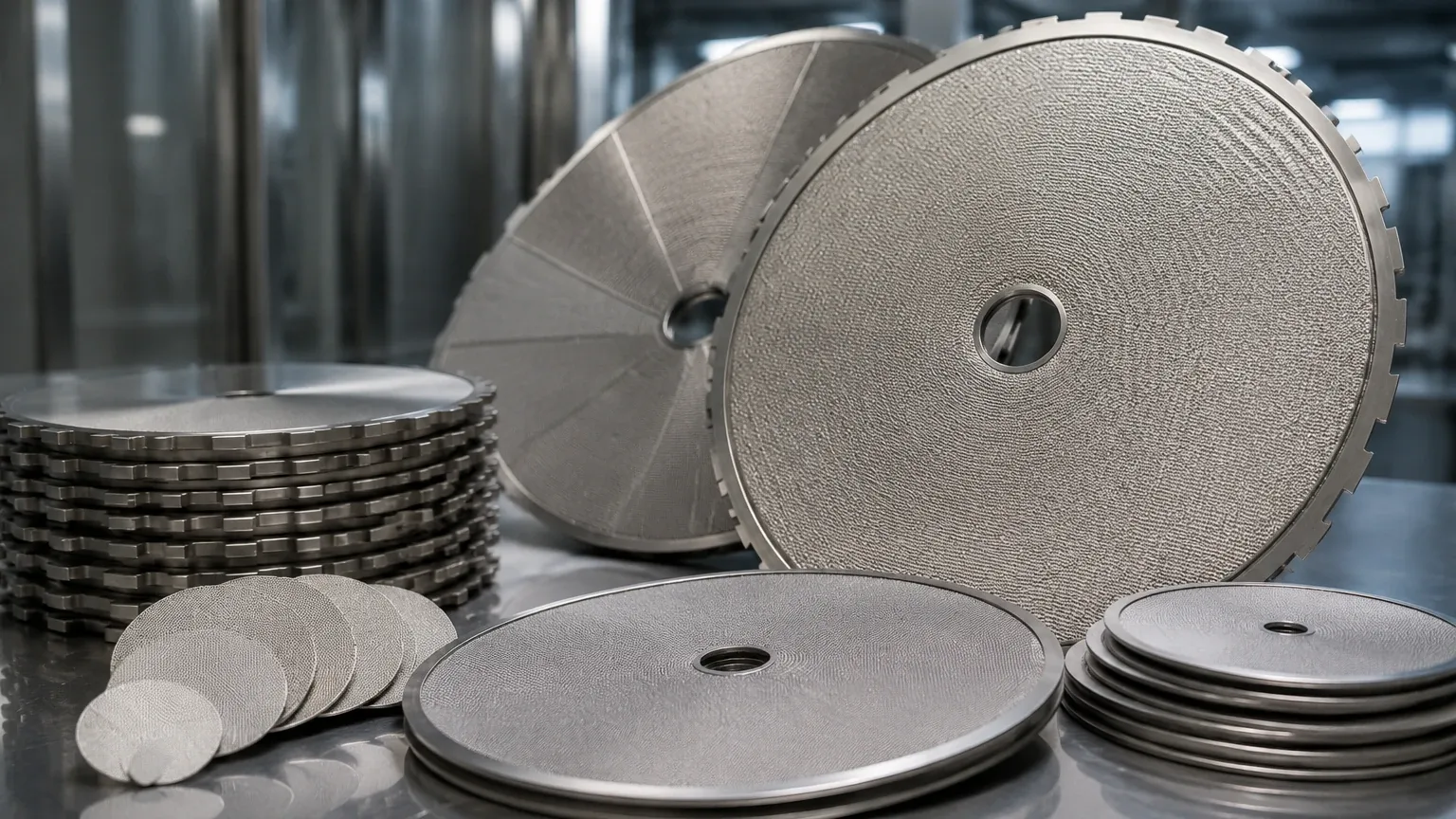
For engineers and procurement professionals, understanding the technical nuances of the disc filter paper machine involves more than just looking at the equipment's footprint. It requires a deep dive into the mechanical stresses, chemical environments, and precision requirements of the filtration media. High-quality Filter Discs & Packs are essential for ensuring that these machines operate at peak hydraulic capacity while maintaining the integrity of the recovered fibers.
Understanding the Role of Disc Filters in Paper Production
A disc filter paper machine operates on the principle of vacuum-assisted filtration. The machine consists of a series of large-diameter discs mounted on a central shaft, which rotates within a vat filled with pulp slurry or white water. Each disc is composed of multiple individual sectors, each covered with a specialized filter medium, typically stainless steel wire mesh.
As the shaft rotates, the sectors are submerged in the vat. A vacuum is applied through the central shaft, drawing liquid through the filter media while solids—fibers and fillers—are deposited on the surface to form a "filter cake." As the disc emerges from the vat, the vacuum is released, and the cake is removed via water jets or mechanical scrapers. This continuous process allows for the handling of massive volumes of liquid, making it indispensable for modern paper mills.
The primary objectives of using a disc filter paper machine include:
* Fiber Recovery: Capturing valuable fibers from white water to return them to the production line, reducing raw material waste.
* White Water Clarification: Removing suspended solids so that water can be reused in showers and other mill processes, significantly lowering fresh water intake.
* Pulp Thickening: Increasing the consistency of the pulp for subsequent processing stages, such as bleaching or storage.
Technical Specifications of Filter Discs & Packs for Paper Machines
The heart of the disc filter paper machine is the filter media. While synthetic fabrics were common in the past, industrial paper production has shifted heavily toward stainless steel wire mesh due to its superior durability and consistent pore geometry. The construction of Filter Discs & Packs for these machines involves complex engineering to balance flow rate with filtration accuracy.
Multi-Layer Mesh Construction
In most paper machine applications, a single layer of mesh is insufficient to withstand the mechanical pressures of the vacuum and the weight of the pulp cake. Instead, multi-layer sintered or bonded mesh packs are used. These typically consist of:
1. Filtration Layer: A fine mesh (often 60 to 200 mesh) that determines the particle retention size.
2. Support Layer: A coarser, heavier mesh that provides structural rigidity and prevents the filtration layer from deforming under vacuum pressure.
3. Drainage Layer: A very coarse mesh or perforated plate that facilitates the rapid exit of filtered liquid (filtrate) toward the central shaft.
Weave Types
The choice of weave—such as plain weave, twilled weave, or Dutch weave—affects how easily the filter cake releases and how resistant the disc is to blinding (clogging). For pulp and paper applications, a smooth surface is prioritized to ensure that the fiber mat can be peeled away cleanly without leaving residues that could lead to bacterial growth or reduced flow.
Engineering Challenges in High-Volume Pulp Filtration
Designing filtration components for a disc filter paper machine requires addressing several harsh operational realities. Engineers must account for hydraulic load, mechanical fatigue, and the rheological properties of the pulp.
Hydraulic Capacity and Open Area
The "open area" of the filter disc determines the hydraulic capacity of the machine. If the mesh is too dense, the vacuum must work harder, increasing energy costs and potentially causing the mesh to collapse. Conversely, if the mesh is too open, fiber loss increases, defeating the purpose of the recovery system. Precision manufacturing ensures that the wire diameter and aperture size are optimized to provide the maximum possible open area while maintaining the necessary micron rating.
Vacuum Fluctuations and Mechanical Stress
During each rotation, the filter sectors transition from atmospheric pressure to a high vacuum and back again. This cyclic loading can lead to metal fatigue in the wire mesh. High-quality Filter Discs & Packs are engineered with reinforced edges and specialized welding techniques (such as TIG or ultrasonic welding) to ensure that the mesh remains securely attached to the sector frame, even after millions of cycles.
Cake Discharge Efficiency
If the pulp cake does not discharge completely, the remaining fibers will harden and block the mesh. This is known as blinding. The surface topography of the stainless steel mesh must be engineered to be "non-stick." Advanced finishing processes, such as electropolishing, are often used to reduce surface roughness, facilitating a cleaner release and extending the time between manual cleaning cycles.
Material Selection and Corrosion Resistance
The chemical environment inside a disc filter paper machine is often aggressive. Depending on the type of paper being produced, the white water may contain residual bleaching agents (like chlorine dioxide), acids, bases, and various process chemicals. Furthermore, the elevated temperatures of the process water accelerate corrosive reactions.
Stainless Steel Grades
* AISI 304/304L: Suitable for general-purpose applications where the chemical load is low and the pH is relatively neutral.
* AISI 316/316L: The industry standard for most paper mill environments. The addition of molybdenum provides significantly better resistance to pitting and crevice corrosion in the presence of chlorides.
* Duplex Stainless Steels: In high-closure mills where water is recycled many times, chloride concentrations can reach levels that challenge even 316L. In these cases, duplex alloys are used for their exceptional strength and resistance to stress corrosion cracking.
By selecting the correct alloy for the Filter Discs & Packs, mills can avoid premature failure and the costly downtime associated with emergency repairs.
Maintenance Protocols for Disc Filter Components
To maintain the efficiency of a disc filter paper machine, a rigorous maintenance schedule is required. Because these machines are often the bottleneck for water treatment, any reduction in their capacity can force a slowdown of the entire paper machine.
Monitoring Pressure Differentials
A rising pressure drop across the filter discs is the most common indicator of mesh blinding or scale buildup. Modern systems utilize sensors to track this data in real-time. When the differential pressure exceeds a certain threshold, an automated acid wash or high-pressure water cleaning cycle is usually initiated.
Inspection for Mesh Integrity
During scheduled shutdowns, each sector should be inspected for physical damage. Small holes in the mesh can lead to a significant increase in the suspended solids in the filtrate, which can then clog downstream equipment like spray nozzles. If a sector is damaged, it is often more cost-effective to replace the entire filter pack rather than attempting a patch repair, as patches create localized turbulence that accelerates wear on the surrounding mesh.
Chemical Cleaning
Over time, organic residues and inorganic scales (like calcium carbonate) can accumulate within the mesh layers. Periodic chemical cleaning using specialized detergents or mild acids is necessary to restore the original flow characteristics. The material of the Filter Discs & Packs must be compatible with these cleaning agents to prevent accidental damage during maintenance.
Optimizing Total Cost of Ownership through Precision Manufacturing
When purchasing replacement components for a disc filter paper machine, the initial price is only one part of the total cost of ownership (TCO). High-quality filtration components produced by specialized manufacturers like Kaifil offer long-term savings through several avenues:
1. Reduced Energy Consumption: Precision-engineered mesh with high open areas allows the vacuum system to operate more efficiently.
2. Increased Fiber Yield: Tighter tolerances in mesh manufacturing mean fewer usable fibers are lost to the wastewater stream.
3. Extended Service Life: Robust construction and proper material selection reduce the frequency of replacement, lowering both labor and part costs.
4. Improved Paper Quality: Consistent filtration leads to cleaner white water, which reduces the risk of spots, holes, or other defects in the final paper sheet.
Customization is also a key factor. Not every disc filter paper machine is built to the same specifications. OEM-quality Filter Discs & Packs can be tailored to specific sector shapes, mounting configurations, and filtration requirements, ensuring a perfect fit and immediate performance improvements upon installation.
Conclusion: The Strategic Importance of High-Quality Filtration
The disc filter paper machine is a vital asset in the modern mill, bridging the gap between production efficiency and environmental responsibility. However, the machine is only as effective as the filter media it houses. By focusing on the technical specifications, material integrity, and engineering precision of Filter Discs & Packs, paper manufacturers can ensure reliable fiber recovery and water clarification.
For engineers and purchasing teams, the goal is to move beyond generic replacements and seek out filtration solutions designed for the specific rigors of the pulp and paper environment. Investing in high-performance stainless steel filtration components is a proven strategy for optimizing machine uptime, reducing waste, and maintaining a competitive edge in a demanding global market.
