


Disc Filter Pulp and Paper
In the pulp and paper industry, the efficiency of water management and fiber recovery systems directly impacts the bottom line and environmental compliance of a mill. Central to these processes is the disc filter, a robust piece of equipment designed to handle high volumes of liquid while capturing valuable fibers and clarifying process water. For engineers and maintenance managers, understanding the technical nuances of the filter media—specifically the filter discs and packs—is essential for optimizing machine uptime and filtration precision.
Disc filters are primarily used for two critical applications: white water recovery (savealls) and pulp thickening. In both instances, the performance of the equipment is dictated by the quality, material composition, and structural integrity of the stainless steel mesh components. This article examines the engineering considerations behind disc filter pulp and paper applications, providing technical insights into selection, maintenance, and performance optimization.
The Role of Disc Filters in Pulp and Paper Processing
The pulp and paper manufacturing process is notoriously water-intensive. To reduce fresh water consumption and minimize fiber loss, mills utilize disc filters to treat "white water"—the filtrate that contains residual fibers, fillers, and chemicals after the paper web is formed.
In a typical disc filter operation, a series of parallel discs are mounted on a central shaft and partially submerged in a vat of pulp slurry. As the shaft rotates, a vacuum is applied to the interior of the discs, drawing the liquid through the filter media while depositing a layer of fiber (the "mat") on the surface. This fiber mat itself acts as a secondary filtration layer, improving the capture of fine particles. The filtered liquid, or filtrate, is then separated into different clarity grades (cloudy, clear, and super-clear) for reuse in various parts of the mill.
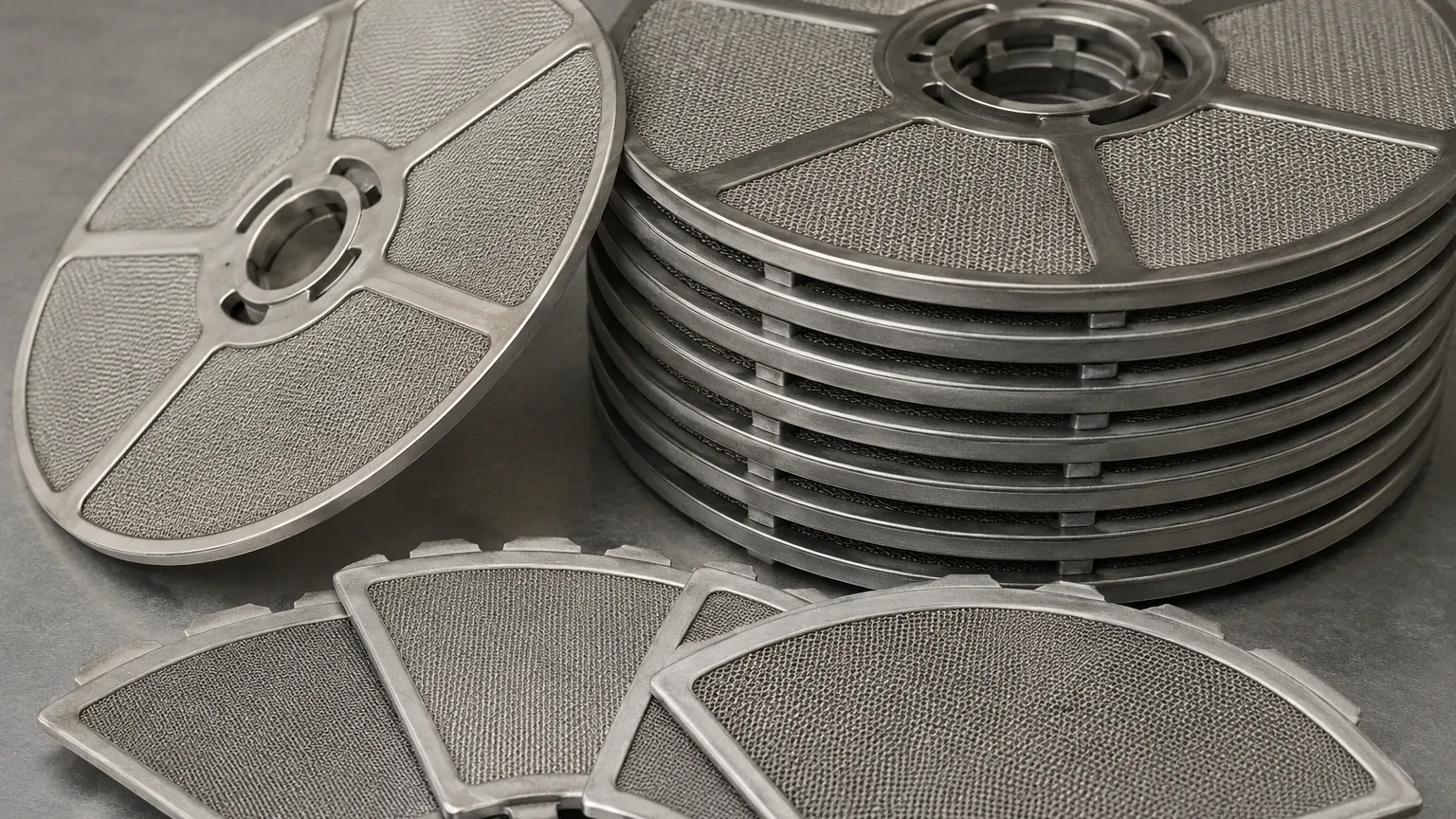
For thickening applications, the disc filter increases the consistency of the pulp stock before it moves to the next stage of production, such as bleaching or storage. In both recovery and thickening, the Filter Discs & Packs serve as the primary mechanical barrier, making their design and material selection paramount to the system's overall efficiency.
Engineering Considerations for Filter Discs & Packs
When specifying replacement components or designing new filtration systems for disc filter pulp and paper applications, several engineering factors must be evaluated to ensure compatibility with the mill's specific operating conditions.
Material Selection and Corrosion Resistance
The chemical environment in a paper mill can be highly aggressive. Depending on the type of pulp being processed (mechanical, chemical, or recycled) and the bleaching agents used (such as chlorine dioxide or ozone), the filter media is subject to varying levels of corrosion.
* Stainless Steel 304: Suitable for non-corrosive, neutral pH environments, typically found in some mechanical pulping processes.
* Stainless Steel 316L: The industry standard for most pulp and paper applications. The addition of molybdenum provides superior resistance to pitting and crevice corrosion, especially in the presence of chlorides and acidic process waters.
* Specialty Alloys: In extreme cases involving high temperatures and highly acidic bleaching stages, duplex stainless steels or high-nickel alloys may be required to prevent premature failure of the wire mesh.
Mesh Count and Filtration Accuracy
The mesh count—the number of wires per linear inch—determines the filtration accuracy and the open area of the disc. In pulp and paper applications, there is always a trade-off between fiber retention and flow rate. A finer mesh (higher mesh count) will capture more fines but may lead to faster blinding and higher pressure drops. Conversely, a coarser mesh allows for higher flow rates but may result in excessive fiber loss into the filtrate.
Engineers must also consider the weave type. Plain square weaves are common for general support, while Dutch weaves (Plain Dutch or Twilled Dutch) offer a more compact structure with higher mechanical strength and precise pore sizes, making them ideal for high-pressure vacuum applications.
Structural Integrity and Multi-Layer Designs
A single layer of wire mesh is often insufficient to withstand the mechanical stresses of a rotating disc filter. The constant cycle of vacuum suction and high-pressure backwashing (used to knock off the fiber mat) can cause metal fatigue and sagging.
To address this, high-performance filter discs are often constructed as multi-layer packs. These packs typically include:
1. A Filtration Layer: A fine stainless steel mesh tailored to the specific micron rating required for fiber capture.
2. Support Layers: Coarser, heavy-duty mesh layers that provide rigidity to the filtration layer, preventing it from deforming under vacuum pressure.
3. Drainage Layers: Intermediate layers designed to facilitate the rapid flow of filtrate toward the central shaft, ensuring the disc operates at maximum hydraulic capacity.
These layers are often bound together using specialized welding techniques or metal rims to ensure a leak-proof seal and structural stability. The use of sintered mesh—where multiple layers are fused together under heat and pressure—is also an option for applications requiring maximum durability and easy cleaning.
Optimizing Performance in Pulp and Paper Applications
To achieve the best results with a disc filter pulp and paper setup, technical teams should focus on several operational parameters that affect the lifespan and efficiency of the filter discs.
Managing Filter Blinding
Blinding occurs when fines, resins, or chemical additives become lodged within the mesh pores, restricting flow. This is a common challenge in mills processing recycled fiber or highly resined wood species. To mitigate blinding, the selection of the mesh surface finish is critical. Smooth, calendared mesh surfaces can help the fiber mat release more cleanly during the discharge cycle, reducing the reliance on aggressive backwashing.
Vacuum and Pressure Management
The vacuum level within the disc filter must be carefully controlled. Excessive vacuum can pull fines too deeply into the mesh, leading to internal plugging that is difficult to remove. It can also cause mechanical strain on the filter packs. Monitoring the differential pressure (Delta P) across the discs is the most effective way to determine when the media requires deep cleaning or replacement.
Backwash Efficiency
Effective mat discharge is essential for maintaining a continuous filtration cycle. The backwash nozzles must be precisely aligned and maintained at the correct pressure to ensure the entire surface of the disc is cleaned. If the filter discs are not cleaned properly, residual fiber can harden, leading to permanent blinding and uneven weight distribution on the rotating shaft.
Maintenance and Replacement Cycles
In a 24/7 industrial environment, unplanned downtime is costly. Establishing a proactive maintenance schedule for filter discs and packs is essential.
Inspection Points
* Mechanical Wear: Check for signs of wire thinning or broken wires, particularly near the outer edges of the disc where peripheral speeds are highest.
* Seal Integrity: Inspect the gaskets or mounting hardware that secure the filter packs to the disc sectors. Any bypass at these points will significantly degrade filtrate quality.
* Scale Accumulation: In mills with hard water or high chemical usage, calcium carbonate or other scales can build up on the mesh. Chemical cleaning may be necessary to restore flow rates.
When to Replace
While stainless steel filter discs are designed for longevity, they are ultimately wear parts. Replacement is typically indicated when:
* The filtrate clarity no longer meets process specifications despite cleaning.
* The throughput of the filter has dropped below the required threshold for mill production.
* Mechanical fatigue has resulted in visible sagging or tearing of the mesh.
Sourcing high-quality OEM or custom-engineered replacements ensures that the new components match the original equipment's specifications, preventing installation delays and ensuring immediate performance recovery.
Customization and Technical Support
Every pulp and paper mill has a unique process chemistry and production goal. Standard off-the-shelf filtration components may not always provide the optimal balance of durability and precision. Custom-engineered Filter Discs & Packs allow mills to specify exact mesh configurations, rim materials, and dimensions to suit their specific disc filter models and pulp types.
Working with a manufacturer that understands the rigors of industrial filtration allows engineers to explore options such as reinforced edges for high-vibration environments or specialized mesh weaves for high-consistency stock. These customized solutions often result in a lower total cost of ownership by extending the time between replacement cycles and improving the recovery of valuable raw materials.
Conclusion
The disc filter remains a cornerstone of efficient pulp and paper production. By focusing on the technical details of the filter media—from the metallurgy of the stainless steel to the structural design of the multi-layer packs—mills can achieve higher fiber recovery rates and better water management. For technical professionals, selecting the right filter discs is not just a matter of maintenance; it is a strategic decision that affects the overall productivity and sustainability of the facility.
