


Paper Filter Discs
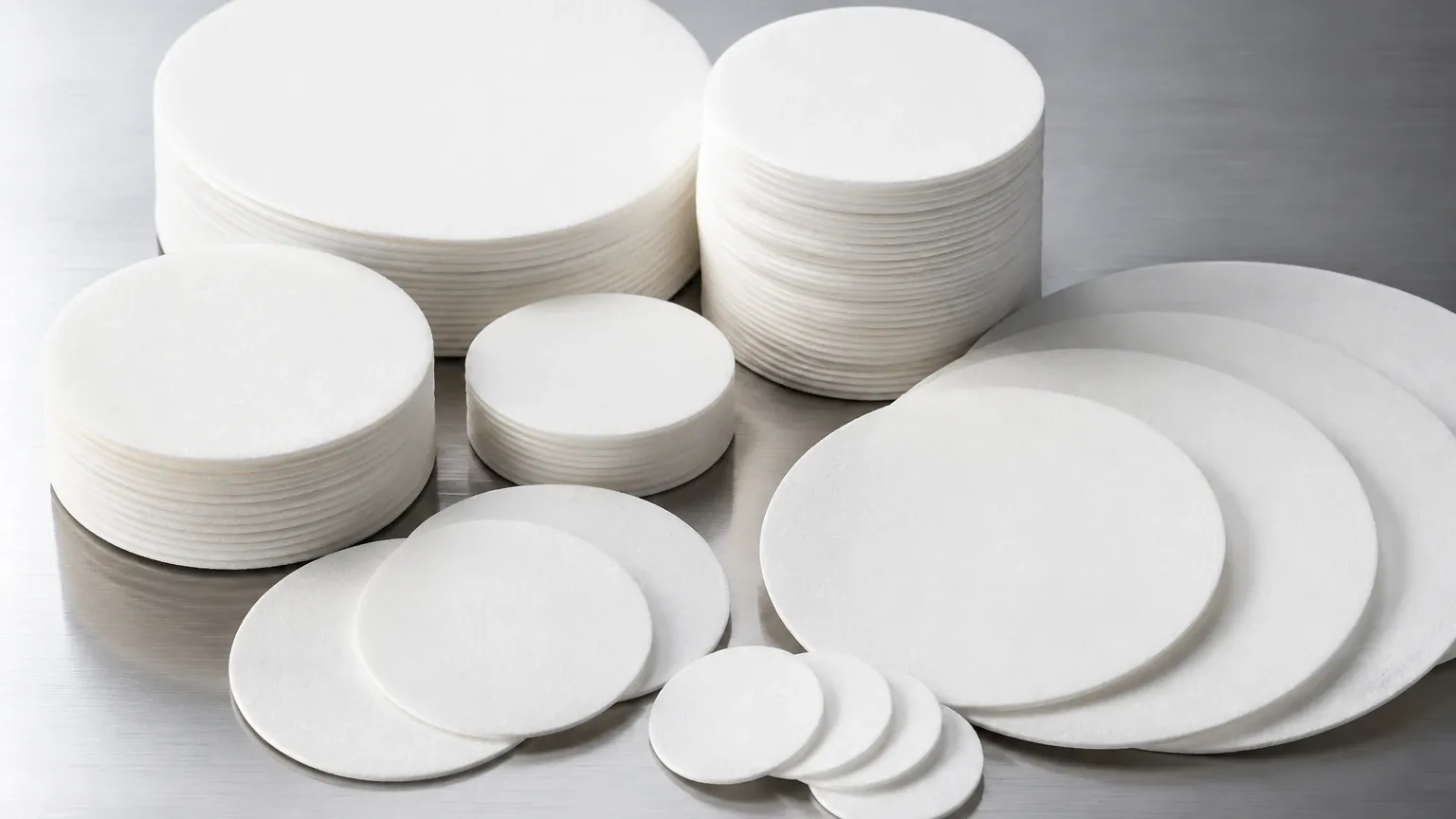
In industrial filtration, the selection of media is a critical engineering decision that directly impacts product purity, equipment longevity, and operational throughput. While stainless steel and synthetic polymers are prevalent in high-pressure environments, paper filter discs remain a fundamental component in liquid-solid separation, particularly in applications requiring high precision, single-use hygiene, or specific chemical resistance. These discs are engineered from cellulose fibers, glass fibers, or specialized synthetic blends to provide a depth-filtration matrix capable of capturing fine particulates that surface-loading metal meshes might allow to pass.
For engineers and procurement teams, understanding the technical nuances of paper filter discs—ranging from their mechanical wet strength to their pore structure—is essential for optimizing filtration systems. These components are frequently utilized as standalone media or integrated into more complex Filter Discs & Packs to achieve multi-stage filtration performance.
Understanding the Composition and Functionality of Paper Filter Discs
Paper filter discs are not merely "paper" in the conventional sense; they are highly engineered porous structures. The primary material is typically high-alpha cellulose derived from cotton linters or wood pulp. The manufacturing process involves a specialized wet-laid technique that ensures a uniform distribution of fibers, creating a tortuous path for the fluid to navigate.
Depth Filtration Mechanism
Unlike woven wire mesh, which acts primarily as a surface filter (sieving particles based on the aperture size of the weave), paper filter discs operate via depth filtration. As the fluid passes through the thick matrix of fibers, particles are trapped not just on the surface, but within the internal structure of the disc. This allows for a higher dirt-holding capacity for fine silts and deformable particles that might otherwise "blind" or block a surface filter prematurely.
Qualitative vs. Quantitative Grades
In industrial and laboratory settings, paper filter discs are categorized into two main functional groups:
1. Qualitative Filter Paper: Used for general filtration where the primary goal is clarifying a liquid or removing large amounts of precipitate. These are common in food processing and industrial chemical manufacturing.
2. Quantitative (Ashless) Filter Paper: These discs undergo acid-washing (typically with hydrochloric or hydrofluoric acid) to remove impurities. They are used in analytical chemistry and critical pharmaceutical processes where the filter media must not introduce mineral contaminants into the filtrate.
Technical Specifications and Performance Metrics
When specifying paper filter discs for an industrial process, several technical parameters must be evaluated to ensure compatibility with the system’s hydraulic and chemical requirements.
Micron Rating and Retention Efficiency
Paper filter discs do not have a single "hole size." Instead, they are rated by their nominal retention efficiency. Common ratings range from 1 micron to 30 microns. It is important to note that because paper is a depth medium, its efficiency can vary based on the flow rate and the viscosity of the fluid. A slower flow rate generally increases the retention efficiency of fine particulates.
Flow Rate and Permeability
The flow rate is typically measured in milliliters per minute (ml/min) under a standardized pressure. In B2B applications, engineers must calculate the "clean pressure drop" (the initial resistance the filter offers to the fluid). Paper media generally exhibits a higher pressure drop than stainless steel mesh of the equivalent micron rating due to the density of the fiber matrix.
Wet Strength and Burst Pressure
A critical limitation of standard cellulose paper is its loss of mechanical integrity when saturated. To address this, many industrial paper filter discs are treated with wet-strength resins (such as polyamides). These resins cross-link the cellulose fibers, allowing the disc to withstand higher differential pressures without tearing or experiencing "media migration," where paper fibers break loose and contaminate the downstream fluid.
Engineering Considerations for Industrial Integration
Integrating paper filter discs into a production line requires careful consideration of the housing and support structures. Because paper is flexible and lacks structural rigidity, it must be supported to prevent deformation under pressure.
Support Structures and Filter Packs
In many high-pressure systems, paper discs are used in conjunction with metal supports. This is where the concept of Filter Discs & Packs becomes vital. A typical configuration might include a fine paper disc sandwiched between two layers of stainless steel wire mesh. The mesh provides the mechanical skeleton required to resist the system's operating pressure, while the paper provides the fine-particle retention that the mesh cannot achieve alone.
Chemical and Thermal Compatibility
Cellulose-based paper filter discs are generally compatible with a wide range of organic solvents and aqueous solutions within a pH range of 3 to 12. However, they are susceptible to degradation by strong oxidizing agents and concentrated acids. Thermally, cellulose is stable up to approximately 120°C (248°F). For applications exceeding these limits, engineers often pivot to glass fiber filter discs or sintered metal components.
Comparative Analysis: Paper vs. Stainless Steel Filter Discs
Deciding between paper and stainless steel filtration media involves a trade-off between initial cost, filtration precision, and operational lifecycle.
| Feature | Paper Filter Discs | Stainless Steel Filter Discs |
| :— | :— | :— |
| Filtration Type | Depth (Internal trapping) | Surface (Sieving) |
| Durability | Low (Single-use) | High (Cleanable and reusable) |
| Micron Precision | Excellent for sub-10 micron | Excellent for 10+ micron |
| Pressure Resistance | Low (Requires support) | High (Self-supporting) |
| Cost per Unit | Low | High |
| Total Cost of Ownership | High (Labor/waste/replacement) | Low (Long-term reuse) |
In processes where the contaminant is hazardous or difficult to clean from a metal mesh, paper filter discs are preferred because the entire "spent" filter can be removed and incinerated or disposed of, eliminating the need for complex cleaning validation protocols.
Applications Across Regulated Industries
Pharmaceutical and Biotechnology
In the pharmaceutical sector, paper filter discs are used for the clarification of cell culture broths and the removal of precipitates after chemical reactions. The use of high-purity, low-extractable paper ensures that the active pharmaceutical ingredients (APIs) remain uncontaminated. They are also essential in laboratory scale-up phases where engineers test filtration parameters before moving to larger sintered metal systems.
Food and Beverage Production
For the filtration of edible oils, syrups, and spirits, paper discs provide a cost-effective way to achieve high clarity (polishing). In the wine industry, for example, specialized paper media can remove yeast cells and spoilage organisms. These discs must comply with FDA or similar international food-contact regulations to ensure no harmful substances migrate into the product.
Chemical and Petrochemical Processing
In the production of fine chemicals, paper filter discs are used to remove catalysts or impurities from solvents. They are often employed in plate-and-frame filter presses, where multiple layers of paper provide a massive surface area for high-volume filtration. In these environments, the compatibility of the wet-strength resins with the specific solvents being used is a primary engineering concern.
Selection Criteria and Procurement Guidance
When purchasing paper filter discs for industrial use, procurement teams should confirm the following details with their supplier to ensure the product is fit for purpose:
1. Basis Weight: The weight of the paper per unit area (g/m²), which correlates with the thickness and dirt-holding capacity.
2. Ash Content: Crucial for quantitative applications; lower ash content indicates higher purity.
3. Thickness: Measured in micrometers (µm); thicker paper provides more depth for particle entrapment but increases pressure drop.
4. Surface Finish: Some discs are creped (wrinkled) to increase the effective surface area, while others are smooth for easier cake removal.
5. Certification: Ensure the media meets industry-specific standards such as ISO 9001 for manufacturing consistency or USP Class VI for biological safety.
Optimizing Filtration Efficiency in Multi-Layer Filter Packs
For many demanding industrial applications, a single layer of paper is insufficient. Engineers often design multi-stage Filter Discs & Packs that utilize graded density. In this setup, a coarse paper or mesh layer captures large debris, while subsequent finer paper layers remove smaller particulates. This "staged" approach prevents the finest filter from clogging prematurely, thereby extending the service life of the entire assembly.
Furthermore, the housing design must account for the compression of paper media. When paper filter discs are clamped into a housing, the edges are compressed to create a seal. Engineers must ensure that this compression does not bypass the media (edge leakage) and that the support plates provide uniform pressure across the entire surface of the disc to prevent localized bursting.
Conclusion
Paper filter discs remain a versatile and essential tool in the industrial filtration toolkit. While they lack the permanence of stainless steel, their ability to provide high-precision depth filtration at a low unit cost makes them indispensable for many clarified liquid and analytical applications. By carefully evaluating micron ratings, wet strength, and the potential for integration into multi-layer Filter Discs & Packs, engineering teams can achieve the optimal balance between filtration performance and operational efficiency. For complex systems, consulting with a manufacturer like Kaifil can provide insights into how custom metal supports can enhance the performance of paper media in demanding environments.
