


Sterile Filter Discs
In high-purity industrial environments, the requirement for sterile processing is non-negotiable. Sterile filter discs serve as a critical barrier against microbial contamination and particulate impurities in sectors ranging from pharmaceutical manufacturing to specialized food and beverage production. Unlike standard filtration components, these discs must meet stringent standards for filtration efficiency, material stability, and the ability to withstand repeated sterilization cycles without compromising structural integrity.
For engineers and procurement professionals, selecting the appropriate Filter Discs & Packs involves a deep understanding of fluid dynamics, material science, and the specific regulatory requirements of the application. This guide examines the technical nuances of sterile filter discs, focusing on stainless steel solutions that offer durability and precision in demanding industrial contexts.
Understanding Sterile Filter Discs in Industrial Applications
Sterile filtration is defined by the ability of a filter medium to remove all viable microorganisms from a fluid stream. In industrial settings, this typically refers to a filtration rating of 0.22 microns or finer, which is the standard threshold for capturing bacteria such as *Brevundimonas diminuta*. While polymer membranes are common in laboratory settings, industrial B2B applications often require the robustness of metallic media.
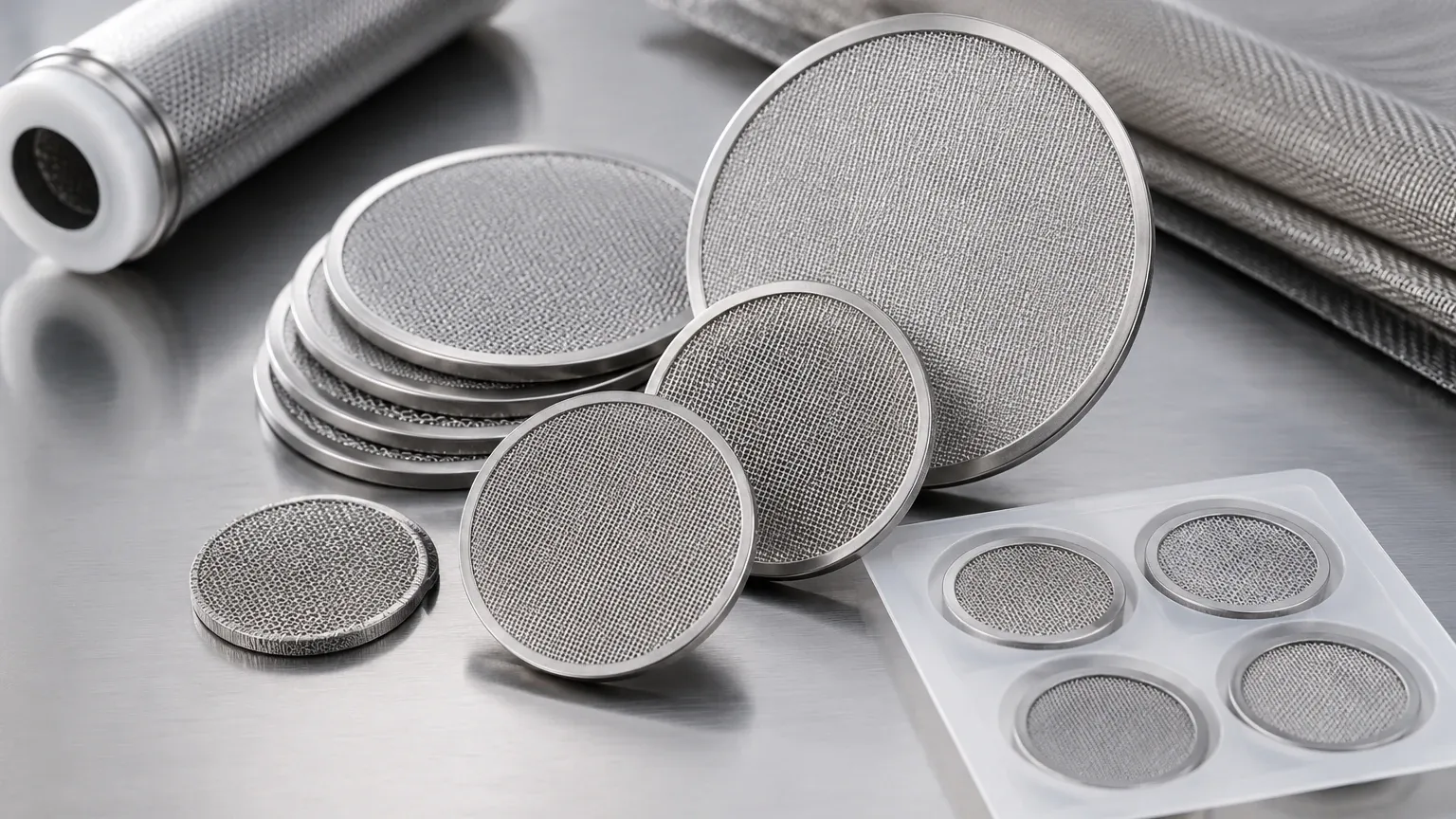
Stainless steel sterile filter discs are engineered using advanced wire mesh or sintered metal fibers. These components are designed to provide an absolute filtration rating, ensuring that no particles larger than the specified pore size can pass through the media. The transition from disposable polymer filters to reusable stainless steel discs is often driven by the need for higher pressure resistance, wider chemical compatibility, and the ability to perform in-situ sterilization.
The Role of Absolute vs. Nominal Ratings
In the context of sterile filtration, an "absolute" rating is mandatory. A nominal rating suggests that the filter will catch a certain percentage of particles at a given size, which is insufficient for sterilization. High-quality sterile filter discs utilize multilayer sintered wire mesh to achieve a fixed pore structure, ensuring that the filtration performance remains consistent even under fluctuating pressure conditions.
Key Engineering Considerations for Selection
When specifying sterile filter discs for an industrial system, several engineering parameters must be evaluated to ensure the component performs as intended throughout its service life.
1. Filtration Accuracy and Pore Size
For sterilization, the pore size must be validated. Engineers must confirm that the disc provides a consistent 0.22-micron absolute rating if the goal is microbial removal. In pre-filtration stages, larger pore sizes may be used to protect the final sterile disc from premature clogging. The choice of weave—such as Dutch weave or Twilled Dutch weave—directly impacts the filtration accuracy and the flow characteristics of the disc.
2. Flow Rate and Pressure Drop (Delta P)
Every filter introduces a resistance to flow. In sterile processes, maintaining a specific flow rate is often critical for system efficiency. Engineers must calculate the clean pressure drop and the terminal pressure drop (the point at which the disc must be cleaned or replaced). Stainless steel discs are advantageous here because they can withstand significantly higher differential pressures than synthetic alternatives without deforming or experiencing "media migration."
3. Structural Integrity and Mechanical Strength
Sterile processes often involve high-pressure pumps or steam-in-place (SIP) cycles. The filter disc must be mechanically strong enough to resist the stresses of backwashing and thermal expansion. Sintered filter discs, which consist of multiple layers of wire mesh fused together at a molecular level through heat and pressure, provide the necessary rigidity to prevent the mesh from shifting or the pores from enlarging under stress.
Materials and Construction of Filter Discs & Packs
The choice of material is perhaps the most critical factor in the longevity and safety of sterile filter discs. In the B2B industrial sector, 316L stainless steel is the industry standard due to its superior corrosion resistance and low carbon content, which prevents intergranular corrosion after welding or high-temperature exposure.
Sintered Wire Mesh Construction
Most high-performance Filter Discs & Packs are constructed using a multi-layer sintering process. This typically involves:
* The Filtration Layer: A fine wire mesh that determines the filtration accuracy.
* The Support Layers: Coarser mesh layers that provide mechanical strength and protect the fine filtration layer from physical damage.
* The Drainage Layers: Layers designed to optimize the flow of the filtrate away from the filtration zone.
By fusing these layers, manufacturers create a monolithic structure that eliminates the need for binders or adhesives, which could otherwise leach into the fluid stream and compromise sterility.
Edge Treatment and Sealing
To prevent bypass—where fluid flows around the filter rather than through it—sterile filter discs require precise edge treatments. Common methods include spot welding, aluminum or stainless steel rimming, and custom gaskets. For sterile applications, the seal between the disc and the housing must be airtight and capable of withstanding the same sterilization temperatures as the filter media itself.
Sterilization Methods and Compatibility
One of the primary reasons industrial operators choose stainless steel sterile filter discs is their compatibility with various sterilization protocols. Unlike plastic filters that may degrade or release volatile organic compounds (VOCs) when heated, metal discs maintain their properties.
Autoclaving and Steam-in-Place (SIP)
Stainless steel discs are ideal for SIP processes, where saturated steam is introduced into the system to kill microorganisms. They can typically handle temperatures up to 250°C (and higher depending on the alloy), far exceeding the 121°C or 134°C required for standard sterilization. This allows for rapid turnaround times in pharmaceutical and biotech production lines.
Chemical Cleaning (CIP)
In food and beverage or chemical applications, Clean-in-Place (CIP) involving caustic or acidic solutions is common. 316L stainless steel is resistant to a wide array of cleaning agents, including sodium hydroxide and nitric acid. This chemical robustness ensures that the sterile filter discs can be cleaned and reused hundreds of times, significantly lowering the total cost of ownership compared to single-use cartridges.
Common Risks and Quality Assurance
Implementing sterile filtration involves managing risks that could lead to batch failure or regulatory non-compliance. Engineers should be aware of the following potential issues:
* Media Migration: In poorly manufactured filters, small fragments of the filter material can break off and enter the filtrate. Sintered mesh effectively eliminates this risk by bonding all wires together.
* Bypass Leakage: If the disc is not perfectly flat or the rimming is inconsistent, unfiltered fluid may leak through the edges. Precision manufacturing and strict tolerances are required to ensure a perfect fit in the filter housing.
* Integrity Testing: Sterile filters should be subjected to integrity tests, such as the Bubble Point Test or Pressure Hold Test. These tests verify that the filter has not been damaged and that the pore size remains within the specified limits.
Customization Options for OEM Integration
Every industrial system has unique requirements regarding geometry and performance. Customization is often necessary to integrate sterile filter discs into existing equipment or new OEM designs. Common customization options include:
* Shape and Dimension: While circular discs are standard, manufacturers can produce oval, rectangular, or complex polygonal shapes using laser cutting or precision stamping.
* Layer Configuration: Depending on the viscosity of the fluid and the expected particulate load, the number of mesh layers can be adjusted to balance flow rate and dirt-holding capacity.
* Connection Types: Discs can be fitted with threaded connectors, flanges, or specialized gaskets to ensure a secure and sterile connection to the piping system.
Conclusion: Selecting a Reliable Filtration Partner
The selection of sterile filter discs is a decision that impacts the safety, efficiency, and cost-effectiveness of industrial processes. For engineers, the priority lies in finding a solution that offers verifiable filtration accuracy, high mechanical strength, and long-term durability. Stainless steel Filter Discs & Packs provide a sustainable and high-performance alternative to disposable media, particularly in demanding environments where chemical and thermal resistance are paramount.
When evaluating suppliers, it is essential to confirm their manufacturing capabilities, material certifications (such as 3.1 material certificates), and their ability to provide technical support for custom designs. By focusing on these technical fundamentals, purchasing teams can ensure they invest in filtration components that meet the rigorous demands of modern sterile processing.
