


Sintered Porous Plastic Filter Discs
In industrial filtration, selecting the appropriate media requires a balance between chemical compatibility, mechanical strength, and filtration precision. Sintered porous plastic filter discs have emerged as a critical component for engineers seeking lightweight, corrosion-resistant, and cost-effective solutions. These components are often utilized both as standalone filtration elements and as integral parts of complex Filter Discs & Packs designed for specialized industrial environments.
Understanding the technical nuances of sintered plastics—ranging from material selection to pore structure—is essential for optimizing system performance and ensuring the longevity of downstream equipment.
The Engineering Behind Sintered Porous Plastics
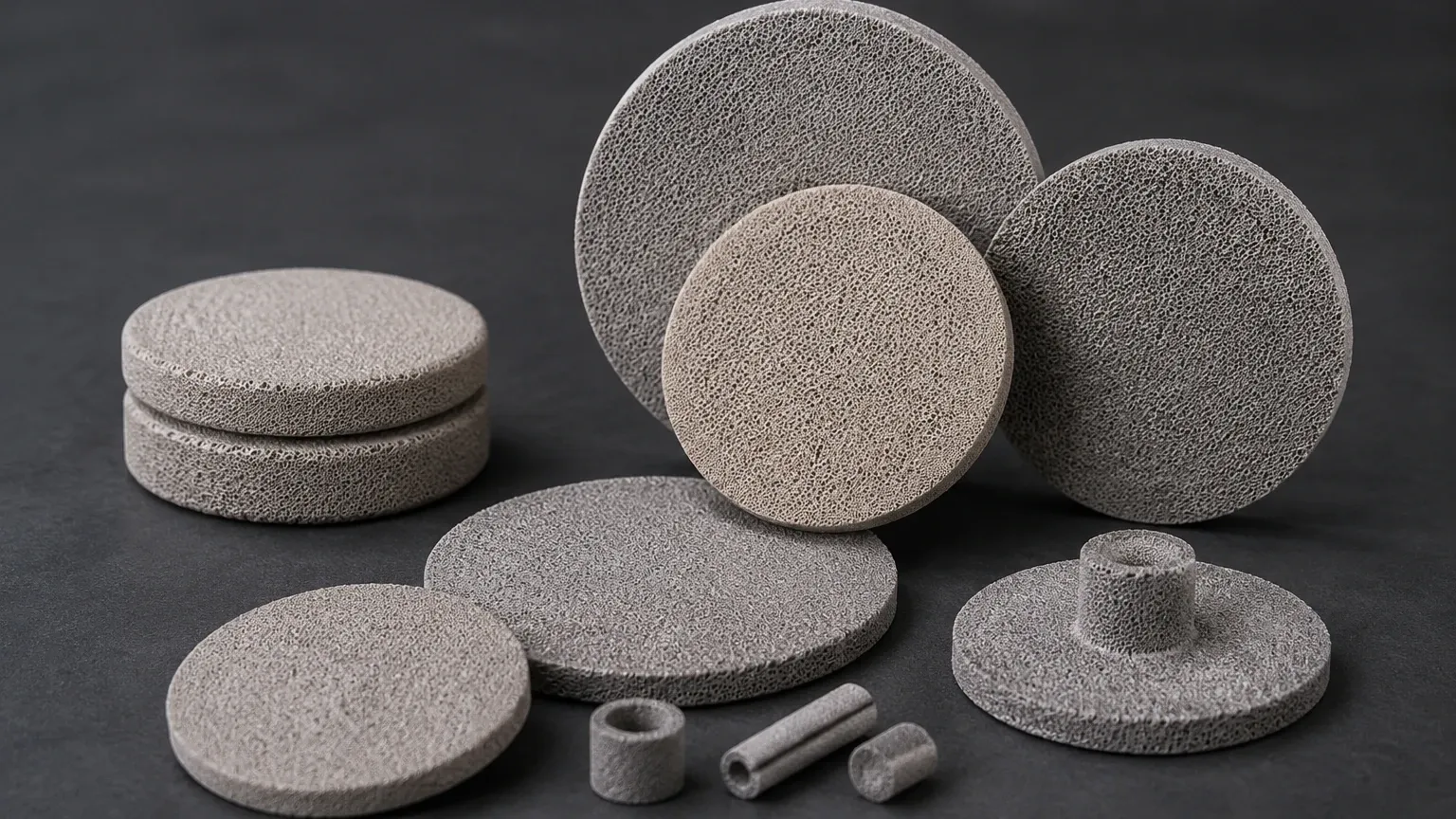
Sintered porous plastic filter discs are manufactured through a controlled thermal process known as sintering. Unlike traditional plastic molding, which melts the polymer into a solid mass, sintering involves heating spherical or irregular plastic granules to a temperature just below their melting point. Under precise pressure, the surfaces of these granules fuse at their contact points.
This process creates a robust, self-supporting structure with an omni-directional, interconnecting pore network. The resulting matrix provides high-efficiency depth filtration, where particles are trapped not only on the surface but throughout the entire thickness of the disc. This "tortuous path" ensures that even if surface pores become partially obstructed, the internal network continues to allow fluid or gas flow, extending the service life of the filter.
Material Selection: PE, PP, and PTFE
The performance of sintered porous plastic filter discs is primarily dictated by the base polymer. Engineers must match the material properties to the specific chemical and thermal demands of their application.
Polyethylene (PE/UHMWPE)
Ultra-High Molecular Weight Polyethylene is the most common material for sintered discs. It offers excellent abrasion resistance and is naturally hydrophobic. PE discs are typically used in water treatment, pneumatic muffling, and general industrial air filtration. They are generally limited to operating temperatures below 80°C (176°F).
Polypropylene (PP)
Sintered PP discs provide enhanced chemical resistance compared to PE, particularly against many organic solvents and salts. They also offer a slightly higher thermal threshold, often reaching up to 100°C (212°F). PP is frequently specified in chemical processing and pharmaceutical applications where sterilization or aggressive cleaning agents are present.
Polytetrafluoroethylene (PTFE)
For the most demanding environments, PTFE sintered discs are the gold standard. They are chemically inert to almost all industrial chemicals and can withstand temperatures up to 260°C (500°F). PTFE is also inherently hydrophobic, making it an ideal choice for gas-liquid separation and venting applications where moisture must be excluded.
Integration with Filter Discs & Packs
While sintered plastic discs are highly effective on their own, they are frequently integrated into broader Filter Discs & Packs systems. In multi-stage filtration, a sintered plastic disc may serve as a pre-filter or a support layer for finer metallic meshes.
Engineers often choose to combine plastic and metal components to achieve specific performance goals. For instance, a sintered plastic disc might provide the necessary depth filtration to capture soft, deformable contaminants that might otherwise extrude through a single-layer wire mesh. Conversely, in high-pressure hydraulic systems, a plastic disc may be encased within a stainless steel rim or mesh pack to provide the necessary structural reinforcement while maintaining the chemical benefits of the polymer media.
Key Performance Evaluation Criteria
When specifying sintered porous plastic filter discs, several technical parameters must be evaluated to ensure the component meets the application's requirements.
1. Micron Rating and Pore Size Distribution: Sintered plastics typically offer filtration ratings from 5 microns up to 200 microns. It is important to distinguish between "nominal" ratings (the ability to retain a percentage of particles) and the actual pore size distribution, which affects the pressure drop.
2. Void Volume: This refers to the percentage of open space within the disc, usually ranging from 30% to 50%. A higher void volume results in lower initial pressure drop and higher flow rates but may reduce the mechanical strength of the disc.
3. Flow Rate vs. Pressure Drop: Engineers must calculate the "clean pressure drop" across the disc. Because the pore structure is complex, the resistance to flow (Delta P) increases as the thickness of the disc increases.
4. Hydrophilic vs. Hydrophobic Properties: Depending on the application, the plastic may need to be treated. While PE and PTFE are naturally hydrophobic (water-repelling), they can be chemically treated to become hydrophilic (water-attracting) to allow for the filtration of aqueous solutions at lower pressures.
Common Industrial Applications
Sintered porous plastic filter discs are utilized across a diverse range of sectors due to their versatility and ability to be molded into custom shapes.
* Medical and Laboratory: Used in pipette tip filters to prevent cross-contamination and in venting caps for specimen containers to allow gas exchange while blocking liquid leakage.
* Pneumatics: Functioning as silencers and mufflers on exhaust ports to reduce noise levels and protect internal valves from atmospheric dust.
* Fluidization: In powder handling systems, these discs are used to distribute air evenly across a surface, allowing powders to flow like liquids for easier transport and dosing.
* Battery Venting: Allowing the escape of gases generated during charging cycles while preventing the ingress of water or debris into the battery cell.
* Water Treatment: Serving as aerators or fine-bubble diffusers in wastewater processing and ozone injection systems.
Addressing Risks and Maintenance
While sintered plastic discs offer many advantages, they are not without limitations. Engineers must be aware of potential risks to avoid system failure.
Mechanical Deformation
Unlike stainless steel Filter Discs & Packs, plastic discs have lower structural rigidity. Under high differential pressure, the plastic can deform or "creep," which may alter the pore size or cause the disc to dislodge from its housing. Ensuring proper support within the filter assembly is critical for high-pressure applications.
Clogging and Cleanability
Because sintered plastics utilize depth filtration, they are more difficult to clean than surface-loading wire meshes. While some backwashing is possible, particles trapped deep within the matrix are often permanent. In many industrial settings, sintered plastic discs are treated as semi-consumable components, replaced once the pressure drop reaches a predetermined threshold.
Chemical Degradation
While polymers are resistant to many substances, they can be susceptible to environmental stress cracking or oxidation when exposed to specific chemicals at elevated temperatures. Always verify the chemical compatibility of the polymer with the specific concentrations and temperatures of the process fluid.
Technical Considerations for Customization
One of the primary reasons engineers choose sintered porous plastic is the ease of customization. Unlike metal filters that require complex machining or welding, plastic discs can be produced to exact specifications through custom tooling.
* Shape and Geometry: Beyond standard circular discs, manufacturers can produce cones, tubes, and complex 3D geometries to fit unique housing designs.
* Assembly Techniques: Sintered plastic can be joined to solid plastic housings using ultrasonic welding, heat staking, or over-molding. This creates a leak-proof seal without the need for adhesives that might contaminate the process fluid.
* Multi-Density Layers: It is possible to produce discs with graduated density—coarser pores on the upstream side and finer pores on the downstream side—to maximize dirt-holding capacity.
Conclusion: Selecting the Right Solution
Sintered porous plastic filter discs represent a highly adaptable solution for modern industrial filtration challenges. By understanding the relationship between material properties, pore architecture, and the broader context of Filter Discs & Packs, procurement and engineering teams can select components that enhance efficiency while controlling costs.
Before finalizing a selection, it is recommended to confirm the exact micron requirements, the maximum operating temperature, and the chemical composition of the fluid. Consulting with a manufacturer experienced in both metal and plastic filtration ensures that the chosen disc will perform reliably within the specific constraints of the industrial application.
