


Whatman Alumina Anodisc Filter Discs
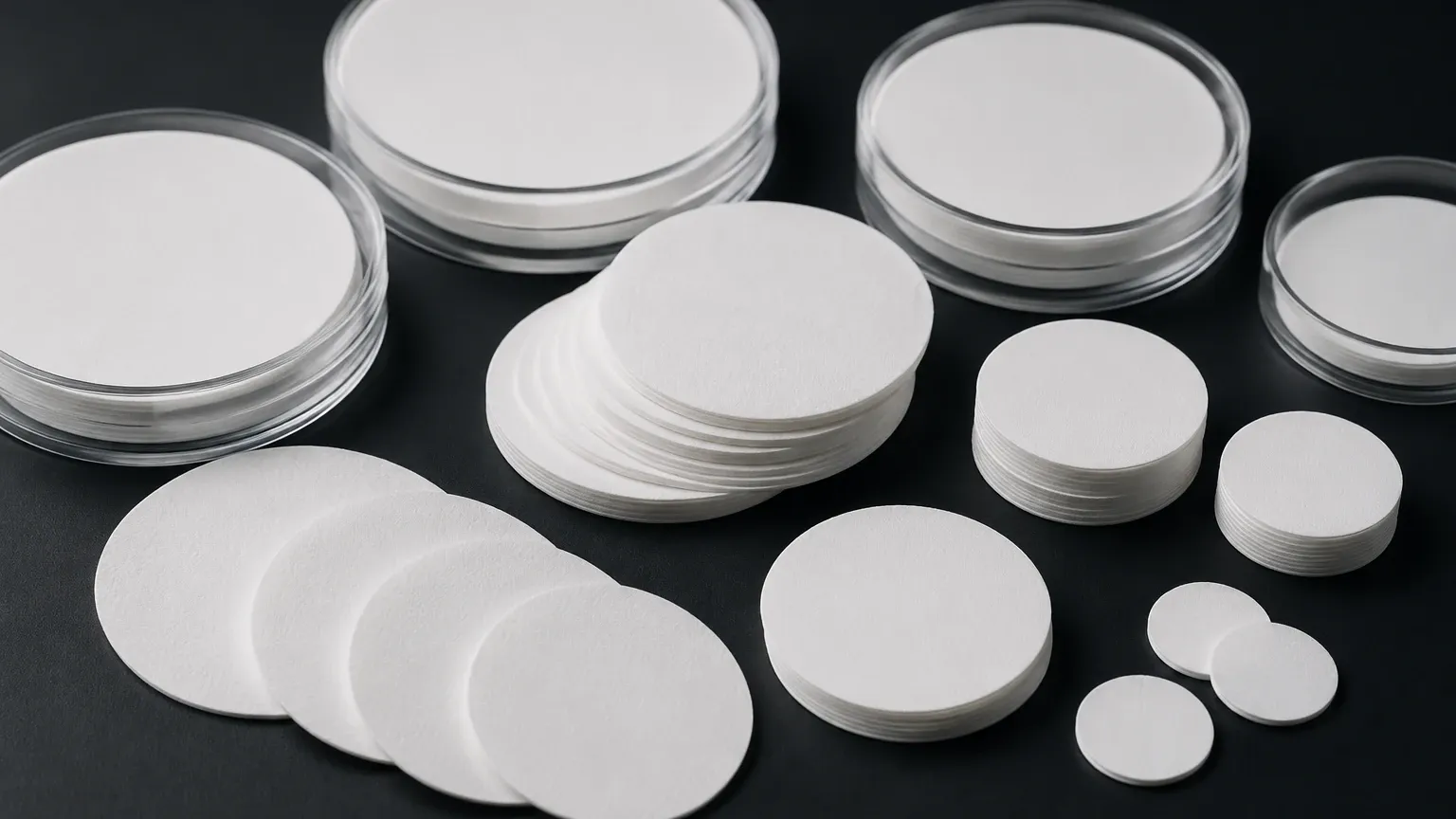
In the specialized field of precision filtration, selecting the correct membrane or disc is critical for ensuring analytical accuracy and process efficiency. Among the most distinct technologies available for laboratory and high-precision applications are Whatman Alumina Anodisc filter discs. These discs are composed of a unique inorganic membrane known as Anopore, which is created through the electrochemical oxidation of high-purity aluminum.
For engineers and technical professionals transitioning from laboratory-scale analysis to industrial-scale production, understanding the performance boundaries of these alumina discs is essential. While they offer unparalleled precision in sub-micron filtration, industrial environments often require the structural robustness found in Filter Discs & Packs manufactured from stainless steel and other high-performance alloys. This article examines the technical properties of alumina-based filtration and compares it with industrial metal filtration solutions to assist in the selection process for demanding B2B applications.
Technical Characteristics of Inorganic Alumina Membranes
Whatman Alumina Anodisc filter discs are defined by their honeycomb-like pore structure. Unlike polymer membranes, which often feature a tortuous path (a random network of interconnected pores), alumina membranes possess precise, non-deformable, and nearly parallel capillary pores. This geometric regularity ensures a very narrow pore size distribution, which is vital for applications requiring exact particle size exclusion.
Pore Density and Geometry
The manufacturing process of Anopore membranes allows for an extremely high pore density. This density translates to high flow rates per unit area relative to the pore size. Because the pores are perpendicular to the surface, there is minimal internal volume where particles can become trapped and lost, which is a significant advantage in biological and pharmaceutical analysis where sample recovery is paramount.
Hydrophilic Nature and Chemical Compatibility
Alumina is naturally hydrophilic, meaning it does not require the addition of wetting agents that could potentially leach into the filtrate. This makes them ideal for aqueous samples. Furthermore, these discs exhibit excellent chemical resistance to most organic solvents. However, engineers must be cautious when using them with strong acids or bases, as the aluminum oxide structure can be susceptible to degradation in extreme pH environments.
From Lab to Industry: The Role of Filter Discs & Packs
While Whatman Alumina Anodisc filter discs excel in the laboratory—specifically in HPLC solvent filtration, mobile phase degassing, and scanning electron microscopy (SEM)—industrial processes often demand a different set of physical properties. As a project moves from the benchtop to the pilot plant or full-scale production, the filtration media must withstand higher pressures, mechanical stresses, and aggressive cleaning cycles.
This is where industrial Filter Discs & Packs become the standard. In sectors such as chemical processing, polymer melt filtration, and hydraulic systems, the fragility of a ceramic or alumina disc is a liability. Metal filter discs, typically constructed from multiple layers of stainless steel wire mesh, provide the necessary durability while maintaining high filtration accuracy.
Bridging the Gap
When scaling up, engineers must determine if the precision of an alumina disc is still required or if the high-flow, high-strength characteristics of a sintered metal mesh disc are more appropriate. For example, in the production of fine chemicals, a multi-layer stainless steel pack can be engineered to provide sub-micron filtration while allowing for high-pressure backwashing—a feat impossible for alumina membranes.
Engineering Considerations for Industrial Filter Discs & Packs
Selecting the right filtration component for industrial equipment involves more than just picking a micron rating. It requires a deep dive into the mechanical and thermal demands of the application. Industrial filter discs are often designed as "packs"—multiple layers of different mesh counts bonded together to optimize performance.
Structural Integrity and Pressure Resistance
In industrial extruders or hydraulic lines, pressure drops can be significant. A single-layer membrane would rupture under these conditions. Industrial packs utilize a "support layer" of coarse mesh to provide mechanical strength, a "filtration layer" to achieve the desired micron rating, and often a "drainage layer" to facilitate flow. This layered approach ensures that the filtration media remains flat and functional even under differential pressures exceeding several hundred bars.
Edge Finishing and Sealing
Unlike laboratory discs that are often placed in a simple glass or plastic housing, industrial discs must integrate seamlessly into complex machinery. This requires specialized edge treatments:
* Spot Welding: Used to keep multi-layer packs aligned during installation.
* Aluminum or Copper Rimming: A metal rim is crimped around the edge of the disc to provide a superior seal and prevent bypass at the periphery.
* Sintering: The layers are thermally bonded, creating a monolithic structure that eliminates the risk of media migration.
Material Selection and Chemical Compatibility
In industrial filtration, the choice of material is the primary determinant of the filter's lifespan and the purity of the final product. While Whatman Alumina Anodisc filter discs are limited to aluminum oxide, metal Filter Discs & Packs can be fabricated from a wide array of alloys to suit specific environments.
Stainless Steel (304 and 316L)
Stainless steel 316L is the most common material for industrial filtration due to its excellent corrosion resistance and ability to withstand high temperatures. It is the preferred choice for food and beverage, pharmaceutical, and general chemical applications. For less demanding environments, SS304 provides a cost-effective alternative.
Exotic Alloys
For highly corrosive environments, such as those involving hot acids or seawater, materials like Hastelloy®, Inconel®, or Monel® are utilized. These alloys prevent the pitting and stress-corrosion cracking that can occur in standard stainless steels. When comparing these to alumina discs, the metal options offer a much broader range of pH compatibility and mechanical toughness.
Manufacturing Processes for Precision Metal Filtration
To achieve the precision required to compete with high-end laboratory membranes, manufacturers like Kaifil utilize advanced weaving and sintering techniques. The performance of a filter disc is largely dictated by the weave type used in its construction.
Weave Types and Their Impact
1. Plain Dutch Weave: Offers a high degree of strength and is excellent for surface filtration.
2. Twill Dutch Weave: Allows for a higher number of wires per inch, resulting in finer filtration ratings and better flow rates than plain weaves.
3. Reverse Dutch Weave: Provides high mechanical strength and is often used in applications where high pressure and backwashing are required, such as in polymer melt filtration.
By combining these weaves into a single pack, manufacturers can tailor the dirt-holding capacity and flow resistance to meet specific process requirements. This level of customization is a hallmark of professional filtration engineering, allowing for optimized performance that standard off-the-shelf laboratory discs cannot provide.
Optimizing Performance: Selection and Maintenance Strategies
For purchasing teams and engineers, the total cost of ownership (TCO) is a critical metric. While the initial cost of a high-quality stainless steel filter pack may be higher than a disposable alumina disc, the long-term savings are significant due to cleanability and durability.
Cleanability and Regeneration
One of the primary advantages of metal Filter Discs & Packs is their ability to be cleaned and reused. Depending on the contaminant, these filters can be regenerated using:
* Ultrasonic Cleaning: High-frequency sound waves dislodge particles from deep within the mesh.
* Chemical Cleaning: Solvents or acids dissolve organic or inorganic build-up without damaging the stainless steel structure.
* Thermal Processing: In the case of polymer filtration, heat can be used to burn off residual plastics.
In contrast, Whatman Alumina Anodisc filter discs are typically intended for single-use or limited-use analytical applications. In an industrial setting, the downtime required to replace disposable filters frequently can quickly exceed the cost of investing in a permanent, cleanable metal solution.
Confirming Specifications Before Purchase
Before finalizing a filtration solution, technical teams should confirm several key parameters with their manufacturer:
* Micron Rating (Absolute vs. Nominal): Ensure the filter meets the specific exclusion requirements of the process.
* Flow Rate Requirements: Calculate the maximum allowable pressure drop across the disc.
* Operating Temperature: Confirm that all materials, including rims and welds, can withstand the process temperature.
* Housing Compatibility: Verify the exact dimensions and tolerances required for a leak-proof fit.
Conclusion
Whether utilizing the extreme precision of Whatman Alumina Anodisc filter discs for laboratory analysis or deploying robust Filter Discs & Packs for industrial production, the fundamental goal remains the same: achieving reliable, repeatable filtration. By understanding the material science behind alumina membranes and the engineering versatility of stainless steel mesh, professionals can make informed decisions that balance precision, durability, and cost-effectiveness. For large-scale industrial applications where durability and customization are paramount, custom-engineered metal filtration components provide the reliable performance necessary to maintain process integrity.
