


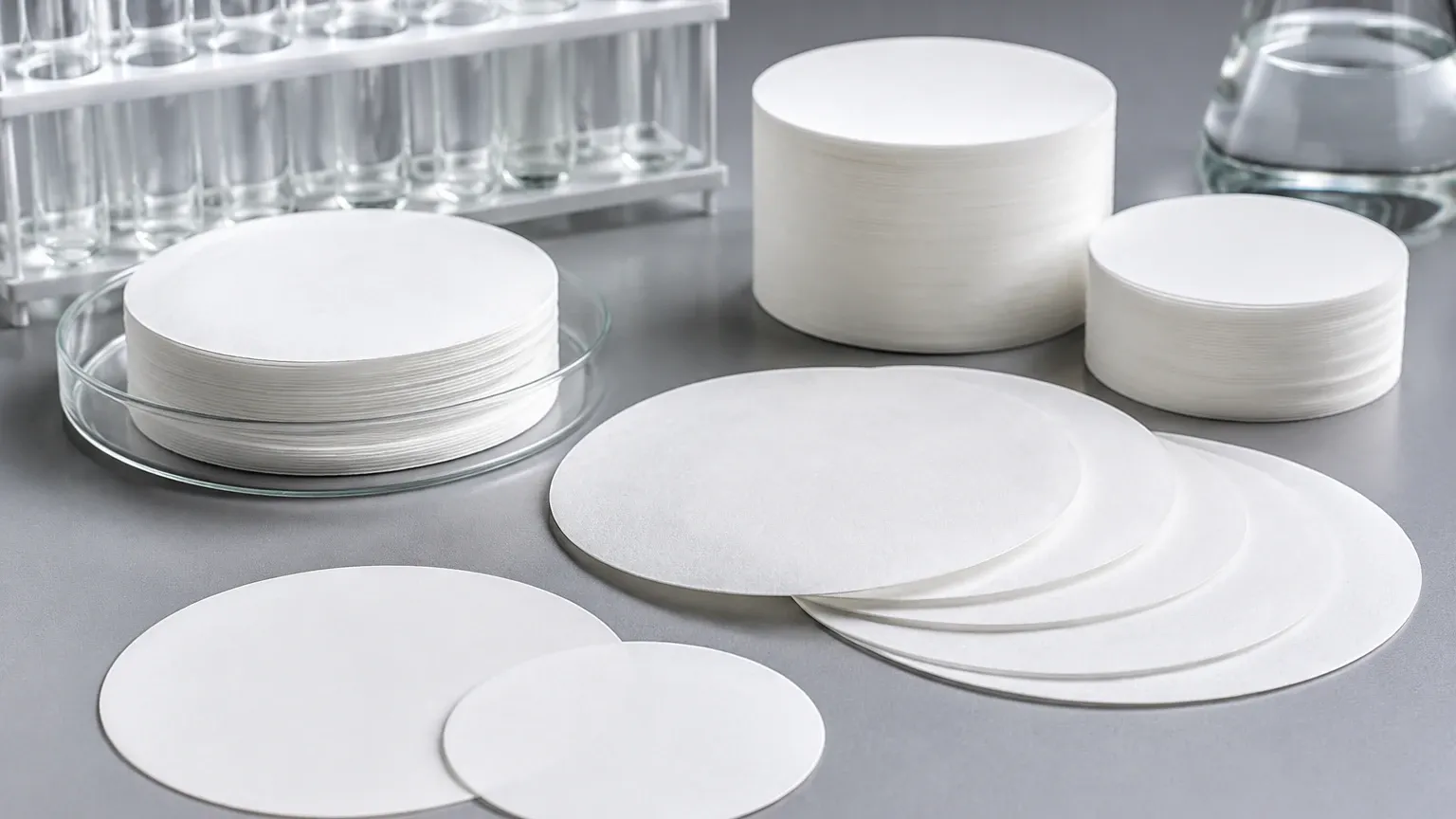
Whatman Filter Paper Discs
In the landscape of industrial and laboratory filtration, precision is the primary metric of success. Among the most recognized components in liquid and gas separation are Whatman filter paper discs. These components serve as a standard for qualitative and quantitative analysis, as well as pre-filtration stages in complex industrial workflows. For engineers and procurement specialists, understanding the nuances of these paper-based media—and how they compare to more robust solutions like stainless steel Filter Discs & Packs—is essential for optimizing process efficiency and ensuring product purity.
This guide examines the technical specifications, application logic, and selection criteria for filter paper discs, while providing the necessary context for transitioning to high-performance metal filtration when application demands exceed the physical limits of cellulose media.
Understanding the Composition of Whatman Filter Paper Discs
Whatman filter paper discs are primarily manufactured from high-quality cotton linters, which have been treated to achieve a high alpha-cellulose content (typically exceeding 98%). The performance of these discs is dictated by the physical structure of the cellulose fibers, which creates a tortuous path for fluid, effectively trapping particles within the depth of the medium.
Qualitative vs. Quantitative Grades
Industrial users typically categorize these discs into two functional groups:
1. Qualitative Filter Papers: These are used for general filtration where the primary goal is clarifying liquids or removing precipitates. They are not intended for gravimetric analysis because they leave a measurable amount of ash upon ignition. Common grades include Grade 1 (standard clarity), Grade 4 (high flow), and Grade 5 (fine particle retention).
2. Quantitative (Ashless) Filter Papers: These discs undergo acid-washing (typically with hydrochloric and hydrofluoric acids) to reduce ash content to extremely low levels (often <0.01%). This makes them suitable for gravimetric analysis where the filter is burned off to weigh the remaining precipitate. Grades such as 40, 41, 42, and 44 are industry standards for specific particle sizes.
Technical Evaluation Criteria for Filter Media
When selecting Whatman filter paper discs for an industrial process, engineers must evaluate several performance metrics to ensure the media does not become a bottleneck or a point of failure.
Particle Retention (Micron Rating)
Unlike metal mesh, which often provides a definitive absolute rating, paper discs are generally rated by "nominal" retention. This refers to the particle size at which a specific percentage (usually 98%) of particles are retained. For instance, Grade 2 offers a nominal retention of 8 µm, while Grade 5 provides much finer retention at 2.5 µm.
Flow Rate and Permeability
The flow rate is inversely proportional to retention efficiency. In a B2B production environment, a disc that provides excellent retention but slows down the process excessively can lead to unacceptable lead times. Factors affecting flow include the thickness of the paper and the porosity of the fiber matrix. Grades like Whatman Grade 4 are specifically engineered for high-speed filtration of coarse precipitates.
Loading Capacity
This refers to the ability of the filter disc to hold solids before the pressure drop across the media becomes too high. Cellulose papers have a finite loading capacity compared to multi-layered metal Filter Discs & Packs, which can be designed with graduated density to handle higher dirt-holding requirements.
Comparing Paper Discs to Stainless Steel Filter Discs & Packs
While Whatman filter paper discs are indispensable in laboratory settings and light-duty industrial applications, they have inherent physical limitations. Engineering teams must determine when a process requires a transition from disposable cellulose to cleanable, high-strength stainless steel components.
| Feature | Whatman Filter Paper Discs | Stainless Steel Filter Discs & Packs |
| :— | :— | :— |
| Material | Alpha-Cellulose / Glass Fiber | 304, 316L Stainless Steel, Inconel |
| Temperature Limit | Generally < 120°C | Up to 600°C+ (depending on alloy) |
| Pressure Resistance | Low (requires support) | High (self-supporting or reinforced) |
| Chemical Compatibility | Limited (degrades in strong acids/bases) | Excellent (broad pH range) |
| Reusability | Single-use (Disposable) | Multi-use (Cleanable/Backwashable) |
| Fiber Migration | Possible under high flow | Negligible (welded or sintered) |
For processes involving high-pressure hydraulic systems, aggressive chemical solvents, or high-temperature steam, the structural integrity of Filter Discs & Packs manufactured from stainless steel wire mesh or sintered metal is often the more cost-effective long-term solution. These metal components eliminate the risk of paper bursting and provide consistent filtration performance over thousands of cycles.
Industrial Applications and Use Cases
Whatman filter paper discs are utilized across several critical sectors, often as a primary filtration layer or as a secondary polishing stage.
Pharmaceutical and Biotechnology
In the production of active pharmaceutical ingredients (APIs), these discs are used for the initial separation of crystals from mother liquors. Quantitative grades are essential in QC labs to verify the purity of batches through gravimetric analysis.
Food and Beverage Processing
Paper discs are frequently used in the analysis of beverages to detect sediment or to clarify samples for sugar and protein analysis. In industrial fryers or oil processing, larger cellulose-based discs may be used to remove fine carbonized particles, though these are often replaced by metal mesh filters for continuous operation.
Environmental Monitoring
Glass fiber versions of these discs (such as Grade GF/C) are the standard for monitoring total suspended solids (TSS) in wastewater. Their high loading capacity and ability to withstand temperatures up to 500°C (for glass fiber) make them ideal for volatile solids analysis.
Common Risks and Operational Challenges
Engineers must be aware of the potential failure modes associated with cellulose filter discs to prevent batch contamination or system downtime.
1. Fiber Migration: In high-velocity fluid streams, individual cellulose fibers can break away from the disc and enter the filtrate. This is unacceptable in "final-mile" pharmaceutical or semiconductor applications. In such cases, a metal mesh filter or a membrane filter is required to ensure zero downstream contamination.
2. Chemical Degradation: Cellulose is sensitive to high-concentration mineral acids and strong oxidizing agents. If the pH of the process fluid fluctuates significantly, the paper disc may lose its structural integrity, leading to a "blowout" or bypass.
3. Hygroscopic Expansion: Paper absorbs moisture, which can cause the disc to swell or warp within the filter holder. This can create gaps at the edges (bypass), allowing unfiltered fluid to pass through. Ensuring a tight mechanical seal, often achieved through precision-machined housings or specialized gaskets, is critical.
Engineering Checklist: Confirmations Before Procurement
Before finalizing a purchase order for filtration media, technical professionals should confirm the following parameters to ensure compatibility and performance:
* Fluid Chemistry: Confirm the pH and solvent compatibility of the fluid. If the fluid is highly alkaline or contains strong solvents, consider moving from cellulose to stainless steel Filter Discs & Packs.
* Operating Pressure: Determine the maximum differential pressure ($ΔP$) the media will face. Paper discs usually require a perforated support plate to prevent rupture.
* Particle Size Distribution (PSD): Match the nominal retention of the disc to the smallest particle that must be removed. If the PSD is broad, a multi-stage filter pack may be more efficient than a single paper disc.
* Sterilization Requirements: If the process requires in-situ sterilization (SIP) or autoclaving, verify that the grade of paper can withstand the moisture and temperature without losing its pore structure.
* Total Cost of Ownership (TCO): Calculate the cost of frequent filter changes, labor for replacement, and disposal of contaminated paper media. In high-volume industrial lines, the initial investment in a permanent metal filter often yields a lower TCO within 12 to 18 months.
Customization and Industrial Integration
While standard diameters (such as 47mm, 90mm, and 110mm) are common in laboratory settings, industrial applications often require custom-cut sizes or specialized shapes. For large-scale manufacturing, filtration media are often integrated into multi-layered packs. These packs may combine different mesh counts or paper grades to provide graduated filtration, effectively extending the service life of the filter.
For organizations looking to scale from pilot-plant testing to full-scale production, transitioning from Whatman filter paper discs to custom-engineered metal filtration solutions allows for higher flow rates, greater mechanical durability, and better integration into automated cleaning systems. By understanding the specific strengths and limitations of each medium, engineers can design filtration systems that balance precision with industrial-grade reliability.
