


Brita Water Filter Discs
In the landscape of water purification, the term "filter disc" encompasses a broad range of technologies, from simple point-of-use consumer products to highly engineered industrial components. Among the most recognized consumer-facing products are brita water filter discs, which are designed for gravity-fed or low-pressure carafes and water bottles. However, for engineers and procurement professionals in the industrial sector, the requirements for filtration go far beyond the capabilities of consumer-grade carbon discs.
Industrial applications require Filter Discs & Packs that can withstand high temperatures, corrosive chemicals, and significant differential pressures. Understanding the technical distinctions between basic consumer filtration and professional-grade metal mesh filtration is essential for selecting the right component for a specific industrial process.
The Mechanics of Brita Water Filter Discs
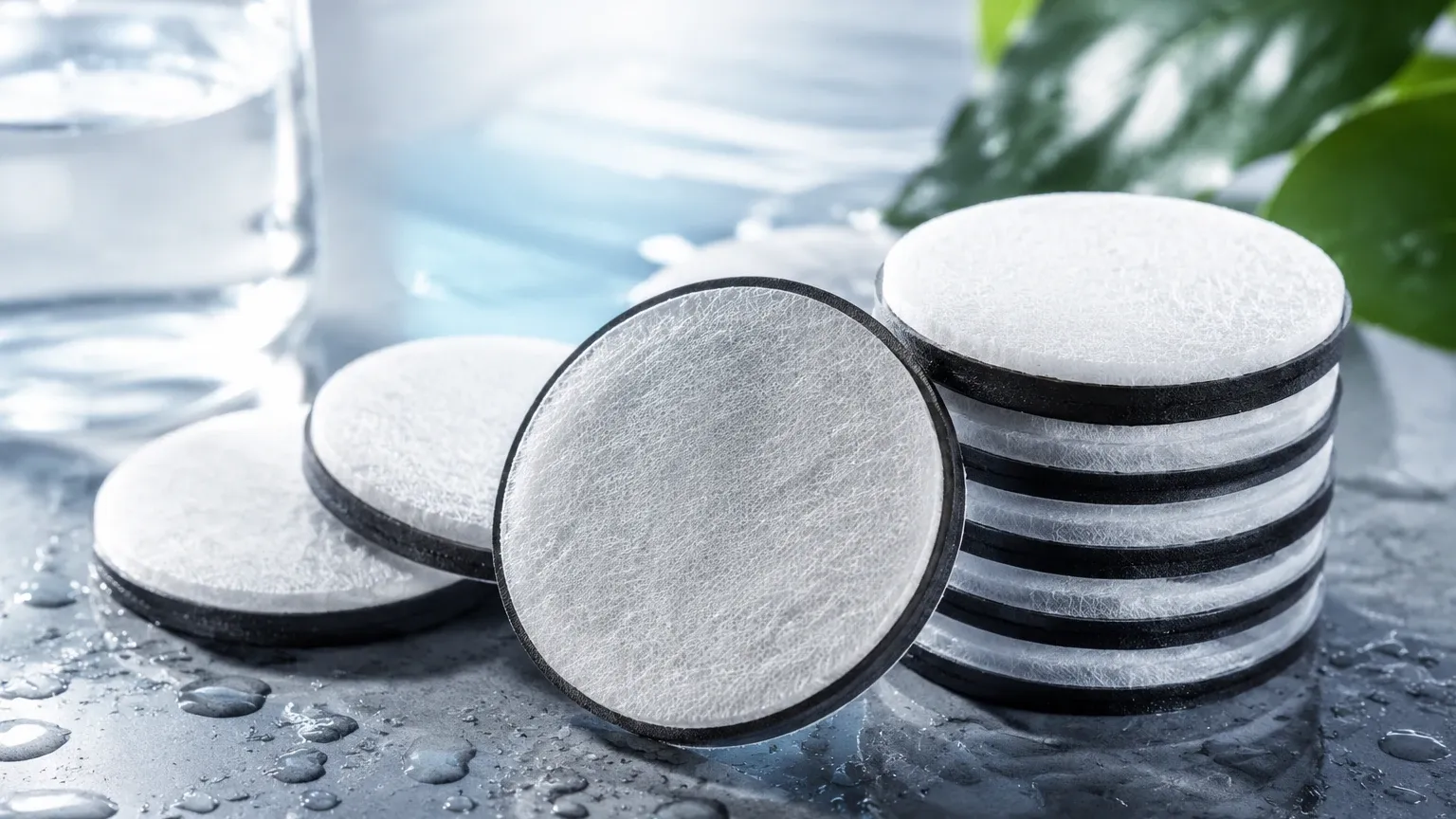
To understand the broader category of disc filtration, it is helpful to examine the baseline technology used in consumer products like brita water filter discs. These discs primarily utilize activated carbon technology, often compressed into a thin wafer or enclosed within a non-woven fleece material.
Adsorption vs. Mechanical Straining
The primary mechanism of a carbon-based disc is adsorption. Activated carbon has an incredibly high surface area with millions of microscopic pores. As water passes through the disc, organic contaminants, chlorine, and certain heavy metals chemically bond to the carbon surface. This is highly effective for improving the taste and odor of potable water at low flow rates.
However, these discs have limitations in industrial environments. They are generally disposable, cannot be cleaned, and lack the structural integrity required for high-pressure systems. Furthermore, their filtration accuracy is often not defined with the precision (micron rating) required for fine chemical or pharmaceutical processing.
Industrial Evolution: From Carbon to Stainless Steel Filter Discs & Packs
When moving from residential water treatment to industrial processing—such as polymer filtration, oil refining, or large-scale food production—the materials and structures of filter discs must evolve. Industrial Filter Discs & Packs are typically constructed from stainless steel wire mesh or sintered metal fibers.
Unlike the carbon used in brita water filter discs, stainless steel provides mechanical straining. This process removes particles based on physical size rather than chemical adsorption. This is critical for processes where the chemical composition of the fluid must remain unchanged, but particulate matter must be strictly controlled.
Key Differences in Performance
1. Pressure Resistance: While consumer discs operate under gravity or minimal suction, industrial metal discs can handle hundreds of PSI (pounds per square inch) of differential pressure.
2. Temperature Tolerance: Stainless steel discs operate efficiently in environments exceeding 300°C, where carbon or plastic-based filters would degrade or melt.
3. Chemical Compatibility: Industrial discs are engineered from specific alloys like 304, 316, or 316L stainless steel to resist corrosion from acids, alkalis, and solvents.
Material Engineering: Why Stainless Steel Dominates Industrial Settings
For technical professionals, the choice of material is the first step in the selection process. While brita water filter discs rely on the chemical properties of carbon, industrial discs rely on the metallurgical properties of the wire mesh.
Stainless Steel 304 vs. 316L
* Type 304: The standard grade for most industrial filtration. It offers excellent strength and basic corrosion resistance, making it suitable for food processing and general industrial water treatment.
* Type 316L: Contains molybdenum, which provides superior resistance to chlorides and pitting. This is the preferred choice for marine environments, pharmaceutical manufacturing, and aggressive chemical processing.
In addition to standard stainless steel, specialized applications may require exotic alloys like Monel, Inconel, or Hastelloy. These materials are selected when the filtration environment involves extreme acidity or high-temperature oxidation that would compromise standard steel.
Structural Variations: Single Layer vs. Multi-Layer Packs
In industrial filtration, a single layer of mesh is often insufficient to meet both the filtration accuracy and the structural requirements of the system. This is where the concept of "packs" becomes vital. Industrial Filter Discs & Packs are often engineered as multi-layer assemblies.
Layer Configuration
An industrial filter pack typically consists of three types of layers:
1. Filtration Layer: The middle layer with the finest mesh, determining the actual micron rating of the pack.
2. Support Layer: Coarser mesh layers on either side of the filtration layer that provide structural rigidity and prevent the fine mesh from deforming under pressure.
3. Drainage Layer: Often the outermost layers, designed to facilitate even flow distribution across the entire surface of the disc.
Bonding Methods
To ensure these layers act as a single unit, they are often joined using specific techniques:
* Spot Welding: Multiple points are welded around the circumference to hold the layers together. This is cost-effective and suitable for most applications.
* Aluminum or Stainless Steel Edging: The layers are bound by a metal rim (frame). This provides a better seal within the filter housing and prevents bypass.
* Sintering: The layers are heated in a vacuum furnace until the contact points of the wires fuse together. This creates the most durable, rigid, and precise filter media available, capable of withstanding extreme backwashing pressures.
Engineering Selection Criteria for Custom Filtration
When engineers move beyond the standardized sizes of consumer brita water filter discs and begin designing industrial systems, several technical parameters must be defined to ensure performance and longevity.
1. Micron Rating (Absolute vs. Nominal)
Industrial filters are rated by the size of the particles they can remove.
* Nominal Rating: Indicates the filter's ability to retain the majority of particles of a specified size (e.g., 90% of 10-micron particles).
* Absolute Rating: Refers to the diameter of the largest hard spherical particle that will pass through the filter under specified test conditions. For critical pharmaceutical or hydraulic applications, absolute ratings are mandatory.
2. Effective Filtration Area (EFA)
The EFA determines the flow capacity and the dirt-holding capacity of the disc. A larger EFA reduces the flux (flow per unit area), which generally leads to a lower pressure drop and a longer service life between cleanings.
3. Mesh Weave Types
The way the wires are woven significantly impacts the performance of Filter Discs & Packs:
* Plain Weave: Simple over-and-under pattern; provides high flow rates but lower strength.
* Dutch Weave: Uses different wire diameters in the warp and weft directions to create a denser, stronger mesh with finer filtration capabilities.
* Twilled Weave: Allows for thicker wires and higher mesh counts, suitable for heavy-duty applications.
Application Focus: From Food & Beverage to Hydraulics
The versatility of metal filter discs allows them to serve diverse industries where consumer-grade discs would fail.
Food and Beverage Processing
In the production of juices, oils, and syrups, filter discs are used to remove pulp, sediment, or carbon fines. Unlike the plastic components found in many brita water filter discs, stainless steel components are "food grade" and can withstand Clean-in-Place (CIP) procedures involving high-temperature steam and caustic detergents.
Chemical and Polymer Filtration
In the production of synthetic fibers and plastics, molten polymers are forced through filter packs at extremely high pressures. These packs must remove gels and degraded polymer particles to ensure the quality of the final product. The structural integrity of the spot-welded or framed pack is critical here to prevent media migration.
Hydraulic and Lubrication Systems
Precision metal discs are used in hydraulic circuits to protect sensitive valves and pumps from metal shavings and environmental contaminants. These discs must provide a very low initial pressure drop to ensure the system operates efficiently while providing high-efficiency particle removal.
Maintenance and Total Cost of Ownership (TCO)
A significant advantage of industrial Filter Discs & Packs over disposable options like brita water filter discs is cleanability. While consumer discs must be discarded after their carbon is saturated, stainless steel discs can often be cleaned and reused.
Cleaning Methods
* Ultrasonic Cleaning: Uses high-frequency sound waves in a liquid bath to dislodge particles trapped deep within the mesh pores.
* Backwashing: Reversing the flow of the fluid to push contaminants out of the mesh.
* Chemical Cleaning: Using solvents or acids to dissolve accumulated organic or inorganic scaling.
Evaluating TCO
When calculating the total cost of ownership, engineers must look beyond the initial purchase price. A high-quality stainless steel filter pack may have a higher upfront cost than a disposable alternative, but its ability to be cleaned multiple times, its resistance to system failures (blow-outs), and its consistent filtration performance often result in a much lower cost per gallon filtered over the life of the equipment.
Customization: The Path to Optimized Performance
For B2B buyers, the most critical factor is often customization. Standard off-the-shelf sizes rarely meet the specific needs of a complex industrial machine. Customization options for industrial filter discs include:
* Custom Geometry: Beyond simple circles, discs can be manufactured in oval, rectangular, or complex polygonal shapes to fit unique housing designs.
* Variable Layering: Engineers can specify the exact sequence of mesh counts to balance dirt-holding capacity with pressure drop.
* Edge Treatments: Options for various rim materials (aluminum, copper, stainless steel) or specialized gaskets to ensure a leak-proof fit.
In conclusion, while brita water filter discs serve as an excellent example of accessible water filtration for the general public, the industrial world demands the precision, durability, and versatility of metal Filter Discs & Packs. By selecting the appropriate material, weave, and structural configuration, technical professionals can ensure their filtration systems provide reliable, cost-effective performance in even the most demanding environments.
