


Disc Filter Y Type
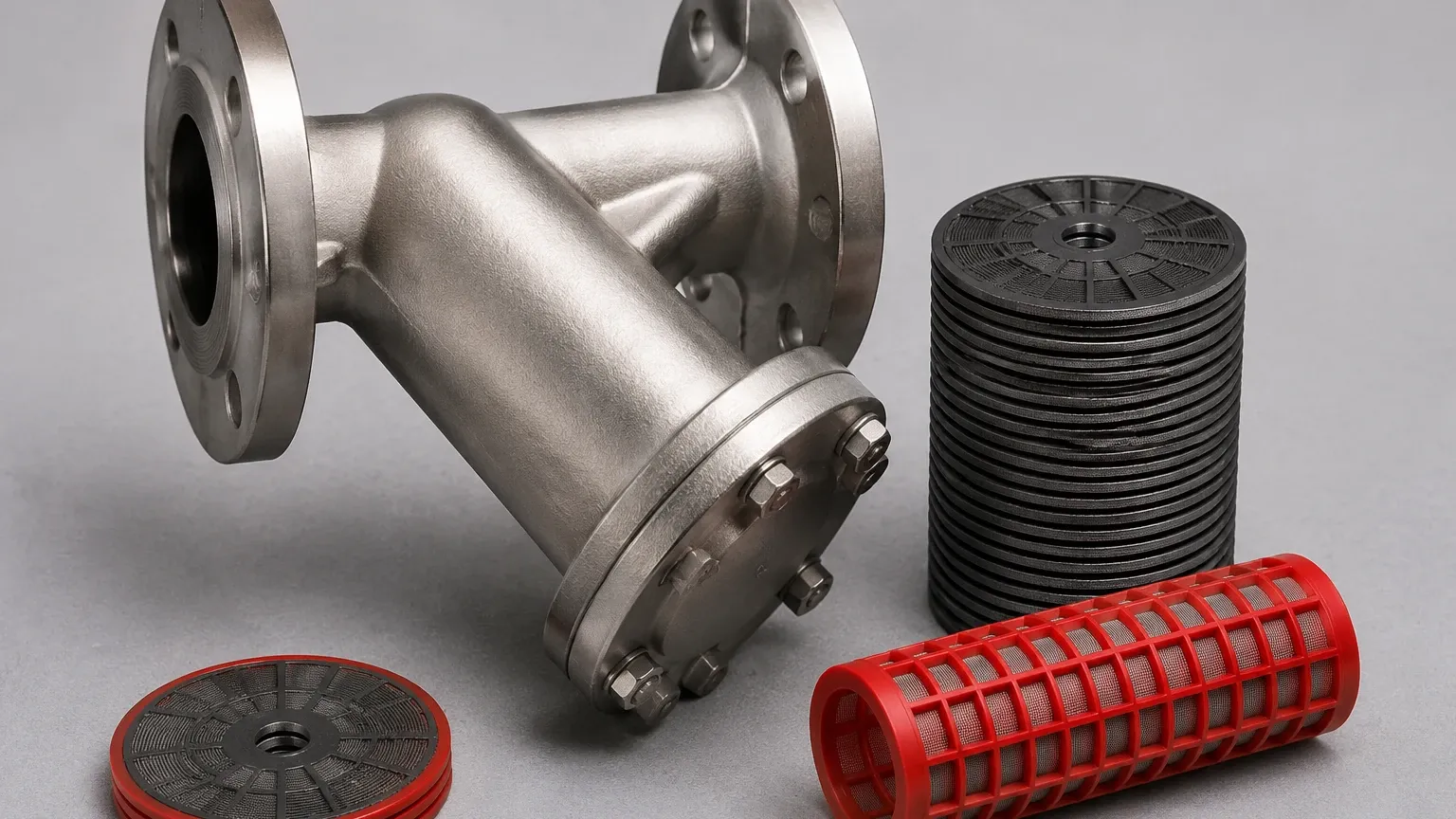
In industrial fluid management, the efficiency of a filtration system is often determined by the synergy between the housing geometry and the internal filtration media. The disc filter y type configuration represents a critical intersection of mechanical design and high-precision filtration. By utilizing a Y-shaped housing—commonly referred to as a Y-strainer or Y-filter—and integrating specialized filter discs or packs, engineers can achieve effective particulate removal with minimal footprint and pressure loss.
This technical guide explores the engineering principles of the disc filter y type, the selection of internal media such as Filter Discs & Packs, and the performance considerations essential for chemical, hydraulic, and pharmaceutical applications.
Understanding the Y-Type Filter Configuration
The "Y" configuration is named for its physical shape, where the filter element is housed in a leg that branches off the main flow path at an angle. This design is primarily used for pressurized lines, either for liquid or gas, to protect downstream equipment from debris and particulate contamination.
In a disc filter y type setup, the traditional perforated basket or simple wire mesh sleeve is replaced or supplemented by a stack of filter discs or a precision-engineered filter pack. The angled orientation of the filter chamber allows for a larger surface area relative to the pipe diameter, which is vital for maintaining flow rates while capturing fine contaminants. This geometry also facilitates the collection of debris in the lower portion of the diagonal leg, which can often be cleared via a blow-off valve without necessitating a full system shutdown.
The Role of Filter Discs & Packs in Y-Type Housings
The internal filtration element is the most critical component of the assembly. While standard Y-strainers often focus on coarse filtration (straining), the integration of sophisticated Filter Discs & Packs allows these units to function as high-precision filtration tools.
Multi-Layer Sintered Discs
For demanding industrial environments, multi-layer sintered wire mesh discs are often the preferred choice. These discs consist of several layers of stainless steel wire cloth bonded together through a heat-treatment process (sintering). This creates a robust, integrated structure that offers:
* Fixed Pore Geometry: Unlike single-layer meshes that may shift under high pressure, sintered discs maintain precise micron ratings.
* Mechanical Strength: The ability to withstand high differential pressures without deformation.
* Depth Filtration Characteristics: Depending on the layer configuration, these packs can provide a degree of depth filtration, increasing dirt-holding capacity.
Edge-Sealed and Framed Packs
In a disc filter y type application, ensuring that fluid does not bypass the media is paramount. Custom filter packs often feature spot-welded or aluminum/stainless steel edged borders. This framing provides a rigid sealing surface that interfaces with the internal seats of the Y-housing, preventing "leak-by" and ensuring 100% of the fluid passes through the filtration media.
Structural Engineering and Flow Dynamics
When specifying a disc filter y type, engineers must analyze the fluid dynamics within the angled chamber. The flow typically enters the side of the filter element and exits through the center, or vice versa, depending on the specific housing design.
Pressure Drop (ΔP) Considerations
Every filtration element introduces a resistance to flow. The total pressure drop in a Y-type system is the sum of the housing loss and the media loss. Because the Y-type design allows for a larger filter area than an in-line strainer, the clean pressure drop is generally lower. However, as the filter discs accumulate debris, the ΔP will rise. Engineers must calculate the "Terminal Pressure Drop"—the point at which the filter must be cleaned or replaced to prevent pump cavitation or pipe stress.
Turbulence and Velocity
The 45-degree or 60-degree angle of the Y-branch influences the velocity profile of the fluid. High-velocity fluids can cause erosion on the filter media if not properly managed. Utilizing reinforced filter packs with support layers helps dissipate the kinetic energy of the incoming fluid, protecting the fine filtration mesh from mechanical fatigue.
Material Science: Stainless Steel and Specialty Alloys
Material selection is dictated by the chemical compatibility of the fluid and the operating temperature. Kaifil specializes in manufacturing filtration components from high-grade alloys to ensure longevity in corrosive environments.
1. AISI 304/304L: The standard for general industrial use, offering good corrosion resistance and cost-effectiveness.
2. AISI 316/316L: Preferred for pharmaceutical, food and beverage, and marine applications due to its superior resistance to chlorides and organic acids.
3. Duplex Stainless Steel: Used in high-pressure or highly corrosive chemical processing where standard austenitic steels might fail due to stress corrosion cracking.
4. High-Temperature Alloys: For steam filtration or high-heat chemical reactions, specialized alloys ensure the structural integrity of the filter discs remains intact at temperatures exceeding 300°C.
Technical Specifications and Performance Parameters
To optimize a disc filter y type for a specific process, several technical parameters must be confirmed during the design phase:
* Micron Rating: This defines the size of the particles the filter will retain. Ratings can range from 1 micron for fine chemical polishing to 200+ microns for coarse protection.
* Effective Filtration Area (EFA): The total surface area of the discs available for filtration. Increasing the EFA reduces the frequency of cleaning cycles.
* Operating Pressure: The housing and the internal Filter Discs & Packs must be rated for the maximum system pressure, including potential surges.
* Viscosity Adjustments: High-viscosity fluids (like heavy oils or polymers) require larger pore sizes or increased surface area to maintain acceptable flow rates at a given pressure.
Industrial Applications and Compatibility
The versatility of the disc filter y type makes it a staple in various sectors:
Chemical and Petrochemical Processing
In these industries, Y-type filters protect sensitive valves and instrumentation from scale and sediment. The use of stainless steel discs ensures compatibility with a wide range of aggressive solvents and reagents.
Hydraulic and Lubrication Systems
Precision hydraulic components require extremely clean oil to prevent wear. A Y-type filter with a high-strength sintered disc pack can remove fine metallic particles and contaminants that would otherwise cause component failure.
Food and Beverage Production
For liquid food products, the filter must be easy to clean and constructed from FDA-compliant materials. The disc filter y type allows for rapid inspection and cleaning, supporting hygienic processing standards.
Water Treatment and Desalination
In pre-filtration stages, these units remove sand, grit, and biological matter before the water reaches membrane systems or UV sterilizers. The durability of metal discs is an advantage over disposable polymer cartridges in high-flow water applications.
Maintenance and Operational Longevity
One of the primary advantages of the disc filter y type is the ease of maintenance. Unlike complex multi-cartridge housings, the Y-type design is straightforward.
* Cleaning Procedures: Many metal filter discs are cleanable. Depending on the contaminant, cleaning can be achieved via backflushing, ultrasonic cleaning, or chemical soaking. This significantly reduces the total cost of ownership compared to disposable filters.
* Monitoring: Installing differential pressure gauges across the inlet and outlet of the Y-filter is the most effective way to track filter loading. A sudden drop in pressure may indicate a media rupture, while a rapid increase indicates heavy loading.
* Gasket and Seal Integrity: During routine maintenance, the seals between the filter leg cap and the housing must be inspected. Using high-quality elastomers (Viton, EPDM, or PTFE) ensures a leak-free operation.
Customization for OEM and Specialized Requirements
Industrial applications often present unique challenges that standard off-the-shelf filters cannot meet. Customization is a core strength of Kaifil’s manufacturing process. For engineers developing new equipment or optimizing existing lines, the following customization options are available for the disc filter y type internal components:
* Custom Dimensions: Tailoring the diameter and thickness of the filter discs to fit proprietary housing designs.
* Layer Configuration: Designing specific multi-layer stacks to balance filtration fineness with flow capacity.
* Reinforcement: Adding perforated metal cores or external skeletons to filter packs intended for high-pulsation environments.
* Surface Treatments: Options such as electro-polishing to improve the smoothness of the mesh, which can reduce particle adhesion and improve cleaning efficiency.
Conclusion: Selecting the Right Solution
The disc filter y type is a robust and efficient solution for industrial particulate control. By combining the mechanical simplicity of the Y-housing with the precision of high-quality Filter Discs & Packs, facilities can achieve reliable performance and protect their critical infrastructure.
When selecting a filtration system, engineers should prioritize material quality, precise micron ratings, and the ability of the manufacturer to provide customized engineering support. Whether the goal is to protect a high-pressure pump or ensure the purity of a chemical batch, the integration of specialized metal filtration media remains the gold standard for durability and accuracy in the field.
