


Y Filter Screen
In industrial fluid handling and piping systems, the Y-strainer serves as a critical line of defense for downstream equipment such as pumps, control valves, and meters. The "heart" of this component is the y filter screen, a replaceable insert designed to mechanically remove solids from flowing liquids or gases. While the outer housing of a Y-strainer provides the structural pressure vessel, the performance of the system depends entirely on the engineering of the internal screen.
Selecting the correct y filter screen requires more than just matching a pipe diameter. It involves a deep understanding of fluid dynamics, material compatibility, and the specific filtration requirements of the process. For engineers and procurement teams, the challenge lies in balancing filtration precision with flow efficiency and structural durability.
The Role of the Y Filter Screen in Industrial Piping Systems
The primary function of a y filter screen is to protect expensive machinery from damage caused by scale, rust, jointing compound, or other foreign debris. Unlike complex filtration systems designed for sub-micron purification, Y-strainers are typically utilized for "coarse" filtration or as a pre-filter to reduce the load on finer secondary filters.
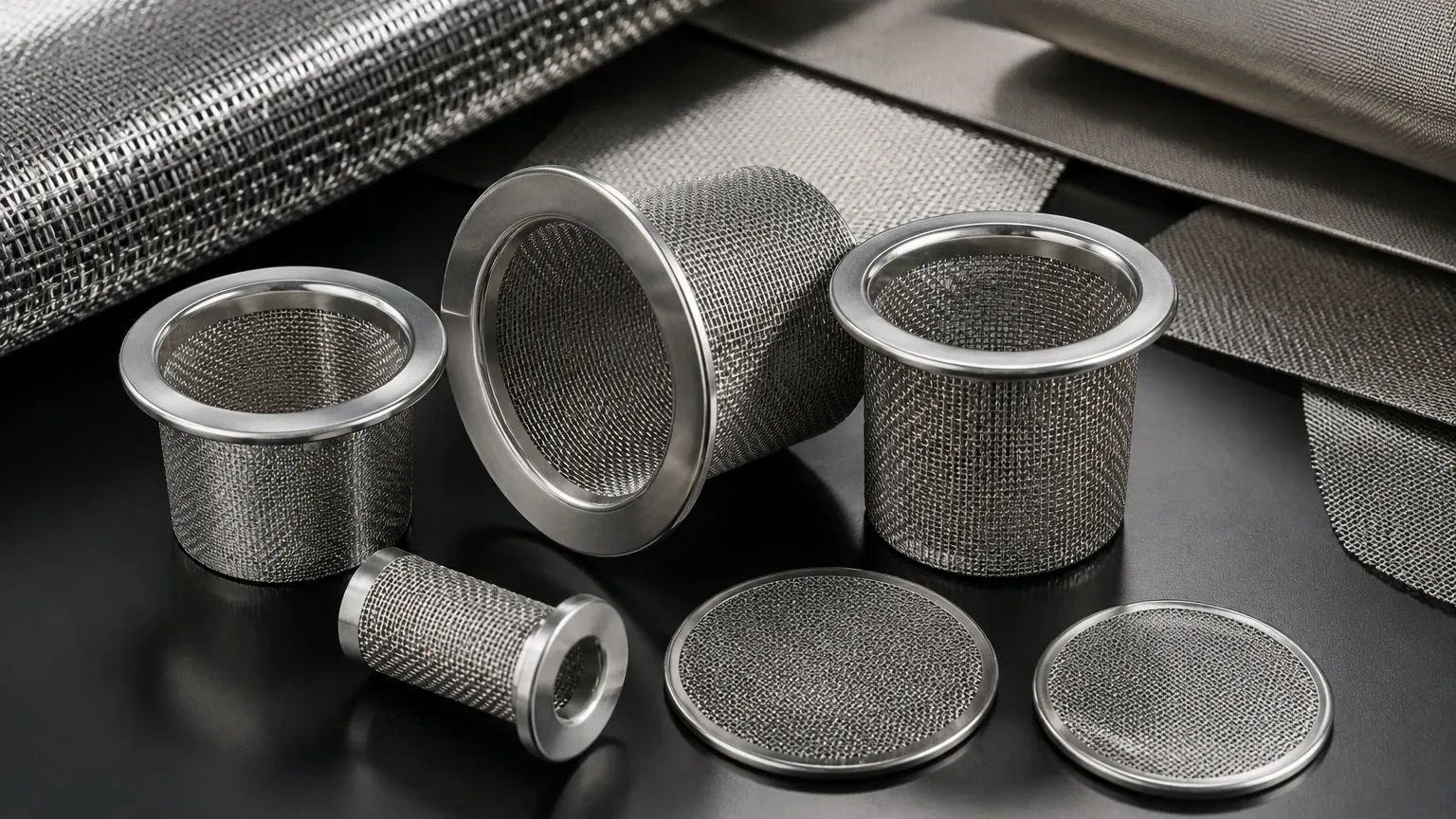
In many industrial contexts, the internal screen is fabricated using high-precision wire mesh or perforated metal. The design of these components often shares manufacturing processes with Filter Discs & Packs, particularly when multi-layered mesh is required to achieve specific micron ratings while maintaining the strength to withstand high differential pressures. Whether used in chemical processing, steam lines, or water treatment, the screen must be robust enough to handle the "slugs" of debris that occur during system start-up or maintenance cycles.
Engineering Specifications: Materials and Construction
Material selection is the most critical factor in determining the service life of a y filter screen. Because these components are often exposed to corrosive fluids or high temperatures, stainless steel is the industry standard.
Stainless Steel Grades
* SS304: The most common grade, offering excellent resistance to atmospheric corrosion and many organic and inorganic chemicals. It is suitable for general water service and non-corrosive industrial fluids.
* SS316/316L: Contains molybdenum, which provides superior resistance to chlorides and pitting. This is the preferred material for pharmaceutical, food and beverage, and marine applications where sanitation and corrosion resistance are paramount.
* Specialty Alloys: For highly aggressive environments involving acids or high-salinity fluids, screens may be manufactured from Monel, Hastelloy, or Duplex stainless steel.
Screen Construction Types
1. Perforated Metal: These screens are made by punching a pattern of holes into a metal sheet. They are exceptionally strong and are used for removing larger particles (typically 0.5mm and larger).
2. Wire Mesh: For finer filtration, a woven wire mesh is used. Because mesh lacks the inherent rigidity of a perforated sheet, it is often supported by a perforated metal "basket" or inner core. This composite construction ensures that the fine mesh does not collapse under pressure.
3. Multi-layer Sintered Mesh: In high-pressure or high-viscosity applications, multiple layers of mesh are sintered together. This creates a monolithic structure that offers the precision of fine mesh with the mechanical strength of a thick plate.
Assessing Filtration Performance: Micron Rating and Open Area
When specifying a y filter screen, engineers must define two primary performance metrics: the filtration degree (expressed in mesh size or microns) and the open area ratio.
Micron Rating vs. Mesh Size
Mesh size refers to the number of openings per linear inch. As the mesh count increases, the size of the openings decreases. However, mesh size can be misleading because it does not account for the diameter of the wire used. Therefore, technical specifications should ideally use the micron rating, which defines the actual size of the particles that will be retained.
The Importance of Open Area
The "open area" is the total area of the holes in the screen expressed as a percentage of the total screen surface. A higher open area results in a lower initial pressure drop across the strainer. A common engineering rule of thumb is that the total open area of the y filter screen should be at least two to four times the cross-sectional area of the inlet pipe. If the open area is too low, the fluid velocity through the screen increases, leading to rapid clogging and potential cavitation in downstream pumps.
Comparing Custom Mesh Screens with Standard Filter Discs & Packs
While a Y-strainer screen is cylindrical or conical, the technology used to manufacture it is closely related to the production of Filter Discs & Packs. In precision applications, the same high-quality stainless steel wire cloth used for disc filters is adapted for strainer screens.
The primary difference lies in the structural loading. Filter discs are often supported by a housing that distributes pressure evenly across a flat surface. In contrast, a y filter screen must withstand radial and axial forces as fluid flows through the "leg" of the Y-body. This necessitates high-quality welding—typically TIG or plasma welding—to ensure that the seams do not fail under hydraulic shock. When a process requires extreme precision, such as in the polymer or chemical fiber industry, the multi-layered construction found in advanced filter packs is often the only way to achieve the necessary balance of flow and strength within the compact footprint of a Y-strainer.
Common Operational Risks and Failure Modes
Failure to correctly specify or maintain a y filter screen can lead to significant system downtime. Engineers should be aware of the following risks:
* Screen Collapse: This occurs when the differential pressure across the screen exceeds its structural limit. This is usually caused by a failure to clean the screen, leading to a total blockage. Using a perforated support basket is the primary way to mitigate this risk.
* Bypass: If the screen is not seated correctly within the strainer body, or if the gaskets are worn, fluid will bypass the filtration element entirely. This allows debris to reach sensitive downstream components.
* Erosion: High-velocity fluids carrying abrasive particles can gradually wear down the wire mesh, enlarging the openings and reducing filtration efficiency. This is particularly common in steam applications.
* Corrosion-Fatigue: In systems with fluctuating pressures, the constant flexing of the mesh can lead to stress corrosion cracking, especially if the material is not perfectly suited to the chemical environment.
Selection Guide: Factors to Confirm Before Procurement
Before ordering a replacement or custom y filter screen, technical teams should confirm the following data points to ensure compatibility and performance:
1. Fluid Characteristics: What is the viscosity, temperature, and chemical composition of the fluid? High-viscosity fluids require a larger open area to prevent excessive pressure drop.
2. Particle Load: Is the debris loading continuous or sporadic? If the fluid is heavily contaminated, a standard Y-strainer may require cleaning too frequently, suggesting the need for a larger basket strainer or an automated backwash system.
3. Target Particle Size: What is the smallest particle that must be removed to protect downstream equipment? Over-filtering (selecting a mesh that is too fine) leads to unnecessary pressure drop and frequent maintenance.
4. Maximum Allowable Pressure Drop (ΔP): What is the clean pressure drop, and at what ΔP must the screen be cleaned?
5. Dimensional Accuracy: For custom screens, precise measurements of the length, outside diameter (OD), and flange thickness are required to ensure a proper seal within the strainer housing.
Maintenance and Cleaning Protocols for Extended Service Life
The longevity of a y filter screen is directly tied to the maintenance regime. Unlike disposable cartridge filters, stainless steel screens are designed to be cleaned and reused.
In most systems, the Y-strainer is equipped with a "blow-off" port in the cap. This allows for the removal of accumulated debris without stopping the flow, provided the pressure is sufficient to flush the particles out. However, a manual blow-off does not remove particles wedged within the mesh. Periodically, the system must be depressurized, the strainer cap removed, and the screen extracted for thorough cleaning.
For fine mesh screens, ultrasonic cleaning is the most effective method, as it removes microscopic particles from the intersections of the wires without damaging the mesh structure. If mechanical cleaning (such as wire brushing) is used, care must be taken not to distort the openings or create scratches that could become sites for localized corrosion.
By focusing on high-quality materials and precise engineering, manufacturers like Kaifil ensure that filtration components meet the rigorous demands of modern industry. Whether you are replacing a standard y filter screen or designing a custom filtration solution, understanding these technical boundaries is essential for optimizing system reliability and reducing the total cost of ownership.
