


Disc Filter 2 Inch Price
In industrial filtration, the 2-inch disc filter is a ubiquitous component used across chemical processing, hydraulic systems, and pharmaceutical manufacturing. When engineers and procurement teams evaluate the disc filter 2 inch price, they are often looking at a complex set of variables that extend far beyond the initial quote. For high-precision applications, the cost of a stainless steel filter disc is determined by material grade, mesh complexity, structural reinforcement, and the required filtration accuracy.
Understanding these cost drivers is essential for optimizing the balance between performance and budget. As a specialized manufacturer, Kaifil provides a range of Filter Discs & Packs designed to meet specific technical requirements while maintaining cost-efficiency through advanced manufacturing processes. This guide explores the factors that influence the pricing of 2-inch metal filter discs and how to evaluate them from an engineering perspective.
Factors Influencing the Price of 2-Inch Disc Filters
The price of a 2-inch disc filter is rarely a flat rate. Because these components are often used in critical environments where failure can lead to system downtime or product contamination, the manufacturing specifications are stringent. Several key factors dictate the final cost.
1. Material Selection (SS304 vs. SS316L)
Material cost is the primary baseline for pricing. Stainless steel 304 (SS304) is the standard for general industrial applications where basic corrosion resistance is sufficient. However, in environments involving high salinity, acidic chemicals, or pharmaceutical-grade hygiene, Stainless Steel 316L (SS316L) is required. The higher molybdenum content in 316L increases its resistance to pitting and crevice corrosion, but it also increases the material cost by approximately 20% to 40% depending on market fluctuations. For extreme temperatures or highly aggressive media, specialty alloys like Hastelloy or Monel may be used, which significantly elevate the price point.
2. Mesh Configuration and Layering
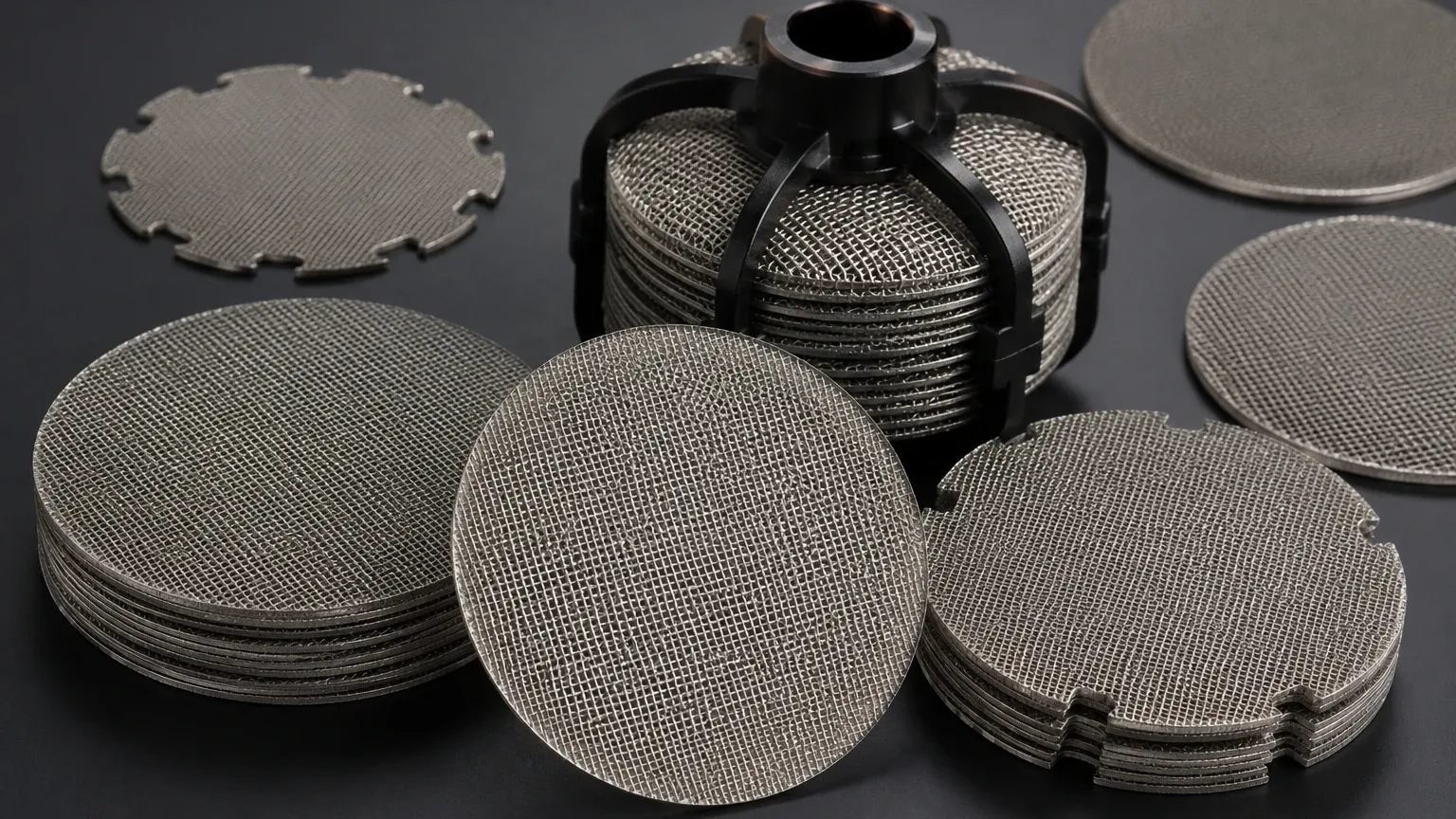
A single-layer wire mesh disc is the most economical option, typically used for coarse filtration or as a support layer. However, many industrial processes require multi-layer Filter Discs & Packs to achieve the desired filtration depth and structural rigidity. A 3-layer or 5-layer sintered or spot-welded pack involves significantly more labor and machine time. Each additional layer adds to the material volume and the complexity of the bonding process, which is reflected in the unit price.
3. Micron Rating and Weave Type
The precision of the weave directly impacts the manufacturing difficulty. A coarse mesh (e.g., 100 mesh or 150 microns) uses thicker wire and is easier to produce. Conversely, a fine mesh (e.g., 5 microns or 10 microns) requires extremely thin wire and high-precision looms. The cost of the raw wire mesh itself increases as the micron rating becomes finer. Furthermore, specialized weaves like Dutch Weave or Twilled Dutch Weave, which offer higher strength and finer filtration, are more expensive than a standard Plain Weave.
Structural Design and Customization Costs
Beyond the basic mesh specifications, the physical construction of the 2-inch disc influences the price. Standard unrimmed discs are the most affordable, but they may not be suitable for all housings.
Rimming and Edging
For many 2-inch applications, the disc must be "rimmed" to prevent fraying of the wire mesh and to provide a secure sealing surface. Rims can be made from aluminum, copper, or stainless steel. A stainless steel rimmed disc is generally more expensive than an aluminum one due to the material cost and the welding or pressing difficulty. The precision of the rim's outer diameter is critical for a leak-free fit; tighter tolerances usually command a higher price due to increased quality control and rejection rates during production.
Spot Welding and Sintering
In multi-layer packs, the layers must be held together. Spot welding at several points is a cost-effective method for keeping layers aligned. However, for applications involving high pressure or backwashing, sintering (diffusion bonding) is preferred. Sintering creates a monolithic structure where the wires are fused at every contact point. While sintering provides superior durability and prevents wire migration, the vacuum furnace time required for this process adds a substantial premium to the disc filter 2 inch price.
The Impact of Order Volume and OEM Requirements
In the B2B manufacturing sector, volume is a major determinant of unit cost. The setup time for CNC cutting, stamping dies, and welding fixtures is the same whether a customer orders 10 pieces or 10,000 pieces.
* Prototyping and Small Batches: Small orders often carry a "set-up fee" or a higher unit price to cover the engineering time and machine calibration. For a 2-inch disc, which is a common size, manufacturers may have existing dies, which can help mitigate some of these costs.
* Bulk OEM Production: High-volume orders allow for automated production runs and material bulk-buying discounts. For large-scale equipment manufacturers (OEMs), the price per unit can drop significantly as the volume increases into the thousands.
* Custom Geometric Shapes: While a 2-inch circular disc is standard, any variation—such as a center hole, an oval shape, or specific notches for alignment—requires custom tooling, which increases the initial investment.
Performance vs. Price: Evaluating Value
When comparing quotes for a disc filter 2 inch price, it is vital to look at the technical data sheet rather than just the bottom line. A lower-priced filter may use lower-grade wire with inconsistent diameters, leading to uneven pore distribution and premature clogging.
Filtration Efficiency
A high-quality 2-inch disc ensures that the micron rating is consistent across the entire surface area. Inconsistent mesh can allow "oversize" particles to pass through, potentially damaging downstream equipment like high-pressure pumps or sensitive valves. The cost of a failed pump far outweighs the savings from a cheaper filter disc.
Pressure Drop and Flow Rate
Engineering the right mesh count is essential for maintaining the required flow rate. A poorly designed 2-inch disc may have a high initial pressure drop, forcing the system to work harder and consume more energy. Professional manufacturers like Kaifil optimize the wire diameter and open area to ensure maximum throughput, which contributes to long-term operational savings.
Total Cost of Ownership (TCO) in Industrial Filtration
For maintenance managers and plant engineers, the purchase price is only one part of the TCO. Stainless steel filter discs are often chosen over disposable polymer filters because of their longevity and cleanability.
1. Durability: A high-quality stainless steel disc can withstand high temperatures and pressure surges that would rupture a disposable filter. This reduces the frequency of replacements.
2. Cleanability: Stainless steel Filter Discs & Packs can be cleaned using ultrasonic baths, chemical solvents, or backflushing. If a 2-inch disc can be cleaned and reused 20 times, its "per-cycle" cost is significantly lower than a cheaper, non-cleanable alternative.
3. Waste Reduction: In industries focused on sustainability, moving away from single-use filters reduces the environmental impact and the costs associated with hazardous waste disposal.
What to Confirm Before Requesting a Quote
To receive an accurate and competitive disc filter 2 inch price, procurement teams should provide the following technical details to the manufacturer:
* Exact Dimensions: Confirm if the 2-inch measurement refers to the inner diameter (ID) or outer diameter (OD).
* Layer Composition: Specify the number of layers and the micron rating for each (e.g., a 100-micron filtration layer supported by two 20-mesh reinforcement layers).
* Material Grade: Clearly state if SS304, SS316, or SS316L is required.
* Edge Treatment: Determine if the disc should be unrimmed, spot-welded, or bound with a metal rim.
* Application Environment: Mention the operating temperature, pressure, and the type of fluid being filtered. This allows the manufacturer to suggest the most cost-effective material and construction method.
Conclusion
While the disc filter 2 inch price is a necessary consideration for any project, it should be evaluated within the context of technical requirements and long-term reliability. By focusing on material quality, precise micron ratings, and appropriate structural design, engineers can ensure they are selecting a filtration solution that protects their equipment and maintains process integrity.
Kaifil specializes in manufacturing high-performance Filter Discs & Packs tailored to the rigorous demands of global industrial sectors. By combining engineering expertise with advanced manufacturing, we help our clients achieve optimal filtration performance while managing the total cost of ownership effectively. Whether you require standard 2-inch discs or custom multi-layer packs, understanding the technical nuances of these components is the first step toward a successful procurement strategy.
