


.2 Micron Filter Disc
In high-precision industrial environments, the requirement for sub-micron filtration is often the difference between a high-quality end product and a contaminated batch. The .2 micron filter disc represents a critical threshold in filtration technology, particularly when fabricated from stainless steel. Unlike disposable polymer membranes, a stainless steel .2 micron filter disc offers the structural integrity, thermal stability, and chemical resistance necessary for demanding B2B applications in pharmaceutical manufacturing, chemical processing, and high-pressure hydraulic systems.
Selecting the right Filter Discs & Packs involves understanding the nuances of pore size, material science, and the physical stresses of the operating environment. This guide examines the technical specifications, engineering considerations, and selection criteria for .2 micron filtration components to assist engineers and procurement teams in making informed technical decisions.
Technical Fundamentals of .2 Micron Filtration
The term ".2 micron" refers to the filtration rating, which indicates the size of particles the media is designed to capture. In the context of metal filtration, achieving a .2 micron rating typically requires advanced manufacturing techniques such as sintering metal fibers or utilizing specialized multi-layer sintered wire cloth.
Absolute vs. Nominal Ratings
For engineers, the distinction between absolute and nominal ratings is paramount. A nominal .2 micron filter disc might capture a significant percentage of particles at that size but allow some to pass through. Conversely, an absolute-rated disc is engineered to ensure that no particle larger than .2 microns passes through the media under specified test conditions. In sterile filtration or critical catalyst recovery, absolute ratings are generally required to ensure process safety and consistency.
The Sintering Process
To achieve a stable .2 micron pore structure in stainless steel, manufacturers use a process called sintering. This involves placing layers of stainless steel wire mesh or metal fibers under high temperature and pressure in a vacuum furnace. The metal strands bond at their contact points without melting, creating a rigid, porous structure that maintains its pore size even under high differential pressure. This stability is why stainless steel is preferred over flexible membranes in high-pressure industrial housings.
Material Selection and Chemical Compatibility
The performance of a .2 micron filter disc is heavily dependent on the alloy used. While various metals can be sintered, stainless steel remains the industry standard due to its balance of cost and performance.
* Grade 304 Stainless Steel: Suitable for general industrial applications where basic corrosion resistance is required. It is often used in food and beverage applications where the environment is not excessively acidic or saline.
* Grade 316L Stainless Steel: The "L" stands for low carbon, which provides superior corrosion resistance, particularly against chlorides and acids. This is the preferred material for pharmaceutical and chemical processing where the .2 micron filter disc must withstand aggressive cleaning agents or corrosive process fluids.
* Specialty Alloys: For extreme environments involving high temperatures or highly corrosive chemicals, alloys like Hastelloy or Inconel may be used in the construction of Filter Discs & Packs, though these are typically reserved for specialized niche applications.
Engineering Considerations: Flow Rate and Pressure Drop
One of the primary challenges with sub-micron filtration is the inherent resistance to flow. A .2 micron filter disc has very fine pores, which naturally results in a higher pressure drop (Delta P) compared to coarser filters. Engineers must balance the need for fine filtration with the energy costs and pump requirements of the system.
Managing Differential Pressure
As the filter disc captures contaminants, the pores become restricted, leading to an increase in differential pressure. In a .2 micron system, the rate of pressure increase can be rapid if the fluid has a high dirt load. To mitigate this, engineers often design systems with multi-stage filtration, using a coarser pre-filter (e.g., 5 or 10 microns) to remove larger debris before the fluid reaches the .2 micron disc. This extends the service life of the precision disc and reduces the frequency of maintenance cycles.
Structural Support and Multi-Layer Packs
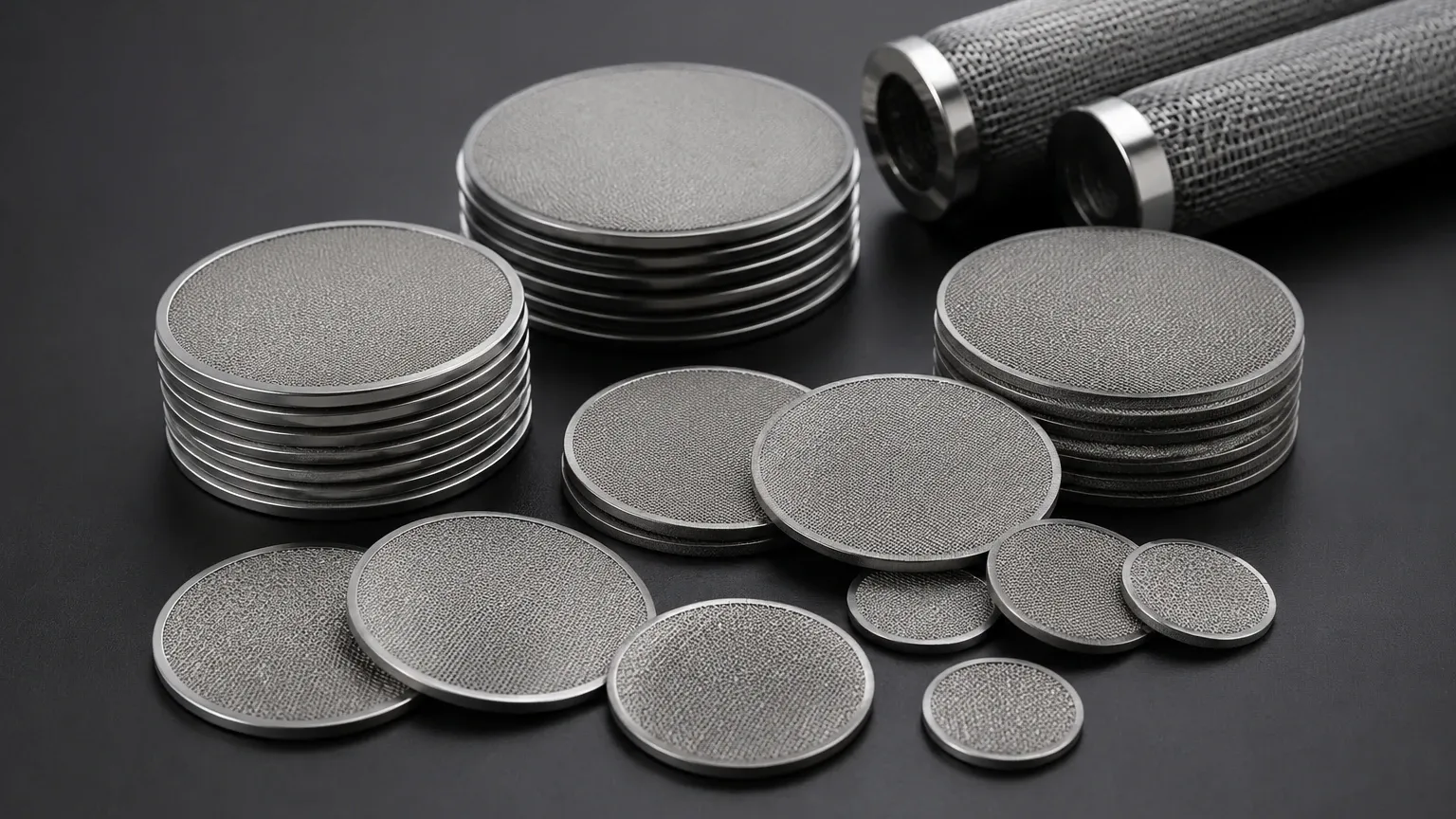
A single layer of .2 micron media is often too thin to withstand high operational pressures. Therefore, it is common to use Filter Discs & Packs that consist of multiple layers. A typical configuration includes:
1. The Filtration Layer: The .2 micron sintered fiber or mesh.
2. Support Layers: Coarser mesh layers on both sides that provide mechanical strength and prevent the fine media from deforming or migrating.
3. Drainage Layers: Layers designed to facilitate even flow distribution across the entire surface of the disc.
Applications of .2 Micron Filter Discs
The precision of a .2 micron rating makes these discs essential in sectors where purity is non-negotiable.
Pharmaceutical and Biotechnology
In pharmaceutical manufacturing, .2 micron filtration is often synonymous with sterilization. While metal discs are not always the primary sterilizing grade filter (which is often a disposable membrane), they are used as critical guard filters or in steam-in-place (SIP) systems where high temperatures would destroy polymer alternatives. They are also used for the filtration of solvents and aggressive chemicals used in drug synthesis.
High-Purity Gas Filtration
In the semiconductor and electronics industries, gases must be free of even the smallest particulates to prevent defects in wafer fabrication. Sintered metal .2 micron filter discs are used to filter process gases, providing a robust solution that can handle the high flow velocities and temperatures associated with gas delivery systems.
Catalyst Recovery
In chemical refining, expensive catalysts are often used in the form of fine powders. A .2 micron filter disc can be employed to recover these catalysts from the process stream, preventing the loss of valuable materials and ensuring the purity of the final chemical product.
Customization and OEM Specifications
Industrial filtration systems are rarely "one size fits all." When sourcing a .2 micron filter disc, engineers must specify several physical and functional parameters to ensure compatibility with existing hardware.
Shape and Dimensions
Discs can be manufactured in a wide range of diameters, from a few millimeters for miniature valves to several hundred millimeters for large industrial housings. Beyond simple circles, custom shapes such as rings, squares, or complex geometries can be produced via precision stamping or laser cutting.
Edge Treatment and Sealing
To prevent bypass (where fluid leaks around the edges of the filter), the edge of the .2 micron filter disc must be properly sealed. Common options include:
* Welded Edges: The layers of a multi-layer pack are TIG or plasma welded together to create a solid, leak-proof perimeter.
* Bound Edges: An aluminum, stainless steel, or copper rim is crimped around the edge of the disc. This provides a flat sealing surface for gaskets.
* Sintered Edges: In some sintered fiber products, the edges can be compressed and sintered into a solid mass to provide structural rigidity.
Maintenance, Cleaning, and Longevity
One of the most significant B2B advantages of stainless steel .2 micron filter discs over disposable alternatives is their cleanability. A properly maintained metal disc can be reused many times, significantly lowering the total cost of ownership.
Cleaning Methodologies
* Backwashing: Reversing the flow of the fluid to dislodge particles trapped on the surface of the disc. This is effective for surface-loading contaminants.
* Ultrasonic Cleaning: Using high-frequency sound waves in a cleaning solvent to create cavitation bubbles that reach deep into the .2 micron pore structure. This is often the most effective method for deep-seated particulates.
* Chemical Cleaning: Using acids, alkalis, or specialized surfactants to dissolve organic or inorganic fouling. The choice of chemical must be compatible with the stainless steel grade (e.g., avoiding high concentrations of hydrochloric acid on 304 stainless steel).
* Thermal Cleaning: For organic contaminants, heating the disc in a controlled atmosphere furnace can burn off the residue, leaving the metal structure intact.
Replacement Indicators
Despite their durability, .2 micron filter discs will eventually reach a state of "irreversible fouling" where cleaning no longer restores the original pressure drop. Monitoring the "clean pressure drop" after each cleaning cycle is a standard engineering practice. Once the clean pressure drop exceeds a certain percentage of the original spec (often 20-30%), the disc should be replaced to maintain system efficiency.
Conclusion for Procurement and Engineering Teams
Specifying a .2 micron filter disc requires a deep dive into the specific demands of the application. Engineers should confirm the maximum operating temperature, the chemical composition of the process fluid, and the expected differential pressure before selecting a material and construction style.
By opting for high-quality Filter Discs & Packs, facilities can achieve the rigorous standards required for sub-micron filtration while benefiting from the longevity and reliability of stainless steel. Whether for protecting sensitive downstream equipment or ensuring the purity of a final product, the .2 micron filter disc remains a cornerstone of precision industrial filtration.
