


4 Inch Diameter Filter
In industrial filtration, the 4 inch diameter filter represents one of the most versatile and widely utilized dimensions across various sectors, including polymer extrusion, chemical processing, and hydraulic systems. Precise sizing is critical in these applications; a 4-inch (approximately 101.6 mm) component must interface perfectly with housing units to prevent bypass and ensure consistent flow rates. For engineers and procurement specialists, selecting the right 4 inch diameter filter involves a deep understanding of material properties, mesh configurations, and the specific mechanical stresses of the operating environment.
At Kaifil, we specialize in the engineering and manufacture of high-performance stainless steel filtration components. By focusing on the technical nuances of Filter Discs & Packs, we provide industrial operators with the precision required to maintain system integrity and product purity.
Engineering Specifications and Material Selection
The performance of a 4 inch diameter filter is fundamentally dictated by its material composition. In industrial settings, stainless steel is the gold standard due to its thermal stability and resistance to corrosive media.
Grade 304 vs. Grade 316L
Most industrial filters are constructed from AISI 304 or AISI 316L stainless steel. While Grade 304 offers excellent strength and basic corrosion resistance suitable for many hydraulic and food-grade applications, Grade 316L is preferred for environments involving high salinity, acidic chemicals, or pharmaceutical processing. The "L" in 316L denotes low carbon content, which enhances weldability and prevents sensitization—a critical factor when manufacturing spot-welded multilayer packs.
Wire Mesh Weave Types
The internal structure of the 4 inch diameter filter determines its filtration accuracy and mechanical strength. Common weave patterns include:
* Plain Weave: The most straightforward pattern where each warp wire crosses over and under each weft wire. It provides high flow rates and is ideal for basic particle separation.
* Twill Weave: Each warp wire passes over and under two weft wires. This allows for thicker wires and a heavier mesh, providing increased durability for high-pressure applications.
* Dutch Weave (Plain and Twill): These weaves use different wire diameters for warp and weft, resulting in a dense, firm mesh with precise micron ratings. Dutch weaves are essential for fine filtration in polymer melt and high-pressure hydraulic systems.
Filter Discs & Packs: Single Layer vs. Multilayer Configurations
When specifying a 4 inch diameter filter, engineers must decide between a single-layer disc and a multilayer pack. This decision is usually driven by the required filtration fineness and the pressure drop limits of the system.
Single Layer Discs
Single-layer Filter Discs & Packs are typically used in low-pressure environments or as pre-filters. They are cost-effective and easy to clean. However, they lack the structural rigidity required to withstand significant differential pressure without deformation.
Multilayer Spot-Welded Packs
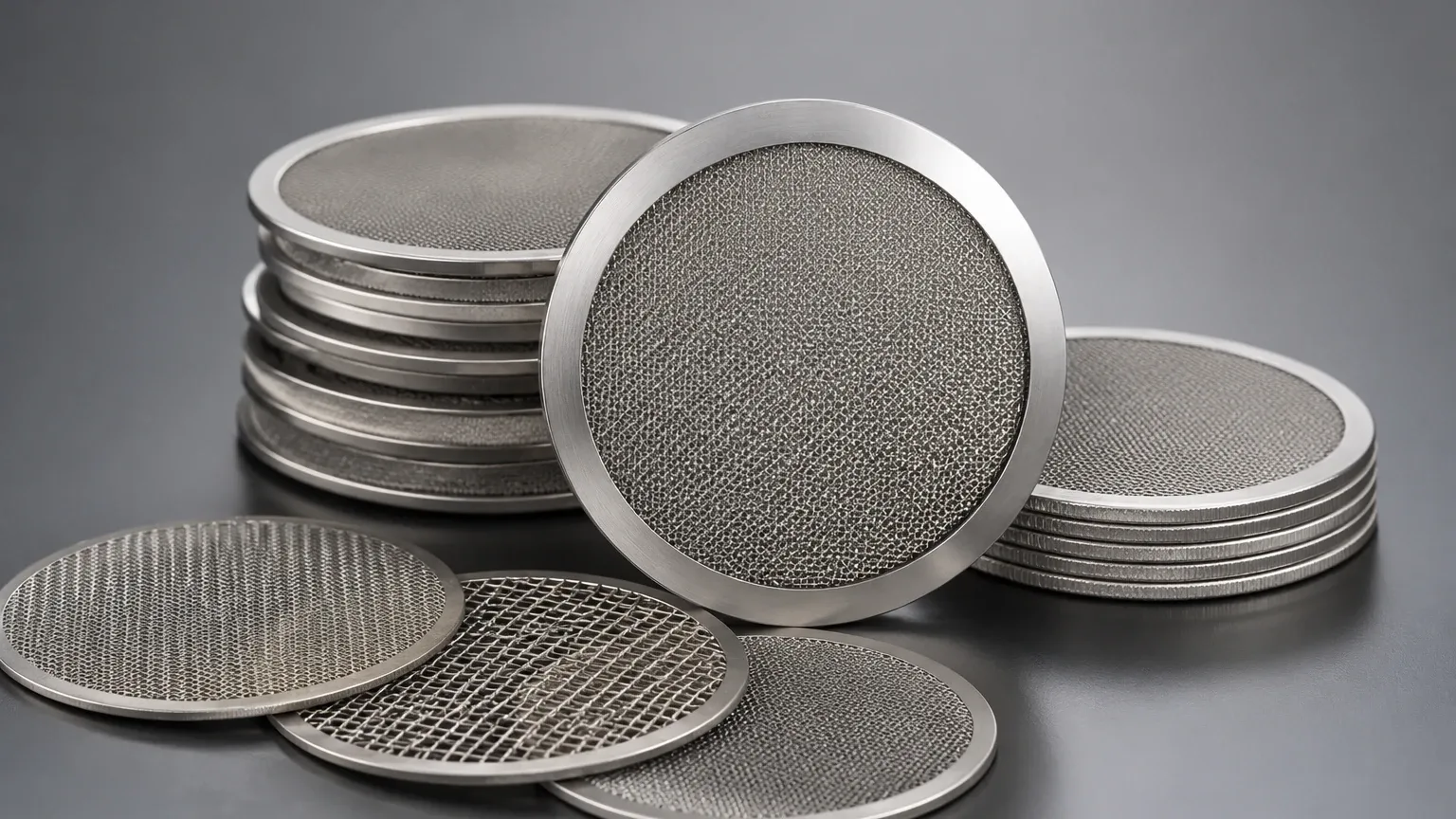
For demanding applications like plastic extrusion or oil refining, multiple layers of wire mesh are combined into a single unit. A typical 4 inch diameter filter pack might consist of:
1. A coarse support layer: Provides mechanical strength to prevent the finer mesh from collapsing under pressure.
2. The filtration layer: The primary mesh layer that determines the micron rating.
3. A drainage layer: Facilitates the flow of the filtrate away from the filtration layer, reducing the overall pressure drop.
These layers are often spot-welded at the edges to ensure they remain aligned during installation and operation. In high-viscosity applications, such as polymer recycling, these packs are indispensable for removing contaminants without interrupting the flow of the melt.
Key Performance Metrics for Industrial Applications
To ensure a 4 inch diameter filter meets the needs of a specific process, several performance metrics must be evaluated during the design phase.
Filtration Accuracy (Micron Rating)
Filtration accuracy is defined by the size of the smallest particle the mesh can reliably trap. This can be expressed as "nominal" (an approximate percentage of particles trapped) or "absolute" (100% of particles of a certain size trapped). For a 4 inch diameter filter, micron ratings can range from 2 microns in pharmaceutical applications to 500 microns in coarse water treatment.
Pressure Drop (Delta P)
The pressure drop is the difference in pressure between the upstream and downstream sides of the filter. A high initial pressure drop indicates that the mesh may be too fine for the flow rate, leading to premature clogging and increased energy consumption. Engineers must balance the need for fine filtration with the requirement for efficient flow.
Dirt-Holding Capacity
This refers to the amount of contaminant the filter can retain before the pressure drop reaches a critical limit. Multilayer packs generally offer a higher dirt-holding capacity than single-layer discs because the depth of the combined mesh layers allows for more internal volume to trap particles.
Selection Criteria for Engineers and Purchasing Teams
Selecting a 4 inch diameter filter is not merely a matter of choosing a size; it requires a comprehensive review of the operating conditions. Engineers should confirm the following before finalizing a specification:
1. Chemical Compatibility: Will the filtrate react with the stainless steel or the rim material (e.g., aluminum, copper, or rubber)?
2. Operating Temperature: Stainless steel filters can operate at temperatures exceeding 500°C, but the specific alloy and any edge-binding materials must be rated for the peak temperature of the process.
3. Mechanical Stress: Will the filter be subjected to sudden pressure surges or constant high-pressure loads? This determines whether a reinforced rim or a specific support mesh is necessary.
4. Flow Velocity: High-velocity fluids can cause wire displacement in low-quality mesh. Precision weaving and proper support layers are required to maintain the integrity of the 4 inch diameter filter under high-flow conditions.
Manufacturing and Customization Options
As a professional manufacturer, Kaifil provides extensive customization for the 4 inch diameter filter to meet unique OEM requirements. Customization goes beyond just the diameter; it involves the physical architecture of the filter unit.
Edge Treatments and Rims
The edges of a 4 inch diameter filter can be left raw (unrimmed) or finished with a metal rim. Rims are typically made from aluminum, stainless steel, or copper. A rimmed edge provides several advantages:
* Improved Sealing: The rim acts as a gasket, ensuring a tight fit within the filter housing.
* Structural Integrity: It prevents the mesh layers from fraying or separating.
* Ease of Handling: Operators can install and remove rimmed filters more safely and efficiently.
Custom Mesh Combinations
Different industries require specific sequences of mesh counts. For instance, a 4 inch diameter filter used in the food and beverage industry might require a fine mesh for clarity backed by a very heavy mesh to handle the weight of the liquid. We work closely with technical teams to develop the optimal layering strategy for their specific viscosity and particle load.
Maintenance, Cleaning, and Replacement Cycles
The total cost of ownership for a 4 inch diameter filter is heavily influenced by its lifespan and cleanability. Unlike disposable synthetic filters, stainless steel Filter Discs & Packs are often reusable.
Cleaning Methods
Depending on the contaminant, stainless steel filters can be cleaned using several methods:
* Ultrasonic Cleaning: High-frequency sound waves create cavitation bubbles that dislodge fine particles from deep within the mesh pores.
* Backwashing: Reversing the flow of fluid through the filter to push out trapped debris.
* Chemical Cleaning: Using solvents or acids to dissolve organic or inorganic buildup, provided the chemicals are compatible with the filter material.
* Burn-off (Pyrolysis): For polymer applications, filters can be heated in a controlled environment to carbonize and remove plastic residue.
Determining Replacement
While cleanable, a 4 inch diameter filter will eventually reach the end of its functional life. Indicators for replacement include:
* Permanent Pressure Drop: When the "clean" pressure drop after maintenance is significantly higher than the original specification.
* Mesh Distortion: Visible sagging or tearing of the wire cloth.
* Corrosion Pitting: Small holes or thinning of the wires that compromise filtration accuracy.
Conclusion: The Importance of Precision in Filtration
The 4 inch diameter filter is a critical component in maintaining the efficiency and safety of industrial processes. Whether it is protecting sensitive hydraulic valves from particulate damage or ensuring the purity of a pharmaceutical batch, the quality of the filter disc or pack cannot be overlooked.
By focusing on high-grade materials, precise weaving, and robust manufacturing techniques, Kaifil ensures that every 4 inch diameter filter provides reliable performance in demanding environments. For engineers looking to optimize their filtration systems, understanding the interplay between mesh geometry, material science, and mechanical design is the first step toward achieving long-term operational success.
When evaluating your next procurement or design project, consider the technical advantages of customized Filter Discs & Packs to ensure your system operates at peak efficiency.
