


C Wedge
In the field of industrial liquid-solid separation, the efficiency of a filtration system is often determined by the geometric precision of its components. Among the various technologies available, the use of profile wire—specifically the configurations often categorized under the term c wedge or C-series profiles—represents a standard for high-performance filtration. These components are integral to the construction of Wedge Wire Screens, providing the structural integrity and precise slot control required for demanding industrial applications.
Understanding the technical nuances of profile wire geometry, material selection, and structural design is essential for engineers and procurement teams tasked with optimizing filtration processes. This guide examines the engineering principles behind wedge wire technology, the specific role of profile shapes, and the criteria for selecting the appropriate configuration for industrial environments.
The Engineering Principles of Wedge Wire Technology
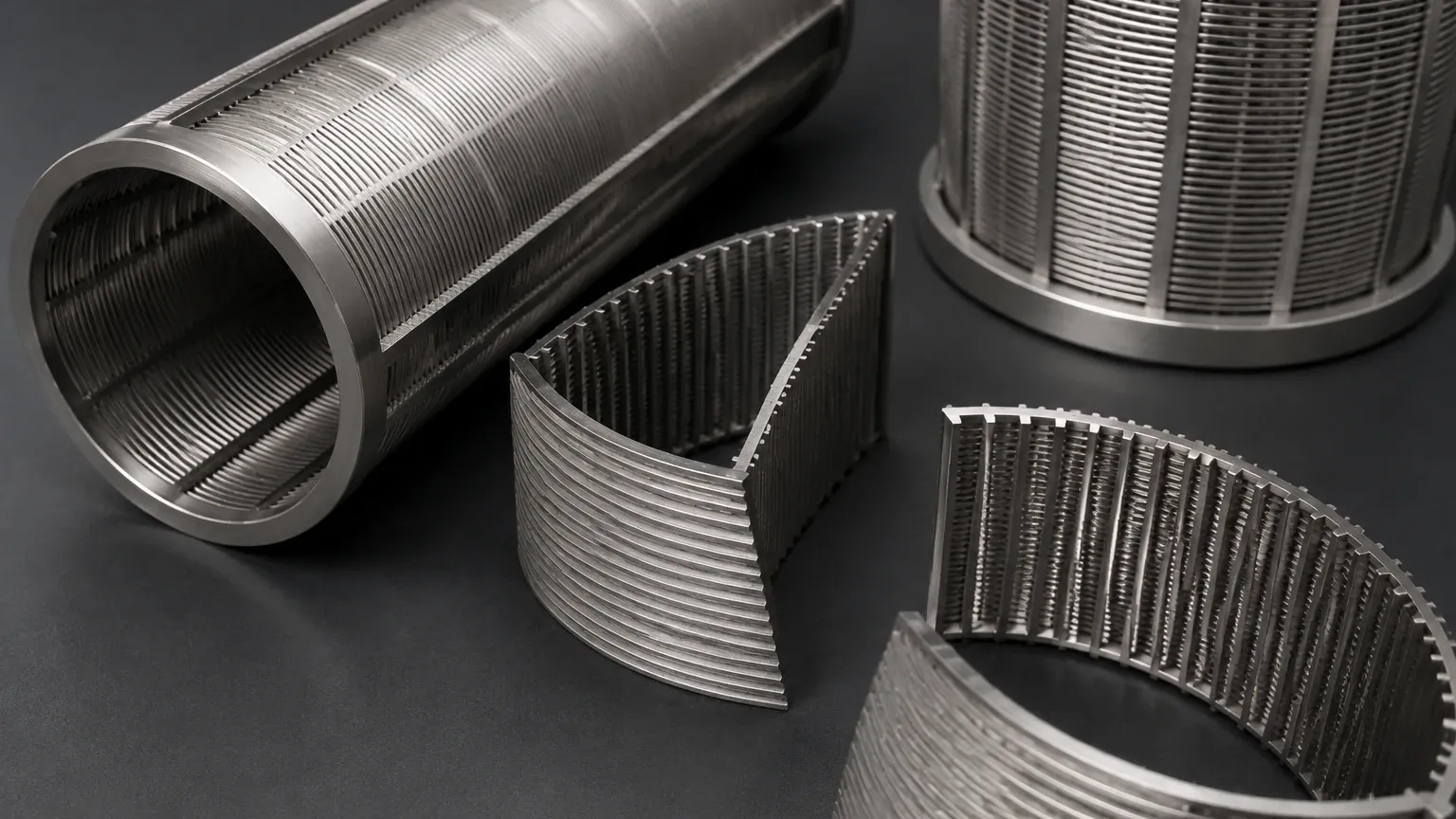
Wedge wire is a specialized type of metallic screen manufactured by resistance welding V-shaped profile wires onto support rods. This process creates a screen that is characterized by a continuous slot that widens inwardly. This unique geometry is the primary reason why wedge wire is preferred over woven mesh or perforated plate in many critical applications.
The V-Shaped Profile Advantage
The fundamental advantage of the V-shaped wire, including the specific c wedge profile variations, is its non-clogging characteristic. In a standard perforated plate, a particle that is slightly larger than the hole can become lodged, leading to blinding and a rapid increase in pressure drop. In contrast, the two-point contact provided by the V-shaped profile ensures that any particle passing through the narrowest part of the slot (the surface) will continue to move freely through the widening gap. This design significantly reduces downtime associated with cleaning and maintenance.
Structural Composition
A wedge wire component consists of two main elements:
1. Profile Wires: The surface wires that define the slot width and perform the actual filtration.
2. Support Rods: The underlying structure that provides mechanical strength and maintains the spacing of the profile wires.
The relationship between these two elements determines the screen's ability to withstand differential pressure, mechanical impact, and thermal cycling. The "C" designation often refers to a specific series of profile wires that offer a particular height-to-width ratio, optimized for either maximum open area or enhanced structural rigidity.
Technical Specifications of C Wedge Profiles
When evaluating a c wedge profile for a filtration application, several technical parameters must be considered. These parameters define the performance envelope of the screen and its suitability for specific media.
Profile Dimensions and Geometry
Profile wires are categorized by their width and height. For instance, a common C-series profile might have a width of 1.5mm and a height of 2.5mm. The height of the wire is a critical factor in determining the wear life of the screen. In abrasive applications, such as mineral processing or pulp and paper manufacturing, a taller profile wire provides a larger "wear reserve," allowing the screen to maintain its slot integrity even as the surface is gradually eroded.
Slot Width and Tolerance
The slot width is the distance between two adjacent profile wires. Precision manufacturing is required to ensure that this width remains consistent across the entire surface of the screen. Typical slot widths range from as small as 20 microns up to several millimeters. For critical filtration tasks, tolerances are often held within +/- 0.05mm. Inconsistent slot widths can lead to bypass of oversized particles or localized high-velocity zones that accelerate wear and reduce filtration efficiency.
Open Area Calculations
The open area of a Wedge Wire Screens component is a function of the slot width and the profile wire width. It is calculated using the following formula:
Open Area (%) = (Slot Width / (Slot Width + Wire Width)) x 100
Maximizing the open area is often a priority to reduce pressure drop and increase flow capacity. However, this must be balanced against the mechanical requirements of the application. Using a narrower profile wire (like certain c wedge variants) can increase the open area but may reduce the screen's resistance to high-pressure surges.
Material Selection for Industrial Durability
The choice of material is as important as the geometry of the screen. Because wedge wire is frequently used in corrosive or high-temperature environments, stainless steel is the primary material of choice.
Grade 304 and 304L Stainless Steel
Grade 304 is the standard material for general industrial applications. It offers good corrosion resistance and mechanical properties. The "L" (low carbon) version is preferred for welded structures to prevent carbide precipitation during the welding process, which can lead to intergranular corrosion in the heat-affected zones.
Grade 316 and 316L Stainless Steel
For more demanding environments, particularly those involving chlorides or acidic solutions, Grade 316 is recommended. The addition of molybdenum enhances its resistance to pitting and crevice corrosion. 316L is the standard for pharmaceutical and food and beverage applications where high-purity and corrosion resistance are paramount.
Specialty Alloys
In extreme cases, such as seawater intake or highly aggressive chemical processing, specialty alloys like Duplex stainless steels (e.g., 2205) or Super Duplex may be required. These materials offer superior yield strength and exceptional resistance to stress corrosion cracking, which is vital for large-scale c wedge screen installations.
Mechanical Considerations and Load Capacity
Engineers must ensure that the selected screen can handle the mechanical loads imposed by the process. This includes the static load of the media, the dynamic load of the fluid flow, and the differential pressure across the screen.
Collapse Strength
In cylindrical filter cartridges, the collapse strength is a primary concern. This is determined by the diameter of the cylinder, the spacing of the support rods, and the moment of inertia of both the profile wire and the support rods. Utilizing a c wedge profile with a greater height can significantly increase the moment of inertia, thereby enhancing the screen's resistance to external pressure.
Burst Strength
For applications where flow is from the inside out, the burst strength must be calculated. This is particularly important in high-pressure hydraulic systems or during backpulsing cycles used for cleaning. The integrity of the resistance welds between the profile wire and the support rods is the limiting factor here. High-quality manufacturing processes ensure that these welds are consistent and capable of withstanding repeated stress cycles.
Applications of Wedge Wire Screens
The versatility of Wedge Wire Screens makes them suitable for a wide array of industries. The specific use of c wedge profiles is often dictated by the need for a balance between fine filtration and structural robustness.
Water Treatment and Intake
Large-scale wedge wire panels and cylinders are used in water intake structures for power plants and municipal water systems. These screens protect downstream equipment from debris while maintaining low approach velocities to prevent the impingement of aquatic life. The durability of stainless steel ensures a long service life in submerged environments.
Food and Beverage Processing
In the food industry, wedge wire is used for dewatering, juice extraction, and brewing (lauter tun screens). The smooth surface of the profile wire allows for easy cleaning and sanitization, meeting strict hygienic standards. The precision of the slots ensures consistent product quality, whether separating grain from wort or pulp from juice.
Petrochemical and Chemical Processing
Wedge wire internals, such as center pipes, scale traps, and outlet collectors, are critical components in reactor vessels. These components must withstand high temperatures and aggressive chemical environments. The use of high-alloy c wedge profiles ensures that these internals remain functional over long production runs, preventing catalyst migration and protecting downstream compressors.
Customization and OEM Solutions
Industrial filtration is rarely a one-size-fits-all requirement. Most applications require some level of customization to integrate the screen into existing equipment or to meet specific process parameters.
Design Flexibility
Wedge wire can be fabricated into various shapes, including:
* Flat Panels: Used for vibrating screens, floors, and architectural applications.
* Cylindrical Cartridges: Available in FOTI (Flow Out-To-In) or FITO (Flow In-To-Out) configurations.
* Curved Sieves (Sieve Bends): Used for gravity-fed dewatering and sizing.
* Conical Screens: Often used in centrifuges.
End Fittings and Integration
To facilitate installation, wedge wire components can be supplied with a variety of end fittings, such as NPT/BSP threads, standard flanges (ANSI, DIN, JIS), or custom-machined collars. For OEM applications, the ability to manufacture to precise tolerances ensures that the c wedge components fit seamlessly into the larger assembly.
Maintenance and Total Cost of Ownership
While the initial cost of a wedge wire screen may be higher than that of a disposable filter or a simple woven mesh, the total cost of ownership (TCO) is often significantly lower. This is due to the durability and cleanability of the product.
Cleaning Methods
Wedge wire screens are compatible with several cleaning methods:
* Backwashing: Reversing the flow of fluid to dislodge particles from the surface.
* Mechanical Scrapers: Using a rotating or reciprocating blade to remove solids buildup.
* Ultrasonic Cleaning: Using high-frequency sound waves to remove fine contaminants from the slots.
* Chemical Cleaning: Using acids or bases to dissolve organic or mineral scaling, provided the material grade is compatible.
Longevity and Replacement Cycles
Because the c wedge profile is made from solid metal and features a wear-resistant geometry, the replacement cycles are much longer than those of alternative media. In many non-abrasive applications, a well-maintained wedge wire screen can last for a decade or more. When evaluating the purchase, engineers should consider the reduced downtime and lower labor costs associated with fewer filter changes.
Conclusion: Selection Criteria for Engineers
Selecting the right filtration component requires a detailed analysis of the process conditions. When considering a c wedge or standard wedge wire solution, the following checklist should be used:
1. Fluid Characteristics: What is the chemical composition, temperature, and viscosity of the fluid?
2. Particle Load: What is the concentration and size distribution of the solids to be removed?
3. Flow Requirements: What is the required flow rate and the maximum allowable pressure drop?
4. Mechanical Stress: What are the expected differential pressures and mechanical impacts?
5. Cleaning Protocol: How will the screen be cleaned, and how often?
By addressing these factors and leveraging the inherent advantages of Wedge Wire Screens, industrial facilities can achieve reliable, efficient, and cost-effective filtration performance. The precision of the c wedge profile remains a cornerstone of modern industrial separation technology, providing the necessary balance of strength and accuracy for the world's most demanding applications.
