


Wedge Wire Screen Nz
In the landscape of industrial separation and filtration, precision is the primary driver of operational efficiency. For engineers and procurement teams managing projects involving a wedge wire screen nz, understanding the technical nuances of these components is essential for ensuring long-term durability and performance. Wedge wire, also known as profile wire, is a specialized metallic filter structure characterized by its high strength, precise slot openings, and non-clogging surface.
In New Zealand’s diverse industrial sectors—ranging from dairy and food processing to wastewater treatment and mining—the demand for robust filtration solutions is constant. Selecting the right Wedge Wire Screens requires a deep dive into material science, hydraulic dynamics, and mechanical engineering to match the component to the specific rigors of the application environment.
The Engineering Principles of Wedge Wire Technology
The fundamental advantage of wedge wire lies in its geometric configuration. Unlike woven wire mesh or perforated plates, wedge wire is constructed by resistance-welding V-shaped stainless steel wires onto support rods. This process creates a continuous slot that widens inwardly.
The V-Shaped Profile
The "wedge" or V-shape of the surface wire is the defining feature of this technology. When particles pass through the slot from the narrow side (the surface), the widening gap ensures that any particle small enough to enter the slot will pass through without becoming wedged. This inherent design minimizes blinding and clogging, which is a critical failure mode in traditional mesh filters. For a wedge wire screen nz application, this means reduced downtime for manual cleaning and more consistent flow rates.
Structural Integrity through Resistance Welding
Every intersection of the surface wire and the support rod is fused through high-precision resistance welding. This creates a rigid, single-piece structure that can withstand significant pressure differentials and mechanical stresses. In high-pressure hydraulic systems or heavy-duty vibrating screens used in mineral processing, this structural rigidity prevents slot deformation, ensuring that the filtration accuracy remains constant over the lifespan of the screen.
Key Applications in the New Zealand Industrial Landscape
New Zealand’s economy relies heavily on primary industries that require high-volume, high-precision separation. The versatility of wedge wire makes it an ideal choice across several key sectors.
Dairy and Food Processing
In the dairy industry, wedge wire screens are utilized in the recovery of fines during cheese production and the separation of solids in whey processing. The smooth surface of the stainless steel allows for effective Clean-In-Place (CIP) procedures, which are mandatory for maintaining hygiene standards. The ability to manufacture screens with extremely tight tolerances—down to 20 microns—allows food processors to achieve high yields while maintaining product purity.
Water and Wastewater Management
Municipal and industrial wastewater treatment plants across NZ utilize wedge wire for intake screens, grit removal, and sludge dewatering. In intake applications, such as river or lake water extraction, wedge wire screens are designed to protect downstream pumps and turbines while minimizing the impact on local aquatic life by maintaining low through-slot velocities.
Agriculture and Irrigation
For large-scale irrigation projects, particularly in regions like Canterbury, wedge wire provides a durable solution for filtering surface water. These screens must handle varying debris loads, from fine silt to organic matter, without requiring constant operator intervention. The self-cleaning nature of the V-wire profile is particularly advantageous in these remote or automated environments.
Material Selection and Durability Factors
When specifying a wedge wire screen nz, the choice of material is as important as the slot size. Environmental factors such as pH levels, temperature, and the presence of corrosive agents dictate the grade of stainless steel required.
1. Grade 304 Stainless Steel: This is the standard choice for general industrial applications. It offers excellent strength and good corrosion resistance for most water-based and food-grade applications.
2. Grade 316L Stainless Steel: For environments involving high chloride concentrations, saline water, or aggressive chemicals, 316L is preferred. The addition of molybdenum and a lower carbon content enhances its resistance to pitting and crevice corrosion, which is vital for coastal installations or chemical processing plants.
3. Duplex Stainless Steels: In extreme cases, such as geothermal energy production or highly acidic mining processes, duplex alloys may be specified to provide superior stress-corrosion cracking resistance and higher mechanical strength.
Technical Specifications: Slot Width and Open Area
The performance of a wedge wire screen is defined by its slot width and the resulting percentage of open area. Engineers must balance the need for fine filtration with the requirement for high flow rates.
Calculating Open Area
The percentage of open area is calculated using the formula:
*Open Area % = (Slot Width / (Slot Width + Wire Width)) x 100*
A higher open area reduces the pressure drop across the screen and lowers the approach velocity, which can extend the life of the screen by reducing abrasive wear. However, the wire width must remain sufficient to provide the necessary mechanical strength for the application's pressure requirements. When designing a wedge wire screen nz, technical teams must calculate the optimal balance between these two competing factors.
Slot Precision and Tolerance
In precision applications, such as catalyst support grids in chemical reactors, slot tolerance is paramount. Modern manufacturing techniques allow for tolerances as tight as +/- 0.05mm. This level of precision ensures that expensive catalysts are retained while allowing for optimized gas or liquid flow through the bed.
Customization and Integration with Existing Systems
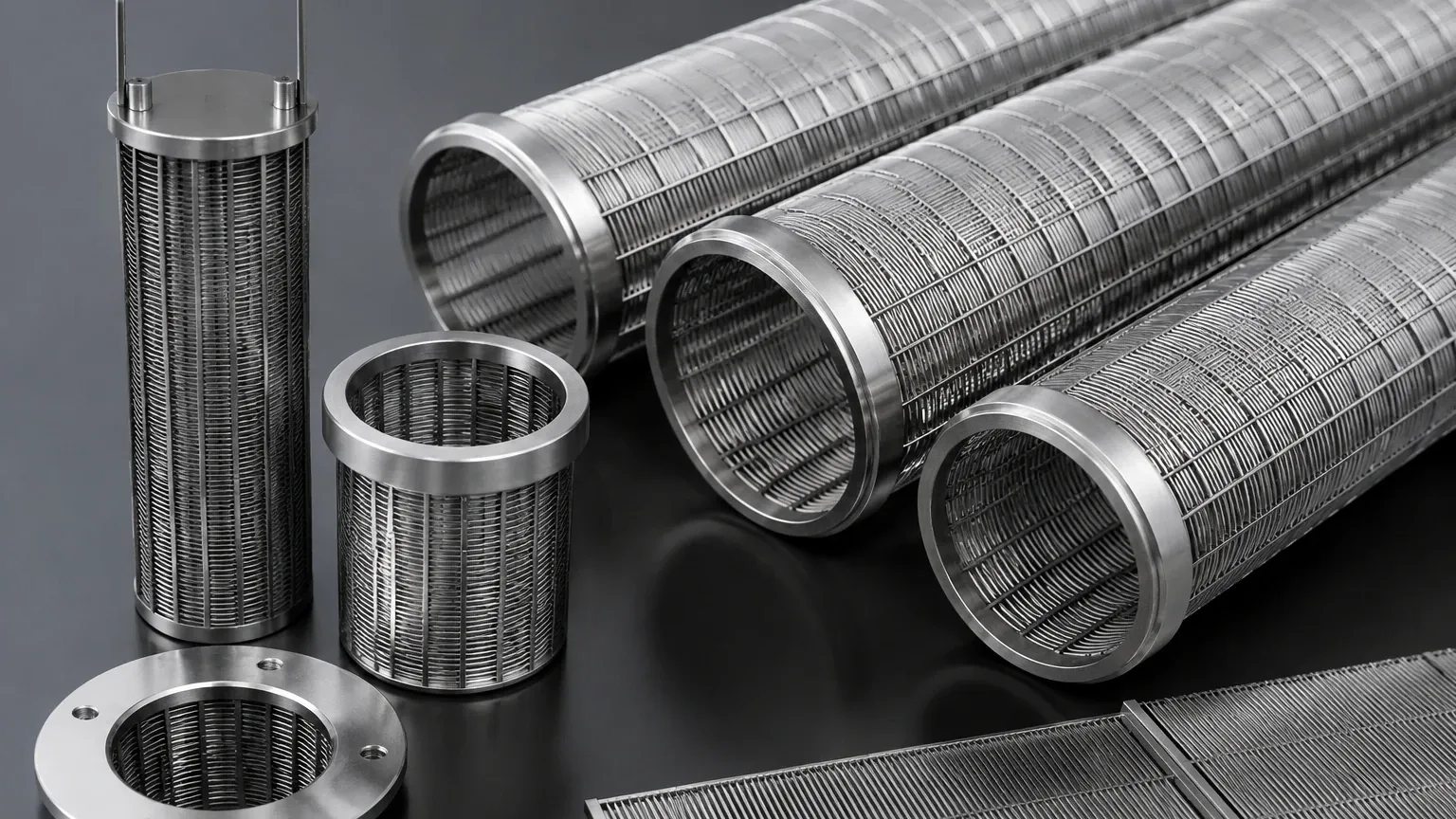
One of the primary reasons engineers seek a wedge wire screen nz is the need for a customized solution that fits seamlessly into existing infrastructure. Unlike standardized filter cartridges, wedge wire can be fabricated into a vast array of shapes and configurations.
* Flat Panels: Used in vibrating screens, floor drains, and static sieves.
* Cylinders and Tubes: Can be designed for internal-to-external or external-to-internal flow, commonly used in screw presses and rotary screens.
* Conical and Curved Screens: Often used in centrifugal separators or DSM (Dutch State Mines) screens for mineral and starch processing.
Customization also extends to the framing and reinforcement. Depending on the installation method—whether it is bolted, clamped, or welded—the edge treatments and support structures are engineered to ensure the screen remains secure under operational loads.
Maintenance and Operational Efficiency
While wedge wire is inherently low-maintenance due to its non-clogging design, establishing a proper maintenance cycle is essential for maximizing the total cost of ownership (TCO).
Cleaning Methods
* Backwashing: In pressurized systems, reversing the flow of the fluid can effectively dislodge accumulated solids from the screen surface.
* Mechanical Brushing: For open systems, automated or manual brushes can be used to sweep the surface of the wires.
* Chemical Cleaning: In food and beverage applications, CIP cycles using caustic or acidic solutions remove organic films and mineral scale without damaging the stainless steel substrate.
Monitoring Wear
In abrasive applications, such as sand separation or mining, the leading edges of the wedge wire will eventually wear down. This wear can lead to an increase in slot width, compromising filtration accuracy. Regular inspections using feeler gauges or optical measurement tools help in predicting the replacement cycle before a failure occurs.
Evaluating Suppliers for Wedge Wire Screen Nz Projects
Selecting a manufacturing partner for industrial filtration components involves more than comparing price points. Technical professionals should evaluate suppliers based on their ability to provide comprehensive engineering support and quality assurance.
* Engineering Expertise: Does the supplier understand the hydraulic requirements of your specific application? Can they provide flow rate calculations and pressure drop estimates?
* Manufacturing Capabilities: Can the manufacturer handle custom wire profiles and support rod spacing? What are their quality control protocols for ensuring slot uniformity?
* Material Certification: For critical applications, mill certificates should be provided to verify the chemical composition and mechanical properties of the stainless steel used.
Kaifil specializes in providing these high-performance, customized filtration solutions. By focusing on the intersection of material science and precision manufacturing, we support industrial operations in achieving reliable, long-term filtration performance. Whether the project involves retrofitting an existing plant or designing a new processing line, our technical approach ensures that every wedge wire component meets the specific demands of the New Zealand industrial environment.
Conclusion
The implementation of a wedge wire screen nz is a strategic decision that impacts the efficiency, hygiene, and reliability of industrial processes. By understanding the engineering behind the V-wire profile, the importance of material selection, and the necessity of precise slot calculation, engineers can specify solutions that offer superior performance over traditional filtration methods. As industries continue to seek ways to optimize production and reduce waste, the role of high-quality stainless steel wedge wire remains fundamental to modern industrial infrastructure.
