


Filter Cartridge Bag
In industrial liquid filtration, the choice between different media formats often dictates the efficiency, cost-effectiveness, and maintenance requirements of a processing line. The term "filter cartridge bag" frequently arises when engineers and procurement teams evaluate the transition from traditional bag filtration systems to high-performance cartridge systems, or when seeking hybrid solutions that combine the benefits of both. Understanding the technical distinctions, performance parameters, and engineering trade-offs between these two formats is essential for optimizing industrial filtration processes.
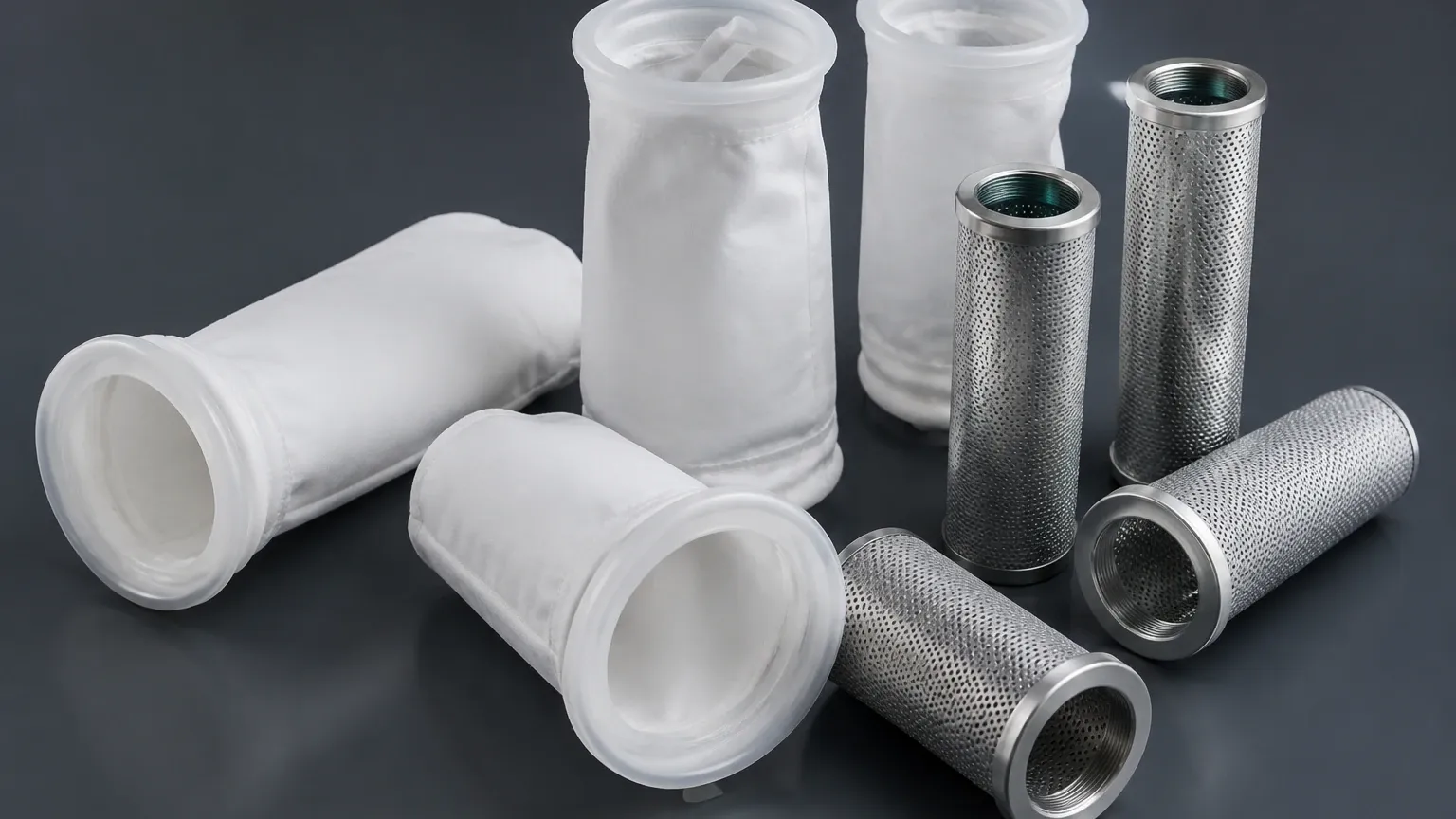
Industrial filtration is rarely a one-size-fits-all application. Whether dealing with chemical processing, food and beverage production, or hydraulic systems, the specific nature of the contaminant, the fluid's viscosity, and the required cleanliness level will determine if a bag or a cartridge is the superior choice. This guide examines the engineering considerations behind the filter cartridge bag selection process, focusing on how stainless steel Filter Cartridges provide a robust alternative to fabric-based bags in demanding environments.
Understanding the Technical Distinctions: Bags vs. Cartridges
To make an informed decision, it is necessary to define the fundamental differences in how these two media operate within a pressurized housing.
Bag Filtration Principles
Filter bags are typically constructed from felt, monofilament mesh, or multi-filament fabrics. They operate on a surface or near-surface filtration principle where the fluid flows from the inside of the bag to the outside. The contaminants are trapped within the bag, which acts as a sacrificial component. Bags are generally favored for high-flow, high-solids loading applications where the required filtration precision is nominal rather than absolute.
Cartridge Filtration Principles
Filter cartridges, particularly those manufactured from stainless steel wire mesh or sintered metal, offer a more complex filtration geometry. Cartridges can provide both surface and depth filtration. Because they are often pleated, the available surface area of a cartridge is significantly higher than that of a bag of equivalent dimensions. This increased surface area results in lower flux rates (flow per unit area), which reduces pressure drop and increases the service life of the media.
When discussing a "filter cartridge bag" solution, engineers are often looking for the ability to retrofit a bag housing with a cartridge to achieve higher efficiency or to move from a disposable media to a cleanable, reusable stainless steel component.
Engineering Advantages of Stainless Steel Cartridges
While fabric bags are cost-effective for low-pressure, non-critical applications, stainless steel filtration components offer technical advantages that are critical for high-stakes industrial environments.
1. Thermal and Chemical Stability
Standard filter bags made of polyester or polypropylene have strict temperature limits, often failing above 100°C to 120°C. In contrast, stainless steel cartridges (typically 304 or 316L) can withstand temperatures exceeding 300°C and are resistant to a wide array of corrosive chemicals, solvents, and high-pH cleaning agents. This makes them indispensable in chemical processing and steam filtration.
2. Structural Integrity and Pressure Resistance
In high-pressure or high-viscosity applications, fabric bags are prone to "bypass" or fiber migration, where the pressure forces the bag to stretch, allowing larger particles to pass through the expanded pores. Stainless steel wire mesh cartridges are rigid. They maintain their pore structure even under significant differential pressure ($ΔP$), ensuring consistent filtration performance throughout the cycle.
3. Absolute vs. Nominal Ratings
Most filter bags are nominally rated, meaning they may capture 60% to 80% of particles at their designated micron size. Stainless steel Filter Cartridges can be engineered to absolute ratings, providing 99.9% efficiency at specific micron levels. This precision is vital in industries like pharmaceuticals and microelectronics where even trace contamination can lead to batch failure.
The "Filter Cartridge Bag" Hybrid Concept
The industry has seen a rise in "bag-sized cartridges" or conversion kits. These products are designed to fit into standard Size #1 or Size #2 bag filter housings but utilize pleated cartridge technology. This hybrid approach addresses several common industrial pain points:
* Increased Surface Area: A pleated cartridge fitting into a bag housing can offer up to 10 times the surface area of a standard bag. This allows for higher flow rates within the same physical footprint.
* Reduced Change-out Frequency: Because the dirt-holding capacity is significantly higher, the interval between maintenance shutdowns is extended, reducing labor costs and process downtime.
* Improved Sealing: Bag filters often rely on a metal snap ring or a plastic flange that may not provide a perfect seal. Cartridge conversions often include O-ring seals or compression gaskets that eliminate the risk of bypass.
For facilities currently using bags but struggling with frequent clogging or insufficient clarity, exploring the filter cartridge bag transition is a logical engineering step.
Key Evaluation Criteria for Industrial Selection
When specifying a filtration solution, engineers should evaluate the following criteria to determine if a cartridge or bag system is most appropriate for their specific fluid dynamics.
Micron Rating and Efficiency
Identify the smallest particle that must be removed. If the requirement is for 5 microns or smaller with high consistency, a pleated stainless steel cartridge is generally required. For coarse filtration (above 100 microns) where high solids loading is present, a heavy-duty mesh bag or a cylindrical metal screen may suffice.
Flow Rate and Viscosity
High-viscosity fluids create higher pressure drops. To maintain a manageable $ΔP$, the filtration surface area must be maximized. This is where the pleated design of a cartridge outperforms the limited surface area of a bag. Engineers should calculate the flux rate (GPM per square foot) to ensure the media is not blinded prematurely.
Total Cost of Ownership (TCO)
While a stainless steel cartridge has a higher initial purchase price than a disposable bag, the TCO is often lower in the long run. Factors to consider include:
* Disposal Costs: Disposable bags can accumulate significant hazardous waste disposal fees.
* Labor: The time required to change bags daily versus cleaning a cartridge monthly.
* Product Loss: Large volume bags retain more process fluid during change-outs compared to compact cartridge designs.
Customization and OEM Solutions
One of the primary benefits of working with a professional manufacturer like Kaifil is the ability to customize the filter cartridge bag configuration to meet unique site requirements. Off-the-shelf solutions often fail to account for specific piping geometries or unique chemical compositions.
Material Selection
Depending on the environment, 304 stainless steel may be sufficient for water treatment, while 316L is required for marine or pharmaceutical applications to prevent chloride pitting. In extreme cases, specialized alloys like Hastelloy or Monel can be utilized for filter mesh.
End-Cap Configurations
Custom cartridges can be designed with various end-cap styles (e.g., 222, 226, DOE, or threaded NPT) to ensure they integrate seamlessly with existing housings. For those converting from a bag system, custom-machined adapters ensure a bypass-free fit into the original bag basket support.
Layered Media Structures
Advanced cartridges can utilize multiple layers of wire mesh—such as a fine filtration layer protected by coarser support layers—to provide depth filtration characteristics and mechanical strength. This multi-layer sintering process ensures that the mesh remains fixed and does not shift under pressure pulses.
Common Risks and Mitigation in Filtration Systems
Implementing a filter cartridge bag system without proper engineering oversight can lead to several operational risks:
1. Pressure Spikes: If a system is not sized correctly, a sudden increase in flow can cause a pressure spike that collapses a weak filter or forces contaminants through the media. Always specify the maximum allowable differential pressure.
2. Incompatibility: Using the wrong gasket material (e.g., using Buna-N in a high-temperature steam application) will lead to leaks. Ensure seals are matched to the fluid chemistry (Viton, EPDM, PTFE, etc.).
3. Improper Cleaning: For reusable stainless steel cartridges, improper cleaning methods (such as using wire brushes on fine mesh) can damage the pore structure. Ultrasonic cleaning or backwashing protocols should be established based on the manufacturer’s guidelines.
Conclusion: Making the Next Step
Selecting the right filtration media is a balance of physics, chemistry, and economics. While the filter cartridge bag terminology covers a broad range of products, the underlying goal is always the same: achieving the required fluid purity with the highest possible reliability.
For engineers looking to upgrade their current systems or design a new process, the move toward stainless steel Filter Cartridges often provides the durability and precision necessary for modern industrial standards. Before finalizing a purchase, technical teams should confirm the exact particle distribution of their influent, the chemical compatibility of all wetted parts, and the projected flow rates to ensure the chosen filtration solution provides the necessary performance margin.
By focusing on high-quality manufacturing and customized engineering, facilities can transition from high-maintenance disposable systems to robust, efficient, and long-lasting filtration architectures.
