


Filter Cartridge Bauer Compressor
In the realm of high-pressure gas compression, the filtration system is the primary safeguard for both equipment longevity and end-user safety. Whether for breathing air applications, industrial gas processing, or specialized laboratory use, the filter cartridge bauer compressor system represents a critical engineering component designed to remove moisture, oil vapor, and toxic gases from compressed air streams. For engineers and procurement specialists, understanding the technical nuances of these filtration elements is essential for maintaining system integrity and ensuring compliance with international air quality standards.
High-pressure compressors operate under extreme mechanical and thermal stress. As air is compressed, contaminants such as water vapor and hydrocarbons become concentrated. Without an effective filtration strategy, these contaminants can lead to internal corrosion, valve failure, and, in breathing air applications, severe health risks. The selection of appropriate Filter Cartridges is therefore not merely a maintenance task but a fundamental engineering requirement for high-pressure system design.
The Mechanics of High-Pressure Filtration
The filtration process in a high-pressure compressor typically occurs after the final stage of compression and cooling. At this point, the air is at its maximum pressure—often ranging from 3,000 to 6,000 PSI—and has been cooled to a temperature slightly above ambient. The filter cartridge bauer compressor assembly is housed within a pressure-resistant vessel designed to withstand these forces while facilitating a specific flow path through the filter media.
Filtration in these systems is usually multi-staged within a single cartridge. The process begins with mechanical separation, where larger droplets of oil and water are removed. However, the most critical work is performed through adsorption and chemical catalysis. Adsorption differs from simple mechanical straining; it involves the adhesion of molecules from a gas or liquid to the surface of a solid adsorbent. Because high-pressure air contains a high density of molecules, the efficiency of the adsorbent media is paramount.
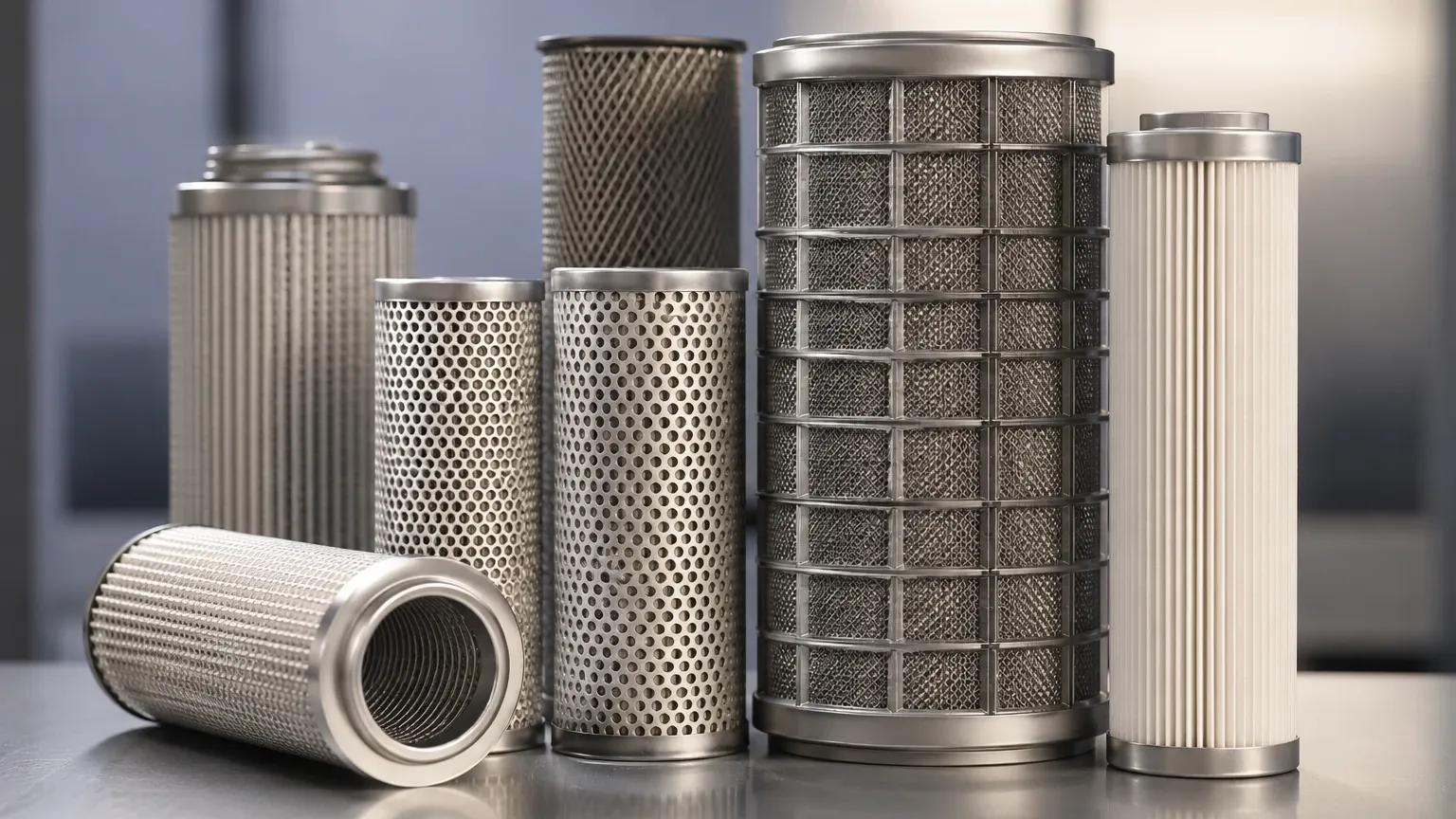
For industrial applications requiring custom solutions, the structural integrity of the cartridge itself is a key consideration. While many standard cartridges use plastic housings, heavy-duty industrial environments often benefit from stainless steel components. Stainless steel offers superior resistance to pressure cycling and chemical degradation, ensuring that the filter media remains contained and effective even under fluctuating operational loads.
Composition of Filter Media
A standard filter cartridge bauer compressor utilizes a combination of specialized media to achieve specific purity levels. The configuration of these layers is determined by the intended application of the compressed gas.
Molecular Sieve (Desiccant)
To prevent freezing in high-pressure valves and to inhibit corrosion within storage cylinders, moisture must be removed to extremely low dew points. Molecular sieves, typically synthetic zeolites, are used for their high affinity for water molecules. They operate by trapping water vapor within a crystalline lattice structure. In high-pressure environments, the efficiency of the molecular sieve is highly dependent on the contact time and the temperature of the incoming air.
Activated Carbon
Oil vapor and organic odors are removed through activated carbon. This media possesses an enormous internal surface area, providing ample sites for the adsorption of hydrocarbons. In industrial gas processing, ensuring that the air is free of oil carryover from the compressor pump is vital for protecting downstream equipment and ensuring the purity of the final product.
Hopcalite (Catalyst)
In breathing air systems, the presence of Carbon Monoxide (CO) is a critical safety concern. CO cannot be easily adsorbed by carbon or desiccant. Instead, a catalyst known as Hopcalite—a mixture of manganese and copper oxides—is used to oxidize Carbon Monoxide into Carbon Dioxide (CO2) at room temperature. This chemical conversion is highly sensitive to moisture; therefore, the Hopcalite layer is always positioned after the desiccant layers to ensure it remains dry and active.
Engineering Considerations for Stainless Steel Filtration Components
In demanding industrial environments, the transition toward stainless steel filtration components provides significant advantages in terms of durability and precision. Kaifil specializes in the manufacturing of custom stainless steel filtration solutions that address the limitations of standard synthetic materials. When designing or specifying a filter cartridge bauer compressor replacement or OEM component, several engineering factors must be evaluated.
Pressure Drop and Flow Dynamics
Every filter media introduces a degree of resistance to the airflow, known as pressure drop (Delta P). An excessive pressure drop reduces the efficiency of the compressor and increases energy consumption. Precision-engineered stainless steel mesh and perforated cores allow for optimized flow distribution, ensuring that the air interacts uniformly with the chemical media while minimizing resistance. This is particularly important in high-flow industrial compressors where throughput is a primary KPI.
Chemical Compatibility and Corrosion Resistance
In chemical processing or offshore environments, the external and internal components of the filter cartridge are exposed to corrosive elements. Standard plastic or aluminum components may succumb to stress-corrosion cracking or chemical degradation over time. Stainless steel (typically 304 or 316L) provides the necessary chemical inertness to ensure that the filtration system does not become a source of contamination itself.
Structural Integrity under High Pressure
High-pressure cartridges must maintain their shape and seal integrity under thousands of pounds of force. A structural failure within the cartridge can lead to "channeling," where air bypasses the filter media entirely, or worse, media migration, where particles of desiccant or carbon are carried downstream into the distribution lines. Stainless steel support structures and end caps provide the mechanical rigidity required to prevent these failure modes.
Air Quality Standards and Compliance
The performance of a filter cartridge bauer compressor is measured against international air purity standards. For engineers, the most relevant benchmarks are ISO 8573-1 and, for breathing air, EN 12021 or CGA Grade D/E. These standards define the maximum allowable concentrations of water, oil, CO, and CO2.
* ISO 8573-1: This is the primary international standard for compressed air quality. It classifies air based on the concentration of solid particles, water, and oil. High-precision filtration is required to achieve Class 1 or Class 2 oil and moisture levels.
* Breathing Air Standards: Standards like EN 12021 specify that Carbon Monoxide levels must be below 5-15 ppm and oil mist below 0.5 mg/m³. Achieving these levels consistently requires a well-maintained filtration stack with high-quality chemical media.
To ensure compliance, many modern compressor systems utilize integrated sensors to monitor the saturation of the filter cartridge. These sensors often detect moisture levels (dew point) as an indicator of the desiccant's remaining capacity. However, for oil and CO removal, scheduled replacement based on run-hours and environmental temperature remains the industry best practice.
Factors Affecting Filter Life and Performance
The service life of a filter cartridge bauer compressor is not a fixed variable; it is heavily influenced by the operating environment and the condition of the compressor pump. Understanding these factors is crucial for developing an effective maintenance schedule.
1. Ambient Temperature: The capacity of air to hold water vapor increases exponentially with temperature. For every 10°C (18°F) increase in temperature, the moisture load on the filter cartridge approximately doubles. Consequently, compressors operating in hot climates or poorly ventilated rooms will require more frequent filter changes.
2. Inlet Air Quality: If the compressor is drawing air from an environment contaminated with high levels of hydrocarbons (e.g., near an exhaust vent or in a chemical plant), the activated carbon in the cartridge will saturate much faster than expected.
3. Compressor Maintenance: Worn piston rings or faulty interstage separators can lead to excessive oil and liquid water carryover into the filtration system. If the mechanical separators fail to remove bulk liquids, the filter cartridge will become "slugged" with water or oil, leading to immediate failure and high pressure drop.
4. Operating Pressure: Higher operating pressures actually improve the efficiency of the adsorption process, but they also increase the density of contaminants passing through the media per unit of time.
Customization and OEM Filtration Solutions
For many specialized industrial applications, off-the-shelf filtration components may not meet specific engineering requirements. This is where custom manufacturing becomes vital. Whether the need is for unique dimensions, specialized end-fittings, or high-temperature resistance, custom-designed Filter Cartridges allow engineers to tailor the filtration system to the exact demands of their process.
Kaifil’s expertise in stainless steel wire mesh and precision metal components allows for the development of filtration elements that can be integrated into existing Bauer compressor housings or new proprietary systems. Customization options include:
* Variable Micron Ratings: Tailoring the mechanical pre-filtration layer to capture specific particle sizes before they reach the chemical media.
* High-Strength Cores: Designing internal support structures that can withstand extreme pressure differentials without collapsing.
* Specialized Gaskets and Seals: Utilizing Viton, EPDM, or PTFE seals to ensure compatibility with various gases and temperature ranges.
* Refillable Designs: In certain industrial contexts, stainless steel cartridge bodies can be designed to be refillable, reducing long-term waste and allowing for the use of specific bulk media tailored to the application.
Total Cost of Ownership and Selection Strategy
When evaluating filter cartridge bauer compressor options, procurement teams must look beyond the initial purchase price. The total cost of ownership (TCO) includes the cost of the cartridge, the energy costs associated with pressure drop, the labor for replacement, and the potential costs of downstream equipment damage or product contamination.
Investing in high-quality filtration components reduces the risk of unscheduled downtime. For example, a failure to remove moisture can lead to the icing of valves in cryogenic applications or the corrosion of expensive storage banks. By selecting cartridges with high-grade media and robust stainless steel construction, facilities can extend the intervals between maintenance cycles and ensure the highest level of gas purity.
For engineers, the selection process should begin with a clear definition of the required gas purity and the maximum allowable pressure drop. Consulting with a manufacturer like Kaifil, who understands the intricacies of metal filtration and industrial applications, ensures that the chosen solution is technically sound and economically optimized for the specific operational environment.
In conclusion, the filter cartridge bauer compressor is a sophisticated assembly of chemical and mechanical engineering. Its role in protecting high-pressure systems and ensuring gas purity is indispensable. By focusing on material quality, structural integrity, and proper maintenance, industrial operators can achieve reliable, high-performance filtration that meets the most stringent international standards.
