


Dolphin M400 Filter Cartridges
In the field of automated liquid maintenance and industrial-grade particulate removal, the efficiency of a system is fundamentally tied to its filtration media. The Dolphin M400, a prominent robotic cleaner utilized in both high-end residential and light commercial aquatic environments, relies on a sophisticated internal filtration architecture. Understanding the technical nuances of dolphin m400 filter cartridges is essential for engineers and facility managers who prioritize water clarity, hydraulic efficiency, and long-term equipment reliability.
As a manufacturer specializing in precision filtration, Kaifil recognizes that the principles governing these cartridges—surface area optimization, micron-rated precision, and material durability—are the same benchmarks used in heavy industrial Filter Cartridges. This article provides a technical deep dive into the design, selection, and maintenance of these filtration components from an engineering perspective.
Technical Architecture of Dolphin M400 Filter Cartridges
The Dolphin M400 utilizes a top-access filtration system that typically employs a set of four individual cartridges. This modular approach is designed to balance high flow rates with high dirt-holding capacity. Unlike older bag-style filters, these cartridges utilize a pleated media design, which exponentially increases the effective filtration area (EFA) within a compact footprint.
From an engineering standpoint, the cartridge frame is constructed from high-impact, UV-resistant polymers. This ensures structural integrity when the robotic unit’s pump creates a vacuum, drawing water through the media. If the frame were to flex or bypass under pressure, the filtration efficiency would drop significantly, allowing debris to recirculate or, worse, damage the internal pump motor. The integration of the cartridges into a snap-in compartment ensures a tight seal, which is critical for maintaining the pressure differential required for effective suction.
Filtration Efficiency: Fine vs. Ultra-Fine Media
One of the most critical aspects of dolphin m400 filter cartridges is the dual-level filtration capability. Most M400 systems are supplied with two distinct types of media to address different particulate loads:
1. Fine Filter Cartridges (Spring Filters): These are typically constructed from a mesh-like synthetic material. They are designed for high-flow scenarios where the primary goal is to capture large debris such as leaves, twigs, and insects. In industrial terms, these serve as a "pre-filtration" stage, protecting the finer media from premature blinding.
2. Ultra-Fine Filter Cartridges: These cartridges utilize a dense, pleated paper or synthetic fiber media. They are engineered to capture microscopic particles, including silt, algae spores, and fine sand. These are often rated to capture particles as small as 20 to 50 microns.
For technical professionals, the choice between these media types depends on the specific environmental load. In a system experiencing heavy organic influx, using only ultra-fine cartridges may lead to rapid pressure increases and frequent cleaning cycles. Conversely, relying solely on fine mesh will result in poor water clarity. A balanced configuration allows the system to manage varying particle size distributions effectively.
Material Engineering and Chemical Compatibility
The longevity of Filter Cartridges is dictated by the chemical and thermal environment in which they operate. For the Dolphin M400, the cartridges must withstand constant exposure to chlorine, bromine, and varying pH levels.
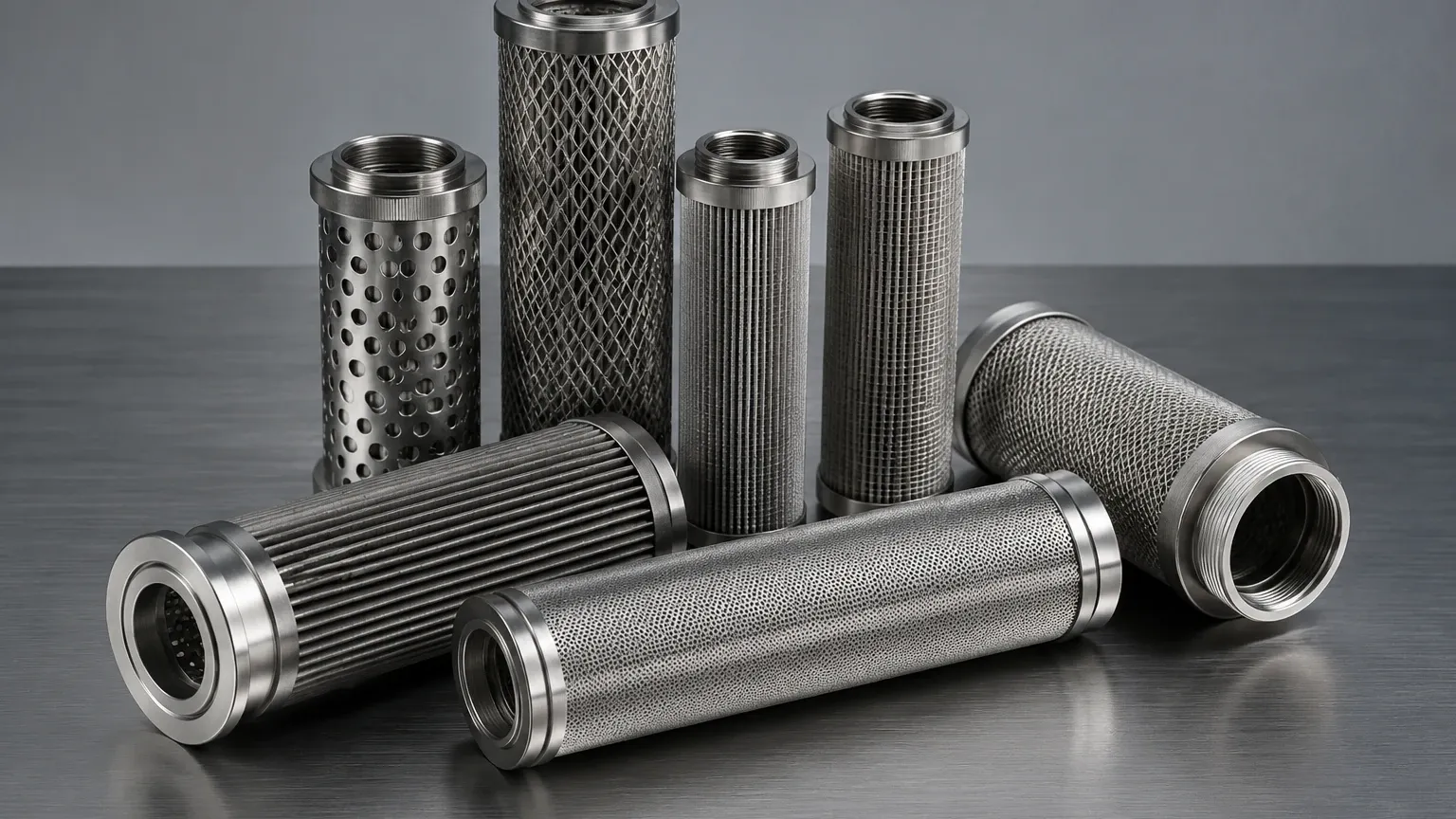
In industrial applications, Kaifil often recommends stainless steel 304 or 316L for filter components due to their superior resistance to corrosion and mechanical stress. While standard dolphin m400 filter cartridges use synthetic fibers, the engineering principles remain the same: the media must not degrade or leach surfactants into the fluid. The pleat packs are often thermally bonded to the end caps rather than glued. Thermal bonding eliminates the risk of adhesive failure, which is a common point of bypass in lower-quality aftermarket filters.
Furthermore, the "rebound" quality of the pleated media is vital. After a cleaning cycle, the fibers must return to their original orientation to maintain the specified micron rating. Over time, chemical exposure can cause synthetic fibers to become brittle, leading to "fiber migration" where the filter itself becomes a source of contamination.
Performance Evaluation: Hydraulic Impact and Pressure Drop
In any filtration system, there is an inherent trade-off between filtration fineness and hydraulic resistance. As dolphin m400 filter cartridges accumulate debris, the "pressure drop" (ΔP) across the media increases. Because robotic cleaners operate on a fixed-speed pump, an increased ΔP results in reduced flow velocity. This can manifest as sluggish movement of the robot or a decrease in wall-climbing capability.
Engineers evaluating replacement cartridges should look at the pleat density. While more pleats generally mean more surface area, pleats that are packed too tightly can actually inhibit flow and make the cartridge harder to clean. The ideal design features "pleat stabilization," where the folds are spaced evenly to allow fluid to reach the entire depth of the media. This ensures that the "cake" (the layer of captured debris) builds up uniformly, extending the time between maintenance intervals.
Maintenance Protocols and Service Life Extension
To maintain the performance of dolphin m400 filter cartridges, a rigorous maintenance schedule is required. Unlike disposable industrial filters, these cartridges are designed to be cleaned and reused. However, the cleaning method significantly impacts their service life.
* Rinsing: High-pressure water should be avoided, as it can tear the delicate fibers of ultra-fine media or widen the pore structure, effectively destroying the micron rating. A gentle hose-off is the standard recommendation.
* Chemical Degreasing: Over time, oils and biofilms can coat the filter media, which simple rinsing cannot remove. Periodic soaking in a mild acidic or enzymatic cleaner helps restore the EFA.
* Inspection: Engineers should inspect the gaskets and seals on the cartridge frames. A compromised seal allows fluid to take the path of least resistance, bypassing the filter media entirely. This "bypass leakage" is a common cause of persistent water turbidity.
In a commercial or heavy-use setting, it is often more cost-effective to maintain two sets of cartridges. This allows one set to be chemically cleaned and dried (which helps kill organic growth) while the other set remains in operation.
Engineering Considerations for Custom and OEM Filtration
While the Dolphin M400 is a specific application, the demand for high-performance Filter Cartridges extends across the chemical, pharmaceutical, and food processing industries. When designing or procuring filtration components for specialized equipment, several factors must be confirmed:
1. Micron Rating Accuracy: Is the rating absolute or nominal? For critical applications, absolute ratings are required to ensure no particles above a certain size pass through.
2. Structural Support: In high-pressure industrial systems, cartridges may require an internal stainless steel core to prevent collapse.
3. Custom Geometry: Many OEM systems require unique end-cap configurations (e.g., 222 O-rings, Fin, or Flat caps) to ensure a leak-proof fit.
4. Total Cost of Ownership (TCO): While synthetic cartridges like those in the M400 have a lower upfront cost, stainless steel wire mesh filters provided by manufacturers like Kaifil offer much longer service lives in harsh industrial environments because they can be ultrasonically cleaned and sterilized.
Conclusion: Optimizing Your Filtration Strategy
Whether managing a fleet of robotic cleaners or a complex industrial process, the selection of dolphin m400 filter cartridges and similar components should be driven by data and technical requirements. By understanding the relationship between media type, surface area, and hydraulic load, users can ensure their systems operate at peak efficiency.
For those seeking more robust or customized solutions, exploring the transition from standard synthetic media to precision-engineered metal Filter Cartridges can provide significant benefits in durability and filtration precision. Kaifil remains committed to supporting engineering teams with the technical expertise needed to solve the most demanding filtration challenges, from material selection to final production.
