


Filter Element Eaton
In industrial fluid management, the integrity of a filtration system is defined by the performance of its internal components. For engineers and procurement teams managing high-pressure hydraulic systems, chemical processing lines, or food and beverage production, the search for a specific filter element eaton often stems from a need to maintain OEM specifications while optimizing for durability and cost-effectiveness. High-quality filtration is not merely about removing particulates; it is about protecting downstream assets, reducing downtime, and ensuring the consistency of the final product.
Industrial filtration requires a deep understanding of fluid dynamics, material science, and mechanical engineering. Whether you are replacing an existing component or designing a new system, selecting the correct Filter Cartridges involves evaluating micron ratings, pressure drop characteristics, and chemical compatibility. This guide examines the technical nuances of industrial filter elements, the engineering considerations for high-performance alternatives, and the critical factors that determine the total cost of ownership in demanding environments.
Technical Specifications and Performance Metrics
When evaluating a filter element eaton, the first priority is understanding the technical parameters that define its efficiency. Industrial filters are categorized based on their ability to capture particles of a specific size, but the "micron rating" alone is often insufficient for a complete engineering assessment.
Nominal vs. Absolute Filtration
A nominal rating indicates the filter's ability to retain a majority of particles of a certain size, but it does not guarantee 100% efficiency. In contrast, an absolute rating—often used in critical pharmaceutical or chemical applications—signifies that the filter will block 99.9% or more of particles at that micron level. For high-stakes industrial processes, engineers must look at the Beta Ratio (β), which compares the number of particles upstream of the filter to the number downstream. A higher Beta Ratio indicates superior filtration performance and more reliable protection for sensitive components like hydraulic valves or precision nozzles.
Differential Pressure and Flow Rate
The relationship between flow rate and differential pressure (ΔP) is a primary concern for system design. Every filter element introduces a degree of resistance to the flow. As the element captures contaminants, the differential pressure increases. If the initial ΔP is too high, the system's energy efficiency drops, and the service life of the element is shortened. High-performance filter cartridges are engineered with optimized pleat geometries to maximize surface area, thereby lowering the clean pressure drop and extending the time between replacement cycles.
Material Selection for Industrial Environments
The environment in which a filter element operates dictates the materials required for its construction. While many standard elements use cellulose or synthetic fibers, demanding industrial applications often necessitate the use of stainless steel and advanced alloys.
Stainless Steel Wire Mesh and Sintered Metal
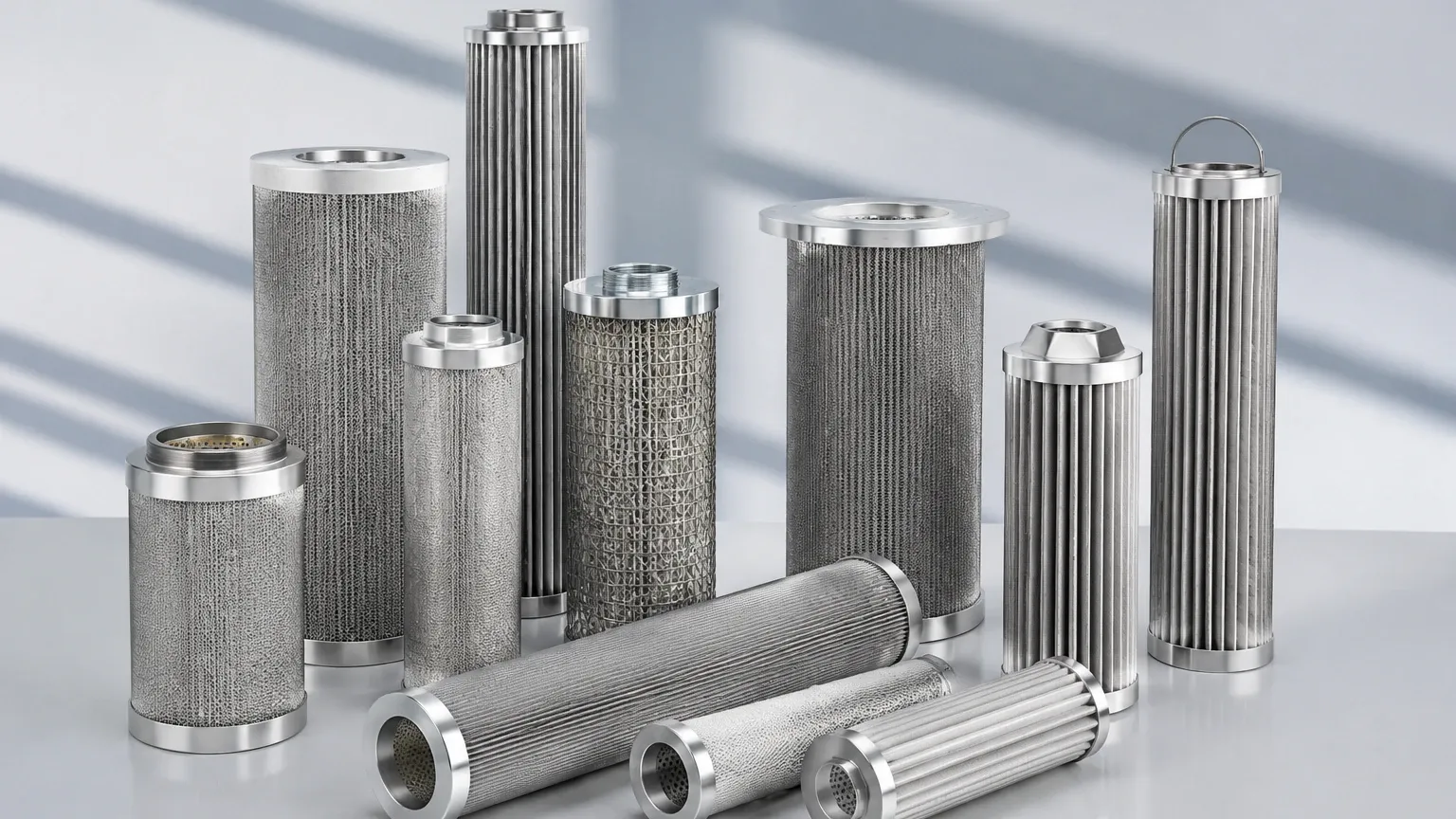
For applications involving high temperatures, aggressive chemicals, or high-viscosity fluids, stainless steel is the material of choice. Stainless steel wire mesh filters provide excellent mechanical strength and can be cleaned and reused, making them a sustainable choice for long-term operations. Sintered metal elements, created by fusing metal powders or fibers, offer even higher structural integrity and precise pore size distribution, capable of withstanding extreme pressure differentials without media migration.
Chemical Compatibility and Gasket Selection
It is not only the filter media that must be compatible with the process fluid. The end caps, center cores, and sealing components (O-rings or gaskets) must also resist chemical degradation. Common materials include Viton, EPDM, and PTFE. A failure in a gasket can lead to fluid bypass, rendering the entire filtration process ineffective. When sourcing a filter element eaton equivalent, verifying that the seal material matches the specific chemical profile of the fluid—whether it be hydraulic oil, caustic cleaners, or solvents—is mandatory for system safety.
Engineering Considerations for Custom Filter Cartridges
Standard OEM elements are designed for general use, but many industrial sites operate under unique conditions that require customized solutions. Custom manufacturing allows for the adjustment of various design elements to better suit specific operational challenges.
Structural Reinforcement
In high-pressure systems, the structural integrity of the filter element is vital. If the internal support core is too weak, the element may collapse under high differential pressure, releasing captured contaminants back into the system. Custom-engineered filter cartridges often feature reinforced center cores and heavy-duty outer cages to ensure the element maintains its shape and function even during pressure surges or cold starts in hydraulic systems.
Pleat Density and Surface Area
The capacity of a filter to hold dirt is directly proportional to its effective surface area. By optimizing the pleat height and density, manufacturers can increase the contaminant-holding capacity without increasing the outer dimensions of the cartridge. This is particularly useful when upgrading filtration efficiency within an existing housing. More surface area means fewer change-outs, lower labor costs, and reduced disposal volumes.
Performance Evaluation and Quality Standards
To ensure that a filter element eaton alternative meets the rigorous demands of industrial use, it must undergo standardized testing. Reliability is built on consistent manufacturing processes and verified performance data.
ISO Testing Protocols
Professional filtration components are typically tested according to ISO standards, such as ISO 2941 (collapse/burst pressure), ISO 2942 (fabrication integrity), and ISO 16889 (multi-pass method for evaluating filtration performance). These tests provide an objective baseline for comparing different elements. When reviewing technical data sheets, engineers should look for these certifications to ensure the product will perform as expected under field conditions.
Quality Control in Manufacturing
For industries like food and beverage or pharmaceuticals, the cleanliness of the filter element itself is a critical factor. Manufacturing should take place in controlled environments to prevent cross-contamination. Furthermore, the use of advanced welding techniques, such as plasma or laser welding for stainless steel components, ensures that no adhesives or resins are introduced into the process stream, which is essential for maintaining high purity levels.
Total Cost of Ownership and Maintenance Cycles
The purchase price of a filter element is only a small fraction of its total cost of ownership (TCO). A comprehensive economic analysis must include the costs of energy, maintenance labor, downtime, and disposal.
Extending Service Life
A common mistake in filtration management is replacing elements based on a fixed schedule rather than actual performance. By monitoring differential pressure, operators can replace elements at the optimal moment—just before the bypass valve opens or the flow becomes restricted. High-capacity filter cartridges may have a higher upfront cost but can last significantly longer, reducing the frequency of system shutdowns and the associated labor costs.
Reusability vs. Disposal
In many large-scale industrial operations, the disposal of used filter elements represents a significant environmental and financial burden, especially if the elements are contaminated with hazardous materials. Stainless steel filter elements offer the advantage of being cleanable. Through ultrasonic cleaning or backwashing, these elements can be restored to near-original performance levels multiple times. This transition from a consumable-based model to a reusable-asset model can drastically reduce the TCO over several years.
Selection Guide: Choosing the Right Filter Element
Selecting the appropriate filtration component requires a systematic approach. Before finalizing a purchase for a filter element eaton replacement, engineers should confirm the following details:
1. Fluid Characteristics: Determine the viscosity, temperature, and chemical composition of the fluid. High-viscosity fluids require larger surface areas to maintain flow.
2. Contaminant Profile: Identify the type and concentration of contaminants. Is the debris hard and abrasive, or soft and gelatinous? This affects the choice between depth filtration and surface filtration.
3. Operating Pressure: Confirm both the steady-state operating pressure and the potential for pressure spikes. Ensure the element’s collapse rating exceeds the system's maximum differential pressure.
4. Target Cleanliness Level: Define the required ISO Cleanliness Code for the system. This will dictate the necessary micron rating and Beta Ratio.
5. Housing Compatibility: Ensure the end-cap configuration (e.g., Code 7, DOE, SOE) and dimensions perfectly match the existing filter housing to prevent bypass.
By focusing on these technical realities, purchasing teams can move beyond brand-name reliance and select filtration solutions based on verified engineering performance. Whether the application calls for standard polymer media or high-precision stainless steel, the goal remains the same: achieving reliable, efficient, and cost-effective fluid purity.
