


Home Depot Water Filter Cartridges
In the realm of water treatment and fluid management, the selection of filtration components is a critical decision that impacts both operational efficiency and product quality. For many maintenance managers and facility engineers, retail-grade solutions like home depot water filter cartridges often serve as an initial point of reference due to their accessibility and standardized sizing. However, in industrial environments—ranging from chemical processing to food and beverage production—the requirements for filtration often exceed the capabilities of standard consumer-grade products. Understanding the technical boundaries between retail solutions and industrial-grade Filter Cartridges is essential for optimizing system performance and ensuring long-term reliability.
Industrial filtration demands a level of precision, durability, and chemical resistance that standard residential filters are not designed to provide. While retail cartridges are excellent for point-of-use residential water softening or sediment removal, industrial applications require components that can withstand high pressures, extreme temperatures, and aggressive chemical solvents. This article examines the specifications of standard cartridges, their limitations in professional settings, and the engineering considerations involved in selecting high-performance filtration solutions.
Understanding the Specifications of Retail Water Filter Cartridges
Retail-grade water filter cartridges, such as those commonly found in large-scale home improvement stores, are generally designed for municipal water treatment. These products are engineered to remove common contaminants like chlorine, sediment, and certain heavy metals from potable water.
Common Materials and Construction
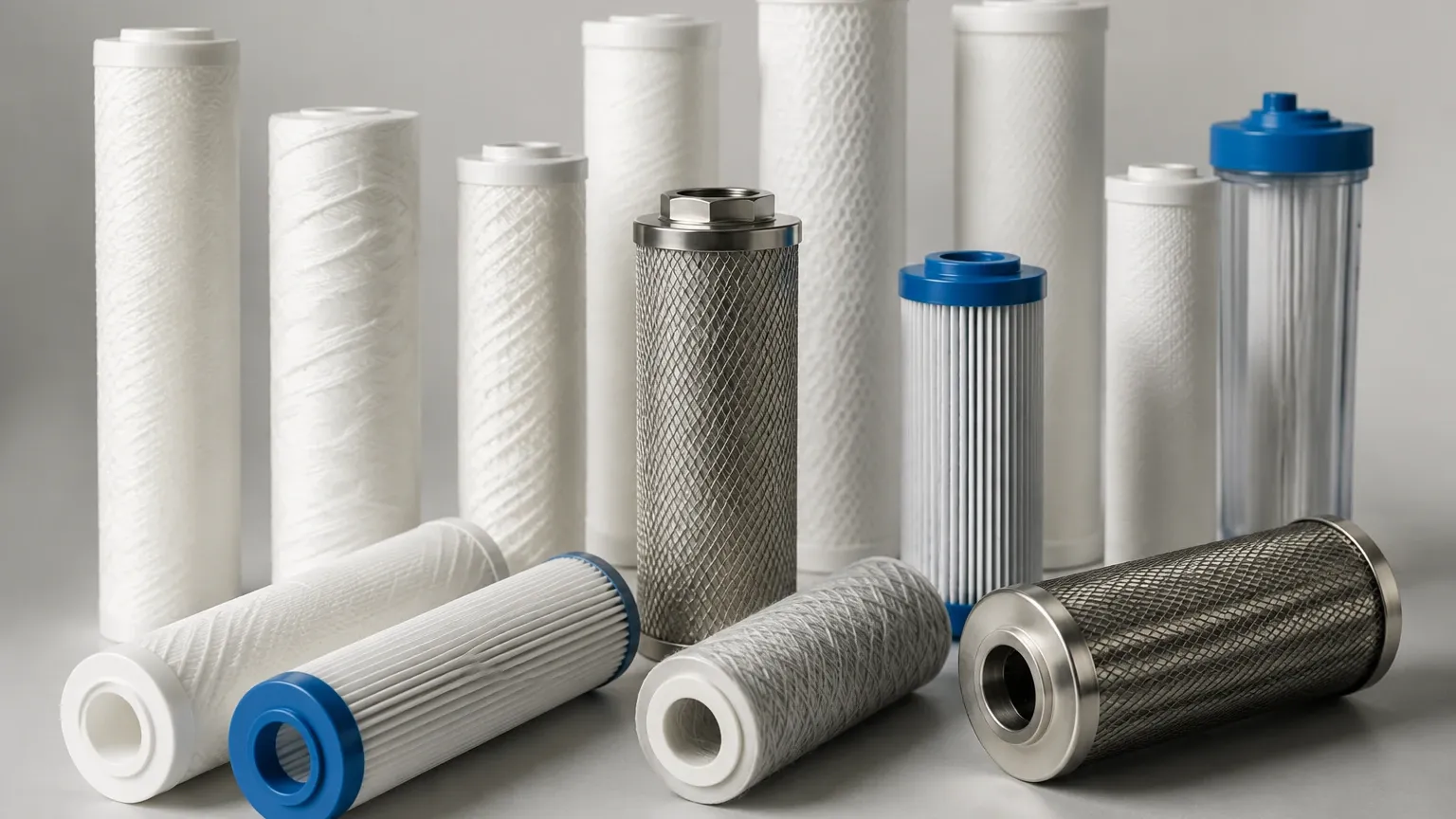
Most home depot water filter cartridges utilize one of three primary media types:
1. Polypropylene (PP) Melt-Blown: These are depth filters used primarily for sediment removal. They work by trapping particles throughout the thickness of the material. While effective for basic pre-filtration, they are disposable and have limited chemical resistance.
2. Carbon Block: These are used for chemical adsorption, specifically for removing taste and odor issues caused by chlorine. They are highly effective for organic compounds but can become a breeding ground for bacteria if not replaced strictly according to schedule.
3. Pleated Paper or Polyester: These provide a higher surface area for sediment filtration compared to melt-blown filters but are susceptible to structural failure under high-pressure surges.
Performance Metrics in Consumer Filters
Consumer cartridges are typically rated by their "nominal" micron rating. A nominal rating indicates that the filter will trap a certain percentage of particles of a given size. For example, a 5-micron nominal filter might trap 85% of 5-micron particles. In contrast, industrial engineers often require "absolute" ratings, where the filter is guaranteed to trap 99.9% of particles at the specified size. This distinction is vital in pharmaceutical or microelectronics applications where even a small amount of bypass can lead to catastrophic batch failure.
Limitations of Standard Filter Cartridges in Industrial Settings
While the convenience of purchasing home depot water filter cartridges is high, their application in industrial systems often leads to increased total cost of ownership (TCO) and potential system downtime. Engineers must account for several factors where retail products typically fall short.
Temperature and Pressure Constraints
Standard residential filter housings and cartridges are usually rated for temperatures up to 100°F (38°C) and pressures around 60-125 PSI. In industrial steam filtration or high-temperature chemical processing, temperatures can easily exceed 300°F (149°C). Under these conditions, the plastic binders and polypropylene fibers in standard cartridges will soften, deform, or melt, leading to "unloading"—where the filter releases previously trapped contaminants back into the fluid stream.
Chemical Compatibility
Industrial fluids often involve acids, bases, or hydrocarbons that are incompatible with standard plastic filters. A polypropylene filter used in a solvent-based cleaning system will degrade rapidly, contaminating the fluid with plastic microfibers. Industrial-grade stainless steel Filter Cartridges are required in these scenarios to ensure the structural integrity of the filtration media remains intact throughout the service life.
Flow Rate and Pressure Drop
Industrial systems often operate at much higher flow rates than residential plumbing. Standard retail cartridges may create a significant pressure drop (delta P) when subjected to high-velocity flows. A high initial pressure drop reduces the available service life of the filter, as the system will reach its terminal pressure drop much faster, necessitating frequent and costly replacements.
Material Selection: When to Move Beyond Polypropylene and Carbon
When the limitations of home depot water filter cartridges are reached, engineers must turn to advanced materials. Stainless steel is the gold standard for demanding industrial filtration due to its mechanical strength and versatility.
Stainless Steel Wire Mesh
Wire mesh filters offer precise surface filtration. Unlike depth filters, they can be backwashed or ultrasonically cleaned, making them a sustainable choice for long-term operations. They are available in various weaves, such as plain weave, twilled weave, and Dutch weave, each offering different levels of flow resistance and filtration fineness.
Sintered Metal Media
For applications requiring extreme durability and fine filtration (down to 0.5 microns), sintered metal cartridges are used. These are created by fusing layers of wire mesh or metal powder under high heat and pressure. The result is a porous metal structure that is nearly indestructible under normal operating conditions and can handle high differential pressures without bypass.
304 vs. 316L Stainless Steel
Selecting the right grade of steel is as important as the filter type. 304 stainless steel is suitable for many general industrial applications, but 316L is preferred for pharmaceutical, food and beverage, and marine environments due to its superior resistance to pitting and corrosion, especially in the presence of chlorides.
Engineering Considerations for Industrial Filter Cartridges
Transitioning from a retail-mindset to an industrial engineering approach requires a focus on the specific mechanics of the filtration process.
Seal and Gasket Integrity
One of the most common failure points in filtration systems is the seal. While home depot water filter cartridges often use standard Buna-N or EPDM gaskets, industrial processes may require Viton, PTFE (Teflon), or silicone to handle specific chemical exposures. The method of attachment—whether it is a double open end (DOE), a 222 O-ring, or a 226 locking fin—must be precisely matched to the filter housing to prevent fluid bypass.
Filtration Efficiency: Nominal vs. Absolute
As previously mentioned, the efficiency of the media is paramount. In industrial fluid power (hydraulics) or sterile air filtration, the Beta Ratio is used to define efficiency. An engineer must determine the sensitivity of the downstream components. For example, a high-pressure fuel injector might require an absolute-rated 2-micron filter, whereas a cooling water loop might function perfectly well with a 50-micron nominal mesh filter.
Customization and OEM Requirements
Industrial equipment often features proprietary housing designs that standard retail cartridges cannot fit. Custom-manufactured Filter Cartridges allow for the optimization of length, diameter, and end-cap configuration. This ensures a perfect fit, which is the first line of defense against bypass—the primary cause of filtration system failure.
Evaluating Total Cost of Ownership (TCO) in Filtration Systems
A common pitfall in procurement is focusing solely on the unit price of the cartridge. While home depot water filter cartridges are inexpensive per unit, their TCO in an industrial setting can be significantly higher than premium alternatives.
Disposal vs. Cleanability
Disposable filters generate significant waste and recurring procurement costs. In contrast, stainless steel filters represent a higher initial investment but can be cleaned and reused hundreds of times. In industries like oil and gas or heavy manufacturing, the reduction in waste disposal costs and the elimination of frequent shipping/logistics for new filters can result in a return on investment (ROI) within months.
Labor and Downtime
Every time a filter needs to be changed, the system must be shut down, depressurized, and opened. The labor costs associated with frequent filter changes for low-capacity retail cartridges often outweigh the savings on the component itself. High-capacity industrial cartridges extend the intervals between maintenance cycles, maximizing production uptime.
Energy Consumption
As a filter clogs, the pump must work harder to maintain flow, increasing energy consumption. Industrial filters with optimized pleat geometries and high-porosity media maintain a lower pressure drop for a longer duration, leading to measurable energy savings over the course of a year.
Selecting the Right Filter Cartridges for Demanding Applications
For engineers and purchasing teams, the move away from standard home depot water filter cartridges toward specialized solutions requires a thorough assessment of the application. Before selecting a replacement or designing a new system, the following data points should be confirmed:
* Fluid Characteristics: Viscosity, pH level, and chemical composition.
* Contaminant Profile: The nature of the solids being removed (hard, soft, fibrous) and the required cleanliness level (ISO codes).
* Operating Conditions: Maximum operating temperature, normal and surge pressures, and required flow rate (GPM or LPM).
* Regulatory Compliance: Does the filter need to meet FDA, 3-A Sanitary, or ASME standards?
By focusing on these technical parameters, organizations can move beyond the "commodity" approach to filtration. While retail outlets provide a valuable service for residential needs, the complexities of industrial processing demand a partnership with manufacturers who understand the nuances of metal filtration and custom engineering.
Reliable filtration is the silent backbone of industrial quality control. Whether it is protecting a multi-million dollar turbine from particulate damage or ensuring the purity of a pharmaceutical batch, the choice of filter media is never trivial. Transitioning to high-performance, stainless steel Filter Cartridges ensures that your system is not just filtered, but engineered for success.
