


How to Install Tetra Whisper Filter Cartridges
In both residential and industrial applications, the efficiency of a filtration system is heavily dependent on the correct installation and seating of the filter media. While the Tetra Whisper system is a common entry-point for small-scale aquatic filtration, the principles underlying its operation—fluid dynamics, bypass prevention, and mechanical filtration—align closely with the rigorous standards required in industrial processing. Understanding how to install tetra whisper filter cartridges correctly ensures optimal water clarity and system longevity, providing a foundational look at cartridge-based filtration mechanics.
For engineers and procurement professionals accustomed to high-capacity Filter Cartridges, the simplicity of consumer-grade systems offers a clear demonstration of how seal integrity affects performance. This guide provides a technical overview of the installation process, followed by an analysis of how these principles scale into industrial-grade stainless steel filtration solutions.
Understanding the Mechanics of the Whisper Filtration System
The Tetra Whisper system utilizes a multi-stage filtration approach contained within a compact housing. The primary component is the Bio-Bag cartridge, which typically consists of a plastic frame, a fiber floss exterior for mechanical filtration, and activated carbon internally for chemical filtration.
From a technical perspective, the system relies on gravity-fed or pump-driven flow that forces water through the surface area of the cartridge. If the cartridge is incorrectly installed, the fluid will follow the path of least resistance, leading to "bypass." In industrial filtration, bypass is a critical failure mode that allows contaminants to pass downstream, potentially damaging sensitive equipment or compromising product purity. In the Whisper system, bypass results in poor water quality and the accumulation of debris within the pump motor.
Step-by-Step Installation Guide for Whisper Cartridges
To ensure the system operates at its designed efficiency, follow these technical steps for how to install tetra whisper filter cartridges:
1. Pre-Installation Preparation and Inspection
Before handling the filter media, inspect the cartridge for any structural defects in the fiber floss or the plastic frame. In industrial settings, this is equivalent to verifying the integrity of the mesh or sintered metal. For Whisper cartridges, it is essential to rinse the new cartridge under cold, clean water. This step removes any carbon dust (fines) produced during shipping, preventing them from clouding the system or clogging the initial pores of the filter media.
2. Assembling the Bio-Bag Frame
If you are using the unassembled Bio-Bag kits, slide the fiber bag over the plastic "Stay-Clean" frame. Ensure the bag is pulled taut across the frame. Any sagging or bunching of the material creates uneven flow distribution, which can lead to premature clogging in high-density areas of the floss.
3. Loading Chemical Media
If the cartridge requires manual addition of activated carbon, pour the measured amount into the bag, ensuring it is distributed evenly at the bottom. In industrial Filter Cartridges, chemical or adsorptive stages are often integrated into pleated layers to maximize contact time and surface area.
4. Inserting the Cartridge into the Housing
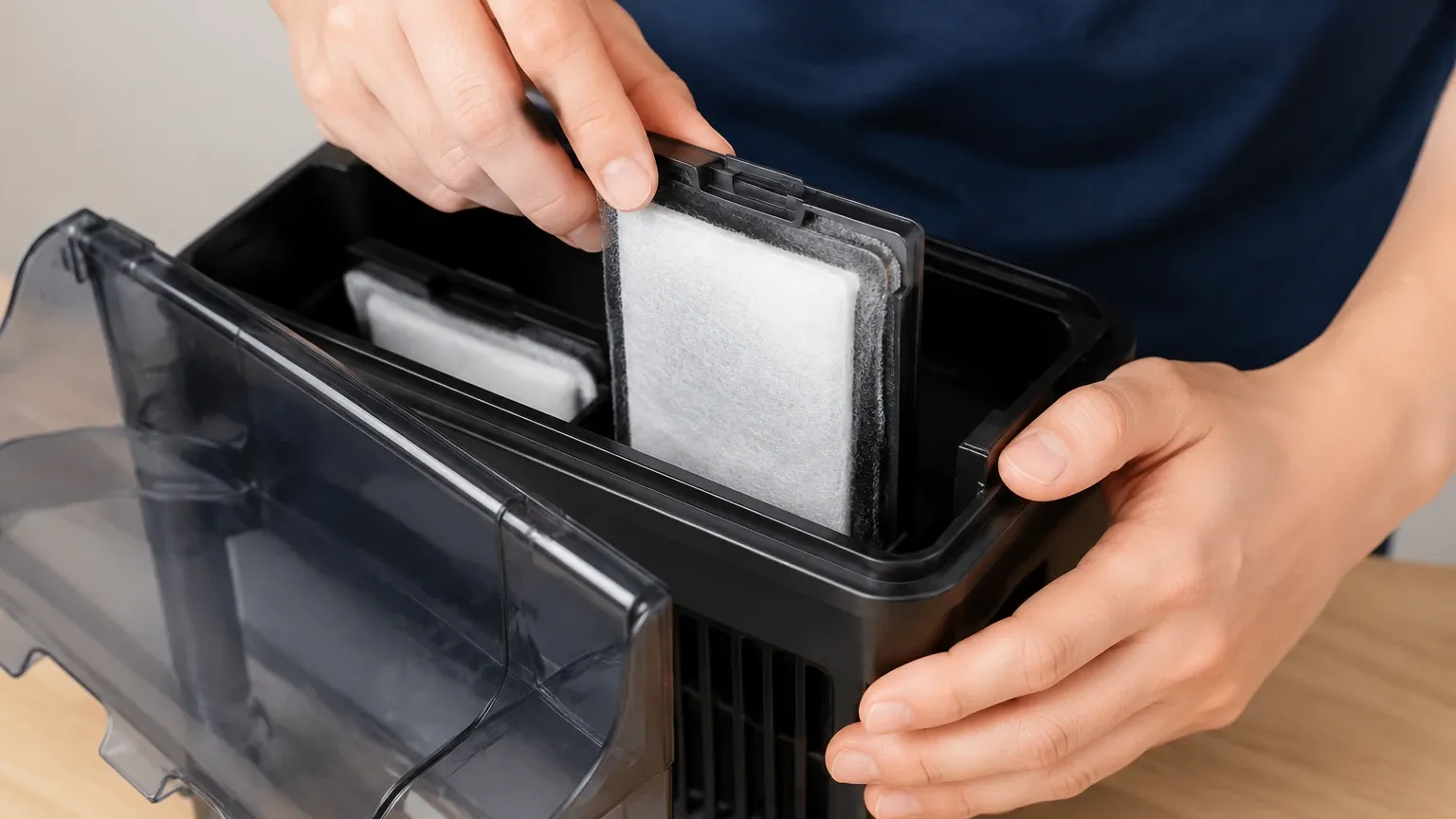
Open the filter cover and locate the dedicated tracks or grooves within the housing. Slide the cartridge into these tracks. The "front" of the cartridge (the side with the fiber floss) should face the intake of the filter. It must be pushed down firmly until it seats at the base. A common error in how to install tetra whisper filter cartridges is failing to seat the frame fully, which allows water to flow underneath the filter rather than through it.
5. Priming and Verification
Once the cartridge is seated, replace the cover and ensure the filter housing is filled with water before starting the pump. Observe the flow pattern. The water should rise evenly behind the cartridge and spill over the weir. If water is overflowing the top of the cartridge frame, the media is either clogged or improperly seated, indicating a pressure differential issue.
Ensuring Seal Integrity and Preventing Fluid Bypass
In any filtration assembly, the interface between the filter element and the housing is the most vulnerable point. When discussing how to install tetra whisper filter cartridges, the "seal" is created by the friction fit of the plastic frame against the housing tracks.
In industrial applications, such as those served by Kaifil’s custom stainless steel solutions, this seal is much more robust, often utilizing O-rings (Viton, EPDM, or Silicone) or flat gaskets to ensure a zero-bypass environment. However, the logic remains the same: if the installation does not create a tighter resistance than the filter media itself, the fluid will circumvent the filter.
Engineers must confirm that the cartridge dimensions are precise. A variance of even a few millimeters in the diameter or length of a filter cartridge can result in significant bypass. When installing any cartridge, whether for a small aquarium or a chemical processing plant, verifying the perpendicularity of the element relative to the flow direction is essential for uniform loading.
Industrial Filtration Perspectives: From Disposable to Stainless Steel
While the Whisper system relies on disposable polyester and plastic components, industrial environments often demand materials that can withstand high temperatures, corrosive chemicals, and high-pressure differentials. This is where the transition from disposable media to permanent, cleanable Filter Cartridges becomes necessary.
Material Durability
Disposable cartridges are cost-effective for low-stakes applications, but in B2B sectors like pharmaceutical or food and beverage processing, the risk of media migration (fibers breaking off into the filtrate) is unacceptable. Stainless steel wire mesh or sintered metal cartridges provide a fixed pore structure that does not shed fibers and can be cleaned and reused, significantly reducing the total cost of ownership (TCO).
Pressure and Temperature Resistance
Standard plastic cartridges are limited by their thermal stability. In steam filtration or high-temperature hydraulic systems, stainless steel cartridges are required. When considering how to install tetra whisper filter cartridges, one realizes the system is limited to ambient temperatures; industrial filters, conversely, must be installed with thermal expansion in mind, ensuring seals remain tight even as temperatures fluctuate.
Engineering Criteria for Selecting Industrial Filter Cartridges
When moving beyond basic consumer installation and into professional procurement, engineers must evaluate several key criteria before selecting a filtration solution:
1. Micron Rating (Absolute vs. Nominal): A nominal rating (common in consumer filters) indicates the filter can trap a percentage of particles at that size. An absolute rating (required in critical industrial processes) guarantees that 99.9% of particles above a specific size are captured.
2. Flow Rate vs. Pressure Drop (Delta P): Every filter cartridge introduces resistance. The goal is to maximize filtration efficiency while minimizing the pressure drop. A high initial Delta P suggests that the filter is either too restrictive for the pump or that the surface area is insufficient for the flow volume.
3. Chemical Compatibility: Unlike the inert environment of a home aquarium, industrial fluids can be highly acidic or alkaline. Selecting the correct grade of stainless steel (e.g., 304 or 316L) is vital to prevent corrosion and contamination.
4. Customization Requirements: Often, standard off-the-shelf cartridges do not fit specialized machinery. Manufacturers like Kaifil specialize in OEM and customized designs, ensuring that the cartridge fits the specific housing geometry and performance requirements of the client's application.
Maintenance and Longevity: Optimizing Filtration Performance
Knowing how to install tetra whisper filter cartridges is only half the battle; knowing when to replace or clean them is equally important. In the Whisper system, the cartridge is typically replaced every 2–4 weeks as the fiber floss becomes saturated with organic matter.
In an industrial context, replacement or cleaning cycles are determined by monitoring the pressure differential across the filter. When the Delta P reaches a predetermined setpoint, the cartridge must be serviced. Stainless steel cartridges offer the advantage of being backwashed or ultrasonically cleaned, extending their service life from weeks to years.
For purchasing teams, the decision between a low-cost disposable cartridge and a high-performance stainless steel cartridge should be based on a TCO analysis. While the initial investment in a stainless steel Filter Cartridges is higher, the reduction in waste, downtime, and replacement costs often yields a higher return on investment (ROI) in demanding industrial environments.
Conclusion: The Importance of Precision in Cartridge Installation
Whether you are learning how to install tetra whisper filter cartridges for a simple aquatic setup or managing a complex industrial filtration line, the core principles of filtration remain constant. Proper seating, the prevention of bypass, and the selection of appropriate media for the fluid's characteristics are the hallmarks of effective engineering.
For those requiring higher durability, precision, and customization than what consumer-grade products can offer, industrial stainless steel filtration components provide the reliability needed for professional applications. By focusing on quality manufacturing and precise engineering, facilities can ensure their filtration systems provide consistent, high-performance results day after day.
Download How to Install Tetra Whisper Filter Cartridges as a PDF
