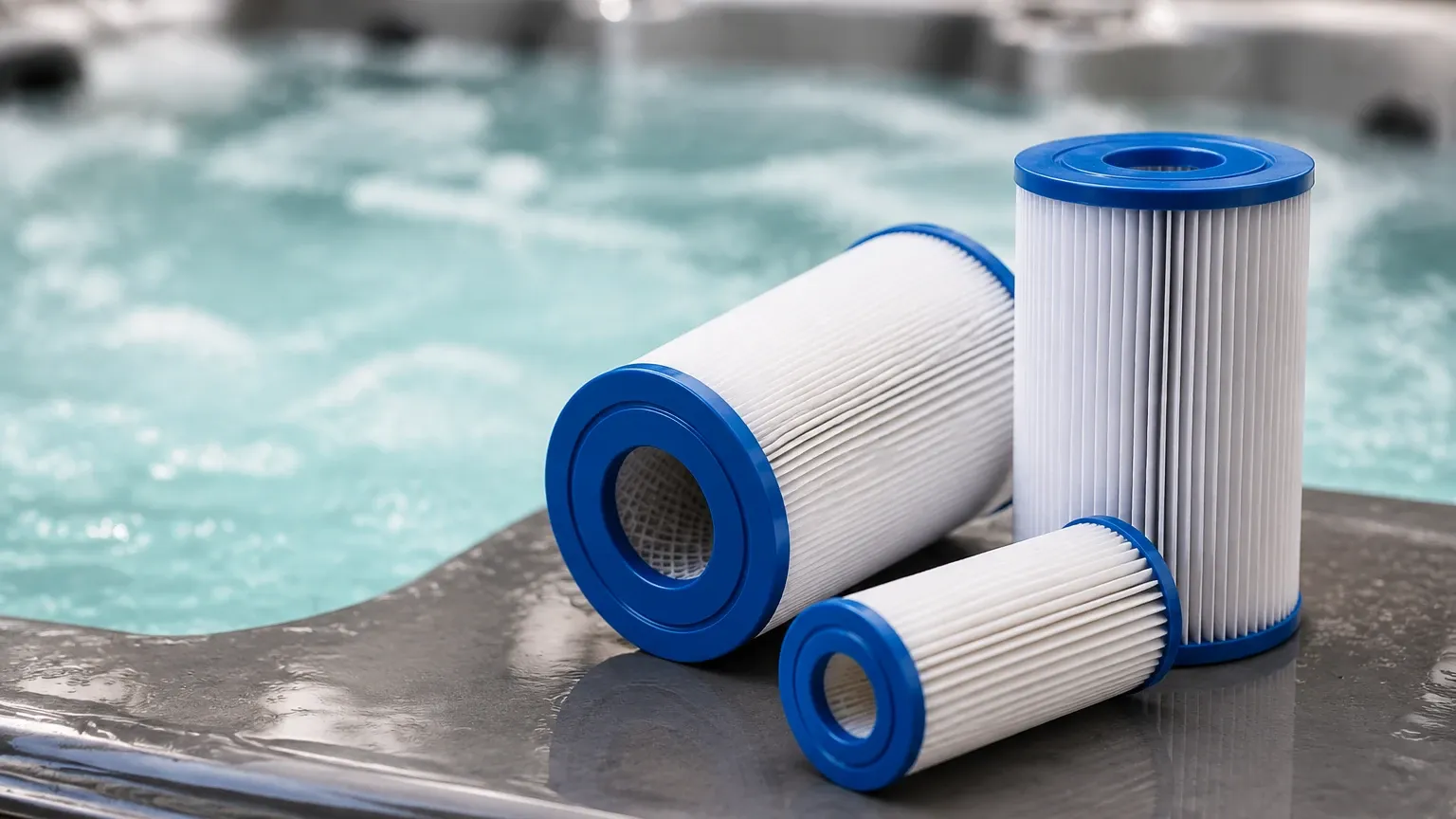
Hot Tub Filter Cartridges
In industrial water management and commercial aquatic facility engineering, the performance of filtration systems is foundational to both operational safety and equipment longevity. While often discussed in residential contexts, hot tub filter cartridges represent a specialized segment of pressurized filtration technology designed to operate under unique stressors, including elevated temperatures, high organic loads, and constant chemical exposure. For engineers and facility managers, understanding the technical specifications, material science, and hydraulic dynamics of these components is essential for maintaining water quality and optimizing system efficiency.
The Engineering Role of Filter Cartridges in Heated Systems
Filter cartridges are the primary mechanical barrier in a water circulation loop. Their function is to remove suspended solids, such as skin cells, oils, environmental debris, and precipitated minerals, from the water stream. In a hot tub or commercial spa environment, the filtration system must handle a significantly higher ratio of organic contaminants per gallon compared to standard swimming pools, primarily due to the higher water temperatures which promote the release of lipids and increase the metabolic rate of microbial contaminants.
From a technical perspective, Filter Cartridges operate on the principle of surface filtration. As water is forced through the media, particles larger than the pore size are trapped on the surface or within the shallow depth of the material. The efficiency of this process is governed by the media's Effective Filtration Area (EFA), the pore size distribution, and the face velocity of the water passing through the pleats.
Anatomy and Material Science of Hot Tub Filter Cartridges
To withstand the rigors of heated, chemically treated water, hot tub filter cartridges are engineered with specific components that must work in unison to prevent bypass and structural failure.
1. Filtration Media
The most common material used in high-quality hot tub filter cartridges is point-bonded non-woven polyester. This material is chosen for its high tensile strength, chemical resistance, and ability to be pleated without losing structural integrity. In commercial applications, the weight of the polyester (typically measured in ounces per square yard) indicates the density and durability of the media. Heavier media generally offers better depth filtration and can withstand more rigorous cleaning cycles.
2. The Core Support
Because these cartridges operate under suction or pressure, a central core is required to prevent the media from collapsing. Industrial-grade cores are typically manufactured from high-impact ABS or PVC, featuring a high open-area percentage to minimize flow restriction. A well-designed core ensures that the pressure drop remains low even as the filter accumulates debris.
3. End Caps
The end caps serve as the structural anchors for the pleated media and provide the seal within the filter housing. They are usually molded from durable polyurethane or plastisol. For engineers, the integrity of the bond between the end cap and the media is a critical point of inspection; any separation in this area leads to "bypassing," where unfiltered water circulates back into the system, rendering the filtration process ineffective.
4. Reinforcing Bands
To maintain uniform pleat spacing and prevent "fluttering" under high flow rates, reinforcing bands are wrapped around the exterior of the cartridge. Consistent pleat spacing is vital because it ensures that the entire surface area of the media is utilized. If pleats bunch together, the effective filtration area is reduced, leading to higher local velocities and premature clogging.
Technical Selection Criteria for Facility Engineers
When specifying or purchasing hot tub filter cartridges for commercial or high-use environments, several technical parameters must be evaluated to ensure the product meets the demands of the application.
Micron Rating and Efficiency
Micron ratings for these cartridges are typically nominal, meaning they are rated to trap a certain percentage of particles at a specific size (usually between 10 and 50 microns). For critical applications where water clarity is paramount, engineers should look for media with a tighter pore structure, although this must be balanced against the resulting increase in initial pressure drop.
Flow Rate and Flux
The flux rate—the volume of water passing through a given area of filter media over time—is a key metric. Exceeding the manufacturer’s recommended flow rate can lead to "dirt migration," where particles are forced through the media, or mechanical damage to the cartridge. It is standard engineering practice to size the filtration system so that the flow rate remains well within the optimal range for the total square footage of the filter media.
Chemical Compatibility
Hot tub water is a complex chemical environment. Cartridges must remain stable in the presence of high concentrations of chlorine or bromine, as well as pH adjusters and clarifiers. Inferior polyester media or poorly formulated end-cap plastics can degrade, become brittle, or leach chemicals back into the water, which can interfere with water balance and damage other system components like heaters and seals.
Performance Challenges: Biofilms and Mineral Scaling
In heated water systems, two primary challenges often degrade the performance of hot tub filter cartridges: biofilm accumulation and mineral scaling.
Biofilms: Bacteria in warm water can secrete an extracellular polymeric substance (EPS), creating a slimy layer on the filter media. This biofilm is highly resistant to standard chlorine levels and can rapidly seal off the pores of the cartridge, leading to a sudden and dramatic increase in pressure. Engineers must implement a maintenance protocol that includes specialized degreasers or enzymatic cleaners to break down these organic bonds.
Mineral Scaling: In areas with high calcium hardness, the evaporation and heat at the water surface can lead to calcium carbonate scaling on the filter media. This turns the flexible polyester into a rigid, cement-like state, significantly reducing flow. Monitoring the Langelier Saturation Index (LSI) of the water is necessary to prevent this type of mechanical fouling.
Maintenance Protocols and Total Cost of Ownership
For B2B buyers and facility managers, the total cost of ownership (TCO) of filter cartridges is determined not just by the purchase price, but by the lifespan and cleaning requirements.
* Pressure Monitoring: The most reliable indicator for maintenance is the pressure differential ($ΔP$). A baseline pressure should be established with a clean filter; once the pressure rises 8-10 PSI above the baseline, the cartridge requires cleaning or replacement.
* Cleaning Cycles: In commercial settings, a rotation system is often used. One set of cartridges is in service while another set is being chemically cleaned and dried. Drying the polyester media is a critical step, as it allows the fibers to snap back into position and kills any remaining anaerobic bacteria.
* Replacement Indicators: Even with proper cleaning, polyester fibers eventually lose their loft and become compacted. Signs that a cartridge has reached the end of its functional life include a baseline pressure that remains high even after cleaning, visible fraying of the media, or permanent discoloration.
Industrial Alternatives: When to Upgrade
While standard polyester hot tub filter cartridges are sufficient for most commercial spa applications, certain industrial water treatment scenarios require more robust solutions. In environments involving extreme temperatures, aggressive chemical solvents, or high-pressure differentials, stainless steel filter elements may be required.
Manufacturers like Kaifil specialize in these high-performance alternatives. Stainless steel wire mesh filters offer absolute micron ratings and can be cleaned and reused indefinitely, providing a lower TCO in specific industrial contexts where disposable cartridges would fail prematurely. For engineers designing systems that bridge the gap between commercial leisure and industrial processing, evaluating the transition from polymer-based media to precision metal filtration is a key step in system optimization.
Conclusion: Confirming Specifications for Procurement
Before finalizing a procurement order for hot tub filter cartridges, purchasing teams and engineers should confirm the following data points with their supplier:
1. Exact Dimensions: Diameter, length, and hole size must be precise to ensure a proper seal within the housing.
2. Square Footage of Media: Ensure the EFA is sufficient for the system's pump GPM (gallons per minute) to avoid excessive face velocity.
3. Media Weight: Confirm the ounce-weight of the polyester to gauge the durability and cleaning potential.
4. Core Reinforcement: Verify that the internal core is rated for the maximum pressure the pump can exert during a dead-head or high-clog scenario.
By focusing on these technical benchmarks rather than just unit price, facilities can ensure consistent water quality, reduce the strain on circulation pumps, and maintain a safer environment for users. Whether utilizing standard polyester media or seeking custom-engineered Filter Cartridges for more demanding applications, the goal remains the same: precise, reliable, and efficient particulate removal.