


Matrix Water Filter Cartridges
In industrial water treatment and process fluid management, the efficiency of a filtration system is often dictated by the internal structure of the media employed. Matrix water filter cartridges represent a sophisticated approach to depth filtration, utilizing a complex, three-dimensional network of fibers or particles to capture contaminants throughout the entire thickness of the filter wall. Unlike surface filters, which trap particles on a single plane, matrix-style cartridges offer significantly higher dirt-holding capacity and extended service life in demanding industrial environments.
For engineers and procurement specialists, understanding the nuances of matrix filtration—from material composition to structural integrity—is essential for optimizing process uptime and ensuring the purity of the final product. Whether the application involves pre-filtration for reverse osmosis (RO) systems, chemical processing, or food and beverage production, selecting the correct Filter Cartridges requires a deep dive into the technical specifications and operational requirements of the specific matrix media.
Understanding the Matrix Filtration Mechanism
The term "matrix" in the context of water filtration refers to the tortuous path created by the arrangement of the filter media. This structure is typically designed as a depth filter, where the density of the matrix may vary from the outer surface to the inner core. This is often referred to as gradient density filtration.
In a gradient density matrix, the outer layers are more porous, designed to capture larger particles, while the inner layers become progressively tighter to trap finer contaminants. This design prevents the surface from blinding prematurely, allowing the entire volume of the cartridge to participate in the filtration process. By distributing the particulate load across the depth of the matrix, the system maintains a lower differential pressure ($ΔP$) for a longer duration compared to standard surface-loading filters.
From an engineering perspective, the matrix must be thermally or mechanically bonded to ensure that the pore structure remains stable under varying flow rates and pressures. If the matrix is too loose, "unloading" can occur, where previously trapped particles are forced through the media due to pressure surges. Conversely, a matrix that is too dense may provide high efficiency but suffer from high initial pressure drops and short replacement cycles.
Key Performance Indicators for Matrix Water Filter Cartridges
When evaluating matrix water filter cartridges for industrial use, several technical parameters must be scrutinized to ensure they meet the application’s rigorous demands. These KPIs go beyond simple micron ratings and encompass the total economic and operational impact of the filter.
Filtration Efficiency and Beta Ratio
Industrial filters are often classified by their micron rating, but for critical applications, the Beta Ratio (β) provides a more accurate measure of performance. A nominal rating suggests a general ability to trap particles of a certain size, whereas an absolute rating (typically β ≥ 5000 or 99.9% efficiency) indicates a high degree of certainty. Matrix cartridges are frequently used for nominal pre-filtration, but high-precision metal matrix filters can achieve absolute ratings for sensitive downstream equipment protection.
Dirt-Holding Capacity (DHC)
DHC refers to the total mass of contaminants a filter can retain before reaching its terminal differential pressure. A well-designed matrix water filter cartridge maximizes DHC by utilizing the full depth of the media. This is a critical factor in calculating the Total Cost of Ownership (TCO), as higher DHC leads to fewer change-outs, reduced labor costs, and less process downtime.
Flow Resistance and Differential Pressure
The initial pressure drop across a clean filter cartridge is a function of the matrix density and the fluid's viscosity. Engineers must balance the need for fine filtration with the energy costs associated with pumping fluid through a high-resistance matrix. Monitoring the increase in differential pressure over time is the standard method for determining when a matrix cartridge has reached the end of its effective life.
Material Selection: Synthetic vs. Metal Matrix
The choice of material for the filtration matrix is perhaps the most significant decision in the design phase. While synthetic materials like polypropylene and cotton are common in standard water applications, industrial processes often require the durability of metal.
Polymer Matrix Cartridges
Polypropylene melt-blown or string-wound cartridges are the industry standard for general water filtration. They offer excellent chemical compatibility with many acids and bases and are cost-effective for disposable applications. However, they are limited by temperature (usually up to 60°C to 80°C) and can suffer from fiber migration if the bonding process is insufficient.
Stainless Steel and Metal Matrix Cartridges
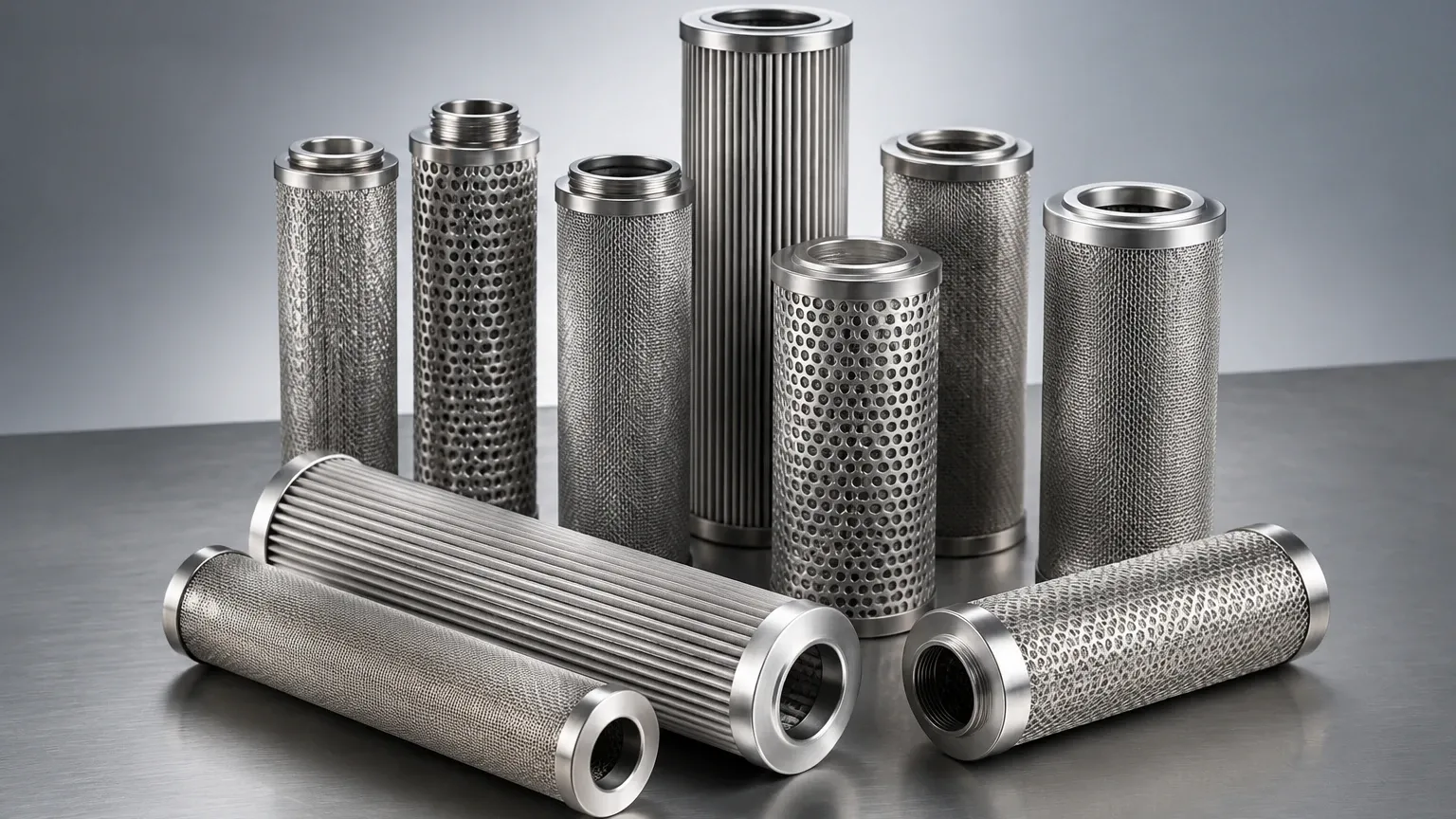
In high-temperature, high-pressure, or highly corrosive environments, a stainless steel matrix is often required. These are typically constructed using sintered metal fibers or multi-layered wire mesh. A sintered metal fiber felt acts as a high-performance metal matrix, providing the depth filtration benefits of synthetic media with the structural integrity of steel.
Stainless steel matrix filters are cleanable and reusable, which, despite a higher initial capital expenditure, often results in a lower TCO in industrial settings where disposable filters would fail or require frequent replacement. They are particularly effective in steam filtration, polymer melt filtration, and aggressive chemical processing where a synthetic matrix water filter cartridge would degrade.
Engineering Considerations for Industrial Integration
Integrating matrix water filter cartridges into an existing industrial system requires careful consideration of the hardware and the fluid dynamics involved. A mismatch between the cartridge and the housing can lead to fluid bypass, rendering the entire filtration stage ineffective.
Seal and End-Cap Configurations
To ensure all fluid passes through the matrix, the cartridge must be properly sealed within the housing. Common configurations include:
* Double Open End (DOE): Uses flat gaskets at both ends; requires a spring-loaded housing mechanism to maintain a seal.
* Code 7 (226 O-ring/Fin): Features a locking tab and double O-rings for high-purity applications, preventing the cartridge from unseating under backpressure.
* 222 O-ring: A common plug-in style seal that provides a reliable barrier against bypass.
Chemical and Thermal Compatibility
Engineers must verify that every component of the cartridge—including the matrix media, the core, the end-caps, and the O-rings—is compatible with the process fluid. For instance, while a polypropylene matrix might handle a specific chemical, the silicone O-rings might swell or degrade. In such cases, Viton or PTFE-encapsulated seals are necessary. For high-temperature water applications (e.g., boiler feed or condensate return), all-welded stainless steel cartridges eliminate the risk of adhesive failure.
Maintenance and Replacement Cycles in High-Demand Environments
The operational life of a matrix water filter cartridge is finite. Establishing a rigorous maintenance schedule is vital to prevent filter failure and protect downstream components like membranes, spray nozzles, or high-pressure pumps.
Monitoring Differential Pressure
The most reliable indicator for replacement is the differential pressure (ΔP). Most industrial systems are designed with a terminal ΔP (often between 15 and 35 psi, depending on the cartridge type). Operating beyond this limit can cause the matrix to compress or collapse, leading to a sudden release of contaminants or a complete blockage of flow.
The Risks of Premature or Delayed Change-outs
Changing filters too early results in unnecessary material costs and labor. Changing them too late risks "breakthrough," where the pressure forces contaminants through the matrix. Implementing automated ΔP sensors and logging the time-to-clog can help maintenance teams predict replacement cycles and align them with scheduled facility shutdowns.
Cleaning and Regeneration
While most synthetic matrix cartridges are designed for single use, metal matrix filters can often be regenerated. Methods such as ultrasonic cleaning, backpulsing, or chemical baths can remove embedded particulates from the stainless steel matrix, restoring the original flow characteristics. This capability is a major advantage for processes with high solids loading where disposable filters would be economically unfeasible.
Customization Options for Specific Industrial Applications
No two industrial water streams are identical. Therefore, the ability to customize the filtration matrix is a significant advantage for OEM manufacturers and system integrators. Customization allows for the optimization of the filter to the specific particle size distribution and chemical profile of the process water.
Tailored Pore Structures
By adjusting the fiber diameter and the density of the lay-up during the manufacturing of a sintered metal matrix, manufacturers can create a filter with a specific micron rating and flow resistance profile. This level of precision is essential for applications like hydraulic fluid filtration or pharmaceutical water processing, where even minor deviations in filtration efficiency can have significant consequences.
Structural Reinforcements
For applications involving high-viscosity fluids or extreme pressure surges, the internal core and external cage of the cartridge can be reinforced. A heavy-duty stainless steel core prevents the matrix from collapsing inward, while an outer shroud protects the media during installation and handling. These structural enhancements ensure that the matrix water filter cartridges maintain their geometric integrity throughout their service life.
Conclusion: Selecting the Right Filtration Partner
Choosing the appropriate matrix water filter cartridge involves a complex balance of material science, fluid dynamics, and economic forecasting. For many industrial applications, the transition from standard disposable filters to precision-engineered stainless steel solutions offers a path toward greater reliability and lower long-term costs.
When evaluating suppliers, it is important to look for manufacturers who offer deep technical expertise and the ability to provide customized solutions. A partner who understands the intricacies of matrix design can help engineers navigate the trade-offs between efficiency, pressure drop, and durability. By focusing on the specific needs of the application—whether it is the high-temperature resistance of a metal matrix or the high-volume capacity of a gradient-density polymer—purchasing teams can ensure they are investing in filtration components that truly support their operational goals.
For those seeking reliable, high-performance filtration components, exploring a comprehensive range of Filter Cartridges is the first step toward optimizing industrial water treatment systems. By confirming the chemical compatibility, required micron rating, and expected flow rates before procurement, engineers can secure a filtration solution that delivers consistent performance in even the most demanding environments.
