


Introduction to Industrial SS Wire Mesh Filtration
In industrial process engineering, the integrity of filtration systems is paramount for protecting downstream equipment, ensuring product purity, and maintaining operational efficiency. Stainless steel (SS) wire mesh filters are among the most versatile and durable solutions available for liquid and gas filtration. Unlike synthetic or paper-based media, stainless steel offers exceptional thermal stability, chemical resistance, and mechanical strength, making it the material of choice for demanding applications in chemical processing, oil and gas, and pharmaceutical manufacturing.
Selecting the right filtration component involves understanding the nuances of mesh geometry, material grades, and structural design. For many procurement teams and engineers, the search for reliable ss wire mesh filter manufacturers in india and other global hubs is driven by the need for a balance between precision engineering and cost-effectiveness. This guide explores the technical considerations required to specify and source high-quality wire mesh filtration components for industrial use.
The Role of SS Wire Mesh Filter Manufacturers in India
India has established itself as a significant hub for the production of stainless steel wire and secondary mesh products. The industrial clusters in regions such as Maharashtra and Gujarat house numerous facilities specializing in the weaving and fabrication of stainless steel mesh. These manufacturers cater to both domestic requirements and international exports, providing a range of products from raw mesh rolls to finished filter assemblies.
When evaluating ss wire mesh filter manufacturers in india, technical buyers must distinguish between general-purpose mesh weavers and specialized industrial filter fabricators. Industrial-grade filtration requires more than just a consistent weave; it demands precision in aperture size, high-quality welding (such as TIG or plasma welding), and rigorous quality control to ensure the filter can withstand high differential pressures. For international engineers, verifying that a manufacturer adheres to global standards like ASTM E11 (for wire cloth) or ISO 9001 (for quality management) is a critical step in the vetting process.
Engineering Specifications for Wire Mesh Filter Cylinders & Tubes
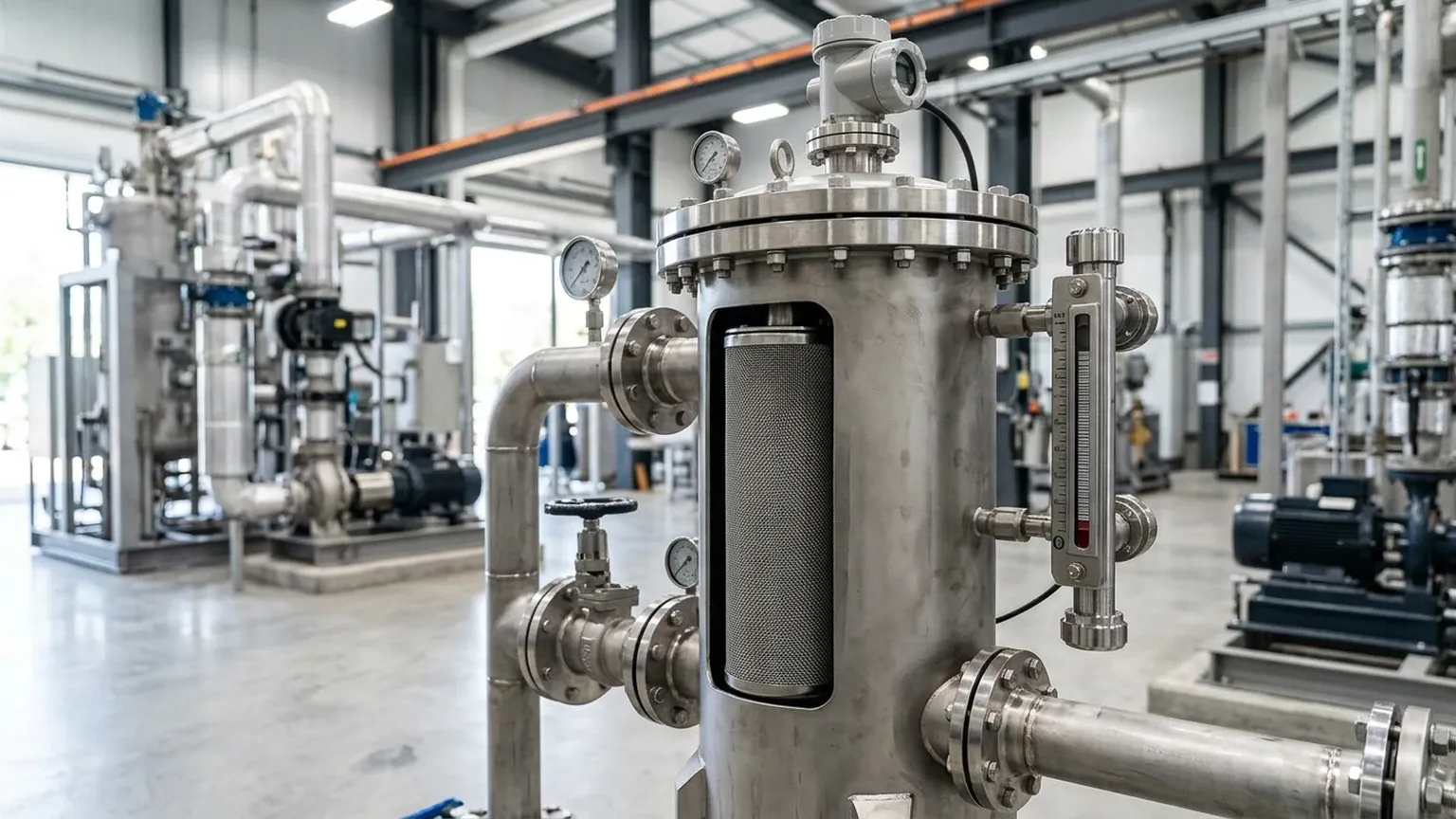
The most common configuration for industrial mesh filtration is the cylindrical form. Wire Mesh Filter Cylinders & Tubes are utilized in basket strainers, candle filters, and inline fluid systems. The cylindrical geometry provides a high surface-area-to-volume ratio and inherent structural rigidity under internal or external pressure.
Key Design Parameters:
1. Diameter and Length: Precision in dimensions is vital for ensuring a proper seal within the filter housing. Even a millimeter of deviation can lead to fluid bypass, compromising the entire filtration process.
2. End Cap Configurations: Depending on the housing, cylinders may feature Double Open Ends (DOE), Single Open Ends (SOE) with a closed bottom, or specialized threaded fittings (e.g., NPT or BSP).
3. Seam Construction: The longitudinal seam of a filter tube is often its weakest point. High-quality manufacturers use automated resistance welding or plasma welding to create a seam that is as strong as the parent mesh, ensuring no gaps exist for particles to escape.
Material Selection and Chemical Compatibility
The performance of a wire mesh filter is largely dictated by the alloy used in its construction. While "stainless steel" is a broad term, the specific grade determines the filter’s lifespan in corrosive environments.
* SS 304: The standard grade for general industrial applications. It offers good corrosion resistance and is suitable for water filtration, food and beverage processing, and non-acidic chemical environments.
* SS 316L: Containing molybdenum, 316L provides superior resistance to chlorides and pitting. It is the preferred choice for marine environments, pharmaceutical production, and aggressive chemical processing. The "L" denotes low carbon content, which improves weldability and reduces the risk of intergranular corrosion after welding.
* Specialty Alloys: For extreme conditions involving high temperatures or highly acidic fluids, alloys such as Duplex stainless steel, Monel, or Inconel may be required.
Engineers must conduct a thorough chemical compatibility assessment before selecting a material, as the high surface area of fine wire mesh makes it particularly susceptible to rapid corrosion if the wrong alloy is specified.
Structural Design: Single Layer vs. Multi-Layer Construction
Wire mesh filters are rarely just a single sheet of mesh. Depending on the application's pressure and filtration requirements, the construction can vary significantly:
Single-Layer Filters
Used primarily for coarse straining or low-pressure applications. These are easy to clean but lack the mechanical strength for high-viscosity fluids or high-velocity flows.
Multi-Layer and Sintered Mesh
To enhance durability, manufacturers often layer different mesh counts together. A typical construction might include:
* Filtration Layer: The fine mesh that determines the micron rating.
* Support Layer: A coarser, heavier mesh that provides mechanical backing to the filtration layer, preventing it from deforming under pressure.
* Protective Layer: An outer layer used to shield the fine mesh from mechanical damage during handling or installation.
In some cases, these layers are sintered—bonded together through heat and pressure without the use of binders. Sintered wire mesh cylinders offer the highest level of structural integrity and are virtually immune to media migration.
Evaluating Filtration Performance: Micron Ratings and Pressure Drop
When sourcing from ss wire mesh filter manufacturers in india or other regions, the technical data sheet must be scrutinized for two primary metrics: micron rating and clean pressure drop.
Absolute vs. Nominal Micron Ratings
* Nominal Rating: An approximate value indicating the ability of the filter to retain a percentage of particles of a certain size (e.g., 90% of 20-micron particles). This is often used for less critical applications.
* Absolute Rating: The diameter of the largest hard spherical particle that will pass through the filter under specified test conditions. For critical processes, such as protecting high-pressure nozzles, an absolute rating is mandatory.
Pressure Drop ($ΔP$)
Every filter introduces a resistance to flow. The "clean pressure drop" is the initial loss of pressure across a new or clean filter. Engineers must ensure that the pump system can handle this resistance while maintaining the required flow rate. Factors influencing $ΔP$ include the mesh's open area percentage, the fluid's viscosity, and the flow velocity. As the filter accumulates contaminants, $ΔP$ increases, eventually reaching a "terminal pressure drop" where the filter must be cleaned or replaced.
Sourcing and Quality Assurance for International Procurement
For companies operating outside of India, sourcing from local manufacturers requires a robust quality assurance (QA) framework. The risks of improper sourcing include material substitution (e.g., using 201 grade instead of 316), poor weld penetration, and inconsistent mesh apertures.
Verification Checklist for Buyers:
1. Material Test Certificates (MTC): Always request EN 10204 3.1 certificates to verify the chemical composition of the stainless steel.
2. Bubble Point Testing: This test measures the pressure required to force air through a liquid-saturated filter. It is a non-destructive way to verify the pore size and structural integrity of a finished filter cylinder.
3. Dimensional Inspection: Ensure the manufacturer uses calibrated instruments to verify diameters, lengths, and concentricity.
4. Cleaning and Passivation: Post-fabrication, stainless steel filters should be cleaned and passivated to remove iron contaminants introduced during the manufacturing process, which prevents premature rusting.
Maintenance and Longevity in Demanding Environments
One of the primary advantages of Wire Mesh Filter Cylinders & Tubes is their cleanability. Unlike disposable cartridges, stainless steel filters can be regenerated multiple times, significantly reducing the total cost of ownership (TCO).
Cleaning Methods:
* Backwashing: Reversing the flow of fluid to dislodge particles from the mesh surface. This is often automated in continuous process systems.
* Ultrasonic Cleaning: Using high-frequency sound waves in a cleaning solvent to remove fine particles trapped deep within the mesh layers. This is highly effective for sintered or multi-layer filters.
* Chemical Cleaning: Using specific acids or alkalis to dissolve organic or mineral scaling. This must be done with careful consideration of the mesh's chemical resistance.
Proper maintenance not only extends the life of the filter but also ensures that the system operates at peak efficiency, preventing energy waste caused by high pressure drops across clogged media.
Conclusion: Selecting the Right Manufacturing Partner
The global market for stainless steel filtration is vast, with ss wire mesh filter manufacturers in india playing a vital role in the supply chain. However, the success of an industrial filtration project depends on more than just finding a supplier; it requires partnering with a manufacturer that understands the engineering rigors of the application.
Whether you are designing a new system or looking for replacement components, focusing on technical specifications—such as material grade, weave precision, and structural reinforcement—is essential. By prioritizing quality and adherence to international standards, engineering teams can ensure their filtration systems provide reliable, long-term performance in even the most challenging industrial environments.
Download Ss Wire Mesh Filter Manufacturers in India as a PDF
