


Pool Filter Cartridges Near Me
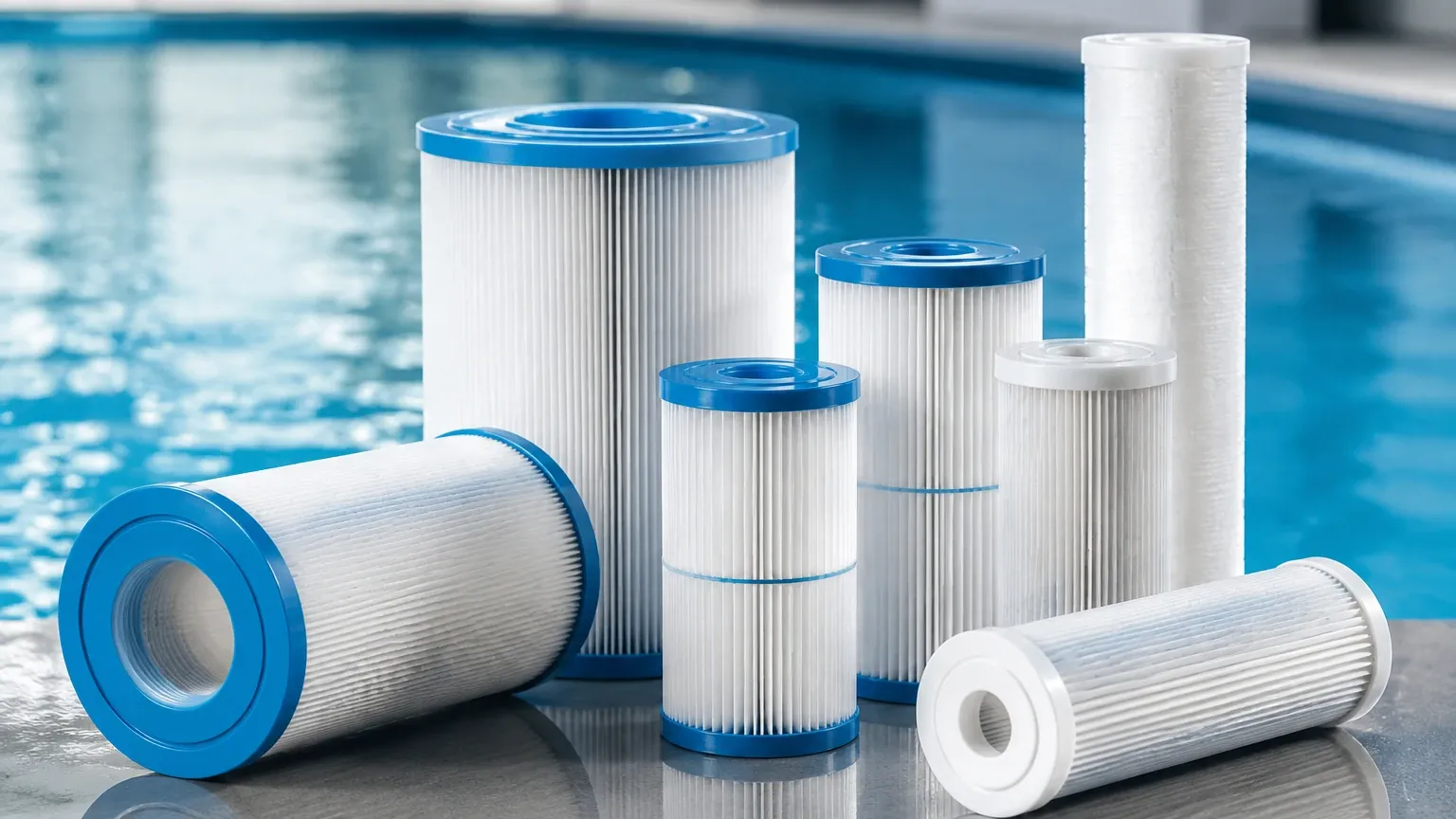
When facility managers, commercial pool operators, or industrial procurement teams search for "pool filter cartridges near me," the immediate goal is often a rapid replacement to minimize system downtime. However, in professional and industrial water treatment environments, the proximity of a supplier is only one factor in a complex selection process. While local retail outlets may stock standard residential-grade polyester filters, commercial and industrial applications require a deeper understanding of filtration engineering, material compatibility, and long-term performance metrics.
Industrial filtration systems, including those used in large-scale aquatic centers, municipal water treatment, and chemical processing, demand Filter Cartridges that can withstand higher flow rates, chemical exposure, and mechanical stress than typical consumer products. This guide examines the technical criteria essential for selecting high-performance filtration components and why moving beyond local consumer-grade options is often necessary for industrial-scale efficiency.
Evaluating Filtration Requirements for Commercial and Industrial Systems
In a commercial or industrial context, a filter cartridge is not merely a consumable part but a critical component of a hydraulic system. When searching for "pool filter cartridges near me," it is vital to distinguish between the needs of a backyard pool and those of a high-capacity system. Commercial systems often operate 24/7, handling significantly higher bather loads or particulate concentrations, which places immense pressure on the filter media.
Flow Rate and Flux Management
One of the primary engineering considerations is the flux rate—the volume of water passing through a specific area of filter media over time. Industrial-grade cartridges are designed to maintain a low pressure drop (ΔP) even at high flow rates. If a cartridge is undersized or uses inferior media, the pressure drop increases rapidly, leading to higher energy consumption by the pumps and potential structural failure of the cartridge itself.
Micron Rating and Efficiency
Filtration accuracy is defined by the micron rating, which can be either nominal or absolute. While many local retail filters provide a nominal rating (filtering a percentage of particles at a certain size), industrial applications often require absolute filtration to ensure the removal of specific contaminants, such as fine sediment or microbial cysts. Understanding the particle size distribution of the fluid being filtered is the first step in selecting the correct cartridge specification.
Material Selection: Why Stainless Steel Outperforms Standard Media
While traditional pool filters often utilize pleated polyester or cellulose, these materials have limitations in terms of temperature resistance, chemical compatibility, and durability. In many industrial water treatment scenarios, stainless steel filter cartridges offer a superior alternative.
Corrosion Resistance in Treated Water
Commercial pools and industrial process water often contain high levels of chlorine, bromine, or salt. Standard plastic-capped filters can degrade over time when exposed to these oxidizers. Stainless steel, particularly Grade 316L, provides exceptional resistance to pitting and crevice corrosion. This makes it an ideal choice for saltwater systems or chemical dosing applications where longevity is a priority.
Thermal and Mechanical Stability
Unlike synthetic fibers, stainless steel mesh does not deform under high temperatures or extreme pressure fluctuations. In industrial heating or cooling loops that may be integrated with water treatment, the structural integrity of the filter is paramount. Sintered metal or wire mesh cartridges maintain their pore geometry under stress, ensuring consistent filtration performance throughout their service life.
Key Performance Metrics for Industrial Filter Cartridges
When evaluating "pool filter cartridges near me," technical professionals should look beyond the physical dimensions and focus on performance data. A high-quality industrial filter is characterized by several key metrics that determine its suitability for demanding environments.
1. Dirt Holding Capacity (DHC): This refers to the total amount of contaminant a cartridge can trap before reaching the maximum allowable pressure drop. A higher DHC means longer intervals between cleanings or replacements, which directly impacts operational costs.
2. Collapse Pressure: Industrial pumps can generate significant head pressure. A filter must be rated for a collapse pressure that exceeds the maximum system pressure to prevent catastrophic failure and downstream contamination.
3. Chemical Compatibility: The elastomers used in the seals and gaskets (such as EPDM, Viton, or Silicone) must be compatible with the fluid. For commercial pools, EPDM is often preferred for its resistance to treated water, whereas industrial processes might require specialized fluoropolymers.
4. Cleanability: One of the most significant advantages of metal filter cartridges is that they are often cleanable and reusable. Methods such as backwashing, ultrasonic cleaning, or chemical soaking can restore the filter to its original state, unlike disposable synthetic cartridges that must be landfilled.
Customization and OEM Solutions: Beyond Off-the-Shelf Options
Local suppliers typically carry a limited range of standard sizes. However, many industrial systems utilize proprietary housings or require specific end-cap configurations to ensure a bypass-free seal. This is where working with a specialized manufacturer like Kaifil becomes essential.
End-Cap Configurations
To prevent unfiltered fluid from bypassing the media, the seal must be absolute. Common configurations include:
* Double Open End (DOE): Utilizes flat gaskets on both ends.
* Code 7: Features a finned end and double O-rings for high-purity applications.
* Threaded Connections: NPT or BSP threads for secure mechanical attachment in high-vibration environments.
Tailored Filtration Media
Depending on the specific debris profile—whether it is organic matter in a commercial pool or metallic scale in an industrial loop—the media can be customized. Options include pleated wire mesh for high surface area or sintered metal powder for fine, depth-loading filtration. Customizing the pleat count and depth allows engineers to optimize the balance between filtration area and fluid velocity.
Total Cost of Ownership (TCO) and Maintenance Cycles
While the initial price of a "pool filter cartridge near me" at a local retailer might be lower, the Total Cost of Ownership (TCO) often tells a different story. For a B2B operation, the cost of the filter is only a fraction of the total expense.
Labor and Downtime
Every time a filter needs to be replaced, the system must be shut down, the housing opened, and the media swapped. In a commercial facility, this labor cost can quickly exceed the cost of the filter itself. By investing in high-capacity or cleanable stainless steel cartridges, the frequency of these interventions is reduced.
Disposal and Environmental Impact
Disposable cartridges contribute to significant waste streams. In an era where corporate sustainability is a priority, switching to cleanable metal filtration solutions reduces the environmental footprint of the facility. The ability to clean a cartridge dozens of times before replacement offers a clear long-term economic and ecological advantage.
Selecting a Reliable Filtration Partner for Specialized Needs
When the search for "pool filter cartridges near me" fails to yield products that meet industrial specifications, the next step is to partner with a manufacturer that understands the nuances of fluid dynamics and material science. A professional manufacturer does more than supply parts; they provide engineering support to ensure the filtration solution is optimized for the specific application.
Technical Support and Validation
Engineers should seek partners who can provide pressure drop curves, micron efficiency validations, and material certifications (such as 3.1.B mill certificates for stainless steel). This level of documentation is rarely available at local retail outlets but is a prerequisite for industrial quality control.
Global Supply Chain and Local Support
While the manufacturer may not be "near me" in a literal sense, modern logistics and dedicated B2B support teams ensure that specialized components are available when needed. Maintaining a strategic inventory of custom cartridges based on usage patterns is a more effective strategy than relying on the fluctuating stock of a local general-purpose store.
Conclusion: Making Informed Procurement Decisions
For those managing commercial aquatic facilities or industrial water systems, the search for "pool filter cartridges near me" should be the beginning of a technical evaluation rather than a simple purchase. Understanding the differences between standard consumer products and engineered Filter Cartridges is essential for maintaining system integrity and operational efficiency.
By focusing on material durability, precise micron ratings, and the long-term benefits of cleanable stainless steel media, procurement teams can move away from the cycle of frequent replacements and towards a more robust, cost-effective filtration strategy. Whether the application involves high-bather-load pools or complex industrial process water, the priority should always be on engineering excellence and verified performance metrics.
