


Filter Replacement Reverse Osmosis
In industrial water treatment, reverse osmosis (RO) stands as a critical process for achieving high-purity water required in chemical processing, pharmaceuticals, and food and beverage production. The efficiency of an RO system is not solely dependent on the semi-permeable membrane but relies heavily on the integrity of the entire filtration train. Maintaining this efficiency requires a rigorous approach to filter replacement reverse osmosis, ensuring that pre-filters and post-filters are swapped at optimal intervals to protect the sensitive membrane and maintain system throughput.
For engineers and facility managers, understanding the technical nuances of filter replacement is essential for preventing membrane fouling, reducing energy consumption, and extending the lifespan of high-value equipment. This guide examines the engineering considerations, selection criteria, and performance indicators associated with industrial RO filter maintenance.
The Importance of Timely Filter Replacement in Industrial Reverse Osmosis Systems
Reverse osmosis systems operate under high pressure to overcome osmotic pressure, forcing water through a dense membrane that rejects salts, minerals, and organic contaminants. However, these membranes are highly susceptible to physical and chemical damage. The role of auxiliary Filter Cartridges in the pre-treatment stage is to remove suspended solids, chlorine, and other particulates that would otherwise cause irreversible scaling or oxidation of the membrane surface.
Neglecting the filter replacement reverse osmosis schedule leads to several technical failures:
1. Membrane Fouling: Particulates that bypass a saturated or damaged pre-filter accumulate on the membrane surface, increasing the pressure required to maintain flow.
2. Biofouling: Organic matter trapped in old filters can become a breeding ground for bacteria, which then migrates to the RO membrane, forming biofilms that are difficult to remove.
3. Chemical Oxidation: In systems using Thin Film Composite (TFC) membranes, carbon filters must remove chlorine. Once the carbon is exhausted, chlorine breakthrough will chemically degrade the membrane structure, necessitating a costly membrane replacement.
Key Components and Stages of RO Filtration
An industrial RO system typically utilizes a multi-stage filtration approach. Each stage serves a specific purpose, and the replacement requirements vary based on the feed water quality and the specific industrial application.
Sediment Pre-Filtration
Sediment filters are the first line of defense. They are designed to capture sand, silt, rust, and other undissolved solids. In industrial settings, these are often depth filters or pleated surface filters. If these are not replaced regularly, the resulting pressure drop (differential pressure) can starve the high-pressure pump, leading to cavitation and mechanical failure.
Carbon Block and GAC Filtration
Activated carbon is used to adsorb chlorine and organic compounds. In industrial RO, this is vital because chlorine can permanently damage polyamide membranes. The replacement of carbon components is usually determined by total gallons processed or by testing for chlorine breakthrough at the filter outlet.
The RO Membrane
While the membrane is the primary separation component, it is also a filter that requires replacement. Unlike pre-filters, membranes are typically replaced based on salt rejection rates and permeate flux decline rather than a fixed time interval, though pre-filtration quality directly dictates this lifespan.
Post-Filtration and Polishing
Depending on the industry—such as ultra-pure water for electronics or sterile water for pharmaceuticals—post-filtration stages may include UV sterilization or sub-micron deionization. These components require strict adherence to replacement cycles to ensure the final water quality meets regulatory standards.
Technical Indicators for Filter Replacement Reverse Osmosis
Determining when to perform a filter replacement reverse osmosis is a data-driven decision. Engineers rely on several key metrics to monitor the health of the filtration system.
Differential Pressure (ΔP)
Monitoring the pressure difference between the inlet and outlet of a filter housing is the most reliable method for assessing sediment loading. As the filter traps more contaminants, the resistance to flow increases. For most industrial filter cartridges, a differential pressure of 15 to 25 psi indicates that the filter has reached its holding capacity and must be replaced to prevent bypass or structural collapse of the media.
Permeate Flux and Flow Rates
A decrease in the volume of purified water (permeate) produced per unit of time often signals that the pre-filters are restricted or the membrane is fouling. If the system must work harder (higher pump pressure) to achieve the same flow rate, it is an indication that the pre-treatment stages are no longer providing adequate protection.
Water Quality Analysis (TDS and Conductivity)
Total Dissolved Solids (TDS) and conductivity measurements provide a snapshot of the membrane's rejection efficiency. A sudden spike in permeate TDS often points to a compromised membrane, which may have been caused by a failure in the pre-filtration stage, such as chlorine breakthrough from an exhausted carbon filter.
Advantages of Stainless Steel Filter Cartridges in RO Pre-filtration
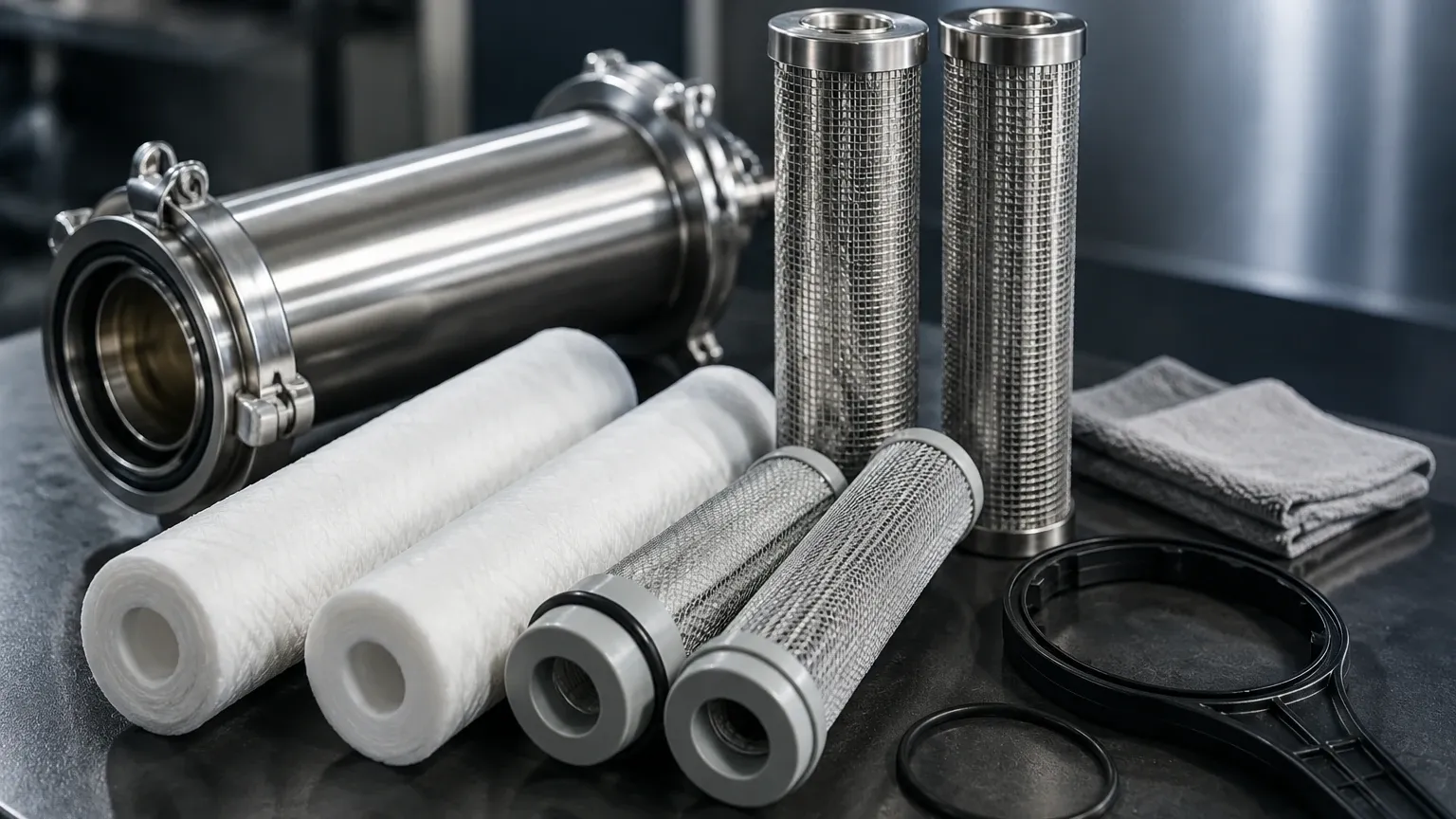
While many RO systems use disposable polymer filters, demanding industrial environments often benefit from the integration of stainless steel Filter Cartridges. Kaifil specializes in manufacturing these high-performance components, which offer several engineering advantages over traditional materials.
Durability and Pressure Resistance
In high-pressure industrial RO systems, plastic filter housings and cartridges can sometimes fail under pressure surges. Stainless steel wire mesh and sintered metal filters provide superior structural integrity, ensuring that the filter media does not deform or bypass under high differential pressures.
Chemical and Thermal Compatibility
Industrial feed water may contain aggressive chemicals or be processed at elevated temperatures that would degrade polypropylene or cellulose filters. Stainless steel (304 or 316L) provides excellent resistance to a wide range of chemicals and can withstand temperatures far exceeding those of synthetic materials. This makes them ideal for pre-filtration in chemical processing and steam-assisted cleaning processes.
Cleanability and Reusability
Unlike disposable filters that contribute to the waste stream, stainless steel filter cartridges can often be cleaned and reused. Through backwashing, ultrasonic cleaning, or chemical soaking, these filters can be restored to their original performance levels. This reduces the frequency of purchasing new consumables and lowers the total cost of ownership (TCO) for the filtration system.
Engineering Considerations for Selecting Replacement Cartridges
When sourcing components for filter replacement reverse osmosis, engineers must evaluate several technical specifications to ensure compatibility and performance.
Micron Rating: Absolute vs. Nominal
It is critical to distinguish between absolute and nominal micron ratings. A nominal rating indicates the filter can trap a percentage of particles of a certain size, whereas an absolute rating guarantees the capture of virtually all particles of that size. For RO pre-filtration, absolute-rated filters are preferred to ensure no large particulates reach the membrane.
Material Selection
The choice of material—whether it be 304 stainless steel, 316L stainless steel, or specialized alloys—depends on the salinity and chemical composition of the feed water. For seawater RO (SWRO) applications, high-grade corrosion-resistant materials are mandatory to prevent pitting and localized corrosion.
End-Cap Configurations
Replacement filters must match the existing housing hardware. Common configurations include Double Open End (DOE), Code 7 (226 O-ring with fin), and Code 3 (222 O-ring). Ensuring a proper seal is vital; even a minor leak around the filter end-cap allows unfiltered water to bypass the media, leading to rapid membrane fouling.
Optimizing the Replacement Cycle for Industrial RO Systems
To achieve the best balance between filtration performance and operational cost, a proactive maintenance strategy is required. This involves more than just reacting to a pressure alarm.
Scheduled vs. Condition-Based Maintenance
While condition-based maintenance (replacing filters based on ΔP) is efficient, many critical industries (like pharmaceuticals) employ scheduled maintenance. This involves replacing filters at fixed intervals—such as every six months—regardless of the pressure drop, to ensure biological growth is kept to an absolute minimum.
Pre-Treatment Optimization
The lifespan of the primary RO filter cartridges can be extended by optimizing the upstream pre-treatment. This might include adjusting the dosage of antiscalants, utilizing multi-media filters for high-turbidity water, or installing larger-capacity stainless steel strainers to remove the bulk of the solids before they reach the fine polish filters.
Total Cost of Ownership (TCO) Analysis
When evaluating filter replacement reverse osmosis options, purchasing teams should look beyond the initial unit price. A high-quality stainless steel filter may have a higher upfront cost than a disposable melt-blown cartridge, but its longevity, cleanability, and superior protection of the RO membrane often result in significant long-term savings. Reducing the frequency of membrane replacements—which are the most expensive components of the system—is the primary goal of a robust filter replacement strategy.
Conclusion
Effective filter replacement reverse osmosis is a cornerstone of industrial water management. By monitoring differential pressure, water quality, and flow rates, and by selecting high-performance Filter Cartridges tailored to the specific demands of the application, engineers can ensure consistent water purity and system reliability. Whether utilizing standard disposable media or specialized stainless steel filtration solutions from Kaifil, the focus must remain on protecting the RO membrane and optimizing the efficiency of the entire purification process. Proper maintenance not only prevents costly downtime but also ensures that the industrial facility meets its production goals with the highest standards of quality.
