


Round Water Filter Cartridges
In industrial water treatment and process fluid management, the efficiency of a filtration system is often dictated by the geometry and material integrity of its internal components. Round water filter cartridges represent a standard yet critical configuration used to remove suspended solids, particulates, and contaminants from liquid streams. For engineers and procurement specialists, selecting the appropriate cartridge involves more than matching dimensions; it requires a deep understanding of fluid dynamics, material science, and the specific demands of the operating environment.
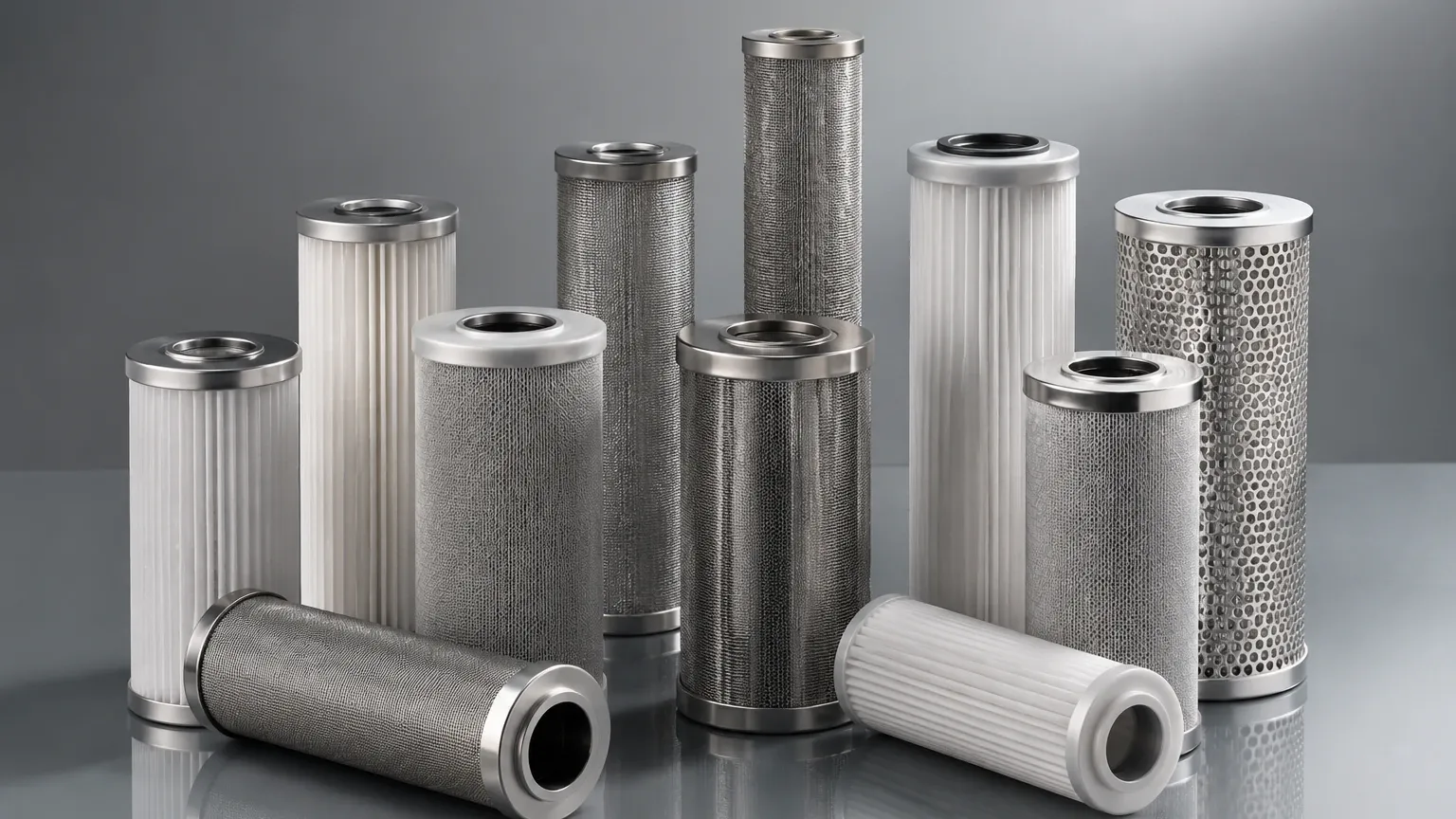
Industrial Filter Cartridges are designed to fit into pressurized housings, where their cylindrical shape allows for uniform pressure distribution and maximized surface area within a compact footprint. Whether used in pre-filtration for reverse osmosis (RO) systems or as a final polishing step in chemical processing, these components must maintain structural integrity under varying flow rates and thermal conditions.
Engineering Characteristics of Round Water Filter Cartridges
The "round" or cylindrical design of these cartridges is not merely a matter of tradition but a functional requirement for high-pressure industrial applications. A cylindrical profile facilitates an even distribution of the fluid across the filter media, preventing localized clogging and ensuring that the differential pressure increases predictably over the life of the filter.
Structural Integrity and Pressure Resistance
In many industrial settings, water filtration occurs under significant pressure. Round water filter cartridges, particularly those constructed from stainless steel or reinforced polymers, are engineered to resist collapse. The internal core—often a perforated metal tube—provides the necessary mechanical support to withstand high differential pressures (ΔP). When the ΔP reaches a specific threshold, it indicates that the media is loaded with contaminants and requires cleaning or replacement.
Surface Area vs. Depth Filtration
Round cartridges generally fall into two categories: surface filters and depth filters.
1. Surface Filters: These often utilize pleated media, such as pleated stainless steel wire mesh. The pleating process significantly increases the effective filtration area within the same cylindrical volume, allowing for higher flow rates and lower initial pressure drops.
2. Depth Filters: These rely on the thickness of the media to trap particles throughout the structure. While they may have a lower surface area than pleated designs, they are highly effective at handling a wide range of particle sizes in a single pass.
Material Selection for Industrial Environments
Material compatibility is a primary concern for engineers when specifying round water filter cartridges. While plastic-based cartridges (such as polypropylene or PES) are common in light-duty applications, demanding industrial processes often necessitate the use of metallic media.
Stainless Steel (304 and 316L)
For applications involving high temperatures, aggressive chemicals, or the need for repeated sterilization, stainless steel is the preferred material. Kaifil specializes in manufacturing stainless steel cartridges that offer superior durability compared to synthetic alternatives.
* 304 Stainless Steel: Suitable for general industrial water filtration where corrosion risk is moderate.
* 316L Stainless Steel: Contains molybdenum, providing enhanced resistance to chlorides and pitting, making it ideal for marine environments, pharmaceutical grade water, and chemical processing.
Advantages of Metal Media
Unlike polymer cartridges, metal round water filter cartridges do not suffer from media migration—a phenomenon where fibers from the filter material break off and contaminate the filtrate. Furthermore, metal filters can withstand temperatures exceeding 250°C and are resistant to a broad spectrum of pH levels, ensuring they do not degrade when exposed to caustic cleaning agents or acidic process streams.
Evaluating Filtration Performance and Micron Ratings
Selecting the correct micron rating is essential for achieving the desired water quality without prematurely clogging the system. In the context of round water filter cartridges, performance is typically measured by two standards: nominal and absolute ratings.
Nominal vs. Absolute Ratings
* Nominal Rating: This indicates the filter's ability to retain a majority percentage (usually 60% to 90%) of particles at a specific micron size. It is often used for pre-filtration stages where the goal is to reduce the overall solids load.
* Absolute Rating: This refers to the diameter of the largest hard spherical particle that will pass through the filter under specified test conditions. For critical applications, such as protecting sensitive membranes or ensuring pharmaceutical purity, an absolute-rated stainless steel mesh or sintered cartridge is required.
Flow Rate and Differential Pressure
The relationship between flow rate and pressure drop is a key engineering consideration. A cartridge with a very fine micron rating will inherently have a higher initial pressure drop. Engineers must balance the need for fine filtration with the available pump head and the desired interval between maintenance cycles. Over-specifying (choosing a finer filter than necessary) leads to frequent downtime and increased operational costs.
Integration into Industrial Systems and Seal Configurations
For round water filter cartridges to function effectively, they must be properly seated within the filter housing. The interface between the cartridge and the housing is a common point of bypass, where unfiltered water escapes around the edges of the media.
End-Cap Configurations
Standard industrial cartridges come with various end-cap designs to ensure a leak-proof fit:
* Double Open End (DOE): Features flat gaskets on both ends; the cartridge is compressed by the housing lid to create a seal.
* Single Open End (SOE): Usually features a 222 or 226 O-ring configuration at one end and a closed-end or fin at the other. The 226 design often includes a locking tab to prevent the cartridge from unseating during back-pressure surges.
O-Ring and Gasket Materials
The choice of sealing material is as important as the filter media itself. Common materials include:
* Buna-N/Nitrile: Good for general water applications.
* EPDM: Excellent for steam and hot water.
* Viton (FKM): Required for high-temperature and chemical-rich environments.
* PTFE: Offers the highest level of chemical inertness but lacks the elasticity of elastomers.
Total Cost of Ownership and Maintenance
When evaluating round water filter cartridges, purchasing managers must look beyond the initial unit price. The Total Cost of Ownership (TCO) includes the cost of replacement, labor for maintenance, disposal costs, and the impact of filtration failure on downstream equipment.
Cleanability and Reusability
One of the most significant advantages of stainless steel round water filter cartridges is their ability to be cleaned and reused. In many industrial water systems, the cost of disposing of thousands of spent polypropylene cartridges per year is substantial. Stainless steel elements can be cleaned using several methods:
* Backwashing: Reversing the flow of water to dislodge particles from the surface.
* Ultrasonic Cleaning: Using high-frequency sound waves in a solvent bath to remove deeply embedded contaminants.
* Chemical Cleaning: Using acids or bases to dissolve organic or inorganic scaling.
Replacement Cycles
Even with cleaning, every filter has a finite lifespan. Monitoring the differential pressure is the most reliable way to determine when a cartridge has reached its capacity. In automated systems, pressure transducers trigger an alarm or an automatic backwash cycle when the ΔP reaches a pre-set limit (typically between 15 and 25 psi for most industrial water applications).
Customization and OEM Solutions
Standard off-the-shelf round water filter cartridges do not always meet the unique constraints of specialized industrial machinery. Factors such as non-standard housing dimensions, extreme flow velocities, or specific chemical exposures require customized engineering.
Kaifil provides comprehensive OEM capabilities, allowing for the design of filtration components tailored to specific technical requirements. Customization options often include:
* Variable Lengths and Diameters: Adjusting the physical dimensions to fit legacy housings or proprietary equipment.
* Reinforced Cores: Adding extra structural support for high-viscosity fluids or extreme pressure spikes.
* Multi-Layered Media: Combining different mesh sizes within a single cartridge to provide integrated pre-filtration and final filtration.
By collaborating with a manufacturer that understands the nuances of metal fabrication and filtration physics, engineering teams can optimize their water treatment processes, reduce downtime, and ensure the longevity of their industrial systems. Whether the application involves simple sediment removal or complex chemical purification, the selection of the right round water filter cartridge is a foundational step in maintaining operational efficiency.
