


Filter Cartridge Type a
In industrial filtration, the designation of a "filter cartridge type a" typically refers to a specific dimensional standard and configuration used in pressurized fluid systems. While the term is often associated with standardized sizing in various commercial applications, its industrial application demands a rigorous focus on material integrity, micron precision, and structural durability. For engineers and procurement specialists, selecting a filter cartridge type a involves more than just matching dimensions; it requires an understanding of how the filter media interacts with specific process fluids under varying thermal and mechanical stresses.
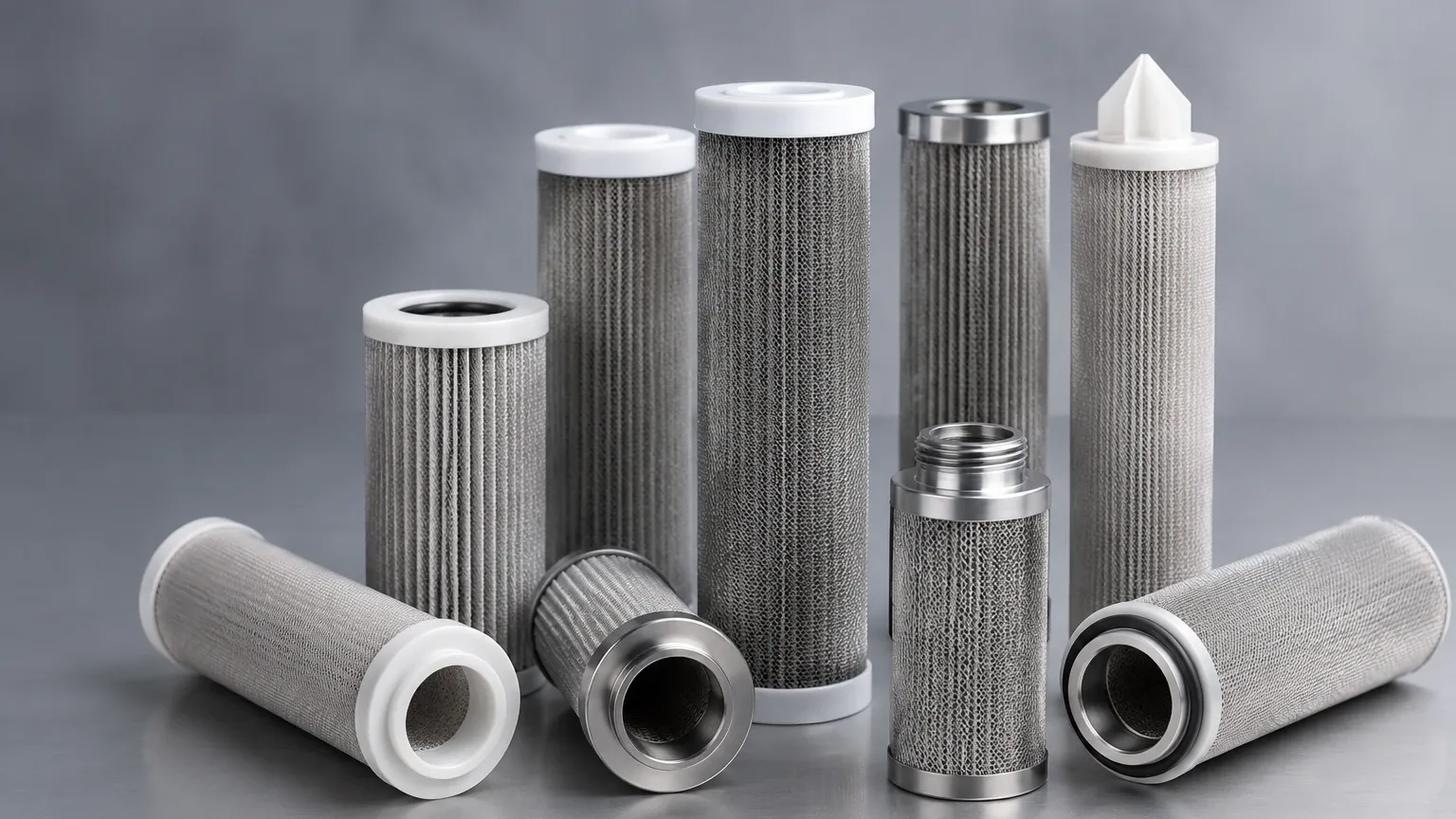
Industrial environments, such as chemical processing, pharmaceutical manufacturing, and hydraulic systems, often require a transition from disposable polymer-based media to more robust, cleanable solutions. High-performance Filter Cartridges constructed from stainless steel wire mesh or sintered metal provide the necessary longevity and resistance to aggressive solvents that standard synthetic "Type A" filters cannot match.
Understanding the Specifications of Filter Cartridge Type a
The primary identifier for a filter cartridge type a is its physical geometry. In most standardized contexts, this refers to a cartridge with a length of approximately 8 inches (203 mm) and an outer diameter of 4.25 inches (108 mm). However, in a B2B industrial context, these dimensions serve as a baseline for custom-engineered components designed to fit into existing housings while providing enhanced filtration characteristics.
Dimensional Accuracy and Fitment
When specifying a filter cartridge type a for an industrial housing, the inner diameter (ID) and the configuration of the end caps are critical. A secure seal is paramount to prevent bypass, where unfiltered fluid escapes around the edges of the cartridge. Industrial versions often utilize Double Open End (DOE) configurations with gaskets made of Viton, EPDM, or PTFE to ensure chemical compatibility and a leak-proof fit. Precision manufacturing ensures that the filter cartridge type a maintains its seat even under high-pressure pulses common in hydraulic and water treatment applications.
Micron Ratings and Filtration Efficiency
Filtration efficiency is defined by the micron rating, which can be either nominal or absolute. A nominal rating indicates the ability of the filter to retain a majority of particles of a specific size, whereas an absolute rating guarantees the retention of nearly 100% of particles at that size. For a filter cartridge type a used in precision engineering, stainless steel wire mesh allows for exact pore sizing, typically ranging from 1 micron to 200 microns. This level of control is essential for protecting downstream components like high-pressure pumps and sensitive nozzles.
Material Engineering: Moving Beyond Synthetic Media
While many "Type A" filters in the consumer market are made of pleated paper or polyester, industrial applications require materials that can withstand extreme conditions. Stainless steel is the material of choice for demanding environments due to its mechanical strength and corrosion resistance.
Stainless Steel 304 vs. 316L
The choice between Grade 304 and Grade 316L stainless steel depends on the chemical environment of the application. Grade 304 is suitable for general industrial use, providing excellent strength and basic corrosion resistance. However, for applications involving chlorides, acids, or high-salinity fluids—common in chemical processing and marine environments—Grade 316L is preferred. The addition of molybdenum in 316L enhances its resistance to pitting and crevice corrosion, significantly extending the service life of the filter cartridge type a.
Thermal Stability
Synthetic filters often fail or deform at temperatures exceeding 60°C (140°F). In contrast, stainless steel Filter Cartridges can operate efficiently at temperatures ranging from cryogenic levels up to 500°C (932°F), depending on the seal material and structural design. This thermal stability makes the filter cartridge type a ideal for steam filtration, hot oil processing, and high-temperature gas applications.
Performance Metrics: Flow Rates and Filtration Efficiency
When integrating a filter cartridge type a into a system, engineers must calculate the balance between filtration fineness and the resulting pressure drop ($ΔP$). A filter with a very fine micron rating will naturally offer higher resistance to flow, which can increase energy consumption and reduce the overall efficiency of the system.
Calculating Pressure Drop
The clean pressure drop is the initial resistance offered by the filter media. As the filter cartridge type a captures contaminants, the $ΔP$ increases. In industrial systems, it is standard practice to replace or clean the cartridge when the pressure drop reaches a predetermined limit (often between 15 and 25 PSI). Using pleated stainless steel mesh increases the available surface area within the standard "Type A" footprint, which lowers the initial pressure drop and extends the time between maintenance cycles.
Flow Capacity
The flow capacity of a filter cartridge type a is influenced by the viscosity of the fluid and the total open area of the filter media. For water-like viscosities, a standard 8-inch cartridge can handle significant flow rates, but for heavy hydraulic oils or polymers, the flow must be derated to prevent media deformation or premature clogging. Engineering teams often use flow-versus-pressure curves to select the optimal mesh density for their specific throughput requirements.
Structural Integrity and Pressure Resistance
One of the primary risks in industrial filtration is "media migration" or structural collapse. This occurs when the differential pressure exceeds the mechanical limits of the filter cartridge. A high-quality industrial filter cartridge type a is engineered to withstand high collapse pressures, often exceeding 300 PSI in specialized designs.
Support Cores and Outer Cages
To maintain its shape under high pressure, a stainless steel filter cartridge type a typically features a perforated internal support core. For applications involving backwashing or high-velocity flow, an outer protective cage may also be added. These components are joined using advanced welding techniques, such as TIG (Tungsten Inert Gas) or plasma welding, which eliminate the need for adhesives or resins that could outgas or contaminate the process fluid.
Pleating Technology
Pleating the wire mesh is a sophisticated engineering process that maximizes the filtration area within the compact dimensions of the filter cartridge type a. By increasing the surface area, the flux (flow per unit area) is reduced, which minimizes the force exerted on individual particles and improves the retention of deformable contaminants. This is particularly important in the food and beverage industry, where removing soft particles without shearing them is critical for product quality.
Customization and OEM Integration for Industrial Systems
Standardized sizes like the filter cartridge type a provide a useful framework, but many industrial systems require customized features to meet specific operational goals. OEM (Original Equipment Manufacturer) capabilities allow for the modification of standard designs to better suit unique housing requirements or specialized fluid chemistries.
Custom End Cap Configurations
While the standard filter cartridge type a might use a simple gasket seal, custom industrial versions can be fitted with threaded connectors (such as NPT or BSP), bolt-down flanges, or specialized O-ring codes (e.g., Code 7 or Code 3). These modifications ensure that the filter remains stationary and sealed even during intense vibration or hydraulic shock.
Specialized Media Layers
In complex filtration tasks, a single layer of mesh may not be sufficient. Custom Filter Cartridges can be manufactured with multi-layered sintered mesh. This structure combines a fine filtration layer with coarser drainage and support layers, providing a combination of high precision and extreme mechanical strength that a standard single-layer filter cartridge type a cannot provide.
Maintenance Protocols and Total Cost of Ownership (TCO)
For purchasing teams, the total cost of ownership is a more significant metric than the initial purchase price. While a stainless steel filter cartridge type a has a higher upfront cost than a disposable plastic or paper filter, its ability to be cleaned and reused multiple times provides substantial long-term savings.
Cleaning and Regeneration
Stainless steel cartridges can be regenerated using several methods:
1. Backwashing: Reversing the flow of fluid to dislodge particles from the surface of the mesh.
2. Ultrasonic Cleaning: Using high-frequency sound waves in a cleaning solvent to remove deeply embedded particles.
3. Chemical Cleaning: Soaking the cartridge in specialized solvents or acids to dissolve organic or inorganic scaling.
4. Burn-off/Pyrolysis: Heating the cartridge to high temperatures to incinerate organic contaminants (applicable only to all-metal designs).
Environmental Impact
By opting for a cleanable filter cartridge type a, facilities significantly reduce their solid waste output. In industries like pharmaceuticals or chemicals, where used filters may be classified as hazardous waste, the reduction in disposal costs and environmental liability can justify the investment in stainless steel filtration within a single year of operation.
Conclusion: Selecting the Right Filter Cartridge Type a
Selecting an industrial filter cartridge type a requires a thorough evaluation of the process conditions, including fluid chemistry, temperature, pressure, and the nature of the contaminants. By focusing on high-quality materials like 316L stainless steel and precision engineering standards, companies can ensure the reliability of their filtration systems.
When evaluating suppliers, engineers should confirm that the manufacturer can provide documentation on micron ratings, pressure testing, and material certifications. For those seeking to optimize their processes, specialized Filter Cartridges offer the durability and precision necessary to maintain high production standards while minimizing downtime and maintenance costs. Whether you are replacing a standard component or designing a new system, understanding the technical nuances of the filter cartridge type a is the first step toward achieving efficient and cost-effective industrial filtration.
