


Filter Cartridge Type U
In the landscape of industrial fluid processing, the selection of filtration components is a critical engineering decision that impacts system efficiency, product purity, and long-term operational costs. Among the various configurations available to process engineers, the filter cartridge type u represents a specific category of filtration media designed for high-performance applications where structural integrity and precise fitment are non-negotiable. Unlike standard disposable filters, industrial-grade stainless steel versions of these cartridges provide a robust solution for demanding environments involving high temperatures, corrosive chemicals, and high-pressure differentials.
Selecting the appropriate Filter Cartridges requires a deep understanding of the mechanical interface, material compatibility, and the specific filtration mechanics required by the process. This guide examines the technical specifications, engineering considerations, and application-specific advantages of the Type U configuration within the context of stainless steel filtration technology.
Technical Architecture and Design Standards
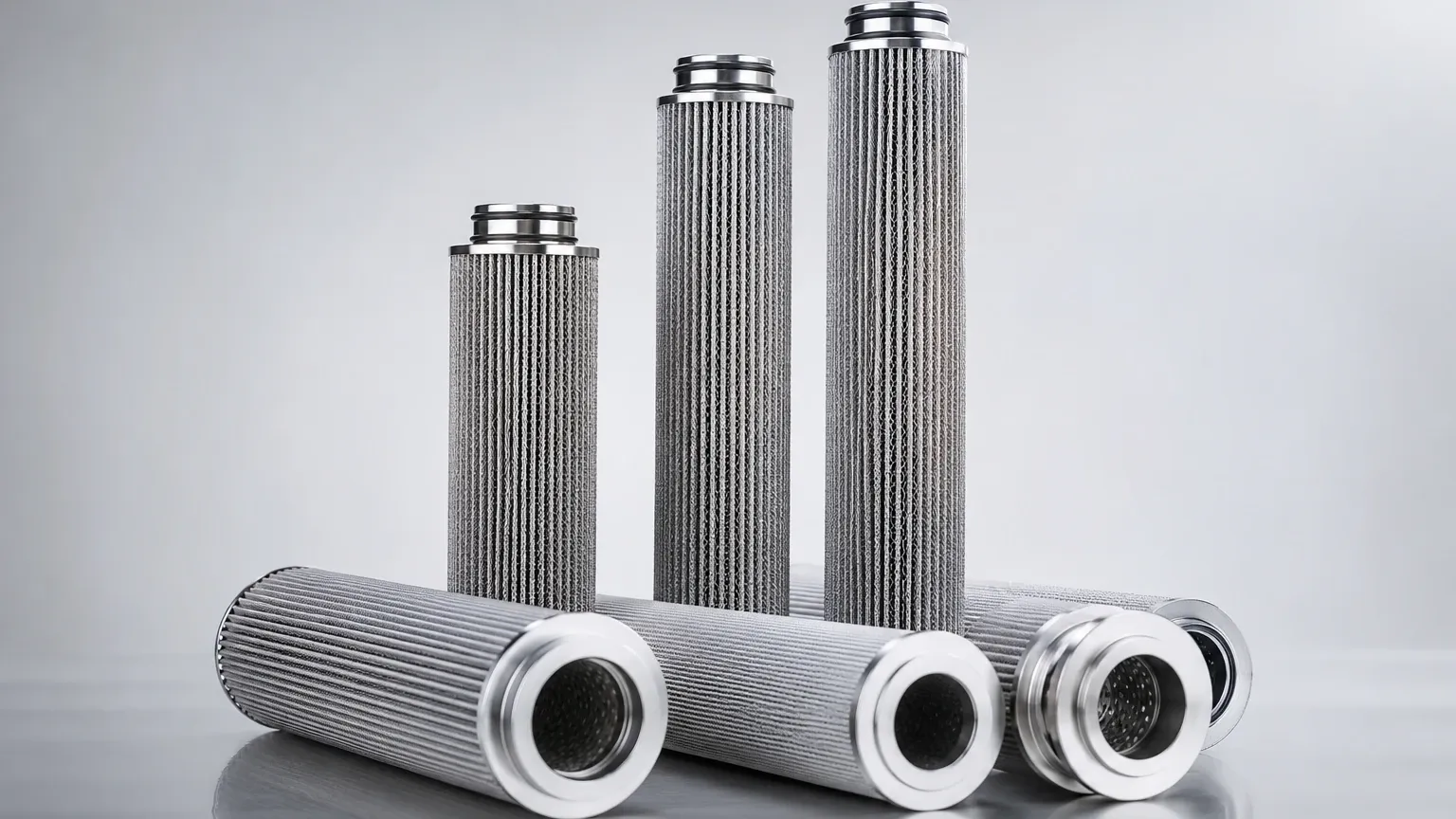
The designation "Type U" typically refers to the end-cap configuration and the sealing mechanism of the cartridge. In industrial filtration, the interface between the cartridge and the housing is the most common point of failure or bypass. The Type U design is engineered to provide a secure, leak-proof seal that can withstand the mechanical stresses of high-flow systems.
Structural Composition
Stainless steel Type U cartridges are generally constructed using multiple layers of wire mesh or sintered metal fibers. The internal support core—usually a perforated stainless steel tube—provides the necessary collapse strength to handle high differential pressures (ΔP). The outer shroud or cage protects the delicate filtration media from mechanical damage during installation and cleaning cycles.
Sealing Mechanisms
The "U" configuration often incorporates a specific gasket or O-ring profile designed to seat into a corresponding groove in the filter housing. This design ensures that the fluid is forced through the filtration media rather than bypassing the cartridge. For high-temperature applications, these seals are often made from Viton, PTFE, or encapsulated silicone, ensuring that the entire assembly remains chemically inert and thermally stable.
Material Science in Stainless Steel Filtration
The primary advantage of moving to a stainless steel filter cartridge type u is the material's inherent resistance to environmental extremes. While polymer-based filters are suitable for ambient temperature water treatment, industrial processes often involve variables that would cause synthetic fibers to degrade or off-gas.
304 vs. 316L Stainless Steel
Most Type U cartridges are manufactured from either 304 or 316L stainless steel.
* 304 Stainless Steel: Suitable for general industrial applications, providing excellent strength and basic corrosion resistance.
* 316L Stainless Steel: The "L" denotes low carbon content, which is essential for components that undergo TIG welding during manufacturing. 316L offers superior resistance to pitting and crevice corrosion, making it the standard choice for pharmaceutical, food and beverage, and chemical processing industries where CIP (Clean-in-Place) chemicals like caustic soda or nitric acid are used.
Sintered vs. Pleated Media
Engineers must choose between sintered mesh and pleated mesh designs based on the required surface area and dirt-holding capacity.
* Pleated Designs: Increase the effective filtration area, allowing for higher flow rates and lower initial pressure drops. This is ideal for fluids with a high concentration of contaminants.
* Sintered Designs: Involve bonding multiple layers of wire mesh through a heat-and-pressure process. This creates a migration-free medium with fixed pore geometry, ensuring consistent filtration accuracy even under fluctuating pressures.
Hydraulic Performance and Filtration Efficiency
When integrating a filter cartridge type u into a hydraulic or process circuit, the engineer must calculate the expected pressure drop and the Beta ratio (filtration efficiency). A filter that is too restrictive will lead to premature pump wear and increased energy consumption, while a filter that is too coarse will fail to protect downstream components.
Understanding Micron Ratings
Filtration accuracy is measured in microns (μm). It is vital to distinguish between nominal and absolute ratings.
* Nominal Rating: Indicates the ability of the filter to retain a majority of particles of a specific size (e.g., 90% or 95%).
* Absolute Rating: Refers to the diameter of the largest hard spherical particle that will pass through the filter under specified test conditions. For critical applications like catalyst recovery or sterile air filtration, absolute-rated stainless steel cartridges are mandatory.
Flow Rate and Differential Pressure
The relationship between flow rate and differential pressure is governed by the viscosity of the fluid and the porosity of the media. Stainless steel Type U cartridges are designed to operate at much higher ΔP limits than their plastic counterparts. While a polypropylene filter might collapse at 2-3 bar, a reinforced stainless steel cartridge can often withstand 10-20 bar or higher, depending on the internal core design.
Industrial Applications for Stainless Steel Type U Filters
The versatility of the Type U configuration allows it to be used across a broad spectrum of industries. Its adoption is usually driven by the need for a reusable, cleanable, and highly durable filtration element.
Chemical and Petrochemical Processing
In the chemical industry, filters are exposed to aggressive solvents and high-temperature polymers. The filter cartridge type u, when constructed from 316L stainless steel, provides the necessary chemical compatibility to handle corrosive streams without leaching contaminants into the product. It is frequently used for monomer filtration, solvent recovery, and the protection of high-pressure injection nozzles.
Food and Beverage Production
For food-grade applications, the filter must comply with stringent hygiene standards (such as FDA or EC 1935/2004). Stainless steel cartridges are preferred because they do not contain binders, adhesives, or surfactants that could migrate into the food stream. Common uses include the filtration of cooking oils, syrups, and beverage carbonation gases (CO2).
Pharmaceutical and Biotechnology
In the pharmaceutical sector, the ability to sterilize equipment is paramount. Type U stainless steel cartridges can be repeatedly autoclaved or sterilized with in-line steam (SIP). They are used for filtering active pharmaceutical ingredients (APIs), sterile air venting for fermentation tanks, and the removal of pyrogens from process water.
Maintenance, Cleaning, and Service Life Optimization
One of the most significant B2B advantages of a stainless steel filter cartridge type u is its status as a permanent asset rather than a consumable. While the initial procurement cost is higher than disposable options, the total cost of ownership (TCO) is often lower due to the cartridge's cleanability.
Cleaning Methodologies
Depending on the nature of the contaminant, several cleaning methods can be employed to restore the cartridge to its original clean pressure drop:
1. Backpulsing/Backwashing: Using a reverse flow of clean fluid or gas to dislodge particles from the surface of the media.
2. Ultrasonic Cleaning: Using high-frequency sound waves in a detergent bath to remove fine particles trapped deep within the sintered layers.
3. Chemical Cleaning: Soaking the cartridge in solvents, acids, or alkalis to dissolve organic or inorganic scaling.
4. Burn-off/Pyrolysis: For polymer applications, the cartridge can be heated in a controlled furnace to carbonize and remove plastic residues.
Determining Replacement Cycles
Although stainless steel cartridges are durable, they are not infinite. Over time, repeated cleaning cycles and mechanical stress can lead to work hardening or "blindage" (permanent clogging). Engineers should monitor the time it takes for the cartridge to reach its terminal pressure drop after each cleaning. A significant shortening of the service interval indicates that the media is reaching the end of its functional life and should be replaced to avoid risking a structural failure.
Customization and Procurement Considerations
For many OEM applications, a standard off-the-shelf filter may not meet the specific spatial or performance requirements of a new machine design. Customization of the filter cartridge type u is a common requirement in the B2B sector.
Engineering Verification
Before finalizing a purchase, procurement teams and engineers should confirm the following data points with the manufacturer:
* Maximum Operating Temperature: Ensure the gaskets and the metal alloy can handle the peak process temperatures.
* Burst and Collapse Pressure: Verify that the cartridge can survive a system malfunction (e.g., a pump surge or a downstream valve closure).
* Media Migration Tests: For high-purity applications, ensure the manufacturer has performed bubble point tests to verify pore integrity.
The Role of OEM Manufacturing
Manufacturers specializing in stainless steel filtration, such as Kaifil, offer the ability to customize the length, diameter, and end-cap geometry of the Type U cartridge. This ensures that the filter integrates seamlessly into existing housings without the need for expensive manifold modifications. Furthermore, choosing a manufacturer with integrated welding and sintering capabilities allows for tighter quality control over the final product.
Conclusion
The filter cartridge type u is a vital component in the toolkit of the modern process engineer. By combining the standardized fitment of the "U" design with the material advantages of stainless steel, these cartridges provide a reliable, high-performance solution for the most challenging industrial filtration tasks. Whether the goal is to protect sensitive downstream equipment, ensure the purity of a pharmaceutical product, or reduce the environmental impact of disposable waste, the transition to high-quality stainless steel filtration media offers a clear path to optimized operational efficiency. When selecting these components, focusing on material grade, sealing integrity, and cleanability will ensure a robust filtration system that delivers consistent results over a long service life.
