


Filter Cartridges for Reverse Osmosis
Reverse Osmosis (RO) is a cornerstone technology in modern industrial water treatment, utilized extensively for desalination, wastewater recovery, and the production of high-purity process water. However, the efficacy and longevity of an RO system are heavily dependent on the quality of its pre-filtration stage. Within this stage, the selection and implementation of specific filter cartridges are critical to protecting the sensitive polyamide thin-film composite membranes from fouling, scaling, and physical degradation. For engineers and procurement teams, understanding the technical nuances of filter cartridges for reverse osmosis is essential for optimizing system uptime and reducing the total cost of ownership.
The Critical Role of Pre-filtration in RO Systems
Reverse osmosis membranes are designed to remove dissolved solids at the molecular level, but they are inherently susceptible to damage from suspended solids, colloids, and biological matter. The primary function of filter cartridges in an RO assembly is to act as a sacrificial barrier. By capturing particles that would otherwise settle on the membrane surface or lodge within the feed spacers, these cartridges maintain the system's hydraulic balance.
One of the most important metrics in RO operation is the Silt Density Index (SDI). High SDI values indicate a high concentration of colloidal and suspended particles, which leads to rapid membrane fouling. Effective pre-filtration aims to reduce the SDI of the feed water to a level typically below 3.0. Without high-performance filter cartridges for reverse osmosis, the frequency of membrane cleaning (Clean-In-Place or CIP) increases, which significantly shortens the membrane's lifespan due to chemical exposure and mechanical stress.
Technical Evaluation of Depth vs. Pleated Filter Cartridges
In industrial RO applications, two primary structural designs of filter cartridges are commonly employed: depth filters and pleated filters. Each offers distinct advantages depending on the feed water quality and the required flow dynamics.
Depth Filter Cartridges
Depth filters, including melt-blown and string-wound varieties, capture particles throughout the entire thickness of the filter media. These are often used as the first stage of pre-filtration. Melt-blown polypropylene cartridges are favored for their graded pore structure, where the outer layers catch larger particles and the inner layers provide the final micron rating. This design allows for a high dirt-holding capacity, making them ideal for feed water with a broad particle size distribution.
Pleated Filter Cartridges
Pleated cartridges utilize a folded media design to maximize the available surface area within a standard footprint. This increased surface area results in lower clean differential pressure and higher flow rates per cartridge. In RO systems where the feed water is relatively clean but requires precise protection, pleated cartridges provide superior efficiency. They are often used as the final "polishing" step before the water enters the high-pressure pump and RO membrane housing.
Material Engineering and Chemical Compatibility
The material composition of filter cartridges must be carefully matched to the chemical profile of the feed water and the cleaning protocols of the facility. While polymer-based cartridges are standard for many water treatment applications, industrial processes often involve variables that necessitate more robust materials.
In environments involving high temperatures, aggressive chemicals, or high-pressure differentials, stainless steel filter components become necessary. Stainless steel 304 and 316L provide exceptional resistance to corrosion and can withstand the harsh acids or caustic solutions used during intensive cleaning cycles. For engineers managing RO systems in the chemical processing or pharmaceutical sectors, ensuring that the Filter Cartridges and their housings are compatible with both the process fluid and the sanitation chemicals is a fundamental safety and performance requirement.
Performance Metrics: Micron Ratings and Flow Dynamics
Selecting the correct micron rating is a balance between protection and permeability. For most RO applications, a 5-micron nominal or 1-micron absolute rating is standard for pre-filtration.
Nominal vs. Absolute Ratings
Engineers must distinguish between nominal and absolute ratings. A nominal rating indicates the cartridge will trap a percentage (typically 60-80%) of particles at that size. An absolute rating implies a 99.9% efficiency (Beta ratio of 1000). For critical RO systems, using an absolute-rated cartridge ensures that virtually no particles larger than the specified micron size reach the membrane, providing the highest level of protection against physical abrasion.
Flow Velocity and Pressure Drop
The flux rate—the volume of water passing through a given area of filter media—impacts the efficiency of particle capture. Operating filter cartridges at excessively high flow rates can cause "breakthrough," where pressure forces particles through the media. Monitoring the differential pressure (ΔP) is the standard method for determining when a cartridge has reached its capacity. Typically, cartridges should be replaced when the ΔP reaches 1.0 to 1.5 bar (15-22 psi) to prevent structural bypass or housing damage.
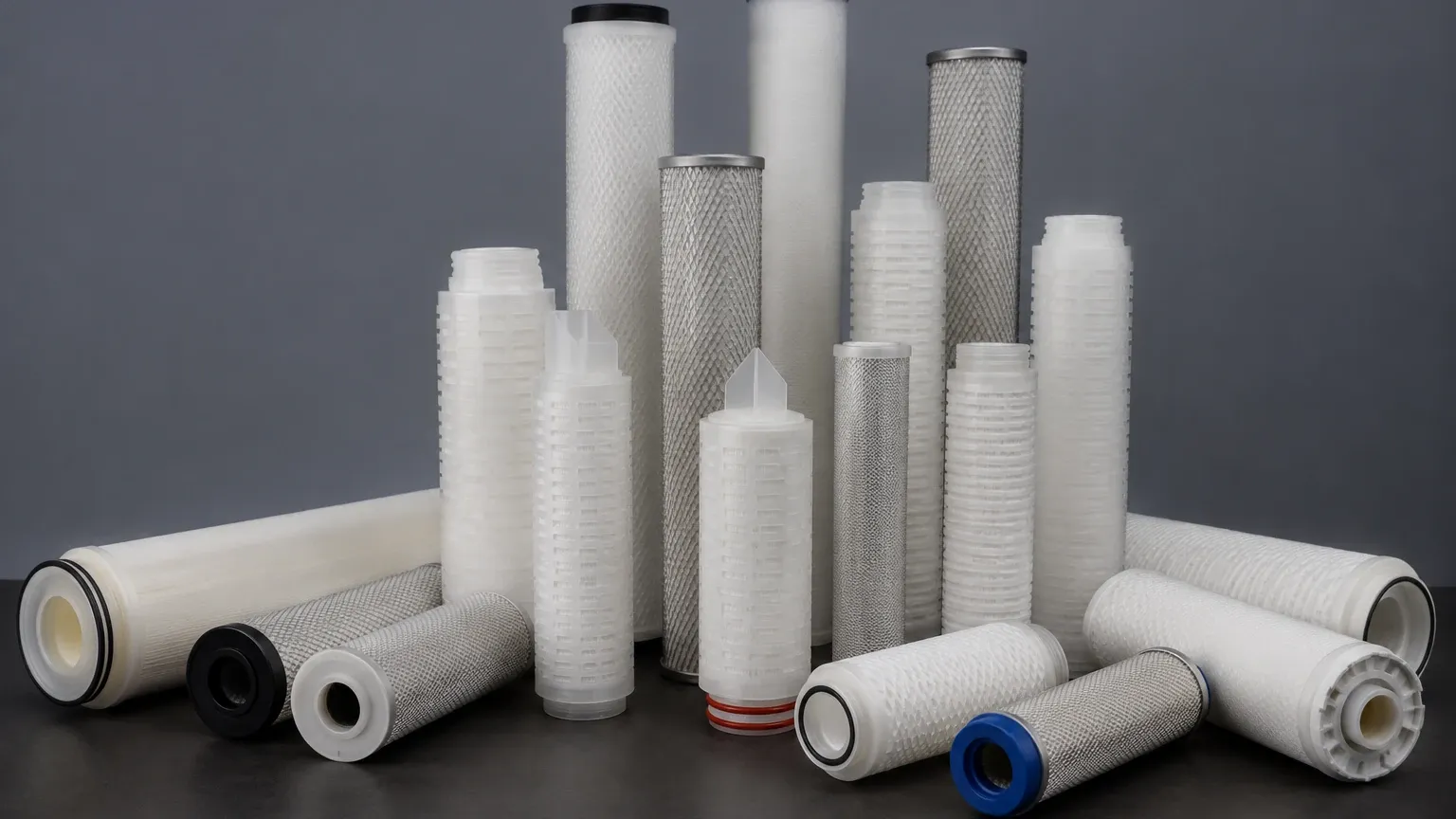
The Strategic Advantage of Stainless Steel Filter Cartridges
While disposable polymer cartridges are cost-effective for standard water treatment, certain industrial RO configurations benefit significantly from stainless steel filtration solutions. Kaifil specializes in these high-durability components, which offer several strategic advantages:
1. High Temperature Tolerance: Standard polypropylene cartridges often lose structural integrity above 60°C. In industrial RO systems processing hot condensate or requiring steam sterilization, stainless steel cartridges maintain their form and filtration accuracy.
2. Mechanical Strength: RO systems operate under high pressure. Stainless steel cartridges can withstand much higher differential pressures without collapsing, providing a fail-safe against sudden pressure surges in the system.
3. Cleanability and Reusability: Unlike disposable filters, stainless steel mesh and sintered metal cartridges can often be cleaned via backwashing or ultrasonic baths. This reduces the long-term waste stream and can lower the total cost of ownership in specific high-load applications.
4. Zero Media Migration: In high-purity applications, there is a risk that fibers from polymer cartridges may shed and contaminate the RO membrane. Precision-engineered metal filters eliminate the risk of media migration.
Operational Maintenance and Replacement Protocols
A proactive maintenance schedule is essential for the stability of any reverse osmosis system. Relying solely on a calendar-based replacement schedule can be inefficient; instead, a data-driven approach based on differential pressure and SDI testing is recommended.
Monitoring and Instrumentation
RO skids should be equipped with pressure gauges upstream and downstream of the filter housing. An automated alarm system triggered by high ΔP ensures that cartridges are replaced before they become a bottleneck. Furthermore, performing an SDI test at least once per shift (or more frequently if source water quality fluctuates) provides immediate feedback on the performance of the filter cartridges for reverse osmosis.
Handling and Installation
Contamination during the replacement process can introduce bacteria or particulates directly into the high-pressure side of the system. Maintenance teams should follow strict hygiene protocols, ensuring that seals and O-rings (typically EPDM or Viton) are properly lubricated and seated. An incorrectly installed cartridge can lead to "fluid bypass," where unfiltered water flows around the cartridge, rendering the entire pre-filtration stage useless.
Customization and OEM Considerations for Industrial RO
Every industrial environment presents unique challenges, from space constraints on a maritime RO skid to the extreme chemical demands of a mining wastewater plant. Off-the-shelf filtration solutions may not always meet the specific flow requirements or housing dimensions of a custom-built system.
Customization options often include:
* End-Cap Configurations: Matching specific housing requirements such as Code 7 (226 O-ring/fin) or DOE (Double Open End).
* Variable Lengths: Producing non-standard lengths to maximize filter surface area within existing footprints.
* Specialized Alloys: Utilizing Hastelloy or Monel for environments with extreme salinity or corrosive potential that exceeds the capabilities of 316L stainless steel.
Working with a manufacturer like Kaifil allows engineering teams to develop bespoke filtration components that are tailored to the exact hydraulic and chemical needs of their RO process. This collaborative approach ensures that the filtration stage is not a weak link but a robust contributor to the system's overall efficiency.
Conclusion: Optimizing RO Performance through Filtration
The selection of filter cartridges for reverse osmosis is a technical decision that impacts the entire lifecycle of a water treatment plant. By prioritizing high-quality materials, appropriate micron ratings, and robust structural designs, engineers can significantly extend membrane life and reduce operational downtime. Whether utilizing standard disposable media or specialized stainless steel components, the goal remains the same: ensuring a consistent, low-SDI feed to the RO membranes to maintain peak permeate quality and system reliability.
