


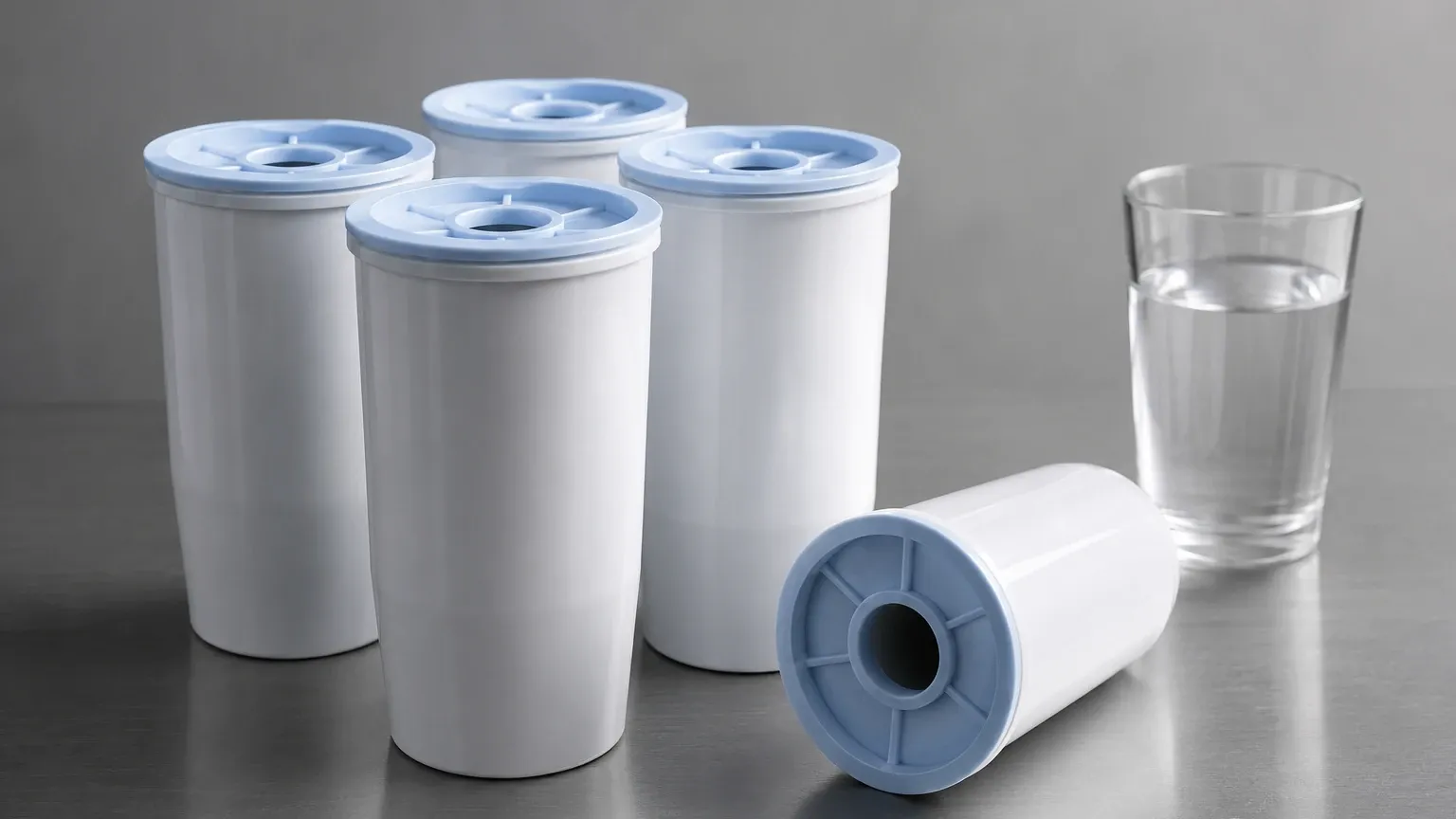
Zerowater Replacement Water Filter Cartridges
In the landscape of high-purity water filtration, the demand for systems capable of achieving near-zero Total Dissolved Solids (TDS) has moved from specialized laboratory environments into broader commercial and industrial applications. While many users are familiar with consumer-grade zerowater replacement water filter cartridges designed for home pitchers, the engineering principles behind these systems—specifically ion exchange and multi-stage mechanical filtration—are foundational to professional water treatment. For engineers and procurement specialists in sectors like food and beverage, pharmaceuticals, and precision manufacturing, understanding the mechanics of these cartridges is essential for selecting the right Filter Cartridges for large-scale or high-pressure operations.
Industrial filtration requires a balance of high flow rates, chemical compatibility, and structural integrity. While consumer-grade replacements focus on gravity-fed purification, industrial equivalents must withstand rigorous cleaning cycles and mechanical stress. This article examines the technical specifications of high-purity water filter cartridges, the science of TDS reduction, and the considerations for transitioning from standard consumer solutions to robust industrial filtration components.
The Engineering Behind High-Purity Water Filtration
The primary objective of zerowater replacement water filter cartridges is the comprehensive removal of dissolved inorganic substances. Unlike standard carbon filters that primarily address taste and odor by removing chlorine, high-purity cartridges utilize a multi-stage process to address a wider spectrum of contaminants. This typically involves a combination of mechanical filtration and ion exchange resins.
Multi-Stage Filtration Mechanics
To achieve a 000 TDS reading, a filter must address contaminants at different molecular levels. The process generally follows a specific sequence:
1. Coarse Particle Removal: The initial stage involves a fine mesh or non-woven layer designed to capture suspended solids such as rust, sand, and sediment. In industrial settings, this is often handled by stainless steel wire mesh pre-filters.
2. Flow Distribution: A distributor layer ensures that water passes evenly through the subsequent media, preventing "channeling," where water finds the path of least resistance and bypasses the filtration media.
3. Organic Contaminant Adsorption: Activated carbon or oxidation-reduction (redox) alloys are used to neutralize chlorine and reduce organic compounds.
4. Ion Exchange (IX): This is the core of the high-purity process. A dual-layer ion exchange resin swaps magnesium and calcium ions (which contribute to water hardness) and other dissolved metals for hydrogen and hydroxyl ions, which combine to form pure H2O.
5. Final Particle Capture: A final ultra-fine membrane or non-woven layer ensures that no resin beads or remaining micro-particles exit the cartridge.
Comparing Consumer Replacements and Industrial Filter Cartridges
When evaluating zerowater replacement water filter cartridges, it is important to distinguish between the needs of a residential user and those of an industrial facility. Industrial applications often involve higher temperatures, corrosive chemicals, and high-pressure differentials that would compromise standard plastic-housed cartridges.
Material Integrity and Housing
Consumer cartridges are typically constructed from BPA-free plastics. While suitable for ambient temperature gravity-fed systems, these materials lack the tensile strength required for hydraulic systems. Industrial Filter Cartridges often utilize 304 or 316L stainless steel for their structural components. Stainless steel provides superior resistance to pressure surges and allows for sterilization via steam or chemicals—a critical requirement in pharmaceutical and food-grade environments.
Flow Rate and Pressure Drop
A common challenge with high-purity cartridges is the "pressure drop" (delta P). Because the ion exchange resins and fine membranes required for zero TDS are densely packed, they naturally resist water flow. In a B2B context, engineers must calculate the required flow rate (GPM) against the maximum allowable pressure drop to ensure the filtration system does not become a bottleneck in the production line.
Technical Evaluation Criteria for Procurement
For technical professionals tasked with sourcing filtration solutions, the selection process goes beyond simple compatibility. Several key performance indicators (KPIs) must be verified before integrating new cartridges into a system.
Micron Ratings: Absolute vs. Nominal
Understanding the micron rating is vital. A "nominal" rating indicates that the filter can trap a large percentage of particles of a certain size, whereas an "absolute" rating guarantees that 99.9% of particles above that size are captured. For high-purity water, the final stage of the cartridge often requires an absolute rating to ensure that no resin fines migrate into the downstream process.
TDS Reduction Capacity
The lifespan of zerowater replacement water filter cartridges is directly proportional to the TDS level of the input water. In industrial settings, this is measured in "grains" of hardness or ppm (parts per million). Engineers must conduct a water quality analysis to estimate the throughput capacity of a cartridge before the ion exchange resin becomes exhausted and requires replacement.
Chemical Compatibility
In many industrial processes, the water being filtered may contain trace chemicals or be at a non-neutral pH. It is essential to confirm that the internal resins and the outer casing of the cartridge are chemically compatible with the fluid. Stainless steel cartridges are often preferred here due to their inert nature and resistance to a wide range of industrial solvents and cleaning agents.
Common Risks in High-Purity Water Systems
Implementing high-purity filtration is not without risks. Failure to monitor the system can lead to several issues that affect both product quality and equipment longevity.
* Biological Growth: Because high-purity filters remove chlorine, the water inside the housing is susceptible to bacterial growth if the system remains stagnant. Industrial systems often incorporate UV sterilization or use stainless steel components that can be heat-sanitized.
* Resin Exhaustion: Once the ion exchange sites are filled, the cartridge will stop removing dissolved solids. In some cases, an exhausted filter can "dump" concentrated contaminants back into the water stream. Continuous TDS monitoring is recommended for all B2B applications.
* Channeling: If the internal structure of the cartridge fails, water may bypass the media entirely. This is why the internal engineering and compaction of the media are critical quality markers for replacement cartridges.
The Role of Customization in Industrial Filtration
Standardized zerowater replacement water filter cartridges are designed for a specific set of consumer products. However, industrial equipment often features unique footprints or specific performance requirements that off-the-shelf solutions cannot meet. This is where custom manufacturing becomes a strategic advantage.
OEM manufacturers like Kaifil specialize in developing Filter Cartridges that bridge the gap between high-purity requirements and industrial durability. Customization options often include:
* Bespoke Dimensions: Tailoring the length and diameter of the cartridge to fit existing stainless steel housings.
* End-Cap Configurations: Providing specific O-ring or gasket interfaces (such as Code 7 or 222/226 fittings) to ensure a leak-proof seal.
* Reinforced Cores: Adding internal support cores to prevent cartridge collapse under high-pressure differentials.
* Hybrid Media: Combining stainless steel mesh with specialized resins to handle both particulate and dissolved solid removal in a single unit.
Total Cost of Ownership (TCO) Considerations
When purchasing filtration components, the initial price of the cartridge is only one factor. A true B2B evaluation considers the Total Cost of Ownership, which includes:
1. Replacement Frequency: How many gallons can the cartridge process before the TDS rises above the acceptable threshold?
2. Labor Costs: How easy is it to change the filters? Quick-change designs can significantly reduce downtime.
3. Disposal vs. Regeneration: While many high-purity cartridges are disposable, some industrial ion exchange systems allow for the regeneration of resins, which may be more cost-effective in high-volume applications.
4. Equipment Protection: High-quality filtration prevents scale buildup in downstream machinery, such as boilers or cooling towers, potentially saving thousands in maintenance costs.
Conclusion
Whether a facility is utilizing zerowater replacement water filter cartridges for small-scale laboratory needs or seeking industrial-grade Filter Cartridges for large-scale production, the underlying science remains the same: the effective removal of dissolved solids through precision engineering. By focusing on material compatibility, micron accuracy, and structural integrity, engineering teams can ensure their filtration systems provide the high-purity water necessary for modern industrial standards.
For those managing complex systems, the transition from consumer-style replacements to professional, customized metal filtration components offers increased reliability and long-term cost savings. Selecting a manufacturer with deep expertise in stainless steel and precision filtration is the most effective way to guarantee performance in demanding environments.
Download Zerowater Replacement Water Filter Cartridges as a PDF
