


Water Filter Cartridges 3m
In industrial water treatment and process fluid management, the selection of high-performance filtration components is critical to maintaining system integrity and product quality. Among the various solutions available to engineers and procurement teams, water filter cartridges 3m have established a significant presence due to their specialized media technology and consistent performance benchmarks. For industrial operators, understanding the technical nuances of these cartridges—ranging from their micron ratings to their structural composition—is essential for optimizing filtration efficiency and reducing the total cost of ownership.
Industrial filtration is rarely a one-size-fits-all endeavor. Whether the application involves high-flow municipal water treatment, precision pharmaceutical processing, or chemical manufacturing, the choice of Filter Cartridges must be guided by rigorous engineering data. This article examines the technical specifications, performance expectations, and selection criteria for water filter cartridges 3m, while also exploring how custom-engineered metal filtration solutions can complement or replace standard polymer-based systems in demanding environments.
Technical Specifications of Water Filter Cartridges 3m
The performance of water filter cartridges 3m is largely defined by the proprietary media and construction methods used to address specific contaminants. Engineers typically evaluate these cartridges based on several key technical parameters:
Media Composition and Filtration Mechanisms
Most industrial-grade cartridges from the 3M portfolio utilize advanced materials such as pleated polypropylene, nylon membranes, or carbon-impregnated media. For instance, the use of "Large Diameter" or "High Flow" designs allows for significantly higher surface areas compared to standard 2.5-inch diameter cartridges. This increased surface area reduces the number of cartridges required for a given flow rate, which in turn simplifies housing design and reduces maintenance labor.
Micron Ratings: Absolute vs. Nominal
A critical distinction in the technical documentation of water filter cartridges 3m is the difference between absolute and nominal micron ratings. An absolute rating implies that the filter will capture at least 99.9% of particles at the specified size under laboratory conditions. In contrast, a nominal rating indicates a percentage (often 60% to 90%) of particles captured. For high-purity applications, such as the final filtration stage in food and beverage production, absolute-rated cartridges are mandatory to ensure microbiological safety and particle consistency.
Chemical and Thermal Compatibility
While many standard water filter cartridges 3m are designed for ambient temperature water, industrial processes often involve elevated temperatures or chemical additives. Engineers must verify that the cartridge’s end caps, gaskets, and core materials are compatible with the process fluid. For example, while polypropylene is excellent for general water use, it may degrade in the presence of certain organic solvents or at temperatures exceeding 80°C (176°F), necessitating a shift toward specialized materials or stainless steel alternatives.
Performance Indicators for Industrial Filtration Systems
When integrating water filter cartridges 3m into an existing system, performance is measured not just by the clarity of the effluent, but by the operational impact on the entire fluid circuit.
Differential Pressure (ΔP)
The pressure drop across a clean filter cartridge is a primary indicator of system efficiency. A high initial differential pressure suggests that the filter may be undersized for the flow rate or that the media density is too high for the application. Monitoring ΔP throughout the service life of the cartridge is essential; once the pressure drop reaches a predetermined terminal limit (typically 20-35 psi for many industrial housings), the cartridge must be replaced to prevent media migration or structural failure.
Dirt-Holding Capacity
The longevity of a filter is determined by its dirt-holding capacity—the total mass of contaminants the media can trap before the differential pressure becomes excessive. Water filter cartridges 3m often employ gradient-density structures, where the outer layers capture larger particles and the inner layers capture finer ones. This depth-filtration approach prevents the surface from blinding prematurely, extending the interval between change-outs.
Flow Velocity and Residence Time
In applications involving carbon-based water filter cartridges 3m, flow velocity is a critical factor. Carbon filtration relies on adsorption, a process that requires sufficient contact time between the water and the carbon media. If the flow rate exceeds the cartridge's design specifications, the removal of chlorine, taste, and odor-causing compounds will be compromised.
Material Selection: Polymeric vs. Stainless Steel Solutions
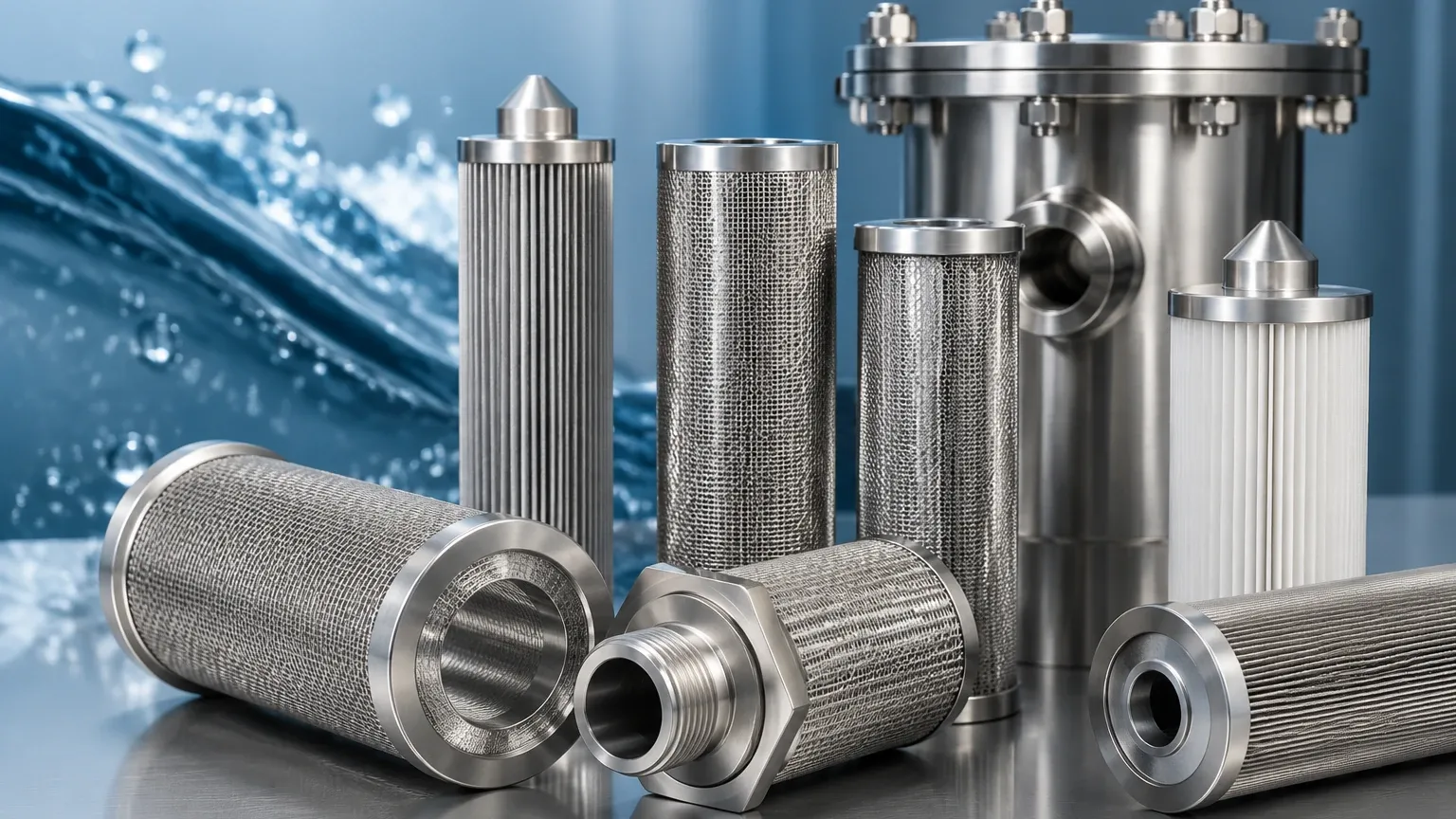
While water filter cartridges 3m are widely used for their versatility and cost-effectiveness in standard water applications, certain industrial environments demand the robustness of metal filtration. As a manufacturer specializing in custom stainless steel filtration, Kaifil provides insights into when an engineer should consider transitioning from polymer cartridges to precision metal components.
High-Temperature and High-Pressure Environments
Polymer-based cartridges are susceptible to thermal expansion and structural deformation under extreme conditions. In steam filtration or high-pressure hydraulic systems, stainless steel wire mesh or sintered metal cartridges offer superior mechanical strength. These metal filters can withstand temperatures far exceeding the limits of polypropylene or polyester without losing their pore structure or integrity.
Cleanability and Reusability
One of the primary advantages of stainless steel Filter Cartridges over disposable polymer units is their ability to be cleaned and reused. Through ultrasonic cleaning, backwashing, or chemical sanitization, metal filters can be restored to near-original performance levels. This is particularly beneficial in processes with high solids loading, where the cost of frequently replacing disposable cartridges would be prohibitive.
Precision and Durability
For applications requiring exact filtration accuracy in harsh chemical environments, custom-made stainless steel filters provide a level of durability that standard water filter cartridges 3m cannot match. The use of 304 or 316L stainless steel ensures resistance to corrosion, making them ideal for chemical processing and pharmaceutical manufacturing where material purity is paramount.
Customization and OEM Integration
In many industrial settings, standard off-the-shelf cartridges may not perfectly align with specialized equipment or unique process requirements. This is where customization and OEM (Original Equipment Manufacturer) capabilities become vital.
Retrofitting Legacy Systems
Many facilities operate with legacy filter housings that may not be compatible with the standard dimensions of modern water filter cartridges 3m. Custom manufacturing allows for the production of cartridges with specific lengths, diameters, and end-cap configurations (such as Code 7, 222, or 226 O-rings) to ensure a leak-proof fit in existing hardware.
Application-Specific Media Design
Beyond physical dimensions, the filtration media itself can be customized. For instance, a system might require a multi-stage filter that combines a coarse stainless steel mesh pre-filter with a fine pleated membrane in a single cartridge body. Such hybrid designs optimize space and reduce the complexity of the filtration train.
Quality Assurance and Compliance
For industries such as food and beverage or pharmaceuticals, any filtration component—whether a standard 3M product or a custom Kaifil metal filter—must meet strict regulatory standards. This includes ensuring that all materials are FDA-compliant and that the manufacturing process adheres to ISO quality management systems. Engineers must confirm that the supplier provides full traceability and material certifications for every batch of cartridges produced.
Maintenance and Replacement Strategies
To ensure the continued performance of water filter cartridges 3m, a proactive maintenance strategy is required. Failure to replace cartridges at the appropriate time can lead to several operational risks:
1. Contaminant Breakthrough: As a filter reaches its capacity, the increasing pressure can force captured particles through the media, contaminating the downstream process.
2. Reduced Flow Rates: Excessive clogging restricts flow, which can starve downstream equipment like pumps or heat exchangers, leading to overheating or mechanical wear.
3. Microbial Growth: In water systems, stagnant areas within a clogged filter can become breeding grounds for bacteria, potentially compromising the entire system's hygiene.
Engineers should implement automated monitoring systems that track differential pressure and flow rates in real-time. Additionally, establishing a regular sampling protocol to test effluent quality ensures that the filtration system is meeting its performance targets.
Conclusion for Engineering and Purchasing Teams
Selecting the right water filter cartridges 3m requires a deep understanding of the specific demands of the industrial process. While these cartridges offer reliable performance for a wide range of applications, the decision-makers must balance initial costs with long-term operational efficiency. Factors such as micron rating, material compatibility, and the potential benefits of reusable stainless steel alternatives should all be weighed during the procurement process.
By focusing on technical data and engineering requirements rather than brand recognition alone, facilities can achieve optimized filtration performance. Whether utilizing the advanced polymer technologies of water filter cartridges 3m or the rugged durability of custom stainless steel Filter Cartridges, the goal remains the same: ensuring the purity, safety, and efficiency of industrial fluid systems. For those managing complex or high-stakes environments, partnering with a manufacturer that offers both technical expertise and customization capabilities is the most effective way to secure a reliable filtration solution.
