


60926 Filter Cartridges
In industrial environments where workers and equipment are exposed to a complex mixture of chemical vapors and hazardous particulates, the selection of filtration media is a critical engineering decision. The 60926 filter cartridges represent a specialized class of multi-gas and particulate protection, designed to address a broad spectrum of contaminants simultaneously. For procurement teams and health and safety engineers, understanding the technical architecture, chemical compatibility, and performance limitations of these components is essential for maintaining operational safety and regulatory compliance.
Industrial filtration often requires a tiered approach, combining high-efficiency particulate air (HEPA) standards with chemical adsorption technologies. The 60926 designation typically refers to a combination cartridge that meets NIOSH (National Institute for Occupational Safety and Health) standards for both multi-gas/vapor protection and P100 particulate filtration. This dual-purpose design is engineered for environments where isolated contaminants are rare, and multi-stage protection is the baseline requirement.
Understanding the Multi-Gas and Particulate Protection Standard
The primary technical characteristic of 60926 filter cartridges is their "combination" capability. This means they are engineered to filter out both physical particles and gaseous chemical molecules. The particulate component of the cartridge is generally rated as P100, which is the highest level of NIOSH-rated particulate protection. A P100 filter is tested to capture at least 99.97% of airborne particles, including oil-based aerosols, with a diameter of 0.3 microns.
On the chemical side, the "multi-gas" aspect of the 60926 standard covers a wide range of hazardous substances. These typically include:
* Organic Vapors (OV): Solvents, degreasers, and various hydrocarbons.
* Acid Gases (AG): Including chlorine, hydrogen chloride, and sulfur dioxide.
* Ammonia and Methylamine (AM/MA): Common in refrigeration and chemical synthesis.
* Formaldehyde (FM): Frequently encountered in laboratory and manufacturing settings.
* Hydrogen Fluoride (HF): A highly corrosive gas used in etching and industrial processing.
By integrating these protective layers into a single unit, 60926 filter cartridges simplify the inventory requirements for facilities dealing with diverse chemical hazards. However, the engineering trade-off for this versatility is often a higher breathing resistance or pressure drop compared to single-purpose cartridges.
Chemical Compatibility and Adsorption Mechanisms
The efficacy of 60926 filter cartridges in neutralizing gases relies on the principle of adsorption. Unlike mechanical filtration, which physically traps particles in a mesh or fiber matrix, adsorption uses chemically treated media—usually activated carbon—to bond with gas molecules.
In a multi-gas cartridge, the carbon bed is often impregnated with various metal salts and chemical reagents. Each reagent is targeted at a specific group of gases. For example, an acidic impregnant might be used to neutralize ammonia, while a basic impregnant targets acid gases. The complexity of the 60926 cartridge lies in balancing these different chemical treatments within a single carbon bed without allowing the reagents to interfere with one another.
Engineers must consider the "breakthrough time" of these cartridges. Breakthrough occurs when the adsorption sites on the media become saturated, allowing contaminants to pass through the filter. For 60926 cartridges, breakthrough times can vary significantly depending on the concentration of the contaminant, the humidity of the environment, and the flow rate of the air or gas being filtered. High humidity, in particular, can compete with gas molecules for adsorption sites, potentially reducing the service life of the cartridge.
Engineering Challenges: Airflow Resistance and Structural Integrity
From a design perspective, 60926 filter cartridges must balance high filtration efficiency with manageable airflow resistance. In industrial respiratory applications, this resistance is measured as inhalation and exhalation pressure. In stationary industrial filtration systems, this is referred to as pressure drop (ΔP).
To achieve P100 efficiency, the particulate filter media must be densely packed or pleated. Pleating increases the surface area available for filtration, which helps to lower the initial pressure drop and extend the life of the filter by distributing the particulate load. However, when this particulate layer is stacked on top of a multi-gas carbon bed, the total resistance increases.
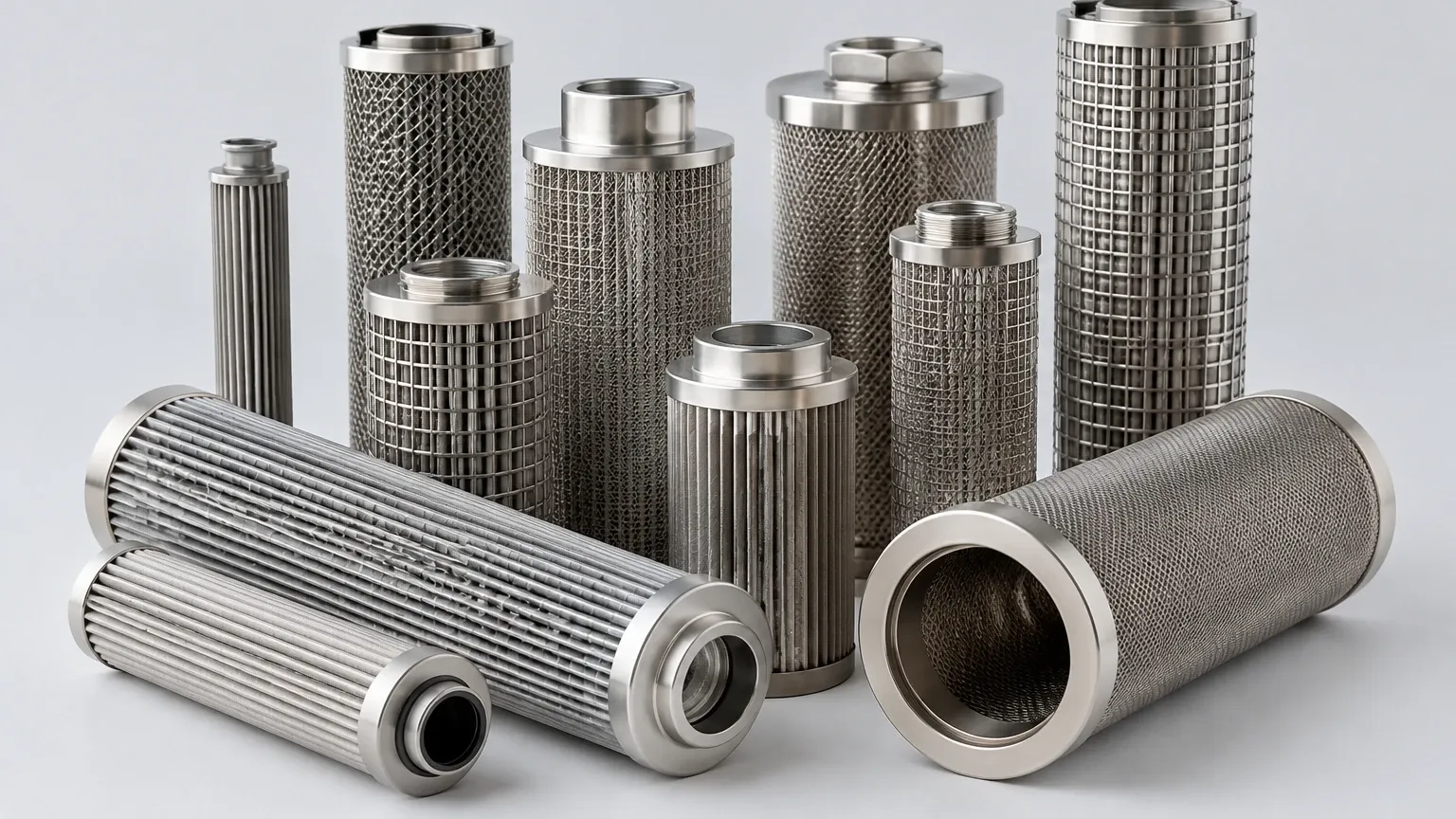
Structural integrity is also a major concern. The housing of the cartridge must be robust enough to withstand the rigors of industrial environments, including mechanical impacts and exposure to corrosive chemicals. For many high-end industrial applications, manufacturers like Kaifil offer specialized Filter Cartridges that utilize stainless steel or other high-performance alloys to ensure that the filtration system remains intact even under extreme pressure or temperature fluctuations.
Comparing Synthetic Media and Stainless Steel Filtration
While many 60926 filter cartridges are designed for short-term or disposable use in respiratory protection, the broader category of industrial filter cartridges often involves a choice between synthetic media and metallic media.
Synthetic cartridges, such as those used in standard 60926 units, are excellent for capturing fine particulates and specific gas molecules through chemical means. However, they are limited by their temperature tolerance and chemical resistance. In contrast, stainless steel filter cartridges are engineered for durability and reusability.
In processes involving high-pressure steam, aggressive solvents, or temperatures exceeding 200°C, synthetic 60926-style media may degrade. In these scenarios, engineers often turn to sintered wire mesh or pleated metal cartridges. While metal filters do not provide the same gas adsorption properties as activated carbon unless specifically modified, they offer superior mechanical filtration for particulates in harsh environments. Often, a stainless steel pre-filter is used to protect more sensitive chemical adsorption cartridges, extending the service life of the 60926 units by removing the bulk of the particulate matter before it reaches the primary filter bed.
Procurement and Compliance for Industrial Applications
For B2B purchasing teams, the procurement of 60926 filter cartridges must be guided by strict compliance standards. In the United States, NIOSH certification is the benchmark. In Europe, similar standards such as EN 14387 apply.
When evaluating suppliers, engineers should request technical data sheets that specify:
1. Test Agents: The specific chemicals the cartridge was tested against.
2. Service Life Curves: Data showing how long the filter lasts at different concentration levels (ppm).
3. Pressure Drop Data: Initial and maximum allowable resistance.
4. Shelf Life: The stability of the chemical impregnants over time when stored in original packaging.
It is also important to consider the "Total Cost of Ownership" (TCO). While a multi-gas 60926 cartridge may have a higher unit price than a simple organic vapor cartridge, the reduction in inventory complexity and the added safety margin for workers exposed to unknown or changing chemical profiles often justifies the investment. Furthermore, implementing high-quality pre-filtration using durable Filter Cartridges can significantly reduce the replacement frequency of these specialized components.
Optimizing Filtration Systems with Custom Solutions
No two industrial facilities have identical filtration needs. While standard 60926 filter cartridges provide a broad safety net, specific high-volume or high-pressure applications may require customized filtration components. Customization allows for the optimization of flow rates, the selection of specific housing materials like 316L stainless steel, and the design of unique form factors that fit into existing machinery.
Manufacturers specializing in precision metal filtration, such as Kaifil, provide the engineering support necessary to bridge the gap between standard safety components and heavy-duty process filtration. By focusing on material selection and filtration accuracy, these custom solutions ensure that the entire filtration train—from the initial intake to the final exhaust—operates at peak efficiency.
When designing a system that utilizes 60926-level protection, engineers should confirm the following before finalizing their selection:
* Contaminant Profile: Is the 60926 rating sufficient for all present hazards, or are there specific chemicals (like carbon monoxide) that require additional specialized media?
* Environmental Conditions: Will extreme heat or humidity affect the adsorption rate of the carbon bed?
* Integration Requirements: Does the cartridge interface correctly with the existing housing or manifold to prevent bypass leakage?
By addressing these technical variables, industrial professionals can ensure that their choice of 60926 filter cartridges provides the necessary protection while maintaining the cost-effectiveness and reliability of their filtration infrastructure.
