


Watts Pleated Filter Cartridges Wpc20 975
In the landscape of industrial water treatment and fluid processing, selecting the appropriate filtration media is a critical engineering decision that impacts system longevity, operational efficiency, and product purity. Among the standard components used for sediment reduction, the watts pleated filter cartridges wpc20 975 represent a widely recognized specification for nominal 20-micron filtration. These cartridges are designed to balance high flow rates with significant dirt-holding capacity, making them a staple in both pre-filtration and point-of-use applications.
For engineers and procurement professionals, understanding the technical nuances of the WPC20 975—and how it compares to high-performance alternatives like stainless steel Filter Cartridges—is essential for optimizing filtration systems. This guide examines the engineering characteristics, performance metrics, and selection criteria for pleated filtration media in demanding industrial environments.
Technical Specifications and Engineering Characteristics
The nomenclature of the watts pleated filter cartridges wpc20 975 provides immediate insight into its functional parameters. The "WPC" designation typically refers to the Watts Pleated Cartridge series, while "20" denotes the nominal micron rating, and "975" indicates the standard length of 9.75 inches. This length is engineered to fit standard 10-inch filter housings, which are ubiquitous in industrial and commercial water systems.
Material Composition and Construction
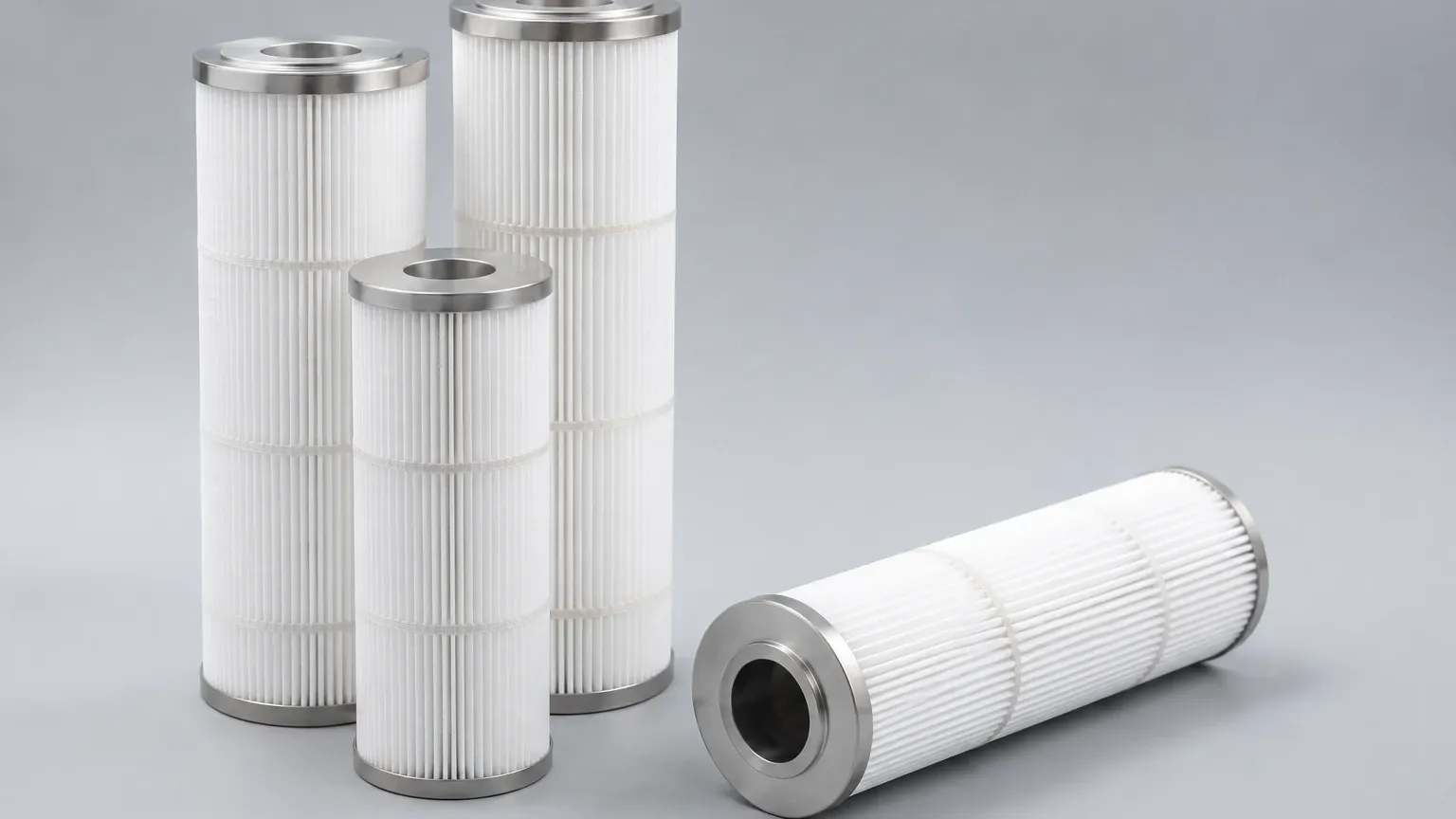
Most pleated cartridges in this class are constructed from specialized polyester media. Unlike depth filters (such as melt-blown or string-wound cartridges), pleated filters utilize a surface-loading mechanism. The media is pleated around a central core—often made of polypropylene—to maximize the available surface area within a compact cylindrical footprint.
Key structural components include:
* Filter Media: Non-woven polyester fibers that provide chemical resistance to a variety of aqueous solutions.
* Core and End Caps: Usually thermally bonded to the media to ensure structural integrity and prevent bypass, which is a common failure point in lower-quality alternatives.
* Gaskets/O-Rings: Typically made of EPDM or Buna-N to provide a secure seal within the housing.
Performance Evaluation: Why Pleated Design Matters
The primary advantage of the pleated geometry found in the watts pleated filter cartridges wpc20 975 is the dramatic increase in surface area compared to cylindrical depth filters. From an engineering perspective, increased surface area correlates directly with three critical performance metrics: pressure drop, dirt-holding capacity, and flow velocity.
Lower Initial Pressure Drop (ΔP)
Fluid dynamics dictate that as the surface area of a filter increases, the flux (flow per unit area) decreases for a given total flow rate. This results in a lower initial pressure drop across the media. For systems relying on centrifugal pumps or gravity feed, maintaining a low ΔP is vital to prevent cavitation and reduce energy consumption.
Extended Service Life
Because the sediment is captured on the large surface area of the pleats, the cartridge can accumulate a greater volume of solids before reaching its terminal pressure drop. In industrial settings, this translates to fewer change-outs, reduced labor costs, and less system downtime. The 20-micron rating of the WPC20 975 is specifically effective for removing larger particulates like sand, scale, and rust, which would otherwise clog finer downstream membranes or precision components.
Washability and Reusability
One of the distinct features of polyester pleated media is its durability. Unlike cellulose or melt-blown polypropylene, these cartridges can often be cleaned and reused in non-critical applications. By gently rinsing the exterior of the pleats, operators can extend the life of the cartridge, further lowering the total cost of ownership.
Material Selection: Polyester vs. Stainless Steel
While the watts pleated filter cartridges wpc20 975 are excellent for standard water applications, industrial engineers must often evaluate whether synthetic media is sufficient for their specific chemical and thermal environments. Kaifil specializes in manufacturing stainless steel Filter Cartridges that serve as high-performance upgrades to standard pleated units.
Temperature and Chemical Compatibility
Polyester and polypropylene components are generally limited to temperatures below 140°F (60°C). In steam filtration, high-temperature chemical processing, or hydraulic systems, synthetic pleats may lose structural integrity or undergo chemical degradation. Stainless steel (304 or 316L) cartridges offer an operating range that exceeds 500°F and provides superior resistance to aggressive solvents and corrosive fluids.
Mechanical Strength
In systems prone to pressure surges or high differential pressures, synthetic pleated filters can suffer from "pleat bunching" or media migration. Stainless steel wire mesh filters, often used in similar 20-micron configurations, provide a rigid structure that maintains its pore geometry even under extreme mechanical stress. For critical OEM applications where bypass is not an option, the transition from a standard WPC20 975 to a custom-engineered metal filter is often necessary.
Installation and Maintenance Protocols
To ensure the watts pleated filter cartridges wpc20 975 perform to their rated specifications, proper installation and monitoring are required. Engineers should prioritize the following protocols:
1. Seating and Alignment: Ensure the cartridge is centered on the bottom guide of the housing before tightening the cap. Improper seating is the most common cause of sediment bypass.
2. Differential Pressure Monitoring: Systems should be equipped with upstream and downstream pressure gauges. A typical WPC20 975 should be replaced when the differential pressure reaches 25-30 PSI, regardless of the visual appearance of the cartridge.
3. Sanitization: In food, beverage, or pharmaceutical pre-filtration, the cartridges and housings must be sanitized regularly to prevent bio-growth within the pleats. While polyester is resistant to mild chlorine solutions, long-term exposure can embrittle the fibers.
Industrial Applications and Compatibility
The versatility of the 20-micron pleated design allows it to function across various sectors. The watts pleated filter cartridges wpc20 975 are frequently found in:
* Reverse Osmosis (RO) Pre-filtration: Protecting expensive RO membranes from large particulate matter that causes mechanical abrasion and fouling.
* Cooling Tower Water: Removing airborne contaminants and scale from circulating water to maintain heat exchanger efficiency.
* Light Chemical Processing: Filtering process water used in the manufacturing of detergents, paints, and textiles.
* Food and Beverage: Serving as a primary sediment filter for ingredient water, ensuring that subsequent fine filtration stages are not overloaded.
When these applications involve higher pressures or require absolute rather than nominal filtration, Kaifil provides customized metal filtration solutions that mirror the dimensions of the 975-series but offer the longevity and precision of industrial-grade alloys.
Total Cost of Ownership (TCO) in Filtration Systems
When specifying Filter Cartridges, purchasing teams often focus on the initial unit price. However, a true B2B evaluation must consider the Total Cost of Ownership (TCO). For a standard watts pleated filter cartridges wpc20 975, the TCO includes:
* Acquisition Cost: The price per unit.
* Disposal Cost: The cost associated with discarding used cartridges, especially if they have filtered hazardous materials.
* Labor Cost: The man-hours required for frequent change-outs.
* Energy Cost: The extra pump power required to push fluid through a partially clogged or high-resistance filter.
In many high-volume industrial processes, replacing a disposable WPC20 975 with a cleanable, permanent stainless steel filter from Kaifil can result in a return on investment (ROI) within less than a year. The ability to ultrasonically clean and sterilize metal filters eliminates the recurring waste stream and labor associated with disposable media.
Conclusion: Making the Informed Selection
The watts pleated filter cartridges wpc20 975 remain a reliable and cost-effective choice for general-purpose sediment removal where temperatures and chemical concentrations are moderate. Their high surface area and low pressure drop make them an ideal baseline for many water treatment designs.
However, for engineers facing more demanding operational parameters—such as high-viscosity fluids, extreme temperatures, or the need for absolute filtration accuracy—evaluating alternative materials is essential. By understanding the relationship between media geometry and fluid dynamics, technical professionals can select the most durable and efficient Filter Cartridges for their specific application. Whether utilizing standard polyester pleated units or moving toward custom-engineered stainless steel solutions, the goal remains the same: achieving consistent, reliable filtration that protects downstream assets and ensures process integrity.
