


Waste Treatment Skids
In modern industrial operations, the management of wastewater has shifted from centralized, large-scale infrastructure toward decentralized, modular solutions. Waste treatment skids represent the pinnacle of this shift, offering self-contained, frame-mounted systems designed to process industrial effluent, recover resources, or treat water for reuse. For engineers and facility managers, selecting the right waste treatment skid involves a deep understanding of fluid dynamics, chemical compatibility, and the critical role of high-precision filtration components.
As industrial regulations regarding discharge tighten globally, the demand for reliable, efficient, and scalable waste treatment skids has grown. These systems must handle diverse waste streams, ranging from oily water in the petrochemical sector to organic-rich effluent in food and beverage processing. At the heart of every effective skid is a robust filtration stage, often utilizing stainless steel components to ensure durability and consistent performance under harsh conditions.
The Architecture of Waste Treatment Skids
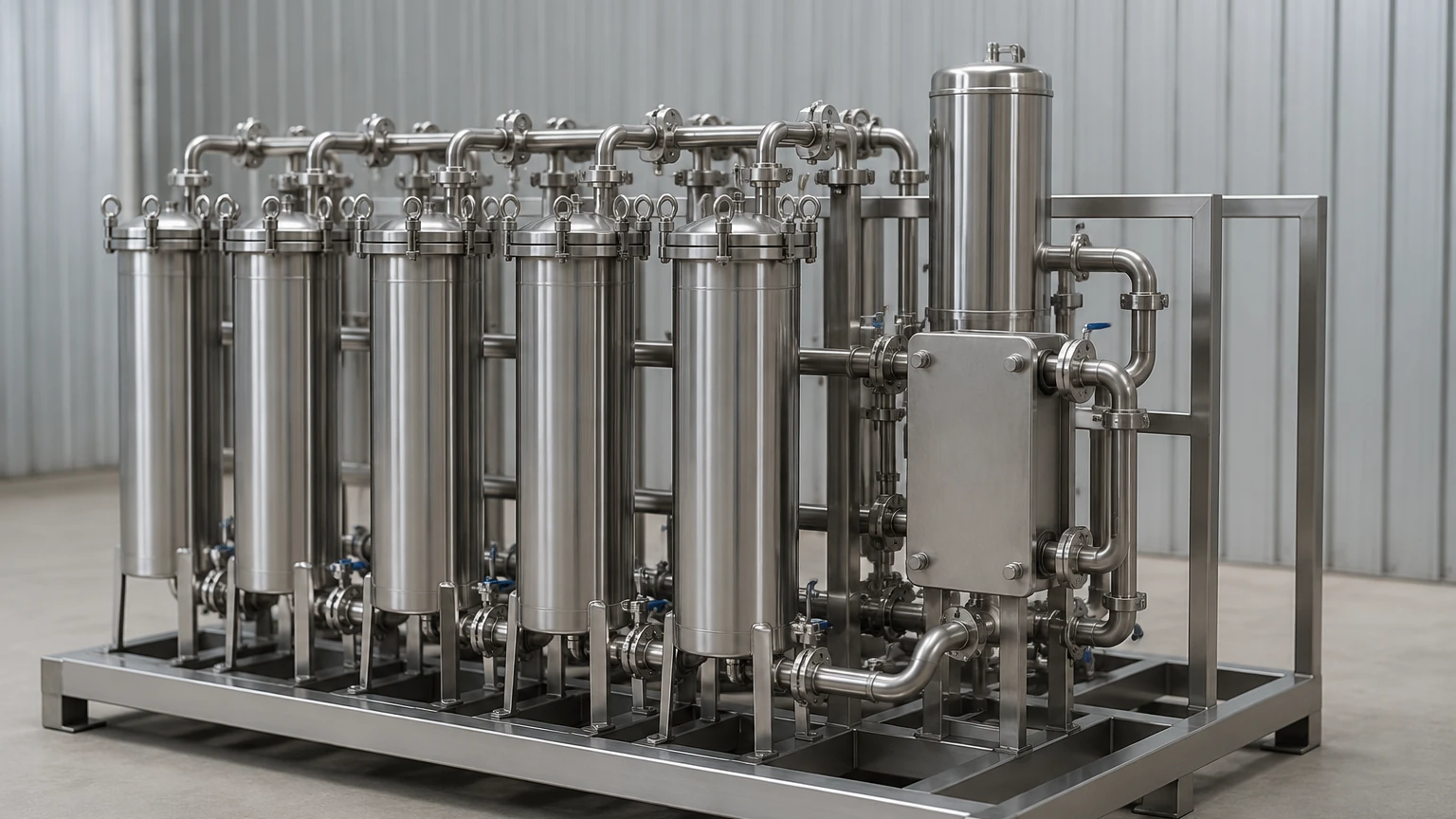
A waste treatment skid is more than just a collection of tanks and pumps; it is a meticulously engineered process environment. By mounting the entire system on a structural steel frame (the "skid"), manufacturers can assemble, test, and calibrate the system in a controlled factory setting before shipping it to the site. This modular approach minimizes on-site installation time and ensures that all components—from sensors to filter housings—are perfectly integrated.
Core Components
Typical waste treatment skids include several key modules:
1. Inlet Manifolds: Where the raw waste stream enters the system.
2. Chemical Dosing Units: For pH adjustment, flocculation, or coagulation.
3. Primary Separation: Often involving gravity settlers or dissolved air flotation (DAF).
4. Filtration Stages: The critical barrier for removing suspended solids and protecting downstream membranes.
5. Control Systems: PLC-based units that monitor flow rates, pressure differentials, and water quality parameters.
The integration of stainless steel filtration solutions within these skids is vital. Unlike plastic or disposable media, stainless steel filter cartridges and wire mesh filters provide the structural integrity required to withstand high-pressure backwashing and aggressive chemical cleaning cycles.
The Role of Stainless Steel Filtration in Waste Treatment
Filtration is often the most critical stage in waste treatment skids, serving as either the primary treatment method or a protective pre-treatment for advanced processes like Reverse Osmosis (RO) or Ultrafiltration (UF). In these demanding environments, stainless steel is the material of choice due to its mechanical strength and thermal stability.
Wire Mesh Filters and Cartridges
Custom wire mesh filters are frequently employed in waste treatment skids to remove specific particle sizes. These filters can be engineered with precise micron ratings to target Total Suspended Solids (TSS) without causing excessive pressure drops. Stainless steel filter cartridges, particularly those manufactured by specialists like Kaifil, offer a high surface area-to-volume ratio, which is essential for skids where space is at a premium.
Precision Metal Filter Components
Beyond standard cartridges, waste treatment skids often require precision metal components such as wedge wire screens or sintered metal filters. These components are designed for "surface filtration," where particles are trapped on the exterior of the media, making them easier to clean via automated backpulsing. This capability is essential for continuous operation in 24/7 industrial environments.
Engineering Considerations for Skid Selection
When specifying waste treatment skids, engineers must look beyond the initial capital expenditure (CAPEX) and focus on technical parameters that dictate long-term reliability and operational efficiency.
Chemical Compatibility and Material Selection
Industrial wastewater can be highly corrosive. The presence of chlorides, acids, or caustic cleaning agents requires careful material selection. While SS304 is standard for many water applications, SS316L is often required for waste treatment skids handling aggressive chemicals or high-salinity streams. In extreme cases, specialized alloys or duplex stainless steels may be necessary for the filter housings and internal mesh components to prevent pitting and stress corrosion cracking.
Filtration Accuracy and Particle Size Distribution
A common mistake in skid design is selecting a filter based on a "nominal" micron rating rather than an "absolute" one. For critical waste treatment processes, absolute-rated stainless steel filters ensure that 99.9% of particles above a specific size are removed. Engineers should request a particle size distribution (PSD) analysis of their waste stream to match the filter mesh accurately, preventing premature clogging or downstream contamination.
Flow Rate and Pressure Drop (ΔP)
The relationship between flow rate and pressure drop is a fundamental engineering constraint. As a filter accumulates debris, the pressure drop across the media increases. A well-designed waste treatment skid will have filters sized to operate at a low initial ΔP, providing a larger "dirt-holding capacity" before cleaning or replacement is required. This is particularly important in skids utilizing high-viscosity fluids or high-solids loading.
Maintenance and Total Cost of Ownership (TCO)
The true value of a waste treatment skid is realized through its lifecycle costs. While disposable filters may have a lower upfront cost, the cumulative expense of replacement media, labor, and disposal of contaminated filters can be staggering.
The Longevity of Stainless Steel
Stainless steel filtration components are designed for longevity. In many waste treatment skids, these filters can be cleaned and reused for years. This not only reduces the TCO but also aligns with corporate sustainability goals by minimizing waste generation. Engineers should evaluate the ease of access to filter housings within the skid layout to ensure that routine maintenance does not lead to extended downtime.
Automated Cleaning Systems
Many modern waste treatment skids incorporate automated backwashing or CIP (Clean-In-Place) systems. These systems use a portion of the treated water or a dedicated cleaning solution to flush trapped particles from the stainless steel mesh. The robustness of metal filters is a prerequisite for these systems, as they must survive the mechanical stresses of rapid flow reversal and pressure spikes.
Customization: Meeting Specific Industry Needs
No two industrial waste streams are identical, which is why customization is a hallmark of high-quality waste treatment skids. A manufacturer's ability to provide tailored filtration solutions is often the deciding factor in project success.
* Food and Beverage: Requires sanitary-grade stainless steel components that meet FDA or EHEDG standards to prevent microbial growth.
* Chemical Processing: Needs filters capable of handling high temperatures and varying pH levels without losing structural integrity.
* Hydraulic and Oil/Water Separation: Focuses on removing fine metallic particles and coalescing oil droplets using specialized mesh structures.
By working with a manufacturer that understands these nuances, engineering teams can ensure that their waste treatment skids are optimized for their specific application rather than relying on a "one-size-fits-all" solution.
Evaluating Manufacturers for Filtration Components
When sourcing components for waste treatment skids, it is essential to partner with a manufacturer that combines metallurgical expertise with advanced production capabilities. Key factors to confirm before moving forward include:
1. Manufacturing Precision: Can the supplier guarantee consistent pore sizes across the entire surface of the wire mesh?
2. Quality Documentation: Does the supplier provide material mill certificates and pressure test reports?
3. OEM Capabilities: Is the manufacturer capable of producing custom sizes and fittings to integrate seamlessly into an existing skid design?
For those seeking professional guidance on selecting the right filtration components for industrial applications, visiting the Main Page of an experienced manufacturer like Kaifil can provide valuable insights into the range of available technologies and customization options.
Conclusion
Waste treatment skids are essential tools for modern industrial environmental management. Their success depends on the synergy between modular design and high-performance components. By prioritizing durable stainless steel filtration and considering the technical requirements of chemical compatibility, flow dynamics, and maintenance, engineers can implement waste treatment solutions that are both effective and economically viable over the long term. As the industry evolves, the focus on precision-engineered, reusable filtration components will continue to be the cornerstone of sustainable and efficient waste treatment technology.
