


Polymer Candle Filter
In the production of high-performance polymers, fibers, and films, the purity of the polymer melt is a critical factor determining the quality of the final product. Contaminants such as degraded gel particles, metal fragments, or environmental dust can lead to fiber breakage, film defects, and equipment downtime. The polymer candle filter serves as the primary defense in these high-pressure, high-temperature environments. Designed to withstand the extreme rheological demands of molten plastics, these filtration components ensure consistent flow and precise particle retention.
For engineers and procurement teams, selecting the right polymer candle filter involves more than just matching a micron rating. It requires a deep understanding of material compatibility, structural integrity under high differential pressure, and the total cost of ownership, which includes the cleanability and lifespan of the filter media. As a specialized manufacturer, Kaifil provides engineered filtration solutions that address these technical challenges, ensuring that industrial processes remain efficient and reliable.
Structural Design of Polymer Candle Filters
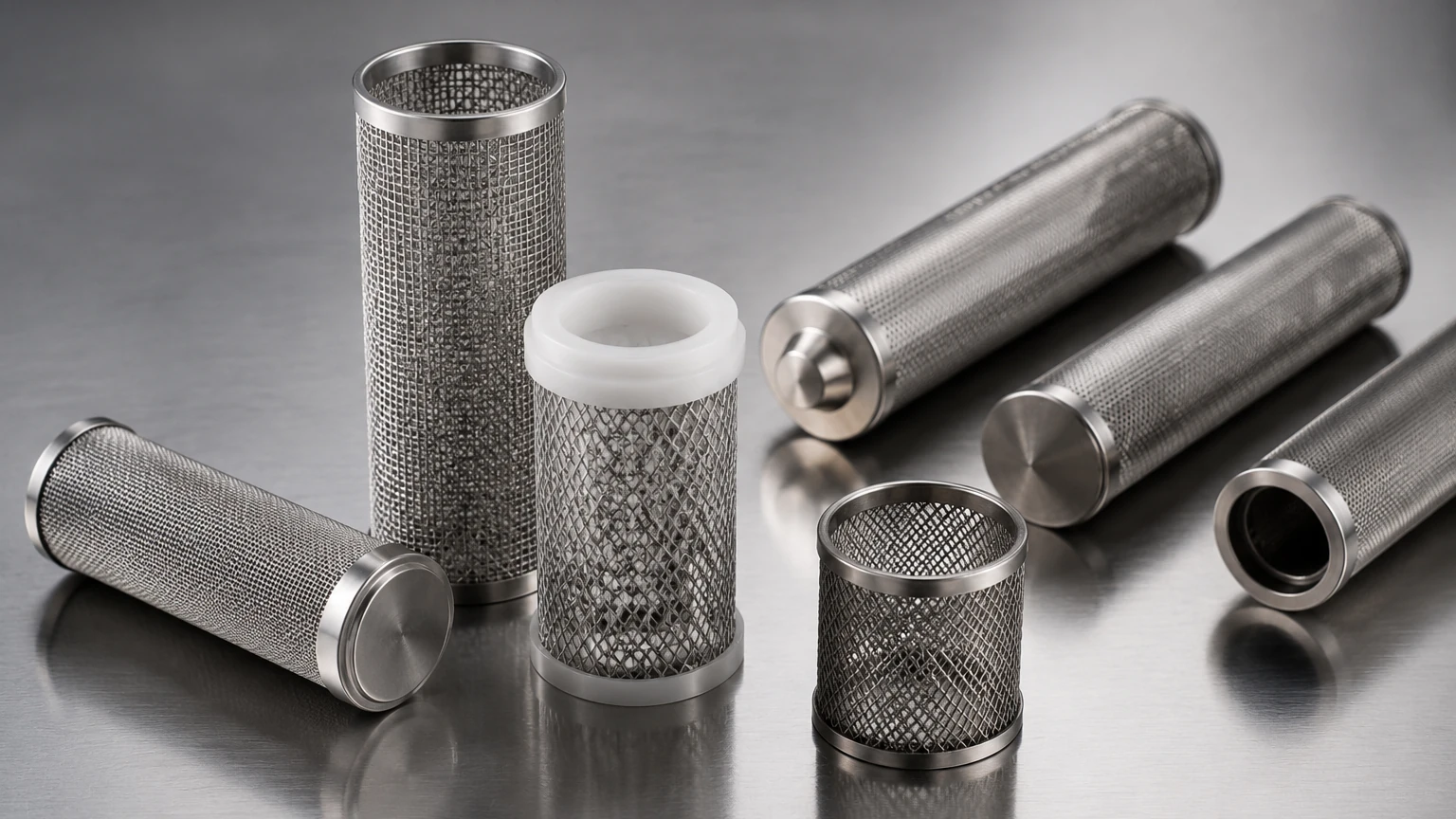
A polymer candle filter is typically a cylindrical filtration element constructed from multiple layers of stainless steel media. Unlike standard liquid filters, these components must operate at temperatures often exceeding 300°C and pressures reaching 300 bar. The structural design is engineered to prevent collapse while maximizing the available filtration area.
The Core Support
At the center of the candle is a perforated or grooved support tube. This core provides the necessary mechanical strength to resist the high differential pressures that occur as the polymer melt passes from the outside of the filter to the inside. The design of the core must balance structural rigidity with a high open area to minimize initial pressure drop.
Filtration Media Layers
The filtration media is the most critical component. Depending on the application, this may consist of sintered metal fiber felt, multi-layer sintered wire mesh, or metal powder. In many high-end polymer applications, a pleated design is utilized. Pleating significantly increases the surface area—often by 2 to 4 times compared to a smooth cylindrical element—which directly translates to a longer service life and lower flux rates.
End Caps and Sealing
The end caps are precision-machined components, usually TIG welded to the filter media and core. Common configurations include threaded connections (such as M32 or M42), bolt-on flanges, or specialized bayonet fittings. Ensuring a leak-proof seal is paramount, as any bypass of unfiltered melt can contaminate the entire production batch.
Engineering Considerations for Filter Selection
When specifying a polymer candle filter, engineers must evaluate the specific rheological properties of the polymer being processed. The behavior of a melt under shear and temperature significantly influences how particles are captured and how the filter behaves over time.
Micron Rating and Efficiency
Filtration ratings for polymer melts typically range from 1 micron to 100 microns. However, it is important to distinguish between absolute and nominal ratings. In fiber spinning, for example, an absolute rating is required to prevent any particle larger than the spinneret hole from passing through. In contrast, for bulk resin production, a nominal rating might be sufficient to manage general purity levels.
Viscosity and Shear Stress
High-viscosity polymers like Polyethylene Terephthalate (PET) or Polyamide (PA) exert significant force on the filter media. If the media is not properly supported, the pleats can compress or "blind," leading to a rapid increase in pressure. Engineers must calculate the expected shear stress to ensure the selected media structure can maintain its geometry under load.
Temperature Stability
Since polymer filtration occurs at elevated temperatures, the thermal expansion coefficients of the filter materials must be considered. Stainless steel grades like 316L are standard due to their excellent corrosion resistance and mechanical stability at high temperatures. In specialized cases involving corrosive additives or extremely high temperatures, alloys like Hastelloy may be required.
Comparison of Filter Media: Sintered Wire Mesh vs. Fiber Felt
The choice of media determines the dirt-holding capacity and the cleanability of the candle filter. Kaifil offers various media types to suit different industrial requirements.
Sintered Metal Fiber Felt
Metal fiber felt is composed of non-woven stainless steel fibers that are sintered together to create a porous, three-dimensional structure. This media is characterized by high porosity (up to 80%) and excellent dirt-holding capacity. Because it acts as a depth filter, it can capture gel-like contaminants that might otherwise deform and pass through a surface filter. It is the preferred choice for high-quality film and fiber production where long on-stream life is required.
Multi-layer Sintered Wire Mesh
Sintered wire mesh consists of several layers of woven wire cloth bonded together through a heat-treatment process. This creates a robust, stable pore structure that is easy to clean. Wire mesh provides surface filtration with very precise pore sizes. While its dirt-holding capacity is generally lower than fiber felt, its mechanical strength and ease of ultrasonic cleaning make it ideal for applications where the filter is frequently recycled.
Performance Metrics: Pressure Drop and Dirt-Holding Capacity
In a B2B production environment, the performance of a polymer candle filter is measured by its "on-stream life." This is the duration the filter can operate before the differential pressure ($\\Delta P$) reaches a predefined limit, requiring a change-out.
1. Initial Clean Pressure Drop: This is the resistance offered by the clean filter and the housing. A lower initial $\\Delta P$ provides more "headroom" for contaminant loading.
2. Contaminant Loading Phase: As particles are trapped, the $\\Delta P$ increases. In depth filtration (fiber felt), this increase is often linear for a significant portion of the cycle.
3. Terminal Pressure Drop: Once the filter pores are largely filled, the pressure rises exponentially. Reaching this point necessitates immediate replacement or cleaning to prevent media rupture or polymer degradation due to excessive residence time.
By optimizing the filtration area through pleating and selecting high-porosity media, manufacturers can significantly extend the time between change-outs, reducing labor costs and material waste.
Maintenance, Cleaning, and Integrity Testing
One of the primary advantages of stainless steel polymer candle filters is that they are cleanable and reusable. However, the cleaning process must be rigorous to ensure the media is restored to near-original performance without damaging the delicate fibers.
Cleaning Methods
* Pyrolysis (Vacuum Burn-off): The filters are placed in a vacuum furnace where the polymer is thermally decomposed into carbon and gases. This is the most common first step for removing bulk polymer.
* TEG (Triethylene Glycol) Cleaning: A chemical cleaning method used for polyesters, where hot TEG dissolves the polymer residues.
* Ultrasonic Cleaning: After the polymer is removed, ultrasonic baths with specialized detergents are used to dislodge inorganic particles trapped deep within the media.
* High-Pressure Water Jetting: Used for the exterior of the candle to remove stubborn surface deposits.
Integrity Testing
After cleaning, it is essential to verify that the filter is still fit for service. The Bubble Point Test is the standard method used to check for leaks or damaged pores. By submerging the filter in a fluid and applying air pressure, technicians can identify the pressure at which the first bubble appears. A lower-than-expected bubble point indicates a hole or a failed weld, meaning the filter must be decommissioned.
Customization and OEM Capabilities
Every polymer processing line has unique requirements based on the machinery used (e.g., Barmag, Neumag, or Rieter systems) and the specific polymer chemistry. Customization is often necessary to optimize performance. On the Main Page of our technical resource, we detail how custom engineering supports industrial efficiency.
Customization options typically include:
* Variable Lengths and Diameters: Matching existing housing dimensions exactly to avoid bypass.
* Specialized End Fittings: Custom threads, o-ring grooves, or flat gaskets to ensure compatibility with legacy equipment.
* Graded Density Media: Using multiple layers of different micron ratings to provide pre-filtration and final filtration in a single candle, further extending service life.
* Reinforced Cores: For ultra-high pressure applications where standard cores might fail.
Conclusion
The polymer candle filter is a sophisticated engineering component that plays a vital role in modern polymer science. By selecting the appropriate media, ensuring structural integrity, and implementing a robust cleaning and testing regimen, industrial operators can achieve higher product quality and lower operational costs. Whether for BOPET film, nylon fiber, or specialty resin production, understanding the technical nuances of these filters is essential for any engineer tasked with maintaining a high-performance filtration system. For more information on custom filtration components and engineering support, visit our Main Page.
