


3-a Sanitary
In the landscape of industrial processing, particularly within the food, beverage, dairy, and pharmaceutical sectors, the term "sanitary" carries a weight far beyond simple cleanliness. It represents a rigorous set of engineering standards designed to ensure that equipment can be effectively cleaned, sterilized, and maintained to prevent the contamination of consumable products. At the forefront of these requirements are the 3-A Sanitary Standards. These standards, managed by 3-A Sanitary Standards, Inc. (SSI), provide a framework for the design and fabrication of equipment used in hygienic applications.
For engineers and procurement professionals, understanding the nuances of 3-A sanitary design is critical when selecting filtration components. Filtration is often a final or intermediate step where the product is most vulnerable to microbial growth or cross-contamination. Utilizing components that adhere to these standards—such as those found on the Main Page of specialized manufacturers—ensures that the filtration process does not become a bottleneck for safety or compliance.
The Evolution and Purpose of 3-A Sanitary Standards
The 3-A Sanitary Standards originated in the 1920s through a collaborative effort between three professional associations representing regulatory sanitarians, equipment fabricators, and processors. The goal was to create a unified set of criteria that would satisfy the stringent requirements of the dairy industry. Today, these standards have expanded to encompass a wide range of food and pharmaceutical processing equipment.
The primary objective of 3-A SSI is to protect public health by promoting hygienic equipment design. This is achieved through the "Third-Party Verification" (TPV) program, which requires equipment manufacturers to undergo independent audits to confirm that their products meet the specific criteria outlined in the standards. For a filter housing or a stainless steel filter cartridge to be considered truly compliant, it must facilitate easy cleaning (often through Clean-In-Place or CIP systems) and prevent the accumulation of organic matter that could harbor pathogens.
Material Specifications for Sanitary Filtration Systems
Material selection is the foundation of any 3-a sanitary component. In industrial filtration, the materials must not only be resistant to the product being filtered but also to the aggressive chemicals used during the cleaning and sterilization cycles.
Stainless Steel Grades
The most common materials used in 3-A compliant filtration are AISI 300-series stainless steels. Specifically, 316L stainless steel is preferred for its superior corrosion resistance compared to 304 stainless steel. The "L" denotes low carbon content, which is essential for components that require welding. Low carbon prevents carbide precipitation during the welding process, which otherwise could lead to intergranular corrosion—a major risk in sanitary environments where acidic or alkaline cleaning agents are frequently used.
Elastomers and Polymers
Filters require seals, gaskets, and O-rings to maintain system integrity. In a 3-a sanitary application, these elastomers must be non-toxic, non-absorbent, and resistant to degradation. Common materials include EPDM, Silicone, and PTFE (Teflon). These materials must comply with FDA 21 CFR 177.2600 and meet the specific 3-A standards for multiple-use rubber and rubber-like materials. Engineering teams must verify that the selected elastomer is compatible with both the process fluid and the intended sterilization temperatures, which can often exceed 130°C (266°F) in Steam-In-Place (SIP) operations.
Geometric Design and Surface Finish Requirements (Ra)
Perhaps the most distinctive feature of 3-a sanitary equipment is the emphasis on surface topography and geometric configuration. It is not enough for a material to be "clean"; its physical structure must actively prevent the entrapment of particles.
Surface Roughness (Ra)
The standards specify a maximum surface roughness, typically measured as Ra (Roughness Average). For most 3-A applications, a finish of 32 micro-inches (0.8 μm) Ra or better is required on all product-contact surfaces. To achieve this, manufacturers utilize mechanical polishing and electropolishing. Electropolishing is particularly effective for complex filtration components like wire mesh or sintered metal, as it removes the "peaks and valleys" on a microscopic level, creating a smooth, passive surface that is highly resistant to bacterial adhesion.
Hygienic Geometry
Designers must avoid "dead legs"—areas in the piping or filter housing where the product can stagnate and escape the flow of cleaning solutions. 3-A standards mandate specific radii for internal corners (typically a minimum of 1/4 inch or 6.35 mm) to ensure that brushes or CIP fluids can reach every surface. All joints must be accessible for inspection, and the equipment must be self-draining to prevent the pooling of liquids after a cleaning cycle.
The Role of Wire Mesh and Sintered Metal in Sanitary Applications
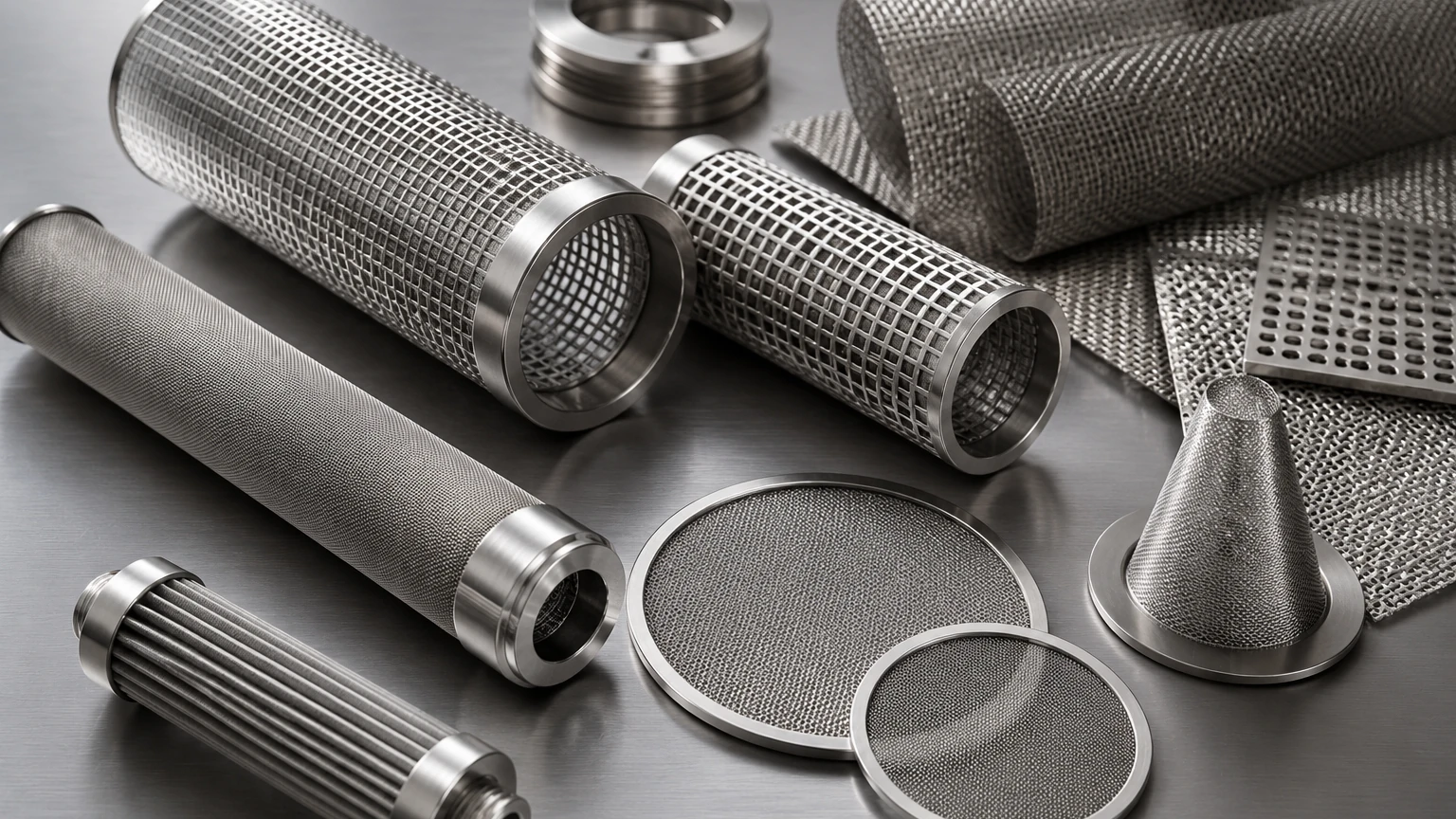
In industrial filtration, the filter media itself must meet sanitary expectations. Kaifil specializes in stainless steel wire mesh and precision metal filter components that are engineered for these demanding environments. Traditional fabric or polymer filters may shed fibers or harbor bacteria within their porous structures, making them difficult to validate in a 3-a sanitary context.
Welded Construction
Sanitary metal filters are typically constructed using advanced welding techniques, such as TIG (Tungsten Inert Gas) or plasma welding, rather than adhesives or resins. Adhesives can degrade over time, leaching chemicals into the product stream or creating crevices where bacteria can grow. A fully welded stainless steel cartridge provides a robust, monolithic structure that can withstand high differential pressures and repeated sterilization cycles without compromising its hygienic integrity.
Permeability and Precision
For B2B applications in the chemical and food sectors, the balance between filtration accuracy and cleanability is paramount. Sintered metal mesh provides a controlled pore size distribution, allowing for precise particle retention. Because these components are made of 316L stainless steel, they can be subjected to ultrasonic cleaning or backpulsing, ensuring that the filter media is restored to its original performance levels without the need for frequent, costly replacements.
Clean-In-Place (CIP) and Sterilization-In-Place (SIP) Compatibility
One of the most significant operational advantages of 3-a sanitary filtration components is their compatibility with automated cleaning systems. In modern industrial facilities, disassembling equipment for manual cleaning is labor-intensive and introduces the risk of human error or re-contamination.
CIP Processes
CIP involves circulating detergents, acid rinses, and water through the filtration system at high velocities. A 3-A compliant filter housing is designed so that the velocity of the cleaning fluid creates enough turbulence to scrub the internal surfaces. The filter elements must be robust enough to handle the chemical concentrations and the thermal shock associated with transitioning from cold process fluids to hot cleaning solutions.
SIP Processes
For pharmaceutical and high-purity food applications, sterilization is required. This usually involves the introduction of saturated steam into the system. Components must be rated for the pressure and temperature of the steam. Engineering considerations include the thermal expansion of the stainless steel and the integrity of the seals under prolonged heat exposure. Using 3-a sanitary certified components ensures that the system can be validated to achieve a specific Sterility Assurance Level (SAL).
Selection Criteria for Engineers and Purchasing Teams
When sourcing filtration solutions for a sanitary process, engineers should look beyond the initial purchase price and consider the total cost of ownership and compliance risks. Key questions to ask include:
1. Is the component TPV certified? Verify that the manufacturer holds a current 3-A symbol authorization for the specific equipment type.
2. What is the documented Ra value? Ensure that the surface finish meets the 32 micro-inch requirement and request a profilometer report if necessary.
3. Are the elastomers compliant? Confirm that all O-rings and gaskets have the necessary FDA and 3-A certifications.
4. Is the design self-draining? Evaluate the housing orientation and port locations to ensure no liquid remains after the process is complete.
5. What is the expected life cycle? Stainless steel filters, while more expensive initially than disposable options, offer significant long-term savings through durability and cleanability.
For those seeking customized filtration solutions that meet these rigorous standards, reviewing the technical capabilities on the Main Page of a dedicated manufacturer can provide the necessary engineering data to make an informed decision.
Validation, Maintenance, and Operational Life Cycles
Compliance with 3-a sanitary standards is not a one-time event; it requires ongoing vigilance. Regular inspection of the filtration media is necessary to check for signs of mechanical wear, pitting corrosion, or seal degradation. In high-vibration environments or systems with frequent pressure spikes, the welds of the filter cartridge should be inspected for stress fractures.
Maintenance protocols should include the replacement of elastomers at scheduled intervals, as these components are typically the first to fail under the stress of CIP/SIP cycles. By maintaining a strict schedule and using high-quality, 3-A compliant replacement parts, industrial facilities can ensure consistent product quality and avoid the catastrophic costs associated with product recalls or regulatory fines.
In conclusion, 3-a sanitary standards serve as a vital benchmark for quality and safety in industrial filtration. By prioritizing hygienic design, selecting the appropriate stainless steel grades, and ensuring rigorous surface finishes, engineers can build filtration systems that are not only efficient but also inherently safe for the end consumer. As global regulations become increasingly stringent, the adoption of these standards is no longer optional for those aiming to compete in the high-purity processing markets.
