


Rotary Drum Thickener
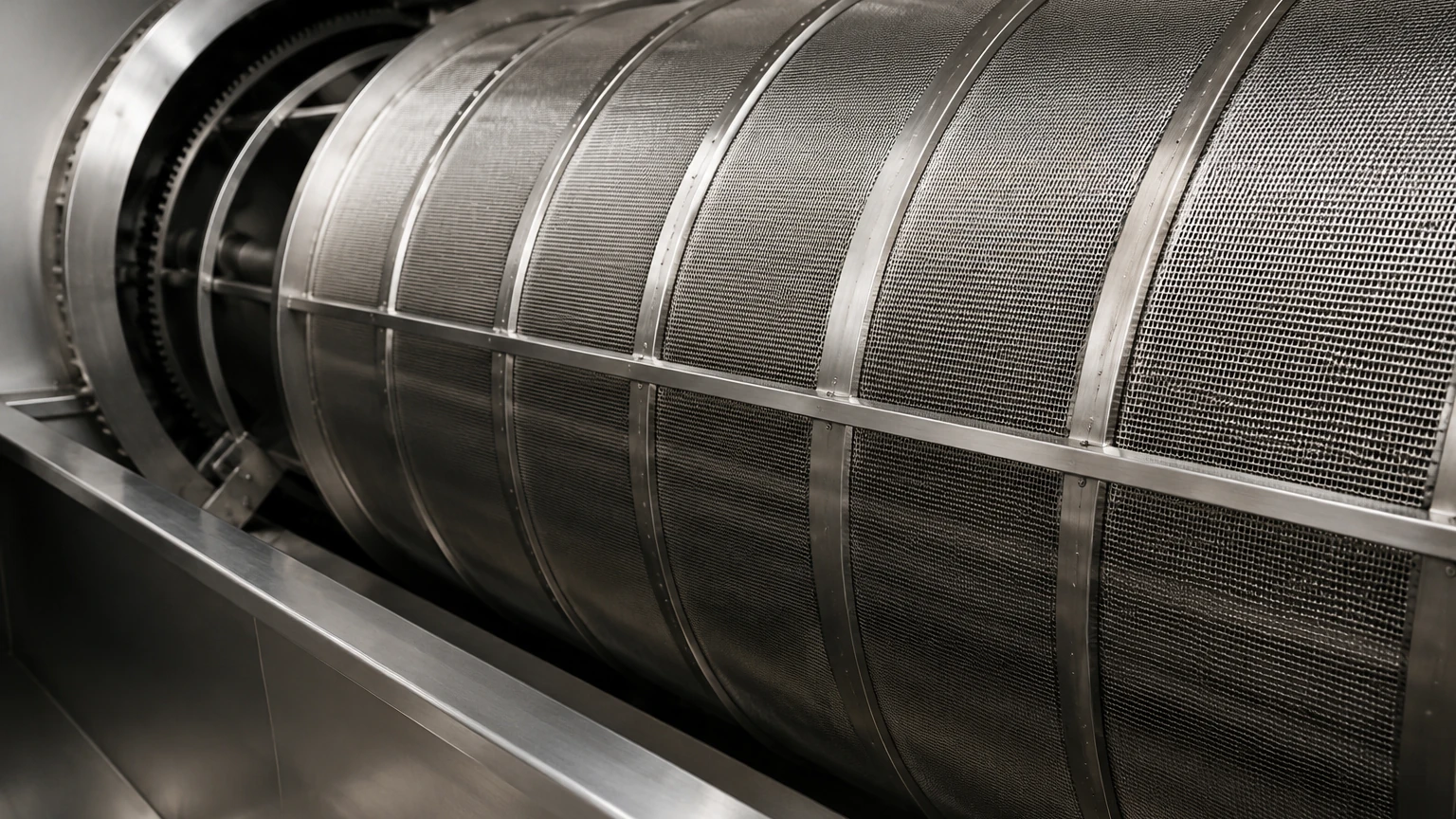
In the landscape of industrial liquid-solid separation, the rotary drum thickener (RDT) serves as a critical component for volume reduction and pre-treatment. For engineers and facility managers in sectors ranging from municipal wastewater to chemical processing and food production, understanding the technical nuances of these systems is essential for optimizing operational efficiency. A rotary drum thickener is designed to increase the concentration of solids in a slurry by removing a significant portion of the liquid phase through gravity filtration, facilitated by a rotating cylindrical screen.
At the heart of any effective thickening system is the filter media. As a specialist in custom stainless steel filtration solutions, Kaifil provides the precision-engineered components necessary to ensure these machines operate at peak performance. For detailed technical specifications and to explore custom filtration components, visit the Main Page to review product options and application support.
The Mechanical Principles of Rotary Drum Thickening
The operation of a rotary drum thickener relies on the fundamental principle of gravity-assisted filtration. Unlike centrifugal separators that use high-speed rotation to generate G-forces, the RDT uses a low-speed rotating drum to gently separate water from solids. The process typically begins with the introduction of a flocculated slurry into the interior of the drum.
As the drum rotates, the slurry is tumbled. The liquid (filtrate) passes through the openings in the filter mesh or perforated plate, while the solids are retained on the surface. Internal flights or screw conveyors within the drum guide the thickening solids toward the discharge end. The rotation speed, usually adjustable via a variable frequency drive (VFD), is a critical parameter that determines the residence time of the material and, consequently, the final solids concentration.
The Importance of Flocculation
Before entering the rotary drum thickener, most industrial slurries require chemical conditioning, typically through the addition of polymers (flocculants). These chemicals cause fine particles to clump together into larger "flocs." The size and stability of these flocs are paramount; if the flocs are too small, they may pass through the filter mesh or blind the openings. If they are too fragile, the mechanical action of the rotating drum may break them apart, leading to poor capture rates. Engineering the right chemical-mechanical balance is the first step in successful thickening.
Engineering Considerations for Filter Media
The selection of the filter media is perhaps the most critical engineering decision in the design of a rotary drum thickener. The media must balance three competing factors: filtration accuracy (micron rating), hydraulic capacity (flow rate), and mechanical durability.
Material Selection: Stainless Steel vs. Synthetics
While some applications use synthetic cloths, industrial-grade rotary drum thickeners frequently utilize stainless steel wire mesh or wedge wire. Stainless steel, particularly grades 304 and 316L, offers several advantages:
1. Chemical Compatibility: In chemical processing or pharmaceutical applications, the filter media must withstand aggressive pH levels and corrosive cleaning agents.
2. Thermal Stability: For high-temperature slurries, stainless steel maintains its structural integrity where polymers might soften or degrade.
3. Mechanical Strength: The abrasive nature of some industrial solids can quickly wear down synthetic fibers. Stainless steel wire mesh provides superior abrasion resistance, extending the replacement cycle.
4. Cleaning Efficiency: Stainless steel surfaces are generally easier to sanitize, which is a non-negotiable requirement in food and beverage applications.
Mesh Configuration and Micron Ratings
The aperture size of the mesh must be carefully matched to the particle size distribution of the flocculated sludge. If the mesh is too coarse, the filtrate will contain high levels of suspended solids, reducing the efficiency of the downstream treatment. Conversely, if the mesh is too fine, the drum will reach its hydraulic limit prematurely, leading to overflow issues. Engineers must also consider the "open area" percentage of the mesh, which directly impacts the flow rate per square meter of filter surface.
Key Evaluation Criteria for Purchasing Managers
When evaluating a rotary drum thickener for a specific industrial application, purchasing teams and engineers should focus on several key performance indicators (KPIs) to ensure long-term ROI.
Solids Loading and Capture Rate
The primary goal of a thickener is to achieve a specific solids concentration (e.g., increasing from 0.5% to 5% solids). The capture rate—the percentage of total suspended solids retained by the drum—should ideally exceed 95% for most industrial applications. A lower capture rate indicates that solids are "leaking" into the filtrate, which can overload secondary treatment systems or violate environmental discharge permits.
Hydraulic Loading Capacity
This refers to the volume of slurry the thickener can process per hour. This is influenced by the drum diameter, length, and the effective filtration area of the mesh. It is vital to specify the maximum anticipated flow rate, including peak surge periods, to avoid system bottlenecks.
Polymer Consumption
Since chemical conditioning represents a significant portion of the total cost of ownership (TCO), the thickener's design should aim to minimize polymer dosage. Efficient drum designs that provide gentle agitation help maintain floc integrity, reducing the need for excess chemicals.
Energy Consumption and Maintenance Requirements
Rotary drum thickeners are generally energy-efficient compared to centrifuges. However, maintenance costs can add up if the system is not designed for easy access. Look for designs that allow for rapid inspection of the internal spray bars (used for backwashing the mesh) and easy replacement of the filter segments.
Customization and OEM Solutions in Filtration
No two industrial waste streams are identical. A rotary drum thickener used in a pulp and paper mill faces different challenges than one used in a poultry processing plant. This is where customization becomes a competitive advantage.
Kaifil specializes in manufacturing the precision metal components that define the performance of these systems. From custom-sized wire mesh cylinders to reinforced filter cartridges designed for high-pressure backwashing, the ability to tailor the filtration interface to the specific characteristics of the slurry is essential. Whether you are an OEM building new thickening equipment or an end-user looking to upgrade an existing system's performance, selecting the right filtration partner is key. More information on customized metal filtration components can be found on the Main Page.
Common Risks and Operational Challenges
Despite their relative simplicity, rotary drum thickeners are subject to several operational risks that can impede performance.
Blinding and Clogging
Media blinding occurs when fats, oils, greases (FOG), or fine particles become lodged within the mesh openings. This reduces the effective filtration area and causes the drum to overflow. To mitigate this, most RDTs are equipped with an external or internal spray bar system. The frequency and pressure of the backwash cycle must be optimized based on the "stickiness" of the solids.
Uneven Cake Distribution
If the thickener is not level or if the internal screw conveyor is worn, solids may accumulate in one area of the drum. This uneven loading can cause mechanical stress on the drive motor and bearings, leading to premature failure. Regular mechanical inspections are necessary to ensure the drum remains balanced.
Wear and Corrosion
In applications involving abrasive solids (like sand or mineral tailings), the filter media will eventually wear thin. Similarly, in high-chloride environments, even 304 stainless steel may suffer from pitting corrosion. Specifying 316L stainless steel or specialized coatings can alleviate these risks in demanding environments.
Information to Confirm Before Procurement
Before moving forward with a rotary drum thickener project, engineers should have a clear data set to share with manufacturers and filtration specialists. Confirming the following will streamline the selection process:
* Feed Characteristics: What is the initial solids concentration? What is the chemical composition (pH, temperature, presence of oils)?
* Target Output: What is the required final solids percentage? What is the acceptable limit for solids in the filtrate?
* Flow Rates: What is the average and peak hydraulic load (m³/h or GPM)?
* Space Constraints: What is the footprint available for the installation, including clearance for maintenance and piping?
* Integration: How will the thickener interface with existing SCADA or control systems? Is a local control panel required?
Conclusion
The rotary drum thickener remains a cornerstone of efficient industrial separation. By focusing on the engineering of the filter media and the mechanical dynamics of the drum, facilities can achieve significant volume reduction, lower disposal costs, and improved downstream processing. As industries move toward more sustainable and cost-effective waste management, the role of high-quality, durable filtration components becomes even more pronounced. For those seeking reliable, custom-engineered stainless steel filtration solutions to support their thickening operations, Kaifil offers the technical expertise and manufacturing capabilities to meet the most demanding industrial requirements. Explore our full range of capabilities on the Main Page.
