


Tube Bundle Heat Exchanger
In the landscape of industrial thermal management, the tube bundle heat exchanger—commonly referred to as the shell and tube heat exchanger—remains the most prevalent design for high-pressure and high-temperature applications. Its robust architecture allows for the efficient transfer of heat between two fluids without them coming into direct contact. For engineers and procurement specialists, understanding the nuances of tube bundle design, material selection, and the critical role of auxiliary filtration is essential for maintaining system integrity and optimizing operational efficiency.
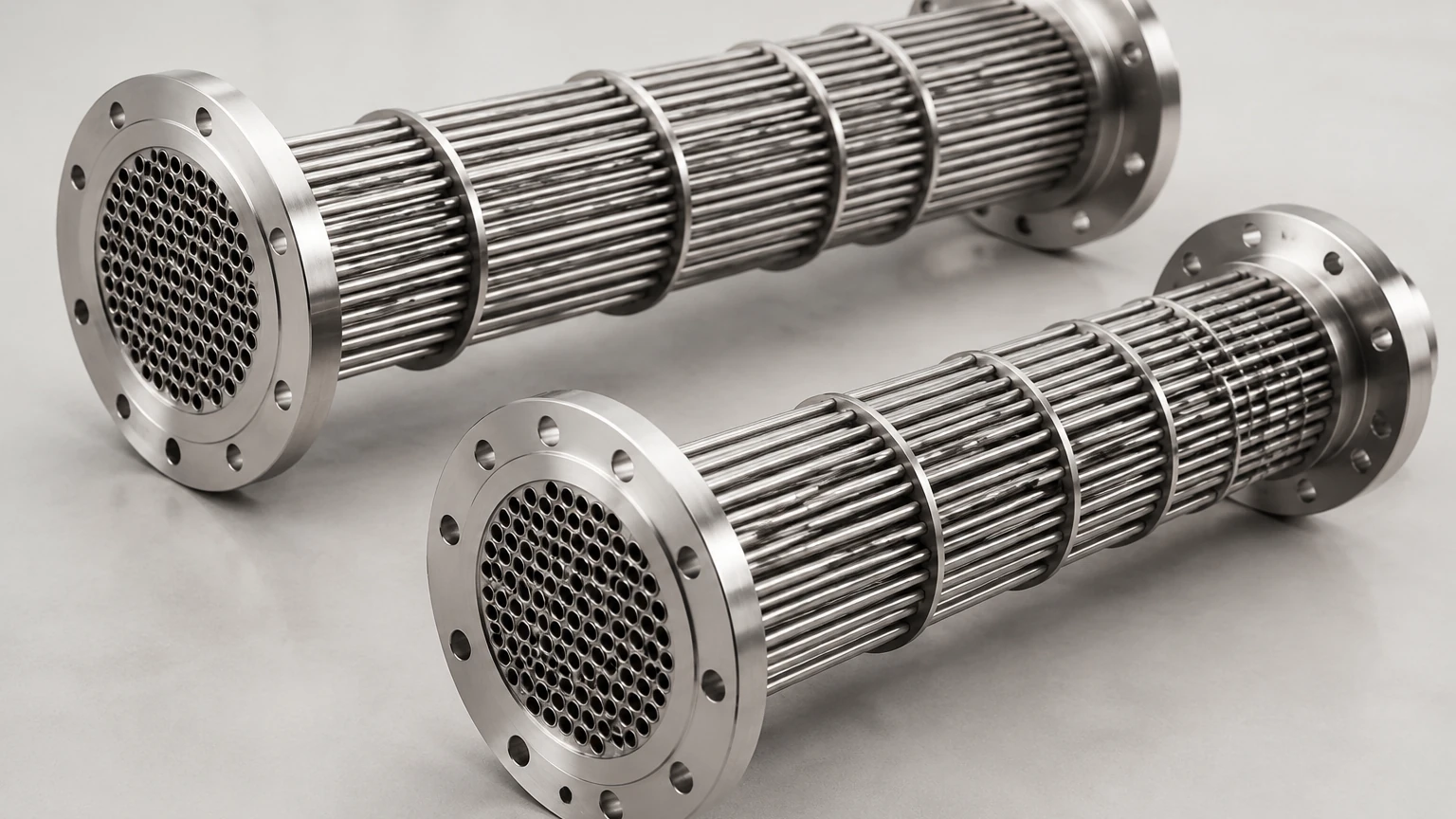
A tube bundle heat exchanger consists of a series of tubes, through which one fluid flows (the tube-side fluid), enclosed within a cylindrical shell through which a second fluid flows (the shell-side fluid). The efficiency of this system is predicated on the surface area of the tube bundle and the thermal conductivity of the materials used. However, the performance of these units is frequently compromised by particulate accumulation and fouling, making the integration of high-quality stainless steel filtration components a necessity rather than an option.
Engineering Fundamentals of Tube Bundle Design
The "bundle" is the core component of the exchanger, comprising the tubes, tubesheets, baffles, and tie rods. The configuration of these elements determines the flow patterns and the resulting heat transfer coefficient. There are three primary configurations used in industrial settings:
Fixed Tubesheet Exchangers
In this design, the tubesheets are welded directly to the shell. This is a cost-effective solution that provides a sturdy structure; however, it lacks the flexibility to handle significant thermal expansion between the shell and the tubes. Because the bundle cannot be removed, cleaning the shell side requires chemical processes rather than mechanical scrubbing.
U-Tube Heat Exchangers
As the name suggests, the tubes are bent into a U-shape and secured to a single tubesheet. This design inherently accommodates thermal expansion, as the U-bend end is free to move within the shell. While the tube bundle heat exchanger in a U-tube configuration is easier to remove for shell-side cleaning, the internal cleaning of the U-bends can be technically challenging, often requiring specialized high-pressure water jets or chemical solvents.
Floating Head Exchangers
This is the most versatile and expensive design. One tubesheet is fixed to the shell, while the other is allowed to "float" within the shell. This eliminates thermal stress and allows the entire tube bundle to be removed for comprehensive cleaning and inspection of both the tube and shell sides. This is often the preferred choice for processes involving dirty or highly corrosive fluids.
Thermal Dynamics and Flow Optimization
The performance of a tube bundle heat exchanger is governed by the principles of thermodynamics, specifically the Log Mean Temperature Difference (LMTD). To maximize heat transfer, engineers often design for turbulent flow. Turbulent flow breaks down the stagnant boundary layer of fluid near the tube walls, significantly increasing the rate of heat exchange.
Baffles play a crucial role in this process. By supporting the tubes and directing the shell-side fluid across the tube bundle in a cross-flow pattern, baffles increase the residence time and turbulence of the fluid. However, increased turbulence also leads to higher pressure drops. Finding the equilibrium between heat transfer efficiency and allowable pressure drop is a primary task during the engineering phase. For more technical insights into the components that support these industrial processes, you can visit our Main Page.
The Critical Role of Filtration in Protecting Tube Bundles
One of the most significant threats to the longevity of a tube bundle heat exchanger is fouling. Fouling occurs when unwanted materials deposit on the heat transfer surfaces, creating an insulating layer that reduces efficiency and increases pressure drop. In many industrial environments, the fluids entering the exchanger contain suspended solids, scale-forming minerals, or biological organisms.
Types of Fouling
1. Particulate Fouling: Sediment, sand, or rust particles that settle on the tube surfaces.
2. Scaling: The crystallization of salts (like calcium carbonate) from the fluid onto the hot metal surfaces.
3. Biological Fouling: The growth of algae, bacteria, or fungi, which is particularly common in cooling water systems.
4. Corrosion Fouling: The accumulation of corrosion products that adhere to the tube walls.
To mitigate these risks, precision filtration is required at the inlet of the heat exchanger. Stainless steel wire mesh filters and filter cartridges are the preferred choice for these applications due to their ability to withstand high temperatures and pressures while providing precise micron ratings. By removing particulates before they enter the tube bundle heat exchanger, operators can significantly extend the interval between maintenance cycles and prevent localized pitting corrosion caused by under-deposit accumulation.
Material Selection for Harsh Industrial Environments
The choice of material for the tube bundle is dictated by the chemical composition of the fluids, the operating temperature, and the pressure requirements. Stainless steel is the industry standard for most demanding applications due to its excellent corrosion resistance and mechanical strength.
* AISI 304/304L: Suitable for general-purpose applications where moderate corrosion resistance is required.
* AISI 316/316L: Contains molybdenum, which provides superior resistance to chlorides and pitting, making it ideal for pharmaceutical and chemical processing.
* Duplex Stainless Steel: Offers higher strength and better resistance to stress corrosion cracking compared to austenitic steels, often used in offshore and heavy industrial environments.
At Kaifil, we specialize in manufacturing the stainless steel filtration components that protect these high-value assets. Our expertise in material science ensures that the filters we provide are compatible with the metallurgy of the tube bundle heat exchanger, preventing galvanic corrosion and ensuring a long service life.
Maintenance Strategies and Component Replacement
Even with robust pre-filtration, tube bundle heat exchangers require a structured maintenance program. The "Total Cost of Ownership" (TCO) of a heat exchanger is heavily influenced by its maintenance requirements. A well-maintained unit can operate for decades, whereas a neglected one may fail within years.
Monitoring Pressure Drop
Engineers should monitor the differential pressure (ΔP) across both the filtration system and the heat exchanger. A sudden increase in ΔP across the exchanger typically indicates fouling within the tube bundle. Conversely, a steady increase in ΔP across the filter suggests that the filtration system is successfully capturing debris and may require cleaning or element replacement.
Mechanical vs. Chemical Cleaning
Mechanical cleaning involves using brushes or high-pressure water to physically remove deposits. This is effective for straight-tube designs. Chemical cleaning (Cleaning-in-Place or CIP) uses specialized acids or detergents to dissolve scale and organic matter. When using CIP, it is vital to ensure that the cleaning agents are compatible with both the tube bundle and the internal filter elements.
Replacement Cycles
While the shell of a heat exchanger may last 20-30 years, the tube bundle and the associated filtration elements are considered wear components. Regular inspection of the tube bundle for thinning walls (using eddy current testing) and the filtration mesh for signs of fatigue or bypass is essential for preventing catastrophic failure.
Customization and OEM Solutions for Filtration Components
Every industrial process has unique requirements regarding flow rates, fluid viscosity, and contaminant loading. Off-the-shelf filtration solutions often fall short in specialized tube bundle heat exchanger applications. This is where custom engineering becomes a critical advantage.
Customized stainless steel filter cartridges and wire mesh components can be engineered to fit specific housing dimensions while meeting precise filtration accuracies (from 1 micron to several millimeters). For OEM manufacturers of heat exchangers, partnering with a specialist like Kaifil allows for the integration of high-performance filtration directly into the system design. This ensures that the end-user receives a turnkey solution optimized for their specific fluid dynamics.
When specifying filtration for a tube bundle heat exchanger, engineers should confirm the following:
* Micron Rating: Does the filter capture particles small enough to prevent tube blockage?
* Material Compatibility: Is the filter housing and element resistant to the process fluid?
* Pressure Rating: Can the filter withstand the maximum system pressure, including potential surges?
* Ease of Maintenance: Can the filter elements be cleaned or replaced without excessive downtime?
Conclusion
The tube bundle heat exchanger is a workhorse of modern industry, providing reliable thermal management across the chemical, food and beverage, and pharmaceutical sectors. However, its efficiency is inextricably linked to the quality of the fluids passing through it. By implementing high-precision stainless steel filtration, industrial operators can protect their investment, reduce energy consumption, and minimize unplanned downtime.
As a professional manufacturer of custom filtration solutions, Kaifil provides the technical expertise and manufacturing precision required to support these complex systems. Whether you are designing a new system or looking to optimize an existing one, choosing the right filtration components is the first step toward operational excellence. For further information on our range of stainless steel filters and custom OEM capabilities, please explore our Main Page.
