


Sterilfilter
In industrial processing, the requirement for absolute purity is often a non-negotiable standard. A sterilfilter (sterile filter) serves as the final barrier against microbial contamination, ensuring that liquids or gases entering a sensitive process are free from viable microorganisms. Unlike standard particulate filters, a sterilfilter must meet rigorous validation standards to prove its ability to remove bacteria, viruses, and other contaminants to a specific log reduction value.
For engineers and procurement specialists in the pharmaceutical, biotechnology, and food and beverage sectors, selecting the correct sterilfilter involves more than just checking a pore size. It requires a deep understanding of material compatibility, thermal stability, and the mechanical integrity of the filter media under repeated sterilization cycles. As a specialized manufacturer of stainless steel filtration solutions, Kaifil provides the technical components necessary to support these high-stakes environments.
The Fundamental Principles of Sterile Filtration
Sterile filtration is defined by the removal of microorganisms from a fluid stream through physical exclusion. In most industrial applications, a filter is classified as a sterilfilter if it can consistently produce a sterile effluent when challenged with a specific concentration of a standard test organism, typically *Brevundimonas diminuta*.
Absolute vs. Nominal Ratings
While many industrial filters use nominal ratings (an approximation of the smallest particle size retained), a sterilfilter must have an absolute rating. For liquid sterilization, the industry standard is 0.22 microns (µm). This pore size is small enough to capture the smallest common bacteria. For gas or air filtration, the pore size may differ because the mechanisms of particle capture—such as diffusion and interception—behave differently in a gas phase than in a liquid phase.
Log Reduction Value (LRV)
The efficacy of a sterilfilter is measured by its Log Reduction Value. An LRV of 7 means that for every 10,000,000 organisms challenged against the filter, only one (or zero) passes through. Engineers must confirm the LRV of a filter under actual operating conditions, including peak flow rates and maximum differential pressures, to ensure the safety of the end product.
Material Selection for Sterile Environments
While polymer membranes (such as PES, PTFE, or PVDF) are common in disposable sterile filtration, stainless steel plays a critical role in the broader sterile process chain. Stainless steel filtration components are essential for pre-filtration, steam sterilization, and high-temperature gas applications where polymers would fail.
Stainless Steel in Sterile Gas and Steam Filtration
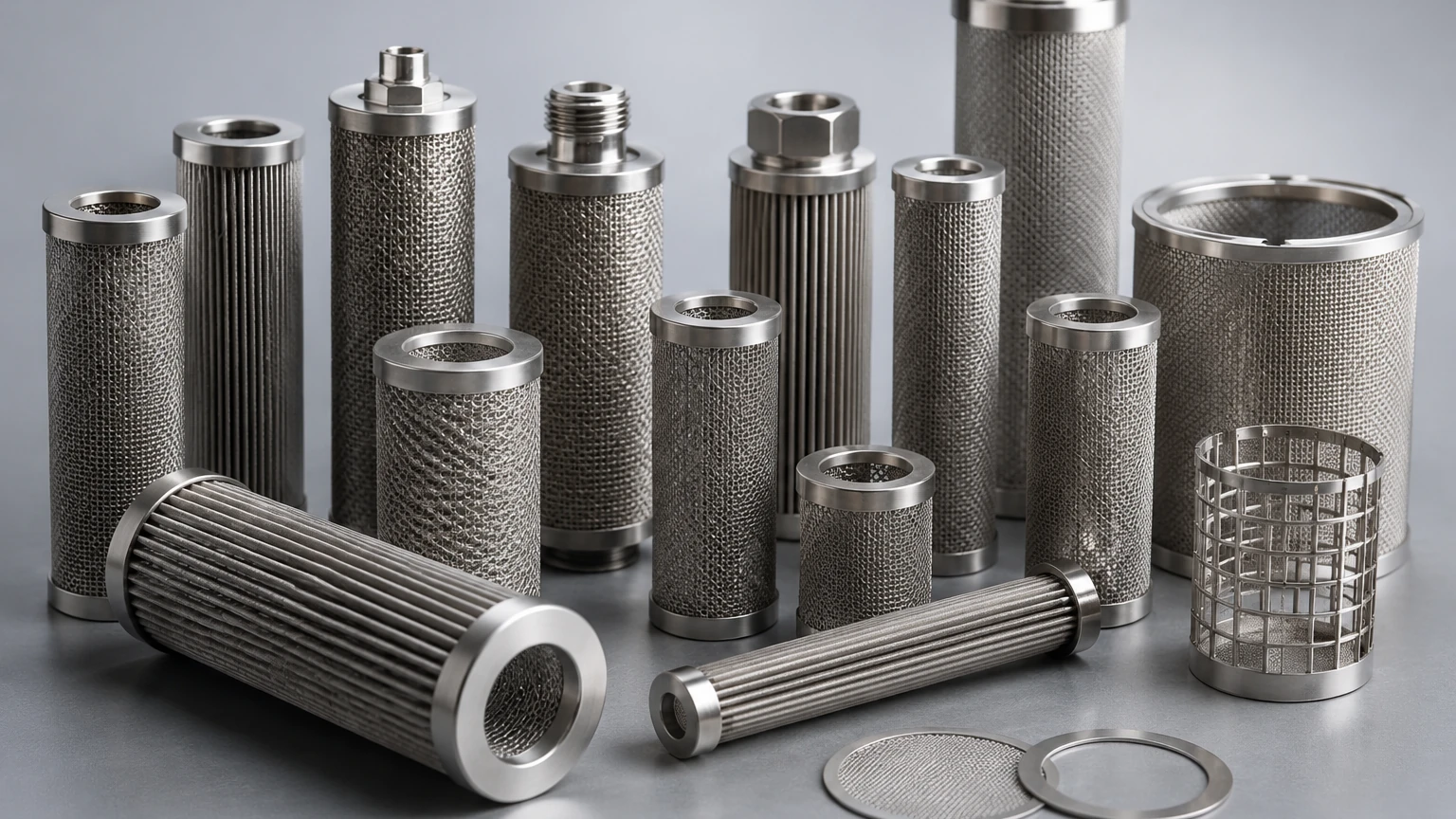
In many pharmaceutical and food processes, the "sterilfilter" is part of a system that includes Steam-in-Place (SIP) protocols. To sterilize the primary membrane filter, "culinary grade" or "pure steam" must be used. This steam itself must be filtered to remove pipe scale, rust, and particulates that could damage the delicate sterile membrane. Custom stainless steel wire mesh filters and sintered metal cartridges are the preferred choice for this application due to their:
1. Thermal Resistance: Ability to withstand continuous exposure to high-pressure steam without structural degradation.
2. Mechanical Strength: Resistance to pressure surges and "water hammer" effects common in steam lines.
3. Cleanability: Stainless steel components can be chemically cleaned and reused, providing a lower total cost of ownership compared to disposable alternatives.
Chemical Compatibility
In chemical processing and solvent filtration, the sterilfilter must be resistant to the fluid itself. While some plastics swell or degrade in the presence of aggressive solvents, 316L stainless steel remains inert, ensuring that no extractables or leachables contaminate the sterile filtrate. For more information on material specifications, you can review our technical resources on the Main Page.
Engineering Considerations for Sterilfilter Integration
Integrating a sterilfilter into an industrial system requires careful consideration of the housing and the surrounding piping architecture. A high-quality filter element is ineffective if the housing allows for bypass or provides areas where bacteria can proliferate.
Sanitary Housing Design
Sterile filter housings must be designed according to sanitary standards (such as 3-A or EHEDG). Key features include:
* Surface Finish: Internal surfaces are typically electropolished to a Ra < 0.4 µm to prevent bacterial adhesion.
* Zero Dead-Legs: The design must ensure that there are no stagnant areas where fluid can trap and grow microbes.
* Tri-Clamp Connections: These provide a secure, leak-proof, and easy-to-clean interface between the filter housing and the process piping.
Differential Pressure and Flow Rates
Every sterilfilter creates a pressure drop (delta P). As the filter captures contaminants, this pressure drop increases. Engineers must calculate the "clean" pressure drop to ensure the pump system can maintain the required flow rate. Furthermore, the filter must be sized so that the flow velocity does not exceed the manufacturer’s recommendations, as excessive velocity can potentially force microorganisms through the pore structure or cause structural failure of the media.
Validation and Integrity Testing
A critical difference between a standard filter and a sterilfilter is the requirement for validation. In regulated industries, it is not enough to assume the filter is working; its integrity must be proven before and after a production batch.
Common Integrity Tests
1. Bubble Point Test: This test measures the minimum pressure required to force air through a liquid-saturated filter. The pressure at which a continuous stream of bubbles appears is correlated to the maximum pore size.
2. Pressure Hold/Decay Test: The filter housing is pressurized, and the rate of pressure loss is monitored. A decay rate faster than the validated limit indicates a leak or a compromised filter element.
3. Water Intrusion Test (WIT): Used primarily for hydrophobic vent filters, this test measures the movement of water into the filter matrix under pressure.
For manufacturers like Kaifil, providing components that can withstand these testing pressures without deformation is a core engineering requirement. Our precision metal filter components are designed to maintain structural integrity throughout the life of the process.
Applications of Sterilfilter Technology
Pharmaceutical and Biotechnology
In the production of injectables, vaccines, and biologics, sterile filtration is often the final step before aseptic filling. It is used for Water for Injection (WFI), buffer solutions, and growth media. Additionally, sterile vent filters are used on storage tanks to prevent airborne contaminants from entering as the tank level fluctuates.
Food and Beverage Industry
In the beverage industry, a sterilfilter is used for "cold stabilization" of beer and wine, removing yeast and spoilage bacteria without the heat of pasteurization, which can alter the flavor profile. In aseptic packaging, sterile air is used to inflate containers and maintain a sterile environment during the filling process.
High-Purity Chemicals
For the semiconductor and specialty chemical industries, sub-micron filtration is required to ensure that reagents do not introduce micro-particulates or microbial life into sensitive manufacturing processes. Stainless steel sterilfilters are particularly valued here for their durability in harsh chemical environments.
Maintenance and Replacement Cycles
While stainless steel pre-filters and steam filters are cleanable, the primary sterilfilter membrane is typically a limited-life component. However, the lifespan of these expensive sterile membranes can be significantly extended by using high-quality pre-filtration.
The Role of Pre-filtration
By using a multi-stage filtration approach—starting with a coarse wire mesh filter and moving to a fine stainless steel cartridge—the bulk of the particulate load is removed before it reaches the sterilfilter. This prevents premature clogging and reduces the frequency of filter changes, which is critical for maintaining continuous production and reducing waste.
Monitoring Performance
Continuous monitoring of differential pressure is the most effective way to determine when a filter needs attention. A sudden drop in pressure may indicate a breach in the filter media, while a rapid increase suggests heavy loading. Regular inspection of seals and O-rings is also essential to prevent bypass.
Choosing the Right Partner for Filtration Solutions
Selecting a sterilfilter system involves balancing technical performance with economic reality. For many OEM applications, a standard off-the-shelf solution may not meet the specific spatial or chemical requirements of the equipment. This is where custom engineering becomes vital.
Kaifil specializes in the design and manufacture of custom stainless steel filtration components that serve as the backbone of industrial sterile systems. Whether you require a specific wire mesh configuration for steam filtration or a precision-engineered cartridge for high-pressure gas, our team provides the technical expertise to ensure your process remains secure.
Before finalizing a filtration strategy, engineers should confirm:
* The specific microbial challenge relevant to their industry.
* The temperature and pressure profiles of the sterilization cycle (SIP/CIP).
* The chemical compatibility of all housing and seal materials.
* The required flow rates and acceptable pressure drop limits.
By addressing these factors early in the design phase, purchasing teams can avoid costly retrofits and ensure long-term operational efficiency. For a detailed look at our manufacturing capabilities and to find the right components for your industrial application, visit our Main Page.
Conclusion
The sterilfilter is an essential component in modern industrial manufacturing, providing the necessary security for products that impact human health and safety. From the pharmaceutical cleanroom to the food processing plant, the integrity of these filters defines the quality of the output. By combining advanced membrane technology with robust stainless steel support components, engineers can create filtration systems that are both highly effective and durably efficient. Understanding the science behind pore sizes, LRVs, and material science is the first step toward achieving optimized filtration performance in any demanding environment.
