


Gas Sparging
Gas sparging is a critical process in industrial engineering where gas is introduced into a liquid medium to facilitate mass transfer, chemical reactions, or physical agitation. In B2B industrial environments, the efficiency of gas sparging directly impacts the yield of chemical reactors, the health of biological cultures in bioreactors, and the quality of carbonated beverages. Unlike primitive methods such as drilled pipes or open tubes, modern industrial sparging relies on porous metal media—often manufactured from stainless steel—to create a high density of fine bubbles. This technical guide explores the engineering principles, material considerations, and application-specific requirements for optimizing gas sparging systems.
Principles of Gas Sparging and Bubble Dynamics
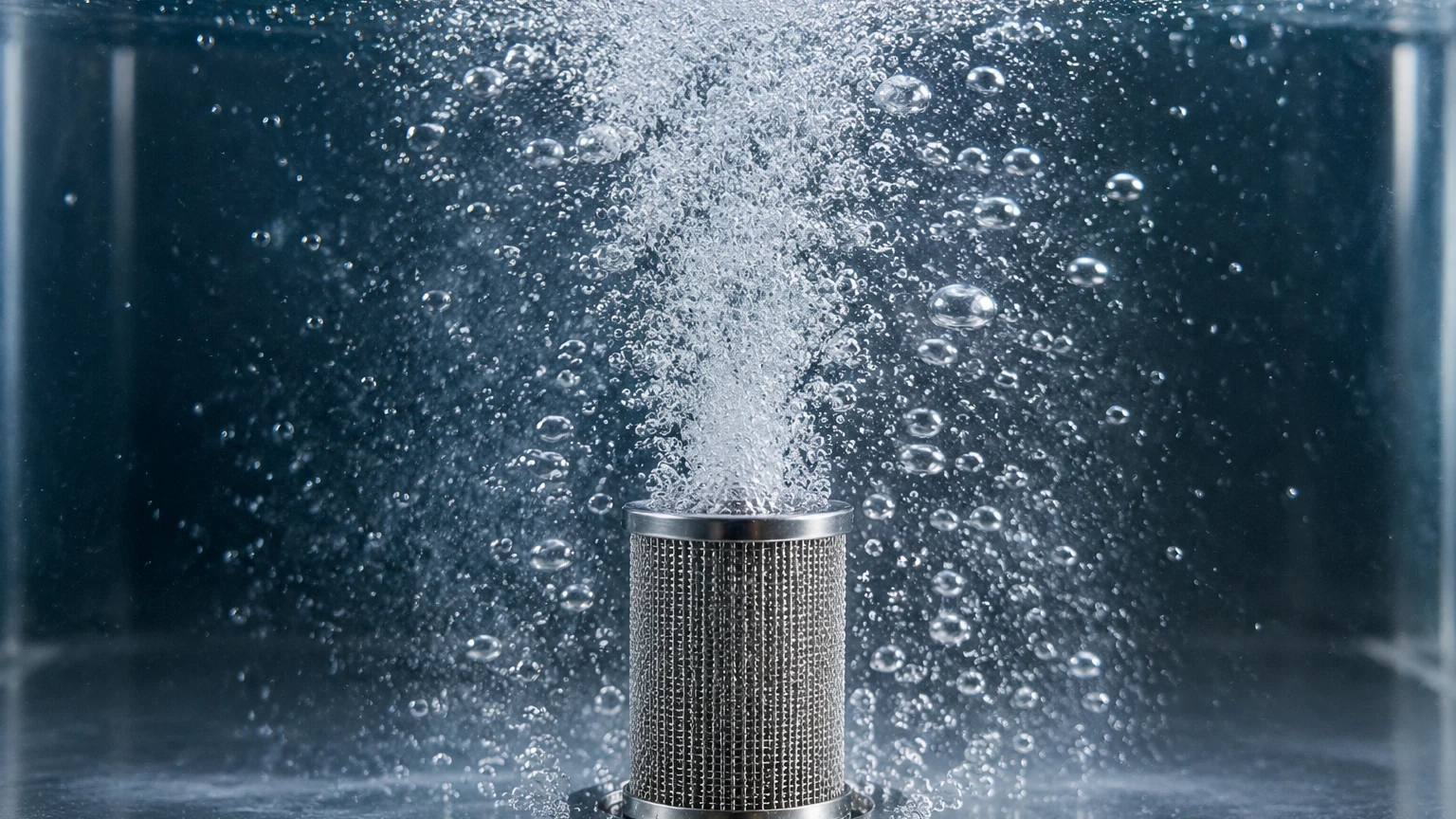
The fundamental goal of gas sparging is to maximize the interfacial surface area between the gas and the liquid. According to the principles of mass transfer, the rate at which a gas dissolves into a liquid is proportional to the total surface area of the gas bubbles. Porous metal spargers are engineered to produce millions of tiny bubbles rather than a few large ones.
When gas is forced through the microscopic pores of a stainless steel medium, the resulting bubbles are significantly smaller than those produced by traditional mechanical orifices. Small bubbles rise more slowly through the liquid column, increasing the "residence time." This extended contact time, combined with the massive increase in surface area, significantly improves the mass transfer coefficient ($k_La$). For engineers, this means achieving the desired gas concentration with lower gas flow rates, reducing waste and operating costs.
Material Selection for Industrial Spargers
Selecting the correct material for a sparging element is governed by the chemical environment, temperature, and mechanical stresses of the application. Stainless steel is the industry standard due to its balance of durability and corrosion resistance.
316L Stainless Steel
316L is the most common alloy used in gas sparging for the pharmaceutical, food and beverage, and chemical industries. The "L" denotes low carbon content, which minimizes carbide precipitation during welding, ensuring the structural integrity of the porous matrix. Its high molybdenum content provides superior resistance to pitting and crevice corrosion in chloride-rich environments.
Specialty Alloys
In highly aggressive environments where standard stainless steel may fail—such as high-temperature acidic processing—specialty alloys like Hastelloy® or Monel® may be required. These materials maintain the same porous structure while providing the necessary chemical inertness to prevent premature degradation of the sparger element.
Structural Integrity
Unlike ceramic or plastic spargers, metal spargers offer high mechanical strength. They can withstand significant pressure differentials and thermal shocks without cracking or shedding particles into the process stream. This reliability is essential for high-pressure hydraulic systems and large-scale industrial fermenters.
Critical Engineering Parameters
When designing or purchasing a gas sparging system, engineers must evaluate several technical specifications to ensure the component meets the application's demands. These parameters dictate the performance and longevity of the sparger.
Pore Size and Micron Rating
The micron rating of the porous metal determines the initial bubble size. While smaller pores create smaller bubbles and better mass transfer, they also result in a higher pressure drop. Engineers must find the "sweet spot" where the bubble size is optimized for the liquid's viscosity without requiring excessive gas pressure that could damage upstream equipment.
Gas Exit Velocity
The velocity at which the gas exits the porous surface is a vital consideration. If the velocity is too high, bubbles may coalesce (merge) immediately upon exit, forming larger bubbles and defeating the purpose of the porous medium. Proper sizing of the sparger's surface area ensures that the exit velocity remains within the laminar flow regime.
Pressure Drop ($ΔP$)
The differential pressure across the sparger element is influenced by the pore size, the thickness of the metal media, and the gas flow rate. A well-designed sparger minimizes the $ΔP$ to reduce energy consumption while maintaining a uniform distribution of gas across the entire surface of the element.
Common Industrial Applications
Gas sparging is utilized across a broad spectrum of industries, each with unique requirements for cleanliness, precision, and durability.
Chemical Processing and Petrochemicals
In chemical reactors, gas sparging is used to introduce reactants like hydrogen (hydrogenation) or oxygen (oxidation) into liquid substrates. The precision of porous metal allows for controlled reaction rates and prevents the formation of "hot spots" that can occur with uneven gas distribution.
Food and Beverage Production
Carbonation and nitrogenation are the primary uses of sparging in this sector. For example, in beer production, nitrogen sparging is used to remove dissolved oxygen, which prevents oxidation and extends shelf life. The use of food-grade stainless steel ensures compliance with hygiene standards and allows for rigorous cleaning protocols.
Pharmaceutical and Biotechnology
In bioreactors, oxygen sparging is critical for maintaining cell viability. Because cells are sensitive to shear stress, the gentle introduction of fine bubbles via porous metal spargers is preferred over high-speed mechanical agitation. These spargers must be capable of withstanding SIP (Sterilization-in-Place) and CIP (Cleaning-in-Place) cycles.
Water and Wastewater Treatment
Ozone sparging is a powerful method for disinfecting water and breaking down organic contaminants. Because ozone is a highly reactive gas, the sparging equipment must be made of corrosion-resistant materials like 316L stainless steel to prevent the equipment from oxidizing along with the contaminants.
Optimizing Gas Sparging Efficiency
Efficiency in gas sparging is measured by how much of the injected gas actually dissolves or reacts with the liquid. To optimize this, engineers often look at the geometry of the sparger and its placement within the vessel.
* Tank Geometry: The sparger should be placed at the lowest possible point in the tank to maximize the bubble rise distance.
* Agitation Integration: In stirred-tank reactors, placing the sparger beneath the impeller allows the mechanical shear to further break down bubbles, though the porous metal itself does most of the work in creating the initial fine distribution.
* Uniformity: A common failure point in low-quality spargers is non-uniform porosity, where gas escapes through a few "pathways of least resistance." High-quality manufacturing ensures uniform pore distribution, which is essential for consistent process results.
For more information on high-performance filtration and sparging components, you can visit the Main Page.
Maintenance and Cleaning of Porous Metal Spargers
Because gas sparging elements are porous, they are susceptible to fouling over time. Fouling can occur from particulate matter in the gas stream or from mineral scaling and biological growth on the liquid side. Maintaining performance requires a proactive cleaning strategy.
Cleaning-in-Place (CIP)
Most industrial spargers are cleaned using CIP methods, where chemical cleaning agents are circulated through the system. For stainless steel spargers, caustic or acidic solutions can be used to dissolve organic or mineral deposits without damaging the metal matrix.
Ultrasonic Cleaning
For stubborn fouling that CIP cannot reach, ultrasonic cleaning is highly effective. The sparger element is submerged in a cleaning bath where high-frequency sound waves create cavitation bubbles that dislodge particles from deep within the pores. This is often the preferred method for restoring the original pressure drop specifications of a sparger.
Replacement Cycles
While stainless steel spargers are designed for long-term use, they are eventually subject to wear or irreversible fouling. Engineers should monitor the pressure drop across the sparger; a significant increase in $ΔP$ at a constant flow rate usually indicates that the element needs professional cleaning or replacement.
Customization and OEM Solutions
Industrial reactors come in various shapes and sizes, meaning off-the-shelf sparging solutions are rarely sufficient for optimal performance. Customization is often necessary to match the sparger to the specific vessel geometry and process conditions.
Connection Types
Spargers can be manufactured with various fittings, including NPT threads, flanges, or quick-connect couplings, to ensure a leak-proof integration into existing piping. The choice of connection often depends on the frequency with which the sparger needs to be removed for maintenance.
Geometry and Configuration
Depending on the application, spargers may be shaped as simple cylinders, flat discs, or complex manifolds. In large tanks, a "spider" configuration—where multiple sparging arms extend from a central hub—is used to ensure even gas distribution across a wide diameter.
OEM Partnerships
For equipment manufacturers (OEMs), partnering with a specialist in porous metal fabrication allows for the development of proprietary sparging components that are optimized for their specific machine designs. This collaboration ensures that the filtration and gas injection components are perfectly matched to the system's flow dynamics and pressure requirements.
Conclusion
Gas sparging is a sophisticated engineering task that requires a deep understanding of fluid dynamics, material science, and mass transfer. By selecting high-quality porous metal spargers, industrial operators can achieve higher efficiency, lower gas consumption, and more consistent product quality. Whether in a pharmaceutical cleanroom or a heavy chemical plant, the choice of sparger material and design is a fundamental factor in the success of the overall process. When evaluating suppliers, technical professionals should prioritize those with demonstrated expertise in custom stainless steel fabrication and a clear understanding of the rigorous demands of industrial filtration and gas injection environments.
