


Gas Coalescing Filter Separator
In industrial gas processing, the presence of liquid contaminants—ranging from bulk water and hydrocarbons to sub-micron oil aerosols—poses a significant threat to downstream equipment and process integrity. A gas coalescing filter separator is a specialized high-efficiency device engineered to remove these liquid droplets and solid particulates from gas streams. Unlike standard particulate filters that simply trap solids, a coalescer utilizes the physical principles of fluid dynamics to merge tiny droplets into larger ones, allowing them to be drained away by gravity.
For engineers and procurement teams, selecting the right gas coalescing filter separator requires a deep understanding of the specific application environment, flow dynamics, and material compatibility. This guide explores the technical foundations of coalescing technology, structural considerations, and the engineering parameters necessary to ensure long-term operational efficiency.
The Fundamental Principles of Gas Coalescence
The primary function of a gas coalescing filter separator is the removal of liquid aerosols. These aerosols are often so small (frequently less than 0.3 microns) that they behave like a gas, following the streamlines of the flow and bypassing conventional separation equipment. Effective coalescence relies on three distinct physical mechanisms occurring within the filter media:
1. Direct Interception
As the gas stream passes through the tortuous path of the filter media, particles that are larger than the pore spaces are physically blocked. For droplets that are slightly smaller than the pores but still possess significant mass, they may come into contact with the fibers of the media and adhere to them through surface tension.
2. Inertial Impingement
This mechanism is most effective for larger droplets (typically >1 micron) traveling at higher velocities. Because these droplets have more momentum than the surrounding gas, they cannot adjust to the rapid changes in flow direction caused by the filter fibers. Consequently, they strike the fibers directly and become trapped.
3. Brownian Diffusion
For extremely small sub-micron particles, their movement is influenced by molecular collisions, causing them to move in a random, zig-zag pattern known as Brownian motion. This erratic movement increases the probability that the particles will collide with the filter media fibers, where they are captured. This is critical for achieving high-efficiency ratings in gas coalescing filter separators.
Once captured, these tiny droplets move along the fibers and merge at the intersection points. As more droplets accumulate, they form larger drops that eventually become heavy enough to overcome the drag force of the gas stream and fall to the bottom of the housing for collection.
Structural Design of a Coalescing Filter Separator
A high-performance gas coalescing filter separator is typically housed in a pressure vessel designed to handle specific flow rates and pressures. The internal configuration is usually divided into two stages to ensure maximum separation efficiency.
The First Stage: Bulk Separation
Before the gas reaches the fine coalescing elements, it often passes through a primary separation zone. This may involve a baffle, a centrifugal cyclonic section, or a coarse wire mesh pad. This stage is designed to remove bulk liquids and large solid particles. By removing the "heavy lifting" first, the life of the high-efficiency coalescing elements is significantly extended.
The Second Stage: Coalescing Elements
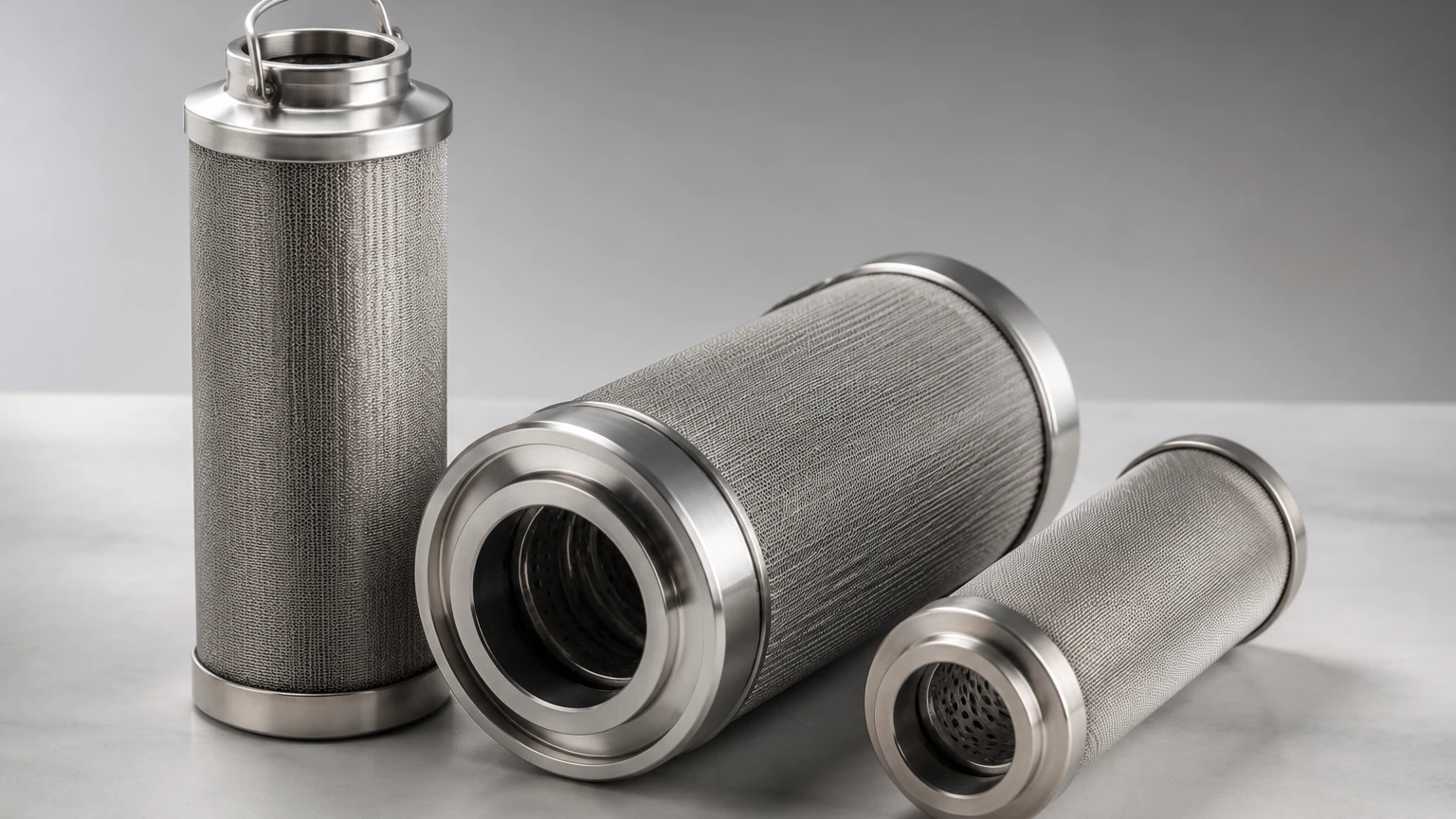
The second stage contains the coalescing cartridges. These are often multi-layered components. In high-demand industrial environments, stainless steel wire mesh and sintered metal fibers are preferred due to their structural integrity. Kaifil specializes in manufacturing these precision components, ensuring that the media can withstand high differential pressures without collapsing or shedding fibers into the clean gas stream.
Drainage and Collection
The vessel includes a "quiet zone" or a sump area where the coalesced liquids collect. It is vital that this area is shielded from the high-velocity gas flow to prevent re-entrainment—a phenomenon where the gas stream picks up the collected liquid and carries it back into the system.
Material Selection for Industrial Durability
The choice of material for the filter media and the housing is dictated by the chemical composition of the gas and the operating temperature. While fiberglass and synthetic polymers are common in light-duty applications, industrial processes involving corrosive gases, high temperatures, or high pressures require more robust solutions.
Stainless Steel (304 and 316L): Stainless steel is the industry standard for demanding applications. It offers excellent corrosion resistance against hydrogen sulfide (H2S), carbon dioxide (CO2), and various organic acids found in natural gas and chemical processing. Furthermore, stainless steel filter cartridges can be cleaned and reused in some applications, providing a lower total cost of ownership compared to disposable synthetic elements.
When evaluating a gas coalescing filter separator, engineers should confirm the compatibility of the seals and gaskets as well. Viton, EPDM, or PTFE are selected based on the specific hydrocarbons or chemicals present in the gas stream to prevent seal failure and bypass leakage.
Key Engineering Parameters for Selection
To ensure a gas coalescing filter separator performs to its specifications, several engineering variables must be calculated and confirmed during the design phase.
Flow Rate and Velocity
The "face velocity" (the speed of the gas as it hits the filter media) is perhaps the most critical factor. If the velocity is too high, the gas will strip the coalesced droplets off the fibers before they can drain, leading to re-entrainment. Conversely, if the velocity is too low, the inertial impingement mechanism becomes less effective. Sizing the vessel correctly ensures that the gas remains within the optimal velocity window.
Operating Pressure and Temperature
Gas density changes with pressure and temperature, which directly affects the actual cubic feet per minute (ACFM) of the gas. Filter elements must be rated for the maximum operating pressure of the system. In high-pressure applications, the structural strength of the stainless steel core and outer support of the filter cartridge is paramount to prevent deformation.
Liquid Loading
The amount of liquid (measured in parts per million or gallons per day) that the filter is expected to handle will determine the size of the sump and the frequency of drainage. High liquid loading may require an automated drainage system with level sensors to prevent the sump from overflowing.
Allowable Pressure Drop (Delta P)
Every filter introduces a restriction to flow. The initial "clean" pressure drop should be minimized to reduce energy costs, particularly in compressor suction applications. As the filter captures solids, the pressure drop will increase. For more information on optimizing these parameters for your specific system, you can Review product options and application support on our Main Page.
Maintenance and Performance Monitoring
Maintaining the efficiency of a gas coalescing filter separator requires consistent monitoring of the differential pressure. A sudden drop in Delta P may indicate a ruptured element or a seal failure, allowing contaminated gas to bypass the media. A gradual increase is normal as solid particulates clog the media, but exceeding the manufacturer’s recommended change-out pressure can lead to element collapse.
Replacement Cycles
In many B2B industrial settings, coalescing elements are replaced on a scheduled basis or when the differential pressure reaches a specific threshold (often 10-15 psi). However, if the gas stream is particularly dirty, pre-filtration is highly recommended to protect the more expensive coalescing stage.
Cleaning vs. Replacement
While synthetic coalescers are almost always disposable, stainless steel wire mesh filters used in primary separation stages can often be cleaned using ultrasonic baths or chemical cleaning, depending on the nature of the contaminants. This is a significant consideration for facilities looking to reduce their environmental footprint and long-term maintenance expenses.
Customization and OEM Solutions
No two industrial gas streams are identical. Factors such as trace chemical contaminants, fluctuating flow rates, and space constraints in existing plants often necessitate customized filtration solutions.
Kaifil provides comprehensive OEM services, working with engineers to design and manufacture stainless steel filter cartridges and custom metal filter components that fit specific vessel geometries and performance requirements. Whether the application involves protecting a high-speed centrifugal compressor or ensuring the purity of gas in a pharmaceutical process, the focus remains on precision engineering and material durability.
When sourcing a gas coalescing filter separator, it is essential to partner with a manufacturer that understands the nuances of filtration accuracy and the structural demands of industrial environments. By confirming the micron rating, material grade, and flow capacity during the procurement process, technical teams can ensure the reliability and longevity of their gas processing infrastructure.
For technical assistance or to explore customized filtration components, visit the Kaifil Main Page to find professional guidance on selecting the right solutions for your industrial application.
