


What Is a Backwash Filter
In industrial fluid management, maintaining continuous flow while ensuring high-purity filtration is a constant challenge. Engineers often face the trade-off between filtration precision and operational uptime. This is where the backwash filter becomes an essential component of modern processing lines. To answer the fundamental question—what is a backwash filter—one must look beyond simple mechanical straining and examine a system designed for self-maintenance and long-term reliability in demanding environments.
A backwash filter is a type of industrial filtration system designed to remove suspended solids from liquids through a reusable filter medium, typically constructed from stainless steel wire mesh or wedge wire. Unlike standard cartridge filters that require manual removal and replacement once they become clogged, a backwash filter utilizes a reverse flow of fluid (either the process fluid itself or an external source) to dislodge accumulated debris from the filter surface. This self-cleaning capability allows the system to operate for extended periods without manual intervention, making it a cornerstone of automated industrial processes.
The Mechanical Principles of Backwashing
To fully grasp what is a backwash filter, it is necessary to understand its two primary modes of operation: the filtration phase and the cleaning (backwash) phase.
The Filtration Phase
During normal operation, the process fluid enters the filter housing and passes through the filter element from the inside out or outside in, depending on the specific design. Contaminants—such as sand, scale, organic matter, or metal shavings—are trapped on the surface of the stainless steel mesh. As these particles accumulate, they create a "filter cake," which actually increases filtration efficiency but also causes a gradual increase in the differential pressure (the difference in pressure between the inlet and the outlet).
The Backwash Phase
When the differential pressure reaches a pre-set threshold or a specific time interval is met, the cleaning cycle is triggered. In an automatic system, a control valve opens a drain or backwash outlet. This creates a high-velocity reverse flow across a small section of the filter element. The sudden change in pressure and flow direction forces the trapped particles off the mesh and out through the waste discharge. In many advanced designs, a rotating scanner or suction nozzle moves across the internal surface of the filter, cleaning the entire element systematically while the rest of the filter continues to provide clean fluid to the downstream process.
Key Components and Engineering Considerations
The performance of a backwash filter is heavily dependent on its materials of construction and the precision of its internal components. Because these systems are frequently used in corrosive or high-temperature environments, material selection is paramount.
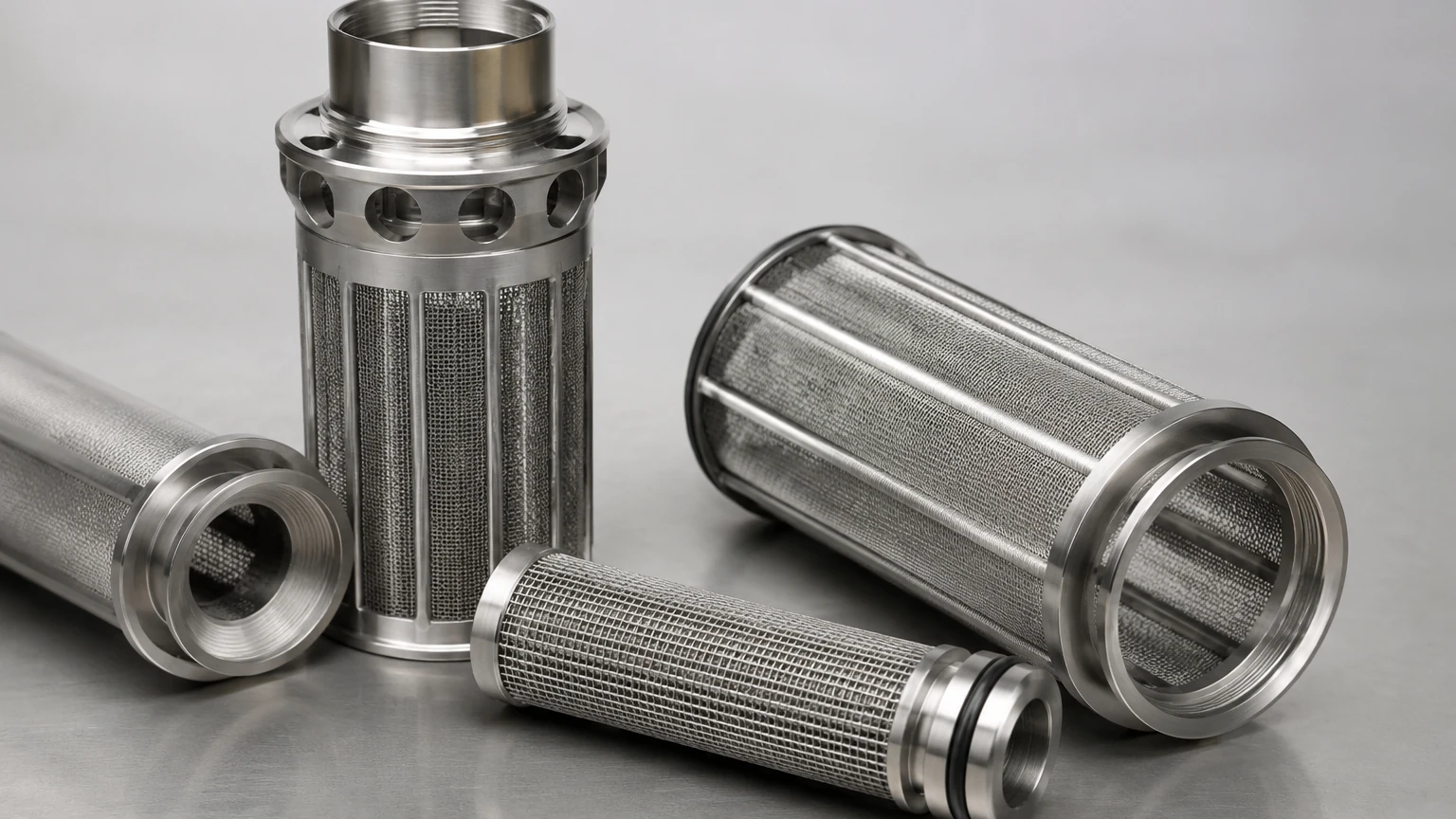
1. Filter Medium: Most industrial backwash filters utilize stainless steel (304, 316L, or Duplex) due to its mechanical strength and resistance to corrosion. The medium can be a multi-layered sintered wire mesh or a wedge wire screen. Sintered mesh provides excellent depth filtration and high porosity, while wedge wire is preferred for high-load applications where its non-clogging V-shaped profile excels.
2. Housing: The outer vessel must be rated for the specific operating pressure of the plant. For chemical and pharmaceutical applications, the housing is often electropolished to prevent bacterial growth and ensure ease of cleaning.
3. Control System: This includes differential pressure sensors, PLC-based controllers, and automated valves. The sensitivity of these sensors determines how efficiently the system responds to loading, preventing unnecessary backwash cycles that could waste water or process fluid.
4. Cleaning Mechanism: Whether using a suction scanner, a back-flush arm, or a full-flow reversal, the cleaning mechanism must be robust enough to handle the specific type of debris found in the fluid.
Advantages of Implementing Backwash Systems
Transitioning from manual filtration to an automated backwash system offers several technical and economic advantages for industrial facilities.
Reduced Operational Downtime
In traditional filtration, the system must be shut down, depressurized, and opened to replace clogged cartridges or bags. This results in significant labor costs and lost production time. A backwash filter eliminates this requirement by cleaning itself in-situ, often without interrupting the main flow.
Lower Total Cost of Ownership (TCO)
While the initial capital expenditure for a backwash system is higher than that of a simple bag filter, the long-term savings are substantial. There are no recurring costs for disposable filter media, and the reduction in labor hours for maintenance allows personnel to focus on more critical tasks. Furthermore, the durability of stainless steel components ensures a service life that often spans decades.
Environmental Sustainability
By utilizing a permanent, cleanable filter element, facilities significantly reduce their solid waste output. In industries like food and beverage or chemical processing, reducing the volume of spent filter cartridges contributes to corporate sustainability goals and reduces waste disposal fees.
Critical Selection Criteria for Engineers
When evaluating what is a backwash filter for a specific application, engineers must confirm several technical parameters to ensure the system will perform as expected. Failure to account for these variables can lead to frequent clogging, insufficient cleaning, or premature component failure.
* Micron Rating and Particle Distribution: It is not enough to know the desired micron rating; one must also understand the nature of the contaminants. Are they hard and abrasive, or soft and gelatinous? Sintered mesh is often better for fine, hard particles, while wedge wire is superior for fibrous materials.
* Flow Rate and Pressure Drop: The filter must be sized to handle the maximum expected flow rate with a minimal initial pressure drop. A system that is undersized will enter backwash cycles too frequently, leading to excessive waste and wear.
* Backwash Fluid Source: Some systems use the filtered process fluid for cleaning, while others require an external source of clean water or compressed air. The availability and cost of this cleaning medium must be factored into the design.
* Chemical Compatibility: The choice between SS304 and SS316L is critical, especially in applications involving chlorides or acidic solutions. For highly aggressive fluids, specialized coatings or high-alloy metals may be required.
For those seeking technical guidance on specific configurations, the Main Page of Kaifil provides comprehensive data on material grades and filtration accuracies available for custom industrial solutions.
Industrial Applications and Use Cases
Backwash filters are versatile tools used across a wide spectrum of industries. Their ability to handle high solids loading makes them ideal for "front-line" filtration tasks.
Water Treatment and Desalination
In seawater desalination plants, backwash filters serve as essential pre-filtration units for Reverse Osmosis (RO) membranes. By removing sand, algae, and larger particles, they protect the sensitive and expensive RO membranes from fouling and mechanical damage.
Cooling Towers and HVAC Systems
Open cooling towers are prone to collecting atmospheric dust and debris. If left unfiltered, this debris can settle in heat exchangers, reducing thermal efficiency and promoting the growth of Legionella. A backwash filter maintains water clarity and protects the entire cooling loop.
Oil and Gas Industry
In upstream operations, backwash filters are used for produced water injection and the filtration of completion fluids. The rugged nature of stainless steel wire mesh allows these filters to withstand the high pressures and harsh chemicals common in oilfield environments.
Food and Beverage Production
Maintaining the purity of process water used in ingredient mixing or bottle washing is critical. Backwash filters provide a reliable barrier against contaminants while meeting the strict hygienic standards required by the industry, including the use of food-grade stainless steel.
Maintenance and Longevity Considerations
Although the primary selling point of a backwash filter is its self-cleaning nature, it is not a "set and forget" device. Proper maintenance is required to ensure the longevity of the precision metal components.
Engineers should establish a routine inspection schedule for the following:
* Seal and Gasket Integrity: Over time, the seals on the backwash valves or the internal scanner can wear, leading to internal bypass or external leaks.
* Mesh Inspection: While stainless steel mesh is durable, high-velocity particles or extreme pressure spikes can occasionally cause mechanical damage. Periodic visual inspections or integrity tests are recommended.
* Control Calibration: Differential pressure sensors should be calibrated annually to ensure the backwash cycle is triggered at the correct setpoint.
By understanding the technical nuances of what is a backwash filter, purchasing teams and engineering departments can make informed decisions that optimize their filtration processes. Choosing a manufacturer like Kaifil, which specializes in custom stainless steel filtration solutions, ensures that the filter is engineered specifically for the unique demands of the application, from material selection to filtration accuracy.
In conclusion, the backwash filter represents a sophisticated intersection of mechanical engineering and fluid dynamics. It provides a robust solution for industries that cannot afford the downtime or waste associated with traditional filtration methods. Whether managing cooling water, protecting sensitive downstream equipment, or ensuring the purity of a chemical product, these systems offer a level of reliability and efficiency that is essential in the modern industrial landscape.
